
Orchestrate AI insights into action

Trending
Categories
KLM Boeing 737-800 Diverts to Denmark After Engine Failure and Cabin Smoke
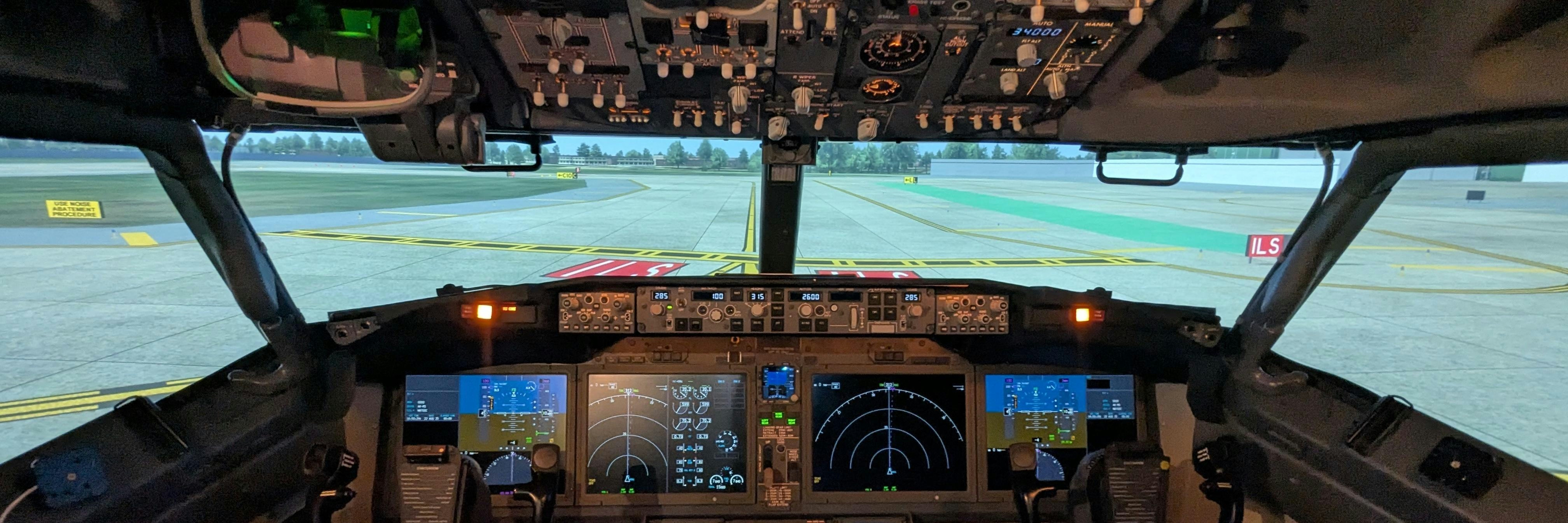
KLM Boeing 737-800 Diverts to Denmark After Engine Failure and Cabin Smoke
June 14, 2026 — A KLM flight from Bergen, Norway to Amsterdam was forced to divert to Denmark on Friday morning after a Boeing 737-800 experienced engine failure accompanied by smoke in the cabin at cruising altitude. The aircraft, registered PH-BXY, was flying at 35,000 feet when the incident occurred. Thanks to the prompt and professional response of the flight crew, all 190 passengers and crew members disembarked safely in Denmark, underscoring the robustness of contemporary aviation safety protocols.
In-Flight Emergency and Immediate Response
Flight KL1164 departed Bergen Airport on schedule and was en route to Amsterdam when passengers were startled by two loud bangs emanating from the right engine. Shortly thereafter, an acrid odor, described by passengers as similar to burning electronics, permeated the cabin, followed by visible smoke. The sudden onset of these symptoms caused significant alarm among those onboard.
Inside the cockpit, pilots were confronted with multiple warning indicators, including a critical low oil pressure alert for the right engine. Adhering to established emergency procedures, the crew promptly shut down the malfunctioning engine. Although the Boeing 737-800 is engineered to operate safely on a single engine, the presence of smoke heightened the urgency of the situation.
Diversion to Billund Airport and Safe Landing
Recognizing the severity of the situation, the flight crew declared an emergency and diverted to Billund Airport (BLL) in Denmark, the nearest suitable airfield. Emergency response teams at Billund were immediately mobilized, with fire and medical personnel prepared to assist upon the aircraft’s arrival. Despite the tense circumstances, the pilots maintained full control during the descent.
At approximately 10:45 AM local time, KL1164 landed safely without the deployment of emergency slides. The aircraft taxied to the gate under its own power, and all passengers and crew disembarked without injury.
Industry Impact and Ongoing Safety Considerations
This incident is expected to prompt increased scrutiny of engine safety and reliability, particularly concerning GE Aerospace’s Leap-1B engines, which are undergoing updates to mitigate risks associated with cabin smoke. Such events often lead airlines and manufacturers to reassess maintenance practices and emergency protocols, potentially influencing insurance premiums and operational planning.
In the competitive landscape, rival manufacturers may emphasize their own safety records to reassure the traveling public. Meanwhile, Boeing continues to increase production of the 737 series, aiming to reach a monthly output of 52 jets early next year following consultations with the Federal Aviation Administration. This production ramp-up could influence market dynamics in the context of recent high-profile incidents.
Affirmation of Aviation Safety Standards
While the emergency was undoubtedly distressing for those onboard, the successful handling of the situation highlights the effectiveness of modern aircraft design, rigorous crew training, and comprehensive emergency preparedness. The safe landing of KL1164 serves as a powerful reminder of why commercial aviation remains one of the safest modes of transportation worldwide.

Bangladesh Launches Initiative to Become Regional Aviation Hub
Russia Transports PD-8 Engine to India for International Certification

Kyrgyzstan to Adopt EMPIC GmbH Software for Flight Safety Oversight

Why Hawaiian Airlines Is Waiting Until 2028 To Add A Premium Economy Cabin To Its Airbus A330 Fleet

Engine Fault Causes Royal Navy Helicopter Crash Fatality

Joby Aviation Begins Texas Air Taxi Test Flights Amid Stock Decline

Iberia Receives Full Approval for Airbus A350 Heavy Maintenance

NetJets to Construct Terminal and Hangar at Dallas Love Field

Using AI in Aircraft Purchases

CIAM Unveils RPD-150T Engine to Replace Rotax 150 hp Model
