
Orchestrate AI insights into action

Trending
Categories
Korean Air and Delta Plan Incheon to Austin Route Amid Samsung’s $37 Billion Chip Investment
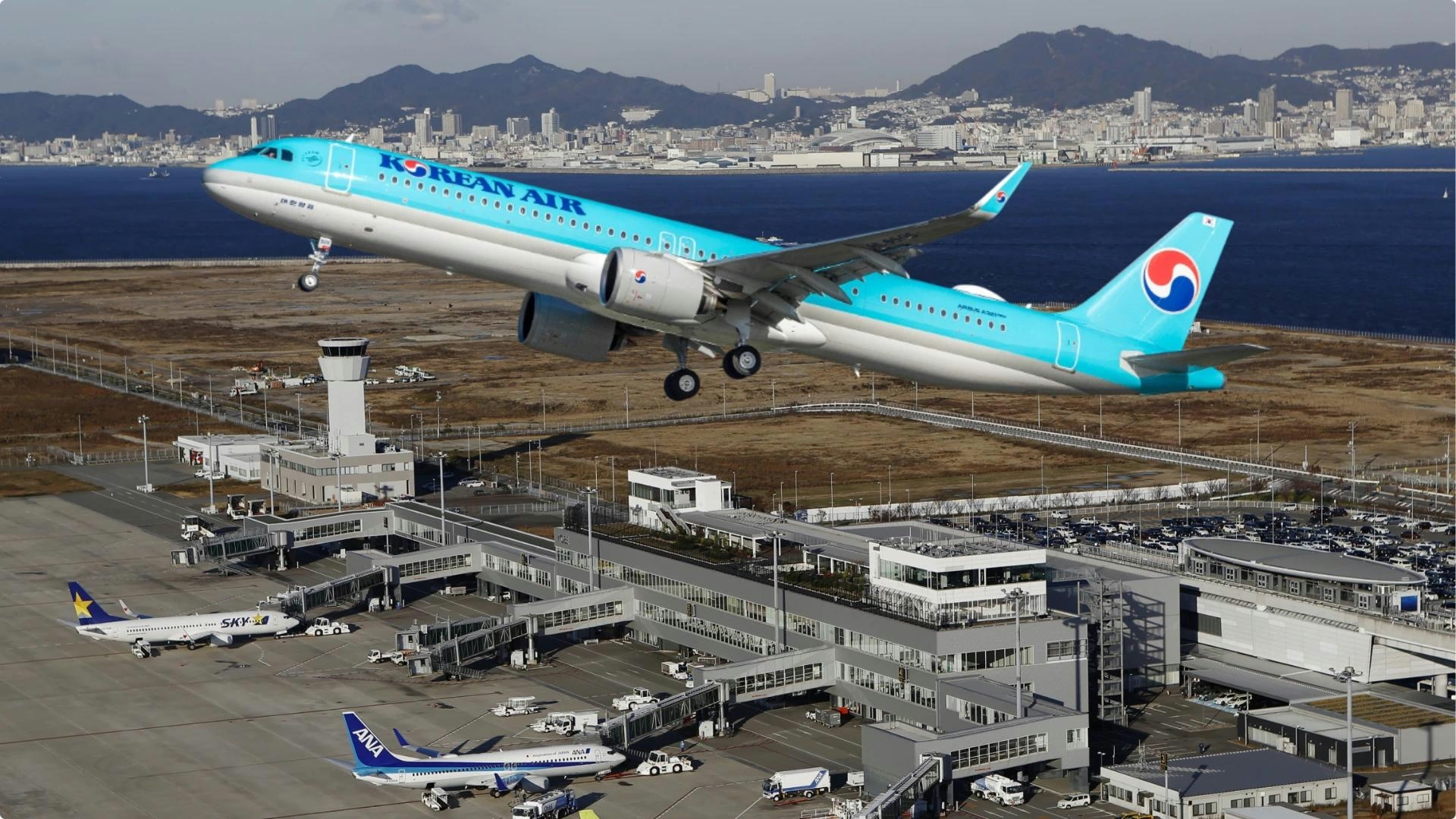
Korean Air and Delta Consider Direct Incheon–Austin Route Amid Samsung’s $37 Billion Texas Chip Investment
Strengthening Connectivity Between South Korea and Texas
Korean Air and Delta Air Lines are engaged in advanced discussions to establish a direct flight route between Incheon International Airport and Austin, Texas. This initiative aims to enhance connectivity in response to Samsung Electronics’ imminent opening of a $37 billion semiconductor manufacturing facility in Taylor, Texas. The proposed route is intended to facilitate smoother travel, improve workforce mobility, and reinforce supply chain integration between South Korea and the United States, reflecting the growing economic interdependence driven by the semiconductor sector.
During a roundtable meeting held on March 11 in Austin, airline executives and local stakeholders, including Lee Seung-hyuk, Deputy Head of International Affairs at Korean Air, and Jeong Ho-yun, Head of Pricing RM, discussed the strategic and operational advantages of the new service. Former Taylor Mayor Brent Rydell, who played a key role in attracting Samsung’s investment, expressed strong support for the route, emphasizing its potential to enhance employee mobility and accelerate corporate decision-making. Rydell highlighted Austin and Taylor’s emerging status as critical nodes linking the U.S. and Asian economies.
Demand Driven by Semiconductor Industry Expansion
The push for a direct Incheon–Austin flight is grounded in concrete demand from the semiconductor industry rather than speculative growth. Samsung’s Taylor plant, scheduled to commence operations in the latter half of the year, will manufacture advanced chips using 2-nanometer process technology for prominent U.S. clients such as Nvidia, Tesla, Apple, Qualcomm, and AMD. This new facility represents a significant technological advancement over Samsung’s existing Austin site, which focuses on mature process nodes, positioning Taylor as a pivotal hub for next-generation chip production.
Recent business developments, including orders for Apple iPhone image sensors, have further reinforced the need for improved international connectivity, supporting optimistic utilization forecasts for the new plant. Currently, no direct flights connect South Korea and Austin, requiring travelers to transit through major U.S. hubs like Dallas Fort Worth or Los Angeles. These indirect routes often extend travel times beyond 18 hours, creating inefficiencies for business travelers and complicating supply chain coordination. A nonstop Incheon–Austin service would substantially reduce travel time and enhance operational efficiency for executives, engineers, and business partners.
Regional Impact and Operational Challenges
Taylor, located approximately 25 kilometers north of Austin, is rapidly developing into a semiconductor cluster, attracting numerous Korean materials, parts, and equipment suppliers to support Samsung’s operations. Improved air connectivity is expected to facilitate faster personnel movement and encourage further business expansion within the region’s growing semiconductor ecosystem.
Despite the clear benefits, Korean Air and Delta face several challenges in launching the new route. They must compete with established U.S. carriers, manage the logistical complexities of a new long-haul service, and generate sufficient passenger demand amid economic pressures from rising memory chip prices. Market responses may vary: Delta could capitalize on its brand recognition and existing partnerships, while Korean Air may encounter difficulties establishing a strong presence in the competitive U.S. market. Competitors may respond by intensifying marketing efforts or introducing new routes to protect market share.
As Samsung’s Texas expansion nears completion, the proposed direct flight highlights the deepening economic ties between South Korea and the United States and underscores the critical role of efficient global connectivity in the semiconductor industry.

Etihad Airways Suspends Airbus A380 Flights on Key Route

Aditya Birla Group Seeks Approval for Aircraft Leasing in GIFT City

Qatar Airways Highlights Innovation and Connectivity at Arabian Travel Market 2026

Hong Kong's Five-Year Plan Includes Andrew Fan's Aircraft Parts Processing Hub Proposal

ACIA Aero Leasing Delivers ATR72-600 to Air Nostrum

RTX Appoints Jill Albertelli as Head of Pratt & Whitney

TAT Technologies Joins Beyond Aero Hydrogen Aircraft Program

AURAK Study Highlights Barriers to Air Taxi Adoption in Emerging Economies

Xiamen Air Selects Altitude for 787 Maintenance at Heathrow

Etihad and Swissport Extend Global Partnership
