
Orchestrate AI insights into action

Trending
Categories
Lessons from the Internet Age for Aviation Cybersecurity

Lessons from the Internet Age for Aviation Cybersecurity
More than forty years ago, the Internet was a specialized tool used primarily by researchers, academics, and government agencies. Few could have predicted the profound transformation it would bring to everyday life, revolutionizing communication, commerce, healthcare, and transportation. As the Internet rapidly evolved into critical infrastructure, its widespread adoption outpaced the development of adequate security measures, exposing new vulnerabilities that continue to challenge stakeholders today.
The Emerging AI Paradigm in Aviation
Artificial intelligence is now following a comparable trajectory. AI is already reshaping numerous industries, including aviation, by enhancing operational efficiency, automating routine tasks, and enabling more informed decision-making. However, much like the early days of the Internet, the full implications of AI integration remain uncertain, particularly in the realm of cybersecurity.
The aviation sector faces distinct challenges due to its real-time operational environment. Airports and airlines rely on instantaneous decision-making and intricate digital networks that support everything from passenger processing to aircraft turnaround. These organizations manage highly sensitive data and depend on a complex ecosystem of partners, many of whom require system access for daily operations. As AI-driven cyber threats become increasingly sophisticated, a single exploited vulnerability can allow attackers to move swiftly across interconnected systems, complicating efforts to contain breaches.
Industry leaders have issued urgent warnings about the rise of advanced AI systems, such as the so-called “Mythos”-class technologies, which possess the capability to autonomously identify and exploit vulnerabilities at unprecedented speed and scale. Olivier Jankovec, Director General of ACI Europe, has emphasized the gravity of this emerging threat. This development raises pressing questions about whether current cybersecurity standards are adequate to confront the challenges posed by AI-enhanced attacks. Many existing safeguards were designed for a different technological era and may prove insufficient as AI continues to reshape the cybersecurity landscape.
Broader Market Dynamics and Sector Vulnerabilities
The aviation industry is not isolated in facing these cybersecurity challenges. Globally, the cybersecurity market is experiencing significant growth, with the United States positioned to lead amid escalating geopolitical tensions and increasing threat levels. Recent rebounds in cybersecurity stocks, following earlier software sector sell-offs, reflect growing market awareness of these risks. Airlines such as United have publicly acknowledged AI’s dual nature as both an opportunity and a threat, recognizing its potential impact on customer relations and operational resilience.
Smaller aviation operators are particularly vulnerable. According to cybersecurity firm Cyviation, these entities often lack the necessary resources and support to defend against the growing complexity of cyberattacks. Ensuring that all participants within the aviation ecosystem, regardless of size, have access to robust cybersecurity tools and expertise is critical to maintaining the sector’s overall resilience.
The experience of the Internet age offers a clear lesson: as transformative technologies become integral to critical infrastructure, security frameworks must evolve in parallel. For aviation, this necessitates moving beyond isolated protective measures toward a comprehensive, adaptive cybersecurity strategy—one that anticipates the rapid pace of AI development and the evolving tactics of cyber adversaries. Only by drawing on past experiences can the industry hope to safeguard its digital future.

Etihad Deploys Widebody Fleet to Meet Strong Demand

Korean Air Finalizes $36.2 Billion Deal with Boeing

Australia’s RFDS Queensland Section Orders Six King Air 260Cs

Korean Air Finalizes Order for 103 Boeing Jets and Engines
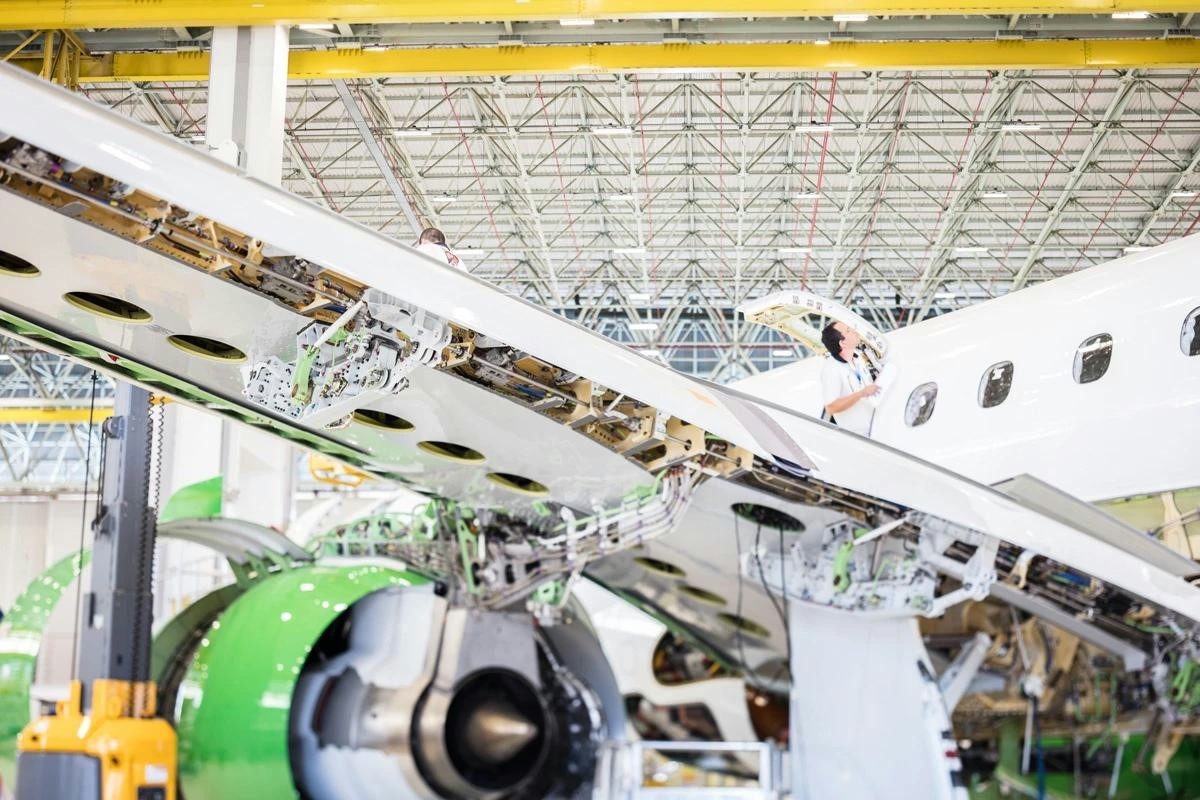
Embraer E195-E2 Features Distinctive Engine Placement Among Regional Jets

What Passengers Can Expect on Boeing’s New 777X Jet

How Ethiopian Airlines Became Africa’s Leading Carrier Amid Gulf Competition

Joby Aviation Extends Autonomous Flight Capabilities with Cross-Country Tour

Strengthening Europe's Aviation Supply Chain Amid Uncertainty

The Evolution of the Aircraft Maintenance Engineer Role
