
Orchestrate AI insights into action

Trending
Categories
Lightning Strike Causes Engine Fire on SriLankan A330, Forcing Mid-Air Return
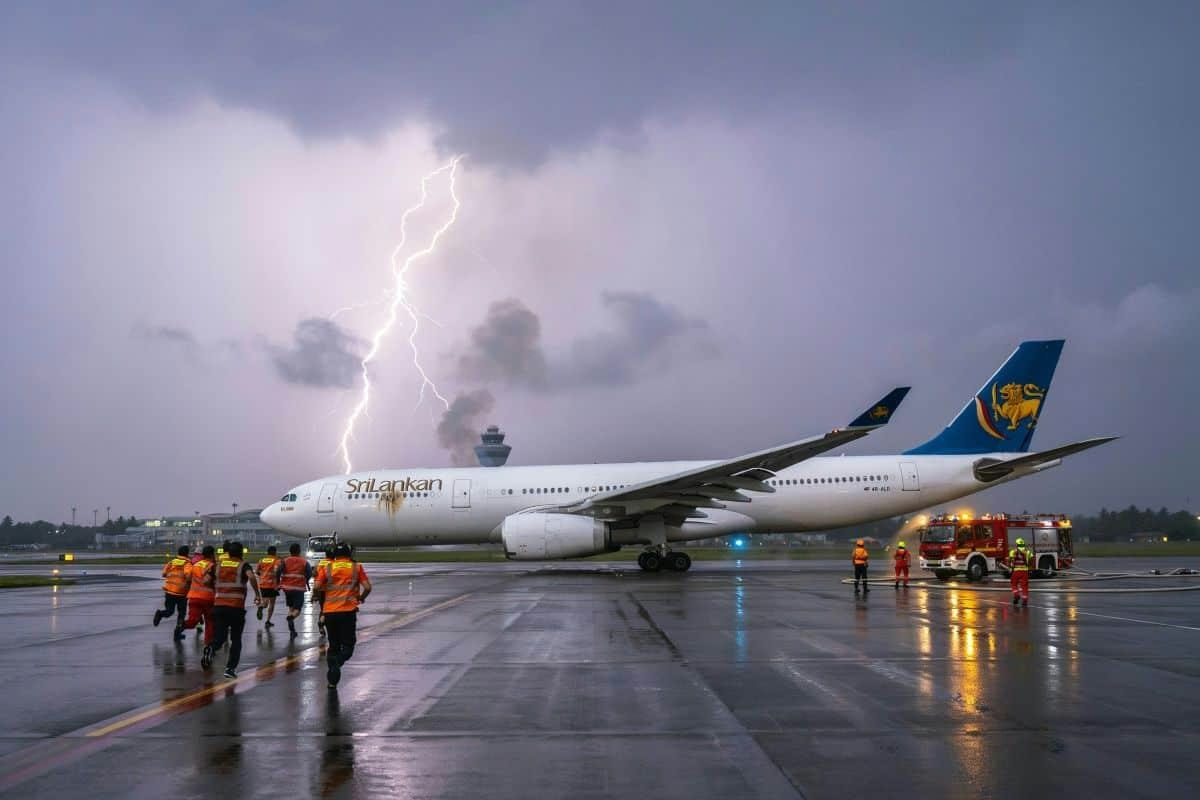
Lightning Strike Triggers Engine Fire on SriLankan Airlines A330, Prompting Mid-Air Return
A SriLankan Airlines Airbus A330-200 operating flight UL606 from Colombo to Sydney was compelled to return to Bandaranaike International Airport on June 12 following an engine fire reportedly caused by a lightning strike shortly after takeoff. The aircraft, carrying 207 passengers and 16 crew members, landed safely without any injuries.
Incident Details and Immediate Response
The event attracted widespread attention after videos and images circulated on social media, showing flames near the aircraft’s right engine during its initial climb. SriLankan Airlines confirmed the safe return of the aircraft and announced that a replacement plane was dispatched, enabling passengers to continue their journey to Sydney later that morning.
The aircraft involved was identified by the Aviation Safety Network as an Airbus A330-243, registration 4R-ALH, equipped with two Rolls-Royce Trent 772B-60 engines. Built in 2004, the jet features a configuration of 18 business-class and 252 economy-class seats and forms a key component of the airline’s long-haul fleet, servicing routes across Asia, Australia, Europe, and the Middle East.
Investigation and Industry Context
Sri Lanka’s civil aviation authorities confirmed that the incident occurred while the flight was still within national airspace. An investigation is underway to determine the precise circumstances surrounding the lightning strike and the extent of any resulting damage. Officials emphasized that comprehensive inspections are standard protocol following such events to ensure the aircraft’s airworthiness before it returns to service.
Commercial aircraft are designed to withstand lightning strikes, which industry data suggests typically affect an airliner once every one to two years. Normally, the electrical current passes safely through designated pathways in the airframe. However, the visible flames and sparks observed in this case highlight the critical importance of thorough post-flight inspections to identify any concealed damage.
The incident has prompted heightened scrutiny of airline safety protocols and may lead to insurance claims as part of the aviation industry’s response. Competitors are expected to monitor similar occurrences closely and may adjust maintenance schedules to mitigate associated risks. Furthermore, the event underscores the ongoing significance of technological advancements in aviation safety. Recent collaborations, such as those between Lufthansa Technik and Airbus, have explored innovations like drag-reduction films on A330 wings and tail surfaces, aiming to improve both safety and operational efficiency.
As the investigation proceeds, SriLankan Airlines and aviation authorities remain focused on ensuring passenger safety and maintaining confidence in long-haul operations. The airline’s prompt response and adherence to established safety procedures have been recognized as vital in managing the situation and minimizing disruption for travelers.

Etihad Airways Suspends Airbus A380 Flights on Key Route

Aditya Birla Group Seeks Approval for Aircraft Leasing in GIFT City

Qatar Airways Highlights Innovation and Connectivity at Arabian Travel Market 2026

Hong Kong's Five-Year Plan Includes Andrew Fan's Aircraft Parts Processing Hub Proposal

ACIA Aero Leasing Delivers ATR72-600 to Air Nostrum

RTX Appoints Jill Albertelli as Head of Pratt & Whitney

TAT Technologies Joins Beyond Aero Hydrogen Aircraft Program

AURAK Study Highlights Barriers to Air Taxi Adoption in Emerging Economies

Xiamen Air Selects Altitude for 787 Maintenance at Heathrow

Etihad and Swissport Extend Global Partnership
