
Orchestrate AI insights into action

Trending
Categories
Lockheed Martin Advances Laser Powder Bed Fusion for Thermal Management in Hypersonic and Aircraft Systems
Lockheed Martin Advances Laser Powder Bed Fusion for Thermal Management in Hypersonic and Aircraft Systems
Lockheed Martin is accelerating the integration of laser powder-bed fusion (LPBF) additive manufacturing to improve thermal management in next-generation aircraft, hypersonic systems, and electric propulsion platforms. This strategic initiative is designed to enhance supply chain resilience and shorten design-to-flight timelines for critical aerospace components, particularly those tasked with managing the intense heat generated by advanced electronics and propulsion systems.
Transforming Thermal Management Through Additive Manufacturing
Historically, thermal management components have been produced using traditional methods such as casting, forging, and brazing, followed by extensive machining to meet rigorous aerospace standards. These conventional manufacturing processes often result in supply chain bottlenecks due to prolonged raw material lead times, alloy shortages, and disruptions caused by geopolitical factors. In contrast, LPBF additive manufacturing constructs metal parts layer by layer without requiring costly tooling, enabling precise small-batch production and significantly faster development cycles.
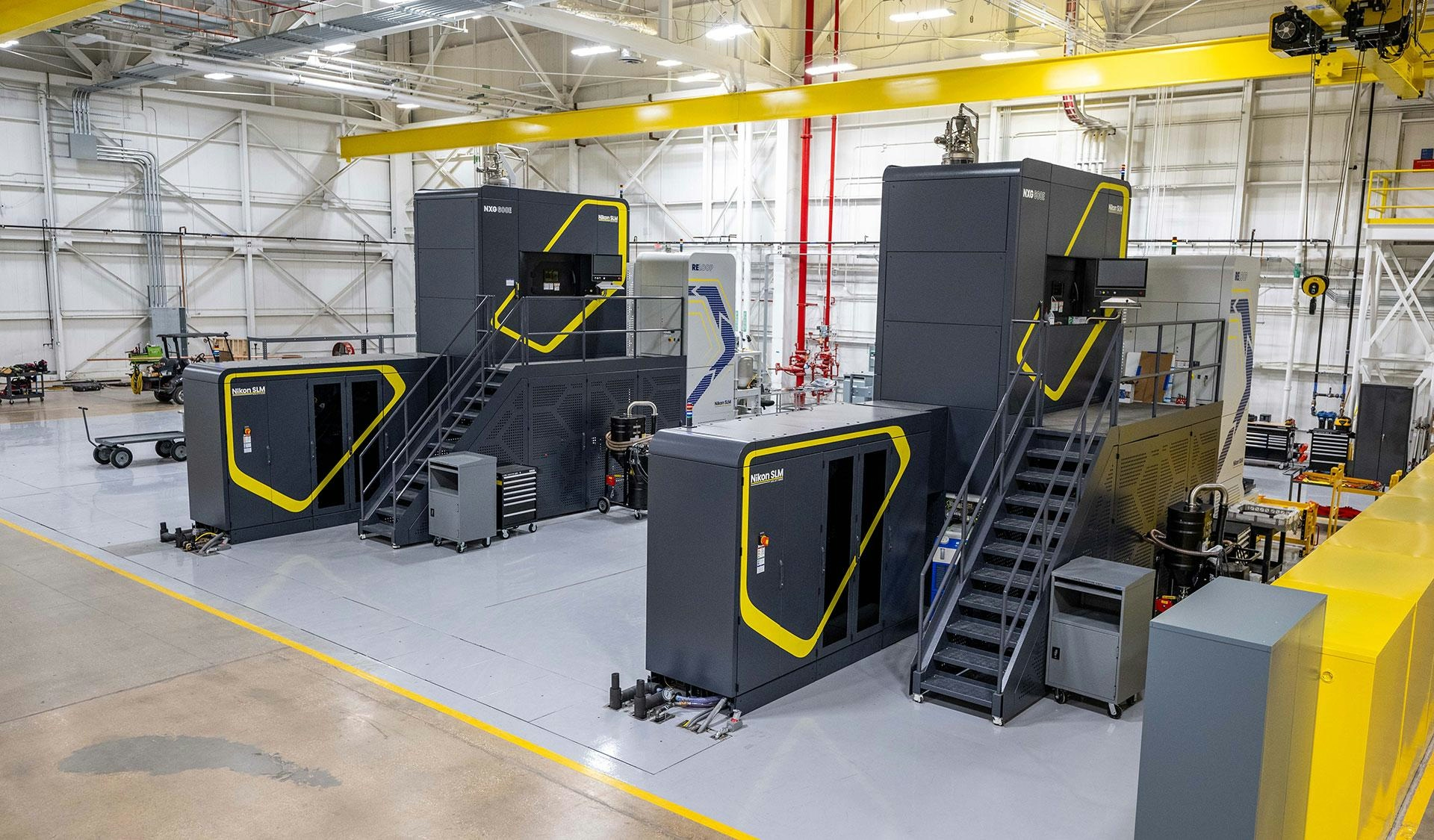
In 2024, Lockheed Martin’s Missiles and Fire Control division inaugurated a 16,000-square-foot additive manufacturing center in Texas. This facility houses some of the state’s largest multi-laser machines alongside advanced heat treatment and inspection equipment, supporting rapid prototyping and production of additively manufactured parts across the corporation.
Collaborative Ecosystem Driving Innovation
Lockheed Martin’s advancements are bolstered by partnerships with industry leaders including Sintavia, EOS, Nikon SLM Solutions, and nTop. David Tatro, vice president of Operations Transformation, highlighted that combining Lockheed Martin’s LPBF expertise with the specialized capabilities of these partners has established an end-to-end ecosystem that accelerates design-to-flight timelines without compromising reliability. This collaborative approach is tailored to meet the stringent thermal management requirements of advanced aerospace platforms while ensuring certification and operational readiness.
The collaboration with nTop has been particularly impactful, enabling Lockheed Martin to utilize generative design and optimization tools that have yielded a 15 to 20 percent reduction in overall system weight and a 10 to 15 percent increase in heat dissipation efficiency. Christopher Yakacki, Ph.D., principal of Research Engineering, AMT, explained that nTop’s parametric modeling capabilities optimize both performance and manufacturability, reducing decision and iteration times from months to minutes.
Partnerships with EOS and Sintavia have led to the development of new LPBF processing windows and customized tool path strategies, pushing the limits of feature resolution and manufacturability. The implementation of process-controlled tool paths and real-time melt pool monitoring has enhanced assembly tolerances and build efficiency. Furthermore, the integration of third-party sensor systems and AI-enabled analysis facilitates early defect detection, reducing the burden of post-processing inspections through real-time data acquisition and computed tomography.
Challenges and Market Dynamics
Despite these technological advancements, Lockheed Martin faces considerable challenges, including the high costs and technical complexities associated with developing and integrating novel manufacturing technologies. Regulatory and safety standards for new materials and processes may also pose significant hurdles. Market reactions remain fluid, with competitors expected to enhance their own manufacturing capabilities or pursue strategic partnerships in response. Lockheed Martin is actively seeking contracts and collaborations to sustain its technological momentum, a strategy that may influence broader market dynamics and competitive responses within the aerospace and defense sectors.

Etihad Airways Suspends Airbus A380 Flights on Key Route

Aditya Birla Group Seeks Approval for Aircraft Leasing in GIFT City

Qatar Airways Highlights Innovation and Connectivity at Arabian Travel Market 2026

Hong Kong's Five-Year Plan Includes Andrew Fan's Aircraft Parts Processing Hub Proposal

ACIA Aero Leasing Delivers ATR72-600 to Air Nostrum

RTX Appoints Jill Albertelli as Head of Pratt & Whitney

TAT Technologies Joins Beyond Aero Hydrogen Aircraft Program

AURAK Study Highlights Barriers to Air Taxi Adoption in Emerging Economies

Xiamen Air Selects Altitude for 787 Maintenance at Heathrow

Etihad and Swissport Extend Global Partnership
