
Orchestrate AI insights into action

Trending
Categories
Marine Equipment Center Resells Engines to Russian Airlines, Evading Sanctions
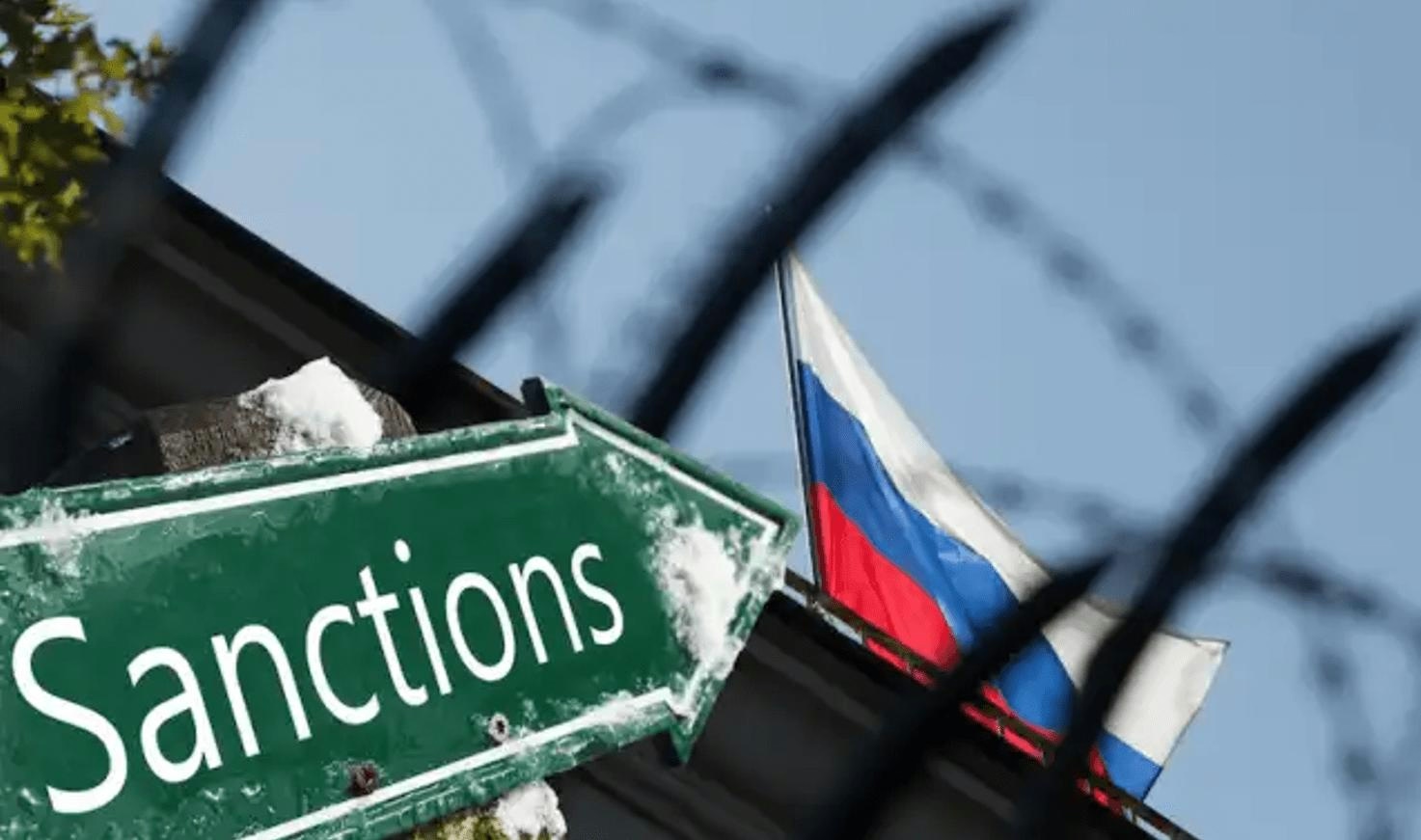
Indian Firm Resells Airbus Engines to Russian Airlines, Evading Sanctions
Circumventing Sanctions Through Complex Transactions
An Indian company, Marine Equipments Centre Pvt. Ltd. (MEC), headquartered in Kochi, has come under international scrutiny for reselling two Airbus aircraft engines to a Russian airline, effectively bypassing Western sanctions and explicit contractual prohibitions. MEC acquired two CFM56-5B engines—critical components for the Airbus A320 family—from Luxembourg-based Vallair Asset Solutions for approximately $17 million. Within just two months, these engines were transferred to Rossiya Airlines JSC, a subsidiary of Aeroflot, for around $24 million. This transaction yielded MEC a profit of roughly $7 million, or 41%, in less than 60 days.
The resale directly contravened contract clauses that forbade re-export to Russia, a restriction designed to uphold sanctions imposed following Russia’s invasion of Ukraine. Despite these clear limitations, MEC proceeded with the sale, facilitated by Aman Aviation & Aerospace Solutions Pvt. Ltd., an Indian intermediary. This case exemplifies the ongoing difficulties in enforcing sanctions on Russia’s aviation sector.
The Broader Context of Sanctions Evasion
As of April 30, 2026, Russian airlines continued to operate a fleet of 460 Airbus and Boeing aircraft, nearly matching pre-sanctions levels from 2021. Rather than grounding their aircraft, Russian carriers have relied heavily on an extensive network of intermediaries spanning India, Turkey, the United Arab Emirates, and Kazakhstan to procure essential parts and equipment. Trade data indicates that at least 30 exporters, including several Indian firms, have persisted in supplying aviation components to Russia, often at substantial markups.
MEC’s chairman, Ajay Kumar, stated that the company ceased Russia-related transactions following directives from Indian authorities. However, MEC is not an isolated case; other Indian companies such as Chandsara Aviation and Shreegee have also exported parts to entities affiliated with Aeroflot and the S7 Group, generating millions in profits.
Challenges and Industry Responses
This incident highlights the complex environment companies face when navigating tightened international sanctions, particularly those targeting the shipping and aviation industries. Firms like MEC must manage evolving regulations, heightened scrutiny from global regulators, and the risk of reputational damage or sanctions from international partners. In response to such breaches, Western suppliers including FTAI Aviation and Vallair have intensified compliance measures to close loopholes exposed by these transactions.
Competitors are adapting by seeking alternative supply chains and implementing more rigorous compliance protocols to avoid similar violations. Meanwhile, geopolitical tensions continue to influence the industry’s landscape. For instance, the United Kingdom’s recent decision to permit imports of diesel and jet fuel refined from Russian crude under a sanctions carve-out underscores the ongoing complexities and inconsistencies in global enforcement.
As Western authorities tighten controls, the aviation sector faces increasing pressure to ensure compliance. Nevertheless, the persistence of intermediary networks demonstrates that the sanctions pipeline remains difficult to fully obstruct.

Etihad Airways Suspends Airbus A380 Flights on Key Route

Aditya Birla Group Seeks Approval for Aircraft Leasing in GIFT City

Qatar Airways Highlights Innovation and Connectivity at Arabian Travel Market 2026

Hong Kong's Five-Year Plan Includes Andrew Fan's Aircraft Parts Processing Hub Proposal

ACIA Aero Leasing Delivers ATR72-600 to Air Nostrum

RTX Appoints Jill Albertelli as Head of Pratt & Whitney

TAT Technologies Joins Beyond Aero Hydrogen Aircraft Program

AURAK Study Highlights Barriers to Air Taxi Adoption in Emerging Economies

Xiamen Air Selects Altitude for 787 Maintenance at Heathrow

Etihad and Swissport Extend Global Partnership
