
Orchestrate AI insights into action

Trending
Categories
Military Falcon Aircraft Experiences Dual Engine Failure in Icing Conditions
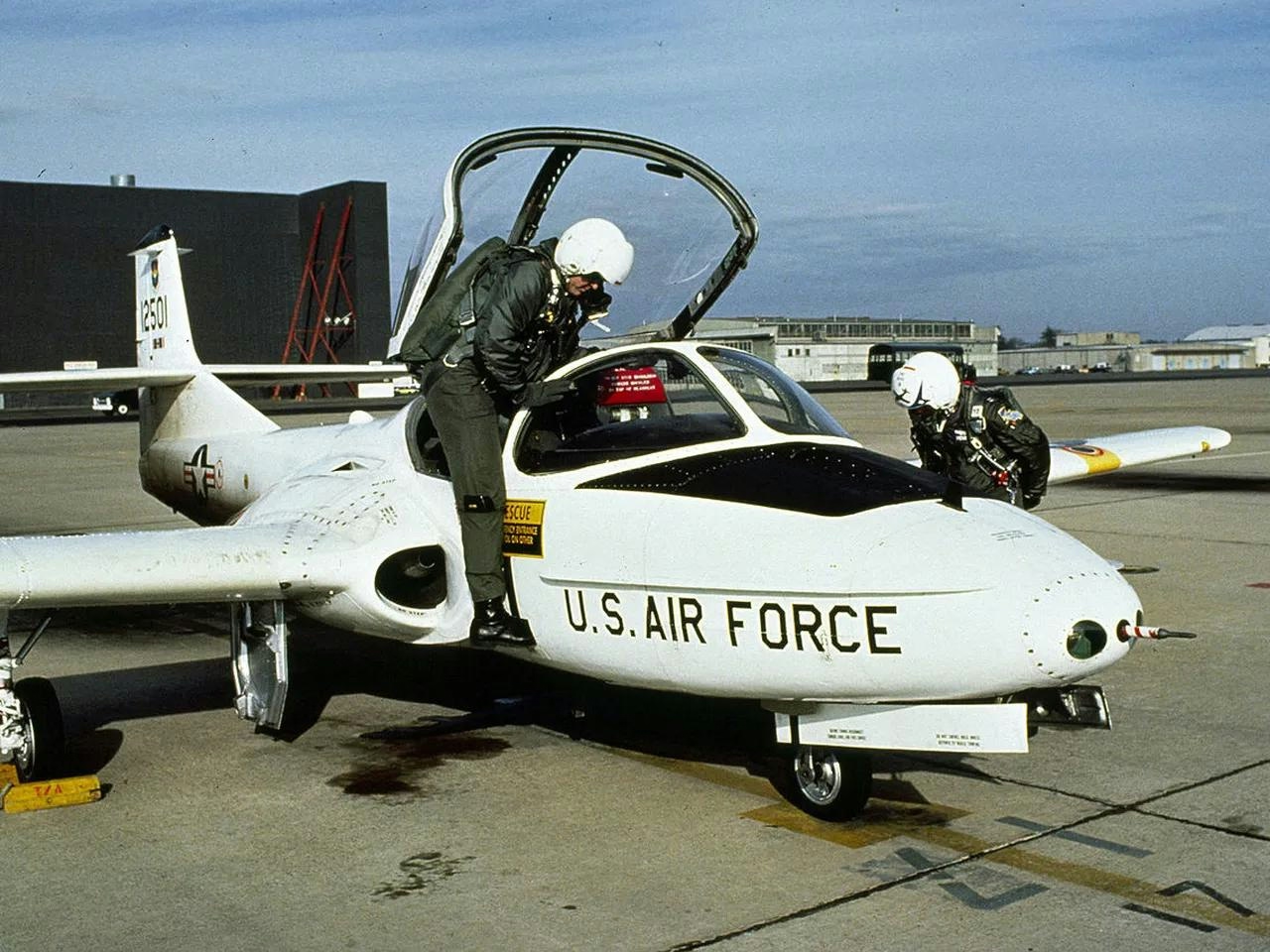
Military Falcon Aircraft Experiences Dual Engine Failure in Icing Conditions
Incident Overview and Immediate Response
Hungarian aviation authorities are conducting an investigation into a significant incident involving a Dassault Falcon 20 business jet that suffered dual engine malfunctions while participating in a NATO military exercise. The event took place on 24 March and has raised serious concerns regarding aircraft performance under adverse weather conditions and the effectiveness of existing anti-icing systems.
Preliminary reports from France’s Bureau d’Enquêtes et d’Analyses (BEA) indicate that the Falcon 20, registered as F-GPAD and operated by Aviation Defense Service, was ascending through 11,000 feet en route to 13,000 feet when it encountered icing conditions. The flight crew activated the anti-icing system on the left-hand GE Aerospace CF700 engine, which immediately produced a loud bang and shut down before restarting. Shortly thereafter, as the climb continued, the anti-icing system was engaged on the right-hand engine, which experienced a rapid loss of power accompanied by compressor stall symptoms, leading to a shutdown within five seconds.
The crew promptly followed the in-flight engine failure checklist and issued an urgency call. They successfully returned to their departure airfield in Kecskemet, Hungary, without further incident. Aviation Defense Service, the operator, is known for providing support to armed forces through target towing and electronic warfare training.
Industry and Regulatory Implications
The incident has attracted the attention of aviation regulators, who are expected to conduct a thorough review of the Falcon 20’s anti-icing systems and overall reliability in challenging weather conditions. This scrutiny may result in delays to certification processes for the aircraft and could trigger a wider reassessment of anti-icing technologies across the aviation industry.
Market reactions have reflected increased investor apprehension about the reliability of Dassault’s aircraft in adverse environments. Competitors within the sector may leverage this opportunity to emphasize the resilience of their own anti-icing systems and intensify internal evaluations of their fleets’ performance under similar conditions.
As the investigation progresses, the primary focus remains on identifying the root causes of the dual engine failure and ensuring that safety standards are rigorously maintained for all aircraft operating in demanding operational environments.

Etihad Airways Suspends Airbus A380 Flights on Key Route

Aditya Birla Group Seeks Approval for Aircraft Leasing in GIFT City

Qatar Airways Highlights Innovation and Connectivity at Arabian Travel Market 2026

Hong Kong's Five-Year Plan Includes Andrew Fan's Aircraft Parts Processing Hub Proposal

ACIA Aero Leasing Delivers ATR72-600 to Air Nostrum

RTX Appoints Jill Albertelli as Head of Pratt & Whitney

TAT Technologies Joins Beyond Aero Hydrogen Aircraft Program

AURAK Study Highlights Barriers to Air Taxi Adoption in Emerging Economies

Xiamen Air Selects Altitude for 787 Maintenance at Heathrow

Etihad and Swissport Extend Global Partnership
