Image

Orchestrate AI insights into action

Join the AeroGenie waitlist today!

Trending

Categories

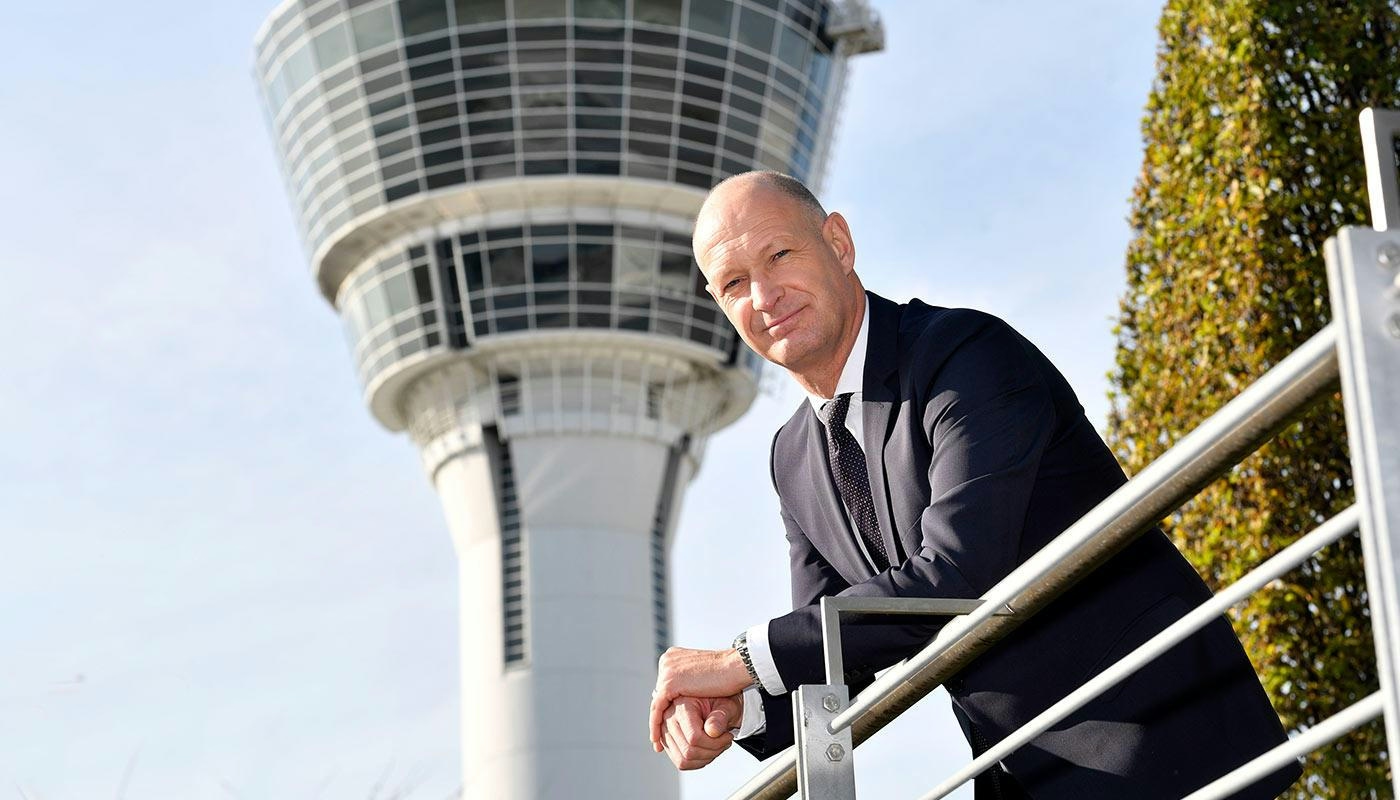
Munich Airport CEO Jost Lammers Named Chair of ACI World Governing Board
January 12, 2026By ePlane AI
Munich Airport CEO Jost Lammers Named Chair of ACI World Governing Board
0
0
Munich Airport
ACI World Governing Board
Airport Leadership

Munich Airport CEO Jost Lammers Appointed Chair of ACI World Governing Board

Jost Lammers, the Chief Executive Officer of Munich Airport, has been named Chair of the Airports Council International (ACI) World Governing Board for the 2026–2027 term. This appointment comes at a critical juncture for the global aviation sector, as the industry navigates profound transformation. Lammers is widely recognized for his extensive leadership experience in airport operations, with a strong emphasis on innovation and sustainability.

Leadership Transition and Board Role

Lammers succeeds Candace McGraw, the retired CEO of Cincinnati/Northern Kentucky International Airport (CVG), who notably was the first woman to chair the ACI World Governing Board. McGraw’s tenure was marked by enhanced global advocacy and strategic initiatives that supported airports through challenging periods, leaving a significant legacy within the organization.

The ACI World Governing Board, composed of 28 airport CEOs nominated by ACI’s five regional bodies, holds a pivotal role in shaping global airport policy. Its decisions impact critical areas such as sustainability, safety, operational efficiency, and technological advancement. As Chair, Lammers will be responsible for steering the board through a volatile operating environment characterized by ongoing post-pandemic recovery, supply-chain disruptions, and technical challenges such as engine reliability issues. These factors, recently highlighted by Air Canada’s network planning adjustments, have intensified scrutiny on industry leadership and underscored the need for resilient and adaptable strategies.

Experience and Vision

Lammers brings considerable expertise to his new position. He has been a member of the ACI World Governing Board since 2019 and served as Vice Chair for the 2024–2025 term. His leadership at ACI EUROPE, where he was President in 2019, was instrumental in guiding European airports through the COVID-19 crisis and fostering enhanced regional collaboration. Since January 2020, Lammers has led Munich Airport, one of Europe’s premier international hubs, with a focus on service excellence, innovation, and sustainable development. Prior to this, he was CEO of Budapest Liszt Ferenc Airport, overseeing significant modernization and expansion projects, and served as President of the German Aviation Association (BDL).

Looking forward, Lammers is expected to prioritize initiatives addressing the aviation industry’s most urgent challenges, including accelerating digital transformation and advancing sustainability objectives. His leadership will be crucial in ensuring that airports remain innovative, resilient, and sustainable amid ongoing global uncertainties.

With Lammers at the helm, ACI World embarks on a new chapter defined by both opportunity and heightened expectations as the aviation sector adapts to a rapidly evolving landscape.

More news
Controversial Aircraft: Crashes, Groundings, and Investigations

Controversial Aircraft: Crashes, Groundings, and Investigations

Controversial Aircraft: Crashes, Groundings, and Investigations Commercial aviation is widely recognized as one of the safest modes of transportation. According to the International Air Transport Association’s (IATA) 2025 safety report, there were only 51 accidents recorded across 38.7 million flights, equating to approximately one accident per 760,000 flights. Fatal accidents are even more infrequent, with just eight incidents reported, or roughly one fatal accident per five million flights. However, when tragedies do occur, they often reveal deeper systemic issues within the aviation industry. The sudden disappearance of a routine flight from radar triggers extensive investigations, relying on wreckage analysis, flight data, and maintenance records to reconstruct the events. Such incidents inevitably raise the question: how could this have happened? Certain aircraft, once celebrated as milestones of technological advancement, have become emblematic of controversy. These planes promised unprecedented speed, comfort, and a new era of air travel, yet they exposed critical design flaws, ignored warnings, and regulatory oversights. In some instances, the signs of impending disaster were apparent well before accidents occurred, prompting uncomfortable scrutiny of industry oversight and corporate decision-making. The Comet: Triumph and Tragedy in the Jet Age The de Havilland Comet, the world’s first commercial jet airliner, symbolized postwar optimism and innovation. It offered higher altitudes, faster speeds, and smoother flights than any previous airliner, briefly positioning Britain as a leader in the emerging jet age. However, this promise was shattered in the early 1950s. On January 10, 1954, BOAC Flight 781 disintegrated mid-flight near Elba shortly after departing Rome. Less than three months later, South African Airways Flight 201 crashed into the sea near Naples. Both accidents involved aircraft operating under normal conditions, indicating that the cause was internal rather than external. Subsequent investigations uncovered a catastrophic design flaw: the Comet’s pressurized fuselage was susceptible to metal fatigue. Repeated pressurization cycles caused cracks to develop at the corners of the aircraft’s square windows, ultimately leading to structural failure after approximately 16,000 cycles. This revelation forced the aviation industry to confront the unprecedented risks associated with high-altitude jet travel, particularly the effects of repeated pressurization on aircraft integrity. The Comet’s failures fundamentally altered aircraft design and safety standards, serving as a sobering lesson on the consequences of unchecked technological ambition. Ongoing Industry Challenges: Groundings, Investigations, and Market Responses The legacy of controversial aircraft continues to influence the aviation sector today. Recent years have witnessed an increase in near-mid-air collisions and fatal accidents, prompting intensified scrutiny of safety protocols. Airlines such as Volaris have responded by pausing fleet expansion plans amid aircraft groundings and escalating fuel costs. Concurrently, regulatory investigations—like the International Trade Commission’s inquiry into Joby Aviation’s trade practices, which has raised concerns from major carriers including Delta—highlight the complex relationship between regulation, competition, and innovation. The industry’s often reactive stance toward safety incidents underscores the enduring tension between technological progress and operational risk. Meanwhile, corporations like Textron are undertaking strategic restructuring, such as divesting their industrial divisions, to adapt to evolving market conditions shaped by government funding priorities and international business uncertainties. Historically, the most controversial aircraft have not merely represented technological failures; they have acted as catalysts for reform, compelling the aviation industry to confront the true costs of advancement. As the sector continues to evolve, the lessons drawn from past crises remain essential reminders that safety, transparency, and vigilance must remain paramount.
Malaysia and Singapore Deepen Aerospace Collaboration with New Widebody Maintenance Hub in Subang

Malaysia and Singapore Deepen Aerospace Collaboration with New Widebody Maintenance Hub in Subang

Malaysia and Singapore Deepen Aerospace Collaboration with New Widebody Maintenance Hub in Subang A Landmark Development in Southeast Asia’s Aerospace Sector The aerospace industry in Southeast Asia has reached a significant milestone with the inauguration of a cutting-edge widebody aircraft maintenance facility in Malaysia. Established by SIA Engineering Company (SIAEC), a prominent provider of maintenance, repair, and overhaul (MRO) services, the new Base Maintenance Malaysia center is located at Sultan Abdul Aziz Shah Airport in Subang. This facility marks a pivotal advancement in regional engineering capabilities and exemplifies strengthened cross-border cooperation between Malaysia and Singapore. Spanning approximately 590,000 square feet, the facility boasts two expansive hangars capable of accommodating up to six widebody aircraft simultaneously. This considerable capacity supports a broad spectrum of services, ranging from routine maintenance checks to complex structural overhauls and sophisticated cabin retrofits. The center’s operational capabilities were showcased with the induction of a Singapore Airlines Airbus A350-900 for its inaugural scheduled C-check, symbolizing a new era of high-volume maintenance as international air travel experiences a resurgence across the Asia-Pacific region. Strategic Expansion and Regional Implications By situating advanced aviation infrastructure and specialized engineering expertise within Malaysia, SIAEC is extending its operational reach beyond its traditional base at Singapore Changi Airport. This strategic expansion not only enhances the company’s footprint but also reinforces industrial ties between the two nations. The timing of this development aligns with the increasing maintenance demands of global carriers operating next-generation long-haul aircraft such as the Airbus A350, Boeing 777, and Boeing 787 Dreamliner. These technologically sophisticated fleets require advanced tooling, certified technicians, and stringent regulatory oversight—capabilities now accessible locally to reduce aircraft downtime and optimize fleet utilization. Despite the promising prospects, the collaboration faces considerable challenges. The regional MRO market is intensely competitive, with established hubs in the Middle East and other parts of Southeast Asia actively vying for market share. While the Subang facility is anticipated to attract further investment, questions persist regarding the long-term economic viability and sustainability of such large-scale projects. Industry analysts observe that competitors may respond with strategic expansions or partnerships, as evidenced by recent moves such as VSE’s acquisition of Precision Aviation Group and Steiner Aviation’s facility growth targeting midsize jets. Outlook for the Asia-Pacific MRO Industry The Asia-Pacific MRO sector is projected to experience robust growth, which will inevitably heighten competition and influence the operational strategies of both Malaysia and Singapore. The success of the Subang hub will largely depend on its ability to deliver efficient turnaround times, maintain rigorous safety standards, and adapt to shifting market conditions. The establishment of this widebody maintenance center in Subang represents both an opportunity and a challenge for the aerospace ambitions of Malaysia and Singapore. It underscores the region’s commitment to advancing aviation infrastructure while highlighting the competitive pressures and strategic decisions that will shape the future of aerospace collaboration in Southeast Asia.
Taiwan’s AI Growth Boosts China Airlines’ Cargo Profits

Taiwan’s AI Growth Boosts China Airlines’ Cargo Profits

Taiwan’s AI Boom Drives China Airlines’ Cargo Profit Surge The rapid expansion of artificial intelligence (AI) infrastructure is transforming global logistics, with Taiwan emerging as a pivotal hub in the international supply chain. China Airlines, Taiwan’s flagship carrier, has reported record-breaking cargo profits amid soaring demand for the expedited transport of AI hardware and components. This surge reflects the growing need for swift and reliable delivery of sensitive electronics essential to powering modern AI applications. Rising Demand for AI Components Fuels Air Freight Growth The global rollout of high-performance computing systems, increased investments in data centers, and the widespread adoption of deep learning frameworks have significantly heightened the urgency for rapid shipment of critical components. Air freight has become the preferred mode of transport over maritime shipping, particularly for high-value items such as silicon wafers, advanced microchips, GPUs, and memory modules. Delays in delivering these components can lead to substantial financial losses for technology manufacturers, underscoring the importance of timely logistics. China Airlines has effectively capitalized on this trend by optimizing its wide-body freighter fleet and refining cargo routes that connect Asia’s manufacturing hubs with key markets in North America and Europe. The airline has also maximized the use of belly cargo space on passenger flights to accommodate overflow shipments, thereby enhancing operational efficiency and sustaining premium freight rates. To safeguard delicate semiconductor cargo, specialized transport conditions—including climate control and vibration mitigation—have become standard practice. Intensifying Competition Amid Shifting Market Dynamics Despite China Airlines’ strong position, the competitive landscape is evolving rapidly. Taiwan’s dominance in the AI server ecosystem faces challenges from companies such as Foxconn Industrial Internet (FII), which has reported robust profit growth driven by soaring demand for AI GPUs and ASICs. Simultaneously, industry leaders like Broadcom and Nvidia are advancing system integration technologies, intensifying competition to upgrade data center network architectures. While hyperscale cloud providers continue to invest heavily in AI infrastructure, rising costs have led to mixed market reactions and divergent investor sentiment regarding AI-related expenditures. On the supply side, Chinese memory chip manufacturers, including YMTC and CXMT, are expanding production capacity, potentially altering global supply dynamics and influencing the flow of AI components. In the air cargo sector, Air China Cargo’s recent order for four additional A350 freighters signals a strategic effort to capture a larger share of the lucrative electronics transport market, directly challenging China Airlines’ cargo operations. Nevertheless, China Airlines’ extensive logistical expertise and strategic fleet management have positioned the carrier to benefit from the ongoing AI-driven boom. Its ability to meet stringent shipping requirements and integrate seamlessly with global supply chains has translated into improved yields and sustained financial performance. As the AI revolution accelerates, the interplay between technological innovation, supply chain logistics, and competitive maneuvering will continue to shape the prospects of carriers like China Airlines, redefining the global air cargo landscape.
Aircraft Leasing Industry Does Not Prioritize Sustainable Aviation

Aircraft Leasing Industry Does Not Prioritize Sustainable Aviation

Aircraft Leasing Industry Does Not Prioritize Sustainable Aviation Sustainability Remains a Low Priority Among Executives A recent report from Deloitte Ireland reveals that sustainability is not a primary focus for most executives in Ireland’s aircraft leasing sector. The 2026 Aviation Finance Leaders Survey, which collected insights from senior industry leaders, indicates that zero and low-emission aircraft are largely absent from current strategic priorities despite increasing global demands for greener aviation solutions. Ireland holds a dominant position in the global aircraft leasing market, with 19 of the world’s top 20 lessors based in the country and Irish firms managing approximately 60% of the leased fleet worldwide. Nevertheless, the survey found that only 55% of executives have incorporated zero or low-emission aircraft into their strategies. Among these, a mere 5% expect to deploy such aircraft within the next five years, while 36% anticipate this transition may take a decade or longer. Although half of the respondents are tracking developments in sustainable aviation fuel (SAF) and low- or zero-emission aircraft, they currently lack concrete investment plans. Industry Challenges and Limited Investment in Sustainable Technologies The report further highlights a surprising disconnect between the industry’s awareness of environmental regulations and its response. None of the surveyed executives identified environmental compliance or sustainability mandates as significant challenges. Investment intentions in SAF or helicopter-related sustainable opportunities remain low, with only 9% planning to allocate resources over the next three years. This cautious stance persists despite widespread expectations of increased airline defaults and restructurings in the coming two years, driven by volatile fuel prices, geopolitical instability, and fragile airline financials. Ron Doyle, a Deloitte partner with nearly two decades of experience advising the sector, acknowledged the Irish government’s Sustainable Aviation Fuel Policy Roadmap as a positive development but stressed the need for enhanced support to stimulate SAF production and adoption. Doyle emphasized that further incentives for SAF training and education, some of which are already emerging in Irish universities and leasing firms, could accelerate progress. He also pointed to the potential impact of more accessible research and development tax credits in encouraging investment in SAF technologies. Doyle noted that the current fuel crisis underscores the growing importance of alternative fuels, despite the immature supply chains and challenging economics surrounding SAF. Risks and Outlook for the Leasing Sector The industry’s slow advancement on sustainability issues exposes it to multiple risks. Increasing regulatory pressure to reduce carbon emissions could lead to financial penalties for non-compliance, while reputational damage may arise if the sector is perceived as lagging in climate action. Investor preferences are shifting toward companies with robust sustainability credentials, potentially increasing capital costs for leasing firms that fail to adapt. At the same time, competitors investing in sustainable technologies may secure a competitive edge. Despite these challenges, the survey found that 68% of executives are more optimistic about their company’s financial outlook compared to the previous year, with 27% expressing slight pessimism. David McCaffrey, head of aviation finance and leasing services at Deloitte Ireland, highlighted the sector’s resilience amid external shocks such as the Covid-19 pandemic, supply chain disruptions, and geopolitical crises. However, the report suggests that resilience alone may not suffice as the industry confronts mounting pressure to embrace sustainable aviation practices.
Expanding Operations to Support Future Innovation

Expanding Operations to Support Future Innovation

Expanding Operations to Support Future Innovation From Humble Beginnings to Industry Recognition Founded in 2009 in the Czech Republic by aviation veterans Milan and Martin Bristella, Bristell has grown into a prominent manufacturer of custom-built aircraft. The company’s initial product, the Bristell LSA Classic, was designed as a light sport aircraft and quickly earned recognition within the global aviation market. Building on this foundation, Bristell introduced the Bristell RG, a retractable gear variant that enhanced speed and operational complexity to meet the demands of more advanced pilots. This evolution from a single entry-level model to a diversified product line exemplifies Bristell’s scalable engineering philosophy, which allows its core platforms to be adapted for varying performance needs and underscores the company’s commitment to customization. Customization as a Core Business Strategy Customization remains central to Bristell’s approach, particularly within the light sport aircraft segment, which is regulated to a maximum weight of 600 kilograms and typically accommodates two passengers. The company employs a modular design strategy that enables customers to choose from multiple engine options, a spectrum of avionics ranging from traditional analog instruments to fully digital glass cockpits, and extensive interior personalization. This approach allows Bristell to deliver tailored aircraft without sacrificing production efficiency, distinguishing the company in a market where buyers are highly engaged and value the ability to influence both design and performance specifications. Expanding Operations in Mexico: Opportunities and Challenges Bristell’s expansion into Mexico highlights both the potential and complexities of operating in a dynamic global market. Mexico ranks third worldwide in general aviation activity, trailing only the United States and Brazil, and offers a substantial base of prospective customers. The company’s supply chain is truly global: fuselage components are sourced locally in Mexico, engines are supplied by Rotax in Austria, and avionics come from Garmin in the United States, supplemented by parts from various other countries. While demand is primarily domestic, it closely mirrors North American aviation trends. Flight schools, which have traditionally relied on aging fleets such as the Cessna 152, have emerged as a key customer segment seeking modern, cost-effective training aircraft. Between 2022 and 2025, Bristell scaled its Mexican operations to deliver 12 aircraft, a significant accomplishment for a new entrant in this specialized market. Regulatory challenges were considerable, as outdated frameworks initially classified these aircraft as experimental. After two years of navigating complex certification processes, Bristell secured the necessary approvals to deploy its aircraft in flight schools, establishing a vital revenue stream. The company also invested approximately MX$15 million (US$880,000) in a new facility at Laguna Seca Puerto Aéreo to support ongoing growth. Navigating Industry Challenges Amid Expansion Despite these successes, Bristell’s expansion and innovation efforts are influenced by broader industry challenges. Geopolitical conflicts pose risks to both demand and supply chains, while cybersecurity threats and the availability of raw materials remain persistent concerns. The company must also contend with competition, tariffs, trade restrictions, and economic fluctuations, including rising input costs and currency exchange volatility. Expanding facilities introduces additional logistical and regulatory complexities. Furthermore, the aviation sector faces increasing scrutiny regarding sustainability, cybersecurity, and technological advancement, compelling Bristell to maintain agility and foresight as it continues to innovate and expand its global presence.
American Airlines to Equip Over 500 Narrowbody Aircraft with Starlink

American Airlines to Equip Over 500 Narrowbody Aircraft with Starlink

American Airlines to Equip Over 500 Narrowbody Aircraft with Starlink American Airlines has announced a major enhancement to its inflight connectivity by planning to install Starlink satellite internet on more than 500 narrowbody aircraft. This initiative forms part of the airline’s broader modernization strategy aimed at improving the passenger experience, particularly on domestic and short-haul international routes where demand for reliable, high-speed internet continues to rise. Embracing Low Earth Orbit Satellite Technology The decision to adopt Starlink reflects a growing industry trend toward low Earth orbit (LEO) satellite systems, which offer faster, more reliable, and higher-capacity internet connections compared to traditional geostationary satellites. Developed by SpaceX, Starlink has already been selected by several prominent carriers worldwide, including Lufthansa Group, airBaltic, United Airlines, Qatar Airways, Hawaiian Airlines, Alaska Airlines, British Airways, Emirates, Air France, and WestJet. For instance, Lufthansa Group plans to equip approximately 850 aircraft with Starlink, with initial flights expected in the latter half of 2026. AirBaltic became the first European airline to provide free Starlink internet to passengers on its Airbus A220-300 fleet in early 2025. Unlike geostationary satellites positioned roughly 36,000 kilometers above Earth, which suffer from higher latency and limited bandwidth, Starlink’s constellation operates in much lower orbits. This proximity shortens signal paths, reduces latency, and increases bandwidth availability per aircraft. Consequently, inflight Wi-Fi is approaching the quality and responsiveness of ground-based internet, enabling passengers to stream content, engage in cloud-based work, and participate in video conferences with greater ease. Advancements in Inflight Connectivity Performance Comparisons of inflight internet performance underscore the rapid technological progress in this sector. Earlier satellite systems, such as those provided by Panasonic, offered average speeds up to 12 Mbps with peak rates near 20 Mbps. Panasonic’s latest LEO terminal, developed in partnership with Intellian, targets speeds up to 195 Mbps and latency below 100 milliseconds. Starlink, however, advertises speeds reaching 1 Gbps per antenna for aircraft, with Qatar Airways reporting speeds up to 500 Mbps on its fleet. Independent testing cited by The Verge found median download speeds of 152 Mbps on Starlink-equipped flights, significantly outperforming the 62 Mbps median speeds recorded on SES satellite systems. Starlink’s hardware also presents operational advantages. Traditional satellite antennas, typically housed beneath large aerodynamic radomes, add considerable weight and drag, with some installations weighing approximately 182 kilograms. In contrast, Starlink’s business aviation kit weighs less than 27 kilograms, offering potential reductions in fuel consumption and operational costs. Implementation Challenges and Market Impact Despite the clear benefits, American Airlines faces logistical and technical challenges in integrating Starlink technology across its extensive fleet. The airline must manage installation costs and address any technical issues that arise during deployment. Nevertheless, market response has been positive, with customers expressing satisfaction over improved inflight connectivity. Competitors such as United, Southwest, and Alaska Airlines have already adopted Starlink, positioning American Airlines among the leaders in advanced inflight Wi-Fi services. Through this upgrade, American Airlines aims to establish a new benchmark for inflight internet, responding to the growing passenger demand for high-speed, reliable connectivity in the skies.
2026 Aerium Innovation Summit Takes Place at Johnstown Airport

2026 Aerium Innovation Summit Takes Place at Johnstown Airport

2026 Aerium Innovation Summit Opens at Johnstown Airport The 2026 Aerium Innovation Summit commenced Wednesday morning at the Johnstown-Cambria County Airport, attracting aviation and aerospace professionals from across Pennsylvania to engage in discussions about the future of the sector. Now in its fourth year, the summit has established itself as a vital forum for promoting innovation, education, and workforce development within the aviation industry. Over the course of two days, participants will hear from regional and state leaders, engage in panels focused on emerging aviation technologies, and observe presentations from high school and college teams showcasing their latest projects. The event is designed to foster collaboration among industry leaders, educators, and policymakers, all working collectively to strengthen Pennsylvania’s aviation talent pipeline. Focus on Workforce Development Amid Industry Evolution This year’s summit arrives at a critical juncture for the aviation sector. Aerium partners have underscored the significance of workforce development, emphasizing that expanding training and educational opportunities is essential to driving job creation in aviation. The summit’s emphasis on workforce initiatives aligns with broader market trends, particularly the growing interest in drone technology and advanced air mobility. These advancements are anticipated to generate new employment opportunities and attract increased investment to the industry. Johnstown Airport manager Cory Cree highlighted the summit’s importance as a hub for networking and knowledge exchange. He remarked, “We have numerous aviation experts here speaking, and it’s just a great opportunity to network and to learn more about the upcoming aviation and advanced air mobility.” The event also takes place amid intensified global competition in the aviation sector. Airport expansions and international aviation summits—such as the proposed Ontario International Airport expansion and the CAPA Airline Leader Summits—reflect the rapid pace of industry evolution. Furthermore, regulatory changes, including slot restrictions in European business aviation and updated FAA protocols at San Francisco Bay Oakland International Airport, emphasize the ongoing need for innovation and adaptation, themes that are central to this year’s discussions. The summit is scheduled to conclude Thursday afternoon with closing remarks from U.S. Senator Dave McCormick, marking the culmination of an event aimed at positioning Pennsylvania at the forefront of aviation advancement and workforce readiness.
FAA Mandates SpaceX Mishap Investigation Before Starship Launches Resume

FAA Mandates SpaceX Mishap Investigation Before Starship Launches Resume

FAA Orders SpaceX Mishap Investigation, Halting Starship Launches The Federal Aviation Administration (FAA) has mandated that SpaceX conduct a thorough mishap investigation following the 12th flight of its Starship-Super Heavy rocket. This directive effectively suspends further launches until the investigation is completed and approved by the agency. The FAA’s decision follows a detailed review of the May 22 mission, which ended with the Super Heavy booster failing to perform the planned engine burns necessary for a controlled return, culminating in a hard splashdown in the Gulf of Mexico. Details of the Incident and Investigation Requirements The FAA classified the off-nominal performance of the Super Heavy booster, known as Booster 19, as a mishap under federal regulations. The agency emphasized that it will oversee the SpaceX-led investigation, participating in every stage of the process and retaining authority to approve the final report and any corrective measures. During the ascent, one of the 33 Raptor V3 engines on Booster 19 shut down approximately one minute and 42 seconds after liftoff. Shortly thereafter, SpaceX initiated a staggered shutdown of engines in preparation for stage separation, reducing active engines from 32 to five. Onboard telemetry indicated that several engines failed to reignite as planned for the boostback burn, leading to an early shutdown. Dan Huot, a member of SpaceX’s communications team, acknowledged during the company’s live broadcast that fewer booster engines ignited than expected for the boostback maneuver, though six engines remained operational on the ship. SpaceX later confirmed that the booster was unable to ignite all engines required for the boostback burn, resulting in a partial and prematurely terminated maneuver. The booster then attempted to reignite engines for landing but ultimately experienced a hard splashdown. In contrast, the upper stage of the Starship rocket, designated tail number S39, successfully executed its maneuver to the intended splashdown site in the Indian Ocean. Although one of its three Raptor Vacuum engines failed to reignite during the coast phase, the FAA did not consider this a factor warranting inclusion in the mishap investigation. Regulatory Oversight and Implications for SpaceX The FAA’s involvement reflects standard regulatory oversight for commercial spaceflight incidents, aimed at ensuring public safety and compliance with federal regulations. The agency’s requirement that it review and approve SpaceX’s investigation and corrective actions means that no further Starship launches will be authorized until the process is complete. This enforced pause may have significant repercussions for SpaceX’s immediate plans. The company is reportedly preparing for a potential initial public offering (IPO) in mid-June and is advancing efforts to deploy a megaconstellation of orbital data centers. Delays in Starship launches could affect these timelines, highlighting the broader impact of the FAA’s decision. SpaceX must finalize its investigation and implement any mandated changes before receiving FAA authorization to resume Starship flights.
Czech Republic Orders 11 Airbus H145 Helicopters for Police Use

Czech Republic Orders 11 Airbus H145 Helicopters for Police Use

Czech Republic Orders 11 Airbus H145 Helicopters to Modernize Police Fleet The Czech Ministry of Interior has formalized a contract with Airbus Helicopters for the acquisition of 11 five-bladed H145 helicopters, marking a pivotal advancement in the country’s efforts to upgrade its public safety aviation capabilities. These new aircraft, accompanied by a comprehensive training and logistics package, will be deployed by the Czech Police Aviation Service to support law enforcement, search and rescue, and emergency medical operations. Thomas Hein, head of Airbus Helicopters’ Europe region, emphasized the significance of the contract, stating that the selection of the H145 underscores its versatility as a multi-mission platform capable of seamlessly transitioning between demanding police tasks and critical rescue missions. Modernization Within a Broader Security Framework This procurement forms part of a wider modernization strategy within the Czech Republic’s security and defense sectors. Recently, the government extended its lease of Saab Gripen fighter jets until 2035, maintaining a reduced but upgraded fleet to bridge the interim period before the arrival of 24 Lockheed Martin F-35A fighters. In parallel, the Czech Republic has also entered into an agreement with Embraer for two C-390 Millennium transport aircraft, with the first delivery anticipated in 2025. The new H145 helicopters will replace the existing fleet of nine H135 family helicopters currently operated by the Czech police. The transition is expected to be efficient due to the high degree of commonality between the two models, which will facilitate crew training and maintenance integration. Globally, the H145 family boasts over 1,800 helicopters in service and more than 8.5 million flight hours. The latest five-bladed variant is equipped with Safran Arriel 2E engines featuring FADEC, a Helionix digital avionics suite, and a high-performance 4-axis autopilot. It also claims the lowest acoustic footprint and CO2 emissions in its class. Market Challenges and Regional Context Despite the promising outlook, the procurement may encounter challenges typical of the current aerospace market, including potential supply chain disruptions and delivery delays. The global demand for advanced police helicopters is increasing, prompting competitors such as Bell and Leonardo to enhance their offerings in an effort to maintain market share. Additionally, the integration of emerging technologies, such as drone collaboration demonstrated by Airbus in recent trials with the Spanish navy, could influence operational capabilities and future procurement decisions for police forces adopting these helicopters. The Czech order aligns with similar acquisitions by other European law enforcement agencies, including the German state police, the French Gendarmerie, and the Lithuanian Border Guards. Notably, Germany has recently expanded its H145M light attack helicopter fleet by ordering an additional 20 aircraft, bringing its total to 82. As the Czech Republic advances its aviation modernization program, the successful integration and timely delivery of the H145 helicopters will be closely monitored by industry experts and other police forces contemplating comparable upgrades.
Chinese Lab Flies World’s First Megawatt-Class Hydrogen Turboprop Engine Amid Airbus Delays

Chinese Lab Flies World’s First Megawatt-Class Hydrogen Turboprop Engine Amid Airbus Delays

Chinese Lab Achieves World’s First Megawatt-Class Hydrogen Turboprop Flight Amid Airbus Delays On April 4, 2026, a significant milestone in aviation was reached in Zhuzhou, a midsized industrial city in China’s Hunan province. The W5000, a 7.5-ton unmanned cargo aircraft, completed a 16-minute flight covering 36 kilometers at an altitude of 300 meters and a cruising speed of 220 kilometers per hour. Unlike conventional aircraft powered by Jet A fuel, the W5000 was propelled by liquid hydrogen stored at minus 253 degrees Celsius, which was fed directly into a turboprop engine known as the AEP100. This engine was developed by the Hunan Aviation Powerplant Research Institute, a subsidiary of the state-owned Aero Engine Corporation of China (AECC). This flight marks the world’s first airborne demonstration of a hydrogen turboprop engine in the megawatt class. The AEP100 produces over one megawatt of shaft power, approximately 1,340 horsepower, positioning China at the forefront of hydrogen propulsion technology. This achievement comes at a time when European aerospace giant Airbus is facing setbacks in its own hydrogen-powered aircraft initiatives. Recent delays in the delivery of the A350 and A320neo models, coupled with a sharp decline in first-quarter profits due to engine supply shortages, highlight the challenges established manufacturers encounter as they transition to new propulsion systems. Technical Innovation and Industry Implications The AEP100 is a gas turbine engine rather than a fuel cell system. Liquid hydrogen is stored cryogenically in a vacuum-insulated tank and metered into a combustion chamber, where it combusts with oxygen from ambient air. The expanding gases then drive a turbine, which, through a reduction gearbox, spins a propeller. This mechanical design is reminiscent of Pratt & Whitney Canada’s PT6 and PW100 engine families, which have powered regional turboprops for decades. However, the AEP100 distinguishes itself through an advanced fuel system, a modified combustor, and sophisticated thermal management techniques that enable the safe handling and combustion of hydrogen at extremely low temperatures. While the engine’s output of one megawatt is a notable technical achievement, it remains insufficient for powering larger regional airliners. For context, a Bombardier Q400 typically uses two engines rated at approximately 5,000 shaft horsepower each. Nevertheless, China’s successful demonstration represents a significant leap forward in hydrogen propulsion technology and has the potential to reshape the competitive landscape. The AECC’s development roadmap anticipates technology validation by 2028, the introduction of regional aircraft powered by hydrogen engines by 2035, and mainstream commercial adoption by 2050. China’s progress in hydrogen propulsion may compel other manufacturers to accelerate their research and development efforts in this domain. As Airbus and other industry leaders grapple with the complexities of new propulsion technologies, the successful flight of the AEP100 underscores both the technical challenges involved and the evolving dynamics in the race toward cleaner aviation. The gap between laboratory innovation and commercial application is narrowing, signaling an accelerating pace of change within the aerospace sector.
line









