
Orchestrate AI insights into action

Trending
Categories
Navitaire Outage Attributed to Planned Maintenance
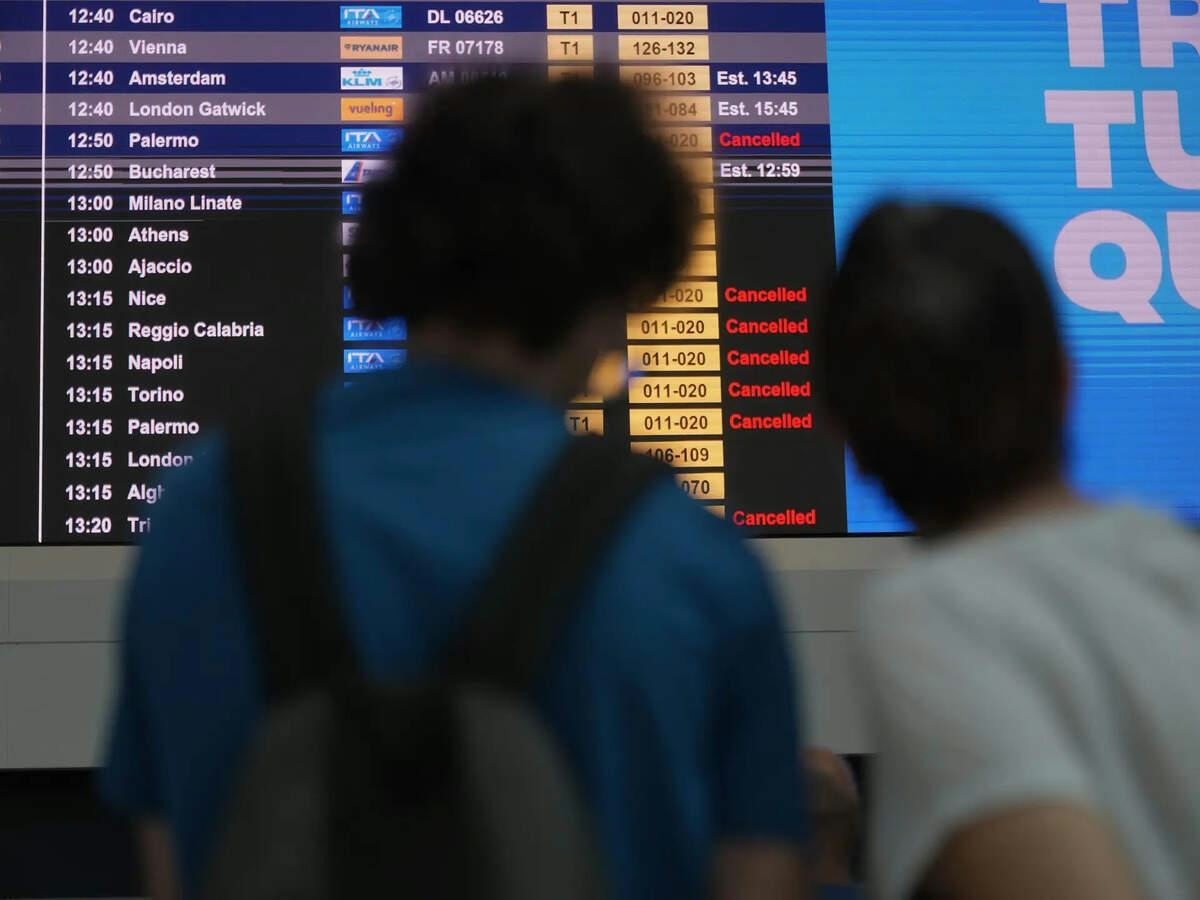
Navitaire Outage Attributed to Planned Maintenance Disrupts Air Travel Across Multiple Regions
A major disruption to Navitaire’s airline technology systems on the morning of February 19, 2026, caused significant delays and operational challenges at airports across India, Europe, and the Asia-Pacific region. The outage, which commenced at 6:45 a.m. IST, incapacitated Navitaire’s booking, reservation, and departure-control systems simultaneously at numerous airports. As a result, airlines were compelled to revert to manual check-in and boarding processes, leading to long queues and passenger frustration. The disruption persisted for 43 minutes, with services restored by 7:28 a.m.
Cause and Immediate Response
According to a statement issued by Navitaire, a subsidiary of Amadeus, the outage stemmed from complications following a planned maintenance operation. The company acknowledged that the maintenance unexpectedly triggered network instability affecting airlines hosted on its platform. Technical teams responded promptly, resolving the issue within 50 minutes. Navitaire expressed regret for the inconvenience caused and confirmed that all systems had returned to normal operation.
Impact on Airlines and Airports
The outage had a pronounced effect on airlines heavily dependent on Navitaire’s technology, including IndiGo, Akasa Air, Air India Express, and SpiceJet. These carriers were unable to access automated tools essential for check-in, boarding, and reservations during the incident. The disruption was particularly acute at Delhi’s Indira Gandhi International Airport, where the ongoing AI Summit 2026 and heightened security protocols for VIP movements exacerbated operational difficulties.
Beyond India, Navitaire-dependent airlines in Europe and the Asia-Pacific region also experienced delays in check-in and boarding procedures. The incident has drawn attention to the vulnerabilities inherent in airline IT systems, especially during planned maintenance activities. Industry data from Asian Business Review highlights the critical need for realistic maintenance scheduling and prompt availability of spare parts to mitigate the risk of widespread operational failures.
Industry Repercussions and Future Considerations
In the aftermath of the outage, several airlines are reportedly reassessing their reliance on Navitaire’s services. Some carriers are exploring alternative technology providers to reduce the risk of similar disruptions in the future. Industry analysts suggest that this event may influence market dynamics, as competitors evaluate Navitaire’s reliability and seek to capitalize on any erosion of client confidence.
As normal operations resume, the incident underscores the essential role of resilient IT infrastructure in modern air travel and the extensive consequences that even brief system failures can impose on the aviation sector.

Etihad Airways Suspends Airbus A380 Flights on Key Route

Aditya Birla Group Seeks Approval for Aircraft Leasing in GIFT City

Qatar Airways Highlights Innovation and Connectivity at Arabian Travel Market 2026

Hong Kong's Five-Year Plan Includes Andrew Fan's Aircraft Parts Processing Hub Proposal

ACIA Aero Leasing Delivers ATR72-600 to Air Nostrum

RTX Appoints Jill Albertelli as Head of Pratt & Whitney

TAT Technologies Joins Beyond Aero Hydrogen Aircraft Program

AURAK Study Highlights Barriers to Air Taxi Adoption in Emerging Economies

Xiamen Air Selects Altitude for 787 Maintenance at Heathrow

Etihad and Swissport Extend Global Partnership
