Image

AeroGenie — Your Intelligent Copilot.

Ask anything. Analyze everything. Act instantly.

Trending

Categories

Oman Air Adjusts Flight Schedules Due to Global Supply Chain Disruptions
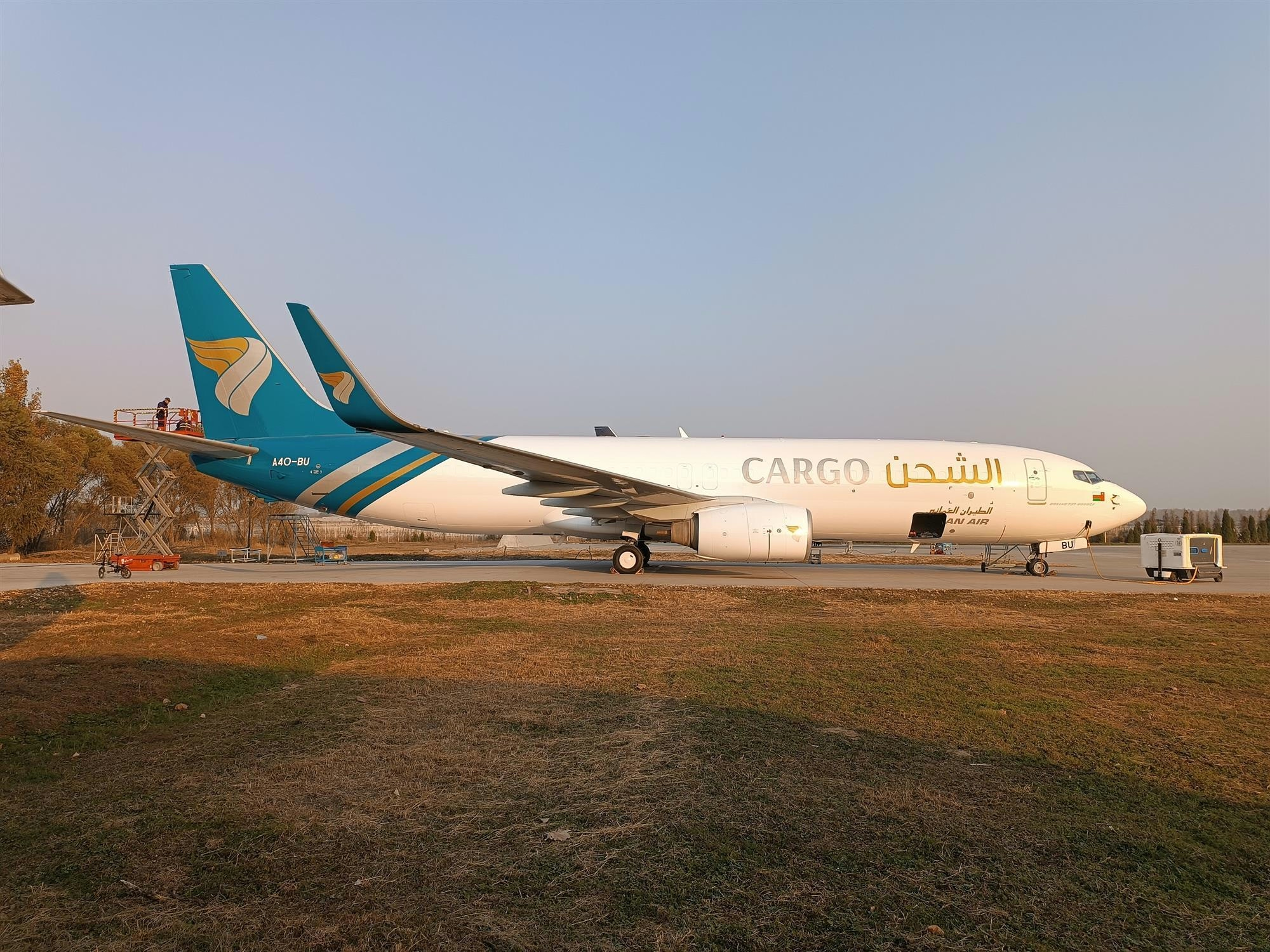
November 13, 2025By ePlane AI
Oman Air Adjusts Flight Schedules Due to Global Supply Chain Disruptions
0
0
Oman Air
Supply Chain Disruptions
Boeing 737 MAX

Oman Air Adjusts Flight Schedules Amid Global Supply Chain Disruptions

Oman Air has announced temporary adjustments to its flight schedules, effective November 13, 2025, in response to ongoing global supply chain disruptions that have rendered several aircraft out of service. The airline is collaborating closely with aircraft manufacturers to expedite repairs and return grounded planes to operation, with the aim of minimizing inconvenience to passengers.

Operational Challenges and Industry Context

Although Oman Air has not disclosed the specific aircraft affected, it cited significant delays in sourcing essential components and spare parts—a challenge that has impacted airlines worldwide throughout the year. The carrier is currently transitioning its fleet to newer Boeing 737 MAX and 787 Dreamliner models, a process expected to continue through 2026. However, supply chain bottlenecks have intensified operational pressures as the airline consolidates its aircraft lineup.

These difficulties are not unique to Oman Air. Industry experts observe that Middle Eastern carriers broadly face similar challenges, including delays in aircraft deliveries and difficulties obtaining certified parts such as oxygen tanks. These issues have constrained the ability of regional airlines to meet peak travel demand, prompting Omani regulators to temporarily authorize foreign operators to assist with domestic flights during busy periods. This measure underscores the widespread manufacturing and logistics hurdles confronting airlines as they modernize fleets and support national economic diversification goals under Vision 2040.

Financial Impact and Strategic Response

The financial repercussions of these supply chain delays are substantial. Industry estimates indicate that global airline costs have increased by over $11 billion this year alone. Airlines are incurring higher expenses due to operating older, less fuel-efficient aircraft, elevated maintenance costs associated with aging fleets, increased engine leasing fees, and greater inventory holding costs for spare parts. These pressures have compelled many carriers, including Oman Air’s competitors, to implement similar schedule adjustments and operational changes to maintain reliability and control costs. Market analysts warn that such disruptions may intensify scrutiny of airline financial health and influence consumer preferences toward carriers perceived as more dependable.

Oman Air’s CEO has acknowledged that delivery schedules for widebody aircraft are being deferred by several years, complicating long-term expansion plans. While Oman Air primarily operates narrow-body aircraft and intends to retire its older Boeing 737 models by mid-2026, current supply chain constraints are limiting its operational flexibility and capacity growth.

Passenger Impact and Future Outlook

To mitigate passenger inconvenience, Oman Air is optimizing its available fleet and realigning resources. The airline has not announced widespread cancellations but has temporarily adjusted flight timings and schedules to maintain service continuity. Affected travelers are advised to contact Oman Air for rescheduling or refund options, with the airline reaffirming its commitment to restoring normal operations as swiftly as possible.

These schedule adjustments coincide with Oman Air’s broader restructuring efforts aimed at returning to profitability by 2027. The airline is focused on cost reduction and fleet modernization, targeting a more efficient lineup centered on Boeing 737 MAX and 787 models. The planned retirement of all Boeing 737 NG variants by mid-2026 remains a key component of this strategy, despite the current period of industry-wide disruption.

More news
Jet Delivery Delays Slow Airline Expansion

Jet Delivery Delays Slow Airline Expansion

Jet Delivery Delays Threaten Airline Expansion Amid Soaring Demand Airlines are poised to generate over $40 billion in profits this year, supported by low fuel prices and strong economic growth, according to a recent analysis by Irish aircraft lessor Avolon. However, the industry faces significant challenges as unprecedented backlogs in new aircraft deliveries threaten to impede expansion plans well into 2026. Production Backlogs and Market Impact Avolon, one of the world’s leading aircraft leasing companies, reports that order backlogs at major manufacturers Airbus and Boeing now extend beyond 11 years based on current production rates. This prolonged delay complicates strategic growth initiatives for airlines, which may be compelled to continue operating older, less fuel-efficient jets or scale back their expansion ambitions. The shortage of new aircraft is already influencing the market; Ryanair recently warned that European travelers could face airfare increases of 3 to 4 percent this year due to constrained capacity driving up prices. In response to these backlogs, both Boeing and Airbus have increased production. Boeing raised its deliveries by 75 percent last year, while Airbus achieved a more modest 3.5 percent increase. Despite these efforts, the gap between orders and deliveries remains substantial, prompting airlines to adjust their strategies. For instance, Delta Air Lines is focusing on more profitable segments such as premium cabins, utilizing new aircraft like the Boeing 787 Dreamliner to attract higher-yield customers. Industry Adjustments and Regional Developments The delivery delays are prompting widespread adjustments across the industry. Airlines are revising profit forecasts and expansion plans amid heightened competition and geopolitical uncertainties. Korean Air has cautioned that these factors could complicate airline strategies in 2026. Meanwhile, consolidation continues in Europe, with Air France-KLM tripling its stake in Scandinavian carrier SAS to 60.5 percent, and Lufthansa planning to increase its holding in Italy’s ITA from 41 percent to 90 percent. Low-cost carriers, led by Ryanair—which is scheduled to receive 29 new Boeing jets this year—remain at the forefront of growth in the region. Avolon projects that manufacturers will deliver $120 billion worth of new aircraft in 2024, representing a 20 percent increase over 2023. Leasing companies, including Avolon and its Irish peers Aercap and SMBC Aviation Capital, are expected to finance approximately half of these deliveries. The leasing model, whereby companies purchase aircraft and lease them to airlines, continues to be a cornerstone of the industry, offering airlines flexibility amid delivery uncertainties. Dublin, a global hub for aircraft leasing, will host the upcoming Airline Economics conference, which will convene industry leaders to address these challenges. Jim Morrison, Avolon’s chief risk officer, highlighted emerging growth regions such as India, the United Arab Emirates, and Saudi Arabia, noting that “airline financial performance continues to strengthen, with the industry expected to record its fourth consecutive year of profitability.” Despite robust profits, the persistent delays in jet deliveries may constrain the industry’s ability to fully capitalize on surging demand, compelling airlines to reconsider their growth strategies in an increasingly complex market.
Can Retired Military Aircraft Power U.S. Data Centers?

Can Retired Military Aircraft Power U.S. Data Centers?

Can Retired Military Aircraft Power U.S. Data Centers? In the arid expanse of the Arizona desert, thousands of retired military aircraft lie dormant in orderly rows at the Aerospace Maintenance and Regeneration Group, commonly known as the “Boneyard,” located at Davis-Monthan Air Force Base. For decades, this facility has symbolized the final chapter for American airpower. However, a recent analysis by the U.S. Energy Information Administration (EIA) proposes a novel possibility: these decommissioned aircraft engines could be repurposed to help power the nation’s rapidly expanding data centers. Rising Electricity Demand and Emerging Solutions The EIA’s latest *Today in Energy* briefing highlights that engines from retired U.S. military aircraft could theoretically generate up to 40,000 megawatts (MW) of electricity—surpassing Arizona’s current total capacity by approximately 10%. Although this figure remains theoretical, it underscores a significant potential resource as the United States confronts soaring electricity demand, particularly driven by data centers supporting artificial intelligence and cloud computing technologies. Utilities nationwide are struggling to accommodate the explosive growth of data centers. In many regions, developers face prolonged delays in securing grid connections. Conventional approaches, such as constructing new power plants or expanding grid infrastructure, are often slow and expensive. Market responses reflect this challenge: 65% of contractors anticipate continued growth in data center construction, while major technology companies increasingly seek long-term electricity contracts to stabilize their power supply amid market volatility. In response, some energy developers have begun exploring unconventional power sources. In states like Texas, modified jet engines—originally designed for aircraft—are being adapted as stationary generators, each capable of producing approximately 48 MW, sufficient to power a small town or a large data center. This emerging trend raises the question of whether the extensive inventory of retired military engines at the Boneyard could serve as a substantial, untapped energy reserve. The Boneyard’s Engine Inventory As of March 2025, Davis-Monthan Air Force Base houses roughly 4,000 retired military aircraft encompassing multiple generations and mission profiles. These aircraft are equipped with four primary types of turbine engines: turbojets, turbofans, turboshafts, and turboprops. The EIA’s analysis excludes older turbojets due to their low efficiency and afterburning turbofans because they are unsuitable for stationary power generation. Despite these exclusions, the remaining engines still represent considerable potential. Turbofan engines, in particular, are notable for their capacity. The EIA estimates that these engines alone could collectively provide around 32,000 MW of electricity. This is significant given that turbofan technology forms the basis of aeroderivative gas turbines, a well-established technology widely used in stationary power generation. Challenges and Market Dynamics Repurposing military aircraft engines for electricity generation presents several challenges. The conversion process is complex and costly, especially when compared to other alternatives such as recycling nuclear reactors from decommissioned Nimitz-class supercarriers, which themselves face substantial technical and regulatory obstacles. Additionally, community opposition and regulatory scrutiny frequently hinder new data center projects, often delaying or preventing their development. In light of the growing demand for electricity, the U.S. government has instructed PJM Interconnection—the nation’s largest grid operator—to conduct auctions that allow technology companies to bid on new electricity generation capacity. This initiative reflects the urgency to secure reliable power sources as data center expansion accelerates. While the concept of powering America’s digital infrastructure with engines from its military past remains largely theoretical, the intensifying search for innovative energy solutions is prompting a reevaluation of even the most unconventional resources. As the nation’s electricity needs continue to grow, retired military aircraft engines may yet find a surprising new role in the country’s energy landscape.
Rolls-Royce Delivers Trent XWB-97 Engines for Airbus A350-1000ULR

Rolls-Royce Delivers Trent XWB-97 Engines for Airbus A350-1000ULR

Rolls-Royce Delivers Trent XWB-97 Engines for Airbus A350-1000ULR Rolls-Royce has delivered its advanced Trent XWB-97 engines to Airbus for installation on the first A350-1000 ULR (Ultra Long Range) aircraft, marking a pivotal development in Qantas’s Project Sunrise initiative. This aircraft is poised to become the world’s longest-range airliner, capable of flying nonstop for over 20 hours and covering distances up to 9,800 nautical miles (18,000 kilometers). Aircraft Development and Capabilities The initial A350-1000 ULR, identified as MSN 707, completed its final assembly in November 2023. Flight testing is scheduled to commence in the coming months, with Qantas expected to take delivery by the end of the year. The aircraft is slated to enter commercial service in the first half of 2027. Compared to the standard A350-1000, the ULR variant incorporates several system enhancements, most notably a 20,000-liter Rear Center Tank (RCT) that significantly increases fuel capacity. This upgrade enables the aircraft to operate ultra-long-haul routes, including Qantas’s planned nonstop flights from Sydney to London and New York. These routes, part of the airline’s “Kangaroo Route” program, aim to reduce current travel times by up to four hours by eliminating intermediate stops. Qantas has placed an order for 12 of these aircraft, underscoring its commitment to advancing ultra-long-haul travel. Rolls-Royce has maintained a longstanding partnership with the Australian carrier, having supplied engines since 1979. The airline’s first Rolls-Royce-powered aircraft was a Boeing 747 fitted with RB211 engines, followed by the Trent 900-powered Airbus A380 fleet delivered from 2008 onwards. Technical and Market Implications The integration of the Trent XWB-97 engines into the A350-1000 ULR presents significant technical challenges for Rolls-Royce, including adherence to rigorous aviation standards and the complexities of global engine supply and maintenance. The company is also addressing logistical demands to ensure dependable support for Qantas’s ultra-long-range operations. Market reaction to the engine delivery has been favorable, with industry analysts noting Rolls-Royce’s potential to capture a substantial share of the ultra-long-range aircraft engine market. This development has intensified competition, prompting rivals such as Boeing to modernize their B-52 bomber fleet with new engines. Concurrently, Rolls-Royce is expanding its maintenance, repair, and overhaul (MRO) services in strategic locations including China and Turkey. As the A350-1000 ULR prepares for its inaugural flights, the collaboration between Rolls-Royce, Airbus, and Qantas highlights the increasing demand for ultra-long-haul air travel and the technological innovations necessary to support this evolving sector.
Options for Continuing Flight Operations During Engine Overhaul

Options for Continuing Flight Operations During Engine Overhaul

Options for Continuing Flight Operations During Engine Overhaul Maintaining Reliability Amidst Aging Engines William J. Wuorinen has piloted his Osprey 2 amphibian, equipped with a Lycoming O-320-E2A engine converted to 160 horsepower, every summer for the past 24 years. With nearly 5,000 flight hours since new and 975 hours since its last overhaul, the engine has demonstrated remarkable reliability. Wuorinen’s diligent maintenance regimen includes winter storage with Aeroshell 2F, Camguard, and desiccant plugs, alongside routine oil sampling and cylinder borescope inspections, all contributing to the engine’s continued flawless performance. Despite this dependable record, Wuorinen is contemplating an overhaul—not due to any immediate performance concerns but because it has been 35 years since the engine’s last major service. However, he faces a significant obstacle: overhaul facilities are currently quoting turnaround times of six to eight months or longer, a delay largely attributed to workforce shortages. This predicament reflects a broader industry trend, exemplified by the experience of CFM International’s CFM56-powered narrowbody fleet in late 2023, where extended ground times for inspections and repairs caused operational disruptions and increased maintenance demand. Navigating Replacement and Compatibility Challenges Reluctant to ground his aircraft for such an extended period, Wuorinen is exploring alternatives to maintain flight operations during the overhaul. One option under consideration is acquiring another 160-horsepower engine—either new or used—to overhaul and install as a temporary replacement. This approach would allow continued flying while the original engine undergoes servicing. However, sourcing a suitable engine is proving difficult. New engines reportedly have lead times extending up to 900 days, and locating a used Lycoming O-320-E2A for overhaul and conversion remains a challenge. Wuorinen has also investigated alternative Lycoming models, such as the O-320-D2A or D2G, guided by Lycoming’s SSP-204 documentation. Yet, compatibility concerns arise, particularly regarding carburetor placement and engine dimensions, which must conform to the Osprey 2’s tightly cowled design. The routing of throttle and mixture cables through a narrow tunnel above the cabin further complicates engine fitment, necessitating precise matching. Additionally, Wuorinen questions whether the O-320-E2D, which features an O-235 main bearing, could be converted to 160 horsepower and whether this bearing design offers any advantages. Industry-Wide Implications and Strategic Considerations These challenges are not isolated to individual operators. Across the aviation sector, both commercial airlines and private owners are contending with extended maintenance cycles and supply chain disruptions. As older aircraft remain in service longer, engine manufacturers such as GE Aerospace are experiencing heightened demand for inspections and repairs. In response, competitors are expanding aftermarket services and adapting to ongoing supply chain constraints. For Wuorinen and others facing similar dilemmas, the decision involves balancing operational requirements with the realities of the current maintenance landscape. Whether by sourcing a replacement engine or enduring the overhaul queue, sustaining flight operations during engine maintenance demands careful planning, with close attention to technical compatibility and market availability.
Fraport AG Implements Certified AI Security at Frankfurt Airport

Fraport AG Implements Certified AI Security at Frankfurt Airport

Fraport AG Implements Certified AI Security at Frankfurt Airport Fraport AG has introduced a certified artificial intelligence (AI) security system at Frankfurt Airport, representing a significant advancement in airport screening technology. The newly deployed software, known as APIDS (Automatic Prohibited Item Detection Systems), is now operational across more than 50 Smiths Detection CT scanners throughout all terminals. This system identifies potentially hazardous items in carry-on luggage, thereby streamlining the decision-making process for security personnel. Pioneering AI-Assisted Screening in Europe Frankfurt Airport distinguishes itself as the first European airport to implement AI-assisted screening on such a large scale with full regulatory certification. Unlike ongoing AI trials at Amsterdam Schiphol or the CT-focused upgrades at London Heathrow and Gatwick, Frankfurt’s approach emphasizes national regulatory approval achieved through close collaboration and rigorous testing with authorities. This ensures that while the AI system highlights suspicious objects, the ultimate decision-making authority remains with human officers. Operational Mechanism and Benefits During routine operations, such as a busy Monday morning, trays pass through CT scanners that generate detailed 3D images of luggage contents. APIDS analyzes these scans in real time, detecting dense or unusual shapes—such as a charger entangled with a metal water bottle—and marking them with a red outline on the screen. This visual cue serves as an alert rather than a definitive judgment. Security officers can then examine the flagged area in greater detail by rotating and zooming the image, enabling them to quickly determine whether a secondary inspection is warranted. This process results in faster passenger throughput and reduces staff fatigue by minimizing the frequency of exhaustive manual searches. Operational Gains and Emerging Challenges The deployment of certified AI at Frankfurt Airport has yielded clear operational advantages, including enhanced efficiency, more consistent screening outcomes, and improved passenger flow. However, the integration of AI also presents new challenges. The potential for false alarms and automation bias persists, and regulatory constraints may limit operational flexibility. Security personnel must adapt to revised workflows and receive additional training to effectively collaborate with AI systems. Beyond immediate operational concerns, the adoption of AI-driven security introduces broader enterprise risks. As organizations like Fraport increasingly utilize generative AI tools, they face heightened security threats, the need for continuous security posture management, and the imperative to prevent unauthorized AI usage that could compromise compliance, intellectual property, or reputation. The industry is responding with intensified scrutiny of AI data handling practices and demands for robust certification and attestations. This environment is likely to accelerate AI security investments among competitors, fostering further innovation and funding within the sector. Contextualizing AI Security Across European Airports Frankfurt’s certified AI-assisted screening sets a new benchmark in Europe. In contrast, Amsterdam Schiphol is currently engaged in AI trials and partnerships, such as Project DARTMOUTH, positioning AI as a collaborative tool rather than a fully certified solution. Meanwhile, London Heathrow and Gatwick focus on modernizing CT technology to enhance passenger convenience, allowing liquids and electronics to remain in bags, with an emphasis on speed and comfort. While UK airports highlight the benefits of advanced 3D scanners, Frankfurt’s approach is defined by the integration of certified AI systems that automatically detect prohibited items, thereby establishing a new standard for security operations. As AI becomes increasingly embedded in airport security frameworks, the interplay between technological innovation, regulatory compliance, and operational risk will continue to be a critical area of focus.
Commercial Aircraft Emergency Generators: Market Trends and Forecasts Through 2035

Commercial Aircraft Emergency Generators: Market Trends and Forecasts Through 2035

Commercial Aircraft Emergency Generators: Market Trends and Forecasts Through 2035 The global market for commercial aircraft emergency generators is set to experience steady growth over the coming decade. Valued at $1.6 billion in 2025, the market is projected to increase to $1.69 billion in 2026, representing a compound annual growth rate (CAGR) of 5.7%. By 2030, this figure is expected to reach $2.12 billion, driven by continuous advancements in aviation safety, stringent regulatory requirements, and the expansion of commercial aircraft fleets worldwide. Key Growth Drivers and Market Dynamics The expansion of the commercial aircraft emergency generator market is underpinned by several critical factors. A heightened emphasis on aviation safety and evolving regulatory frameworks are compelling airlines to invest in more reliable and efficient backup power systems. Technological innovations, particularly in auxiliary power units (APUs) and emergency generators, have led to lighter, more efficient designs that enhance operational reliability and reduce maintenance costs. Additionally, the growth of the global commercial aircraft fleet, coupled with the need to retrofit aging aircraft with advanced emergency power systems, is significantly boosting demand. Emerging markets, especially in the Asia-Pacific region, are witnessing increased air travel fueled by rising incomes, improved connectivity, and expanding tourism sectors, further propelling market growth. Innovation and Competitive Landscape Industry leaders are focusing on the development of smart monitoring and predictive maintenance technologies, alongside low-emission backup power solutions. Notable trends include the adoption of hybrid and variable frequency generators, compact auxiliary power systems, and advanced battery technologies with higher energy densities. These innovations aim to improve efficiency, reduce environmental impact, and enhance the reliability of emergency power systems. Recent technological advancements underscore this trend. For instance, NSK Ltd. has introduced gas turbine generator bearings designed for electric vertical takeoff and landing vehicles (eVTOLs) and large drones, which significantly improve efficiency and flight duration. In a strategic move to bolster its position in aviation electrification and decarbonization, Safran Electrical & Power acquired Thales Group’s aeronautical electrical systems business in October 2023. Key market players include RTX Corporation, The Boeing Company, Honeywell International Inc., GE Aerospace, and Safran S.A. While North America led the market in 2025, the Asia-Pacific region is anticipated to be the fastest-growing market through 2030, reflecting broader regional economic and aviation sector growth. Challenges and Strategic Responses Despite the positive growth trajectory, the market faces several challenges. Supply chain disruptions, evolving regulatory landscapes, and the rapid pace of technological change present ongoing risks. In response, airlines and manufacturers are accelerating retrofitting programs and increasing investments in research and development to produce more efficient and reliable emergency generators. Strategic partnerships are also emerging as companies seek to secure critical raw materials and stabilize supply chains. Moreover, the broader adoption of AI-enabled avionics-grade computing systems is expected to influence the emergency generator market indirectly. Enhanced aircraft computing capabilities improve overall safety and performance, thereby increasing the demand for advanced and dependable emergency power solutions. Regional and Market Outlook The commercial aircraft emergency generator market is geographically diverse, encompassing Asia-Pacific, Europe, and North America. Global trade relations and tariff policies continue to impact production costs and influence local manufacturing strategies. Nevertheless, demand for advanced power systems remains robust, supported by a stable and growing global aviation industry. Market Segmentation The market comprises a variety of generator types, including alternating current (AC), direct current (DC), and hybrid systems, with power outputs ranging from below 50 kilowatts to above 200 kilowatts. These generators serve applications across narrow-body, wide-body, and regional aircraft, catering primarily to commercial airlines and other aviation end-users. This comprehensive market analysis offers vital insights for stakeholders, detailing emerging trends, forecasts, and competitive strategies within this dynamic sector.
GE Aerospace Delivers 2,386 Commercial Engines in 2025 Despite Supply Chain Challenges

GE Aerospace Delivers 2,386 Commercial Engines in 2025 Despite Supply Chain Challenges

GE Aerospace Achieves Record Commercial Engine Deliveries in 2025 Amid Supply Chain Recovery GE Aerospace reported the delivery of 2,386 commercial aircraft engines in 2025, representing a 25% increase compared to the previous year despite persistent supply chain challenges. This significant growth was primarily driven by heightened production within its commercial propulsion programs, notably the CFM LEAP engine. The company, alongside its suppliers, focused on stabilizing industrial systems that had previously constrained output, enabling a marked improvement in manufacturing capacity. Surge in CFM LEAP Engine Deliveries A substantial portion of the delivery increase originated from CFM International, the joint venture between GE and Safran, which accelerated shipments of the LEAP turbofan engine. The LEAP engine, integral to aircraft such as the Airbus A320neo family and Boeing 737 MAX, reached a record annual delivery of 1,802 units in 2025. This figure reflects a 28% rise from 1,407 engines delivered in 2024, marking the highest output in the program’s history. GE attributed this production ramp-up to enhanced material availability, with key suppliers providing over 40% more input materials than the previous year. This recovery in the supply chain not only facilitated increased engine deliveries but also contributed to a rebound in spare-parts availability, which had been limited in recent years due to constrained production. Financial Performance and Market Response The company’s commercial engines segment generated $33.3 billion in revenue for 2025, a 24% increase year-on-year. Overall, GE Aerospace reported total revenues of $45.9 billion, up 18%, alongside a profit increase to $8.7 billion. Equipment sales rose by 18%, while aftermarket services—driven by growing demand for maintenance, repair, and overhaul—expanded by 21%. The growing installed base of LEAP-powered aircraft further bolstered service revenues, underscoring strong market demand. Market analysts responded positively to GE Aerospace’s robust performance, upgrading the company’s stock amid sustained demand for commercial jet engines and aftermarket services. This optimism propelled GE Aerospace shares to new highs, despite ongoing industry challenges such as supply chain bottlenecks, production capacity constraints, and concerns regarding engine durability in demanding operating conditions. Outlook for 2026 and Beyond Competitors, including CFM International, also made significant strides with the LEAP turbofan, which remains a critical engine for both Airbus and Boeing’s leading narrowbody aircraft. Looking ahead, GE Aerospace projects continued momentum in 2026, anticipating low double-digit revenue growth and operating profits between $9.85 billion and $10.25 billion. The company expects further stabilization in production and increased engine output as supply chain conditions continue to improve.
Naidu Addresses Aviation, Sustainability, and Innovation at Davos

Naidu Addresses Aviation, Sustainability, and Innovation at Davos

Naidu Addresses Aviation, Sustainability, and Innovation at Davos At the World Economic Forum (WEF) in Davos, India’s Civil Aviation Minister K Rammohan Naidu engaged with global leaders and industry executives to advance the country’s aviation sector through a focus on sustainability and innovation. His participation underscored India’s growing prominence in the global aviation landscape and its commitment to integrating cutting-edge technology with environmental responsibility. Strengthening International Cooperation and Industry Partnerships During the forum, Naidu held a significant meeting with European Union Transport Commissioner Apostolos Tzitzikostas to explore deeper cooperation between the EU and India in the transport ecosystem. The discussions emphasized enhanced coordination between the European Union Aviation Safety Agency (EASA) and India’s Directorate General of Civil Aviation (DGCA) to improve safety standards. Naidu highlighted this engagement on social media, reflecting the importance of regulatory alignment in fostering safer and more efficient aviation operations. In addition, Naidu met with Francisco Gomes Neto, CEO of Brazilian aerospace company Embraer, to discuss expanding the firm’s presence in India through strategic partnerships with local industry players. As one of the fastest-growing civil aviation markets globally, India’s push for innovation and sustainability is attracting considerable international interest, positioning the country as a key destination for aerospace investment and collaboration. Advancing Climate Resilience and Autonomous Mobility Naidu’s agenda at Davos also included a focus on climate resilience in aviation. He met with Celeste Saulo, Secretary General of the World Meteorological Organization (WMO), to discuss the critical role of advanced weather intelligence and climate data in enhancing aviation safety and sustainable operations. This dialogue highlighted the increasing importance of integrating climate considerations into aviation planning, especially as air traffic continues to expand. At a WEF session dedicated to Scaling up Autonomous Mobility, Naidu outlined India’s regulatory and technological strategies for emerging aviation trends. He emphasized initiatives such as the Drone Rules 2021 and practical applications like medical drone deliveries in remote regions. The minister articulated India’s approach to “enable, deploy and scale” innovations, including preparations for electric vertical takeoff and landing (eVTOL) aircraft and autonomous aviation technologies. He stressed that India aims to leverage regulation, digital infrastructure, and manufacturing capabilities to address challenges related to congestion, access, and logistics on a large scale, moving beyond pilot projects. Navigating Security and Market Dynamics Despite these forward-looking initiatives, Naidu acknowledged the ongoing challenge of balancing national security concerns with the imperative for global connectivity and economic growth within the aviation sector. This balance remains complex, as robust security measures must coexist with efforts to attract investment and foster international collaboration. Market responses to India’s aviation policies have been mixed. Some investors express caution over potential regulatory hurdles, while others remain optimistic about the country’s dedication to sustainability and technological progress. Meanwhile, global competitors are closely observing India’s developments, with some expected to either deepen collaboration or intensify competition in response to India’s leadership in sustainability and innovation. The 56th annual meeting of the World Economic Forum, which convened over 3,000 leaders from around the world, provided a prominent platform for these discussions. India’s evolving aviation sector and regulatory framework featured prominently in several high-level dialogues, reflecting the country’s rising influence in shaping the future of global aviation.
Notable Aviation Incidents in 2025 Contrast with Overall Safety Trends

Notable Aviation Incidents in 2025 Contrast with Overall Safety Trends

Notable Aviation Incidents in 2025 Contrast with Overall Safety Trends Despite a year marked by several high-profile aviation incidents, insurance claims within the airline industry have remained close to long-term historical averages, according to a year-end review by WTW. This report reveals a notable disconnect between the dramatic headlines and the underlying stability of claims activity, highlighting an industry that has largely returned to pre-pandemic operational levels while managing increasingly complex risks. High-Profile Incidents and Industry Response In 2025, several major incidents captured global attention. Among the most significant was one of the deadliest commercial aviation accidents in U.S. airspace since 2001: the January collision involving American Airlines near Washington, D.C. Additionally, the Air Busan fire, triggered by a passenger’s power bank, drew widespread media coverage. On the international front, the Air India crash and operational failures at IndiGo resulted in airspace restrictions and a noticeable decline in traveler confidence. These events intensified scrutiny of safety protocols and prompted legislative responses, including provisions within the National Defense Authorization Act (NDAA). However, some experts have expressed concern that certain aspects of the NDAA could inadvertently compromise airspace safety around the nation’s capital. In response to these challenges, industry competitors have heightened vigilance and accelerated modernization efforts. Testimonies such as Bedford’s and the Federal Aviation Administration’s renewed emphasis on safety and air traffic control improvements underscore a sector-wide commitment to addressing operational vulnerabilities. Concurrently, evolving geopolitical tensions, particularly in Venezuela, have introduced new security risks for aircraft operators, leading to advisories urging extreme caution in affected regions. Recovery Amid Operational Headwinds The airline sector’s recovery from the COVID-19 pandemic continued steadily through 2025, with passenger numbers and cargo volumes rising consistently. Declining fuel prices and improved load factors have bolstered the financial health of many carriers, enabling debt reduction. Nevertheless, this growth has been tempered by persistent operational challenges. Supply chain disruptions, notably prolonged waiting lists for new aircraft deliveries, have compelled airlines to rely on older fleets that are more expensive to maintain and more susceptible to being written off following incidents. Compounding these difficulties is a critical shortage of skilled maintenance, repair, and overhaul (MRO) personnel, alongside extended lead times for spare parts. These operational pressures, combined with emerging threats such as cyber-attacks, increased drone activity, and geopolitical instability, have created a complex and challenging environment for airlines worldwide. Rising Costs and Complex Claims Claims expenses have escalated sharply in recent years, driven by factors extending beyond traditional economic inflation. While average inflation stood at 3.7% annually between 2017 and 2022, liability claim payouts—often referred to as “social inflation”—increased at a rate of 5.4% annually, according to Swiss Re. The frequency and complexity of psychological harm claims have grown, complicating settlement processes. The industry has also witnessed a rise in “nuclear judgments,” defined as jury awards exceeding $10 million, which establish new precedents and contribute to escalating costs. Modern aircraft, constructed with advanced composite materials, present higher repair costs compared to older aluminum models. Delays in obtaining replacement parts further exacerbate these expenses. Additionally, airlines face significant revenue losses when grounded aircraft await repairs, intensifying the financial impact of incidents. Looking Ahead As the aviation industry continues to navigate a landscape shaped by operational constraints, regulatory changes, and evolving security threats, the overall safety trajectory remains positive. Despite headline-grabbing incidents and rising costs, the sector’s resilience and ongoing commitment to modernization underpin its long-term stability.
United Adds More Widebody Planes Than Any U.S. Airline Since 1988

United Adds More Widebody Planes Than Any U.S. Airline Since 1988

United Airlines to Receive More Widebody Jets in 2026 Than Any U.S. Carrier Since 1988 United Airlines is poised to achieve a significant milestone in its fleet expansion, announcing plans to take delivery of approximately 20 Boeing 787 widebody aircraft in 2026. This marks the largest annual intake of widebody jets by a U.S. airline in nearly four decades, surpassing the previous record set by American Airlines, which received 28 widebodies in 1988. Fleet Expansion and Strategic Objectives This substantial increase in widebody deliveries forms a key component of United’s broader strategy to strengthen its international network and enhance the overall customer experience. In addition to the widebody jets, the airline expects to receive over 100 narrowbody aircraft in 2026, including 75 Boeing 737 MAX 9s, 16 Airbus A321neos, and 8 Airbus A321XLRs. These additions will expand United’s projected fleet to 1,180 mainline and 435 regional aircraft by the end of 2026, totaling 1,616 planes. The accelerated delivery schedule is facilitated by Boeing’s resumed production pace, enabling United to modernize its fleet and replace aging models. Some of the incoming widebodies are intended to phase out older 777-200s, which have encountered engine and regulatory challenges, while others will support the airline’s expansion into new long-haul markets. Competitive Landscape and Financial Performance United’s ambitious growth plans come amid intensifying competition within the U.S. airline industry. Delta Air Lines recently placed an order for up to 60 Boeing 787-10s, signaling its intent to expand its presence in premium long-haul travel. Concurrently, United is engaged in ongoing disputes with American Airlines over gate allocations at Chicago’s O’Hare International Airport, a critical hub for both carriers. These developments highlight the fierce competition for market share on lucrative international routes. Financially, United remains robust. The airline reported record fourth-quarter revenue of $15.4 billion, exceeding analyst expectations with an operating margin of 8.6%. Premium cabin revenue increased by 9% year-over-year, while loyalty program revenue grew by 10%. However, revenue per available seat mile declined by 1.6%, reflecting softer performance in economy cabins. For the full year, United generated $59.1 billion in revenue. As United prepares for its largest widebody delivery in decades, the airline is positioning itself to compete aggressively on global routes. The coming years will test whether this bold investment in fleet growth can secure sustained leadership in the international aviation market.
line










