Image

Orchestrate AI insights into action

Join the AeroGenie waitlist today!

Trending

Categories

Orange to Supply AI and Digital Twin Technology for Global Hydrogen Flight
November 20, 2025By ePlane AI
Orange to Supply AI and Digital Twin Technology for Global Hydrogen Flight
0
0
Hydrogen-Powered Aircraft
Digital Twin Technology
Flight Path Optimization

Orange to Supply AI and Digital Twin Technology for Global Hydrogen Flight

Partnership to Pioneer Hydrogen-Powered Aviation

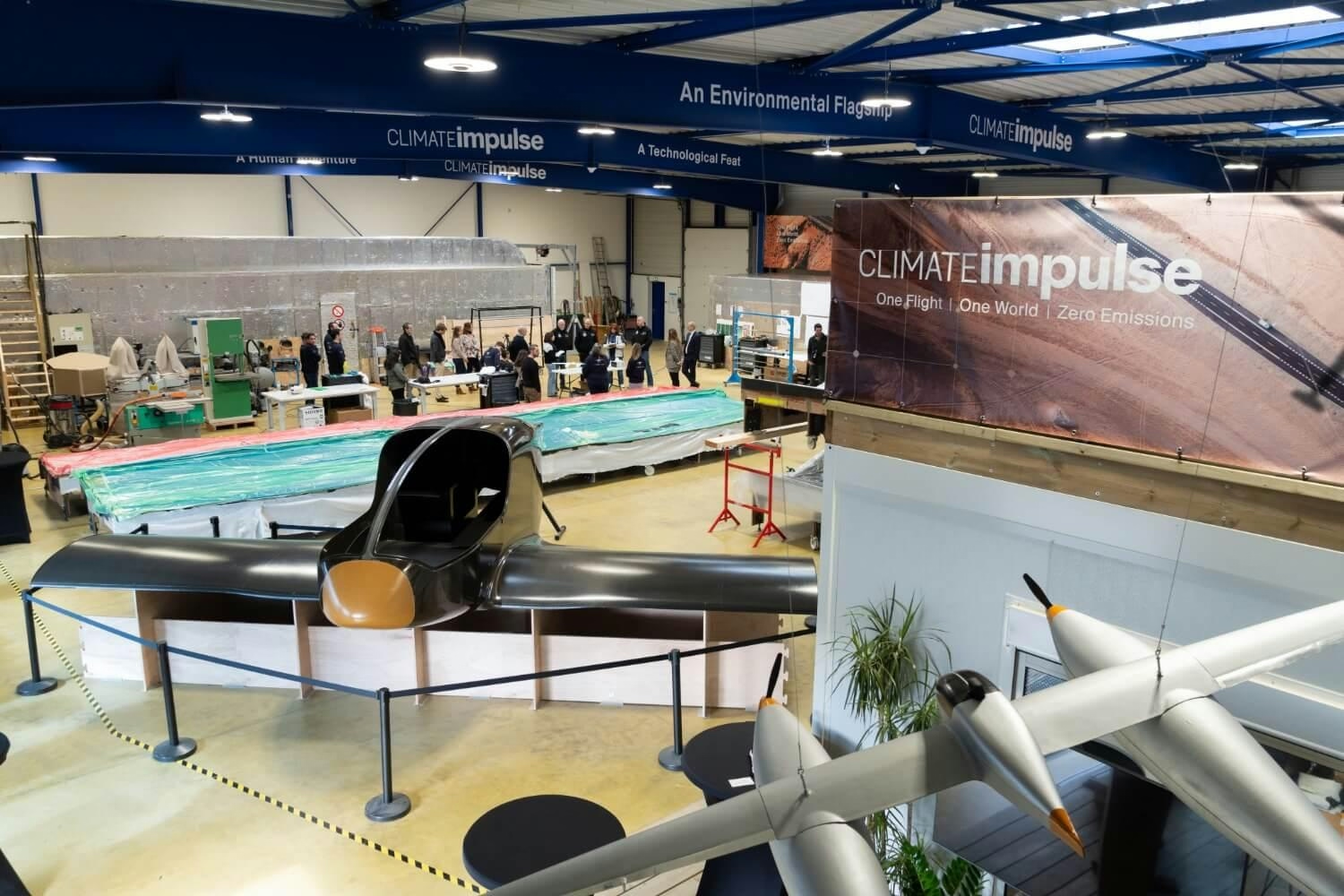
Multinational telecommunications leader Orange has entered into a strategic partnership with Climate Impulse to support the development of a groundbreaking hydrogen-powered aircraft designed for a non-stop circumnavigation of the globe. Spearheaded by Swiss explorer Bertrand Piccard and French sailor Raphaël Dinelli, the initiative aims to construct and fly the aircraft by 2028, with initial development activities commencing in 2024.

Orange will contribute its expertise in artificial intelligence and digital twin technology to optimize flight routes in real time, enhancing both safety and efficiency. The company will also implement advanced cybersecurity measures, including post-quantum cryptography, to secure communications between the aircraft and its control center—a critical safeguard amid increasing concerns over aviation cybersecurity. Lyse Brillouet, Executive Director of Research at Orange, emphasized the value of their digital twin solutions, which utilize data from Climate Impulse and its partners to provide dynamic guidance throughout the mission.

The aircraft itself will be powered by liquid hydrogen, employing fuel cell technology supplied by Ekpo Fuel Cell Technologies. Climate Impulse plans to obtain necessary flight permits and initiate preliminary testing by 2026, targeting the first non-stop hydrogen-powered global flight two years later.

Challenges and Industry Context

The ambitious project faces considerable challenges, including the substantial upfront investment required to develop sophisticated AI and digital twin systems. Integrating extensive flight and environmental data into these platforms remains a complex undertaking. Additionally, regulatory approval poses significant uncertainty, as aviation and hydrogen fuel sectors worldwide continue to navigate the certification of emerging technologies for commercial use.

These difficulties mirror broader trends within the liquid-hydrogen aviation industry, which has encountered setbacks due to high capital costs and protracted certification timelines. The collapse of US-based Universal Hydrogen in 2024, following financial difficulties, underscores the sector’s inherent risks. Concurrently, the market’s reaction to heavy investments in AI infrastructure has been mixed, contributing to volatility in the stock prices of major technology firms such as Oracle and Nvidia.

Competitors are also adapting to the evolving technological landscape. Companies like Cisco are investing in digital twin technologies to improve supply chain operations, reflecting a wider industry shift toward AI-driven optimization. As Orange and Climate Impulse advance their project, they must navigate not only technical and regulatory obstacles but also an increasingly competitive environment.

Despite these challenges, the collaboration between Climate Impulse and Orange marks a significant advancement in sustainable aviation. If successful, it could establish new benchmarks for the integration of AI, digital twin technology, and secure communications in the future of flight.

More news
Liebherr-Aerospace and HAECO Complete First Landing Gear Maintenance on COMAC C909

Liebherr-Aerospace and HAECO Complete First Landing Gear Maintenance on COMAC C909

Liebherr-Aerospace and HAECO Complete First Landing Gear Maintenance on COMAC C909 Landmark Overhaul of COMAC C909 Landing Gear Liebherr-Aerospace and HAECO Landing Gear Services have jointly completed the world’s first major overhaul of the landing gear on the COMAC C909 regional jet, previously known as the ARJ21 or “Soaring Phoenix.” This achievement, marked by the successful final quality acceptance from both partners, represents a significant advancement in local maintenance capabilities within China’s regional commercial aviation sector. The landing gear of the C909, designed by Liebherr, is renowned for its precision and reliability. Overhauling such a critical safety component requires sophisticated technology and extensive product expertise, which is ensured through close collaboration with the Original Equipment Manufacturer (OEM). This partnership not only guarantees technical excellence but also establishes a strong service infrastructure near operators in China and Southeast Asia, supporting the growth of China’s first domestically developed regional jet. Enhancing Regional Maintenance and Market Competitiveness With this milestone, airlines in China and emerging markets such as Indonesia, Vietnam, Laos, and Cambodia gain access to efficient, high-quality maintenance solutions aimed at maximizing fleet availability and extending aircraft service life. The localized maintenance capability developed through this collaboration is expected to provide a dependable foundation for the lifecycle support of the C909 fleet, thereby enhancing operational readiness and competitiveness in the regional market. The project, initiated in 2025 with a focus on capability building and process optimization, culminated in 2026 with joint final acceptance testing by Liebherr, officially delivering the first-ever C909 landing gear overhaul. This accomplishment is anticipated to stimulate demand for specialized landing gear maintenance services across the region, benefiting both Liebherr-Aerospace and HAECO as airlines adapt to evolving regulatory requirements. Liebherr-Aerospace is actively preparing Chinese carriers to meet stricter aviation regulations, positioning itself as a key partner in regulatory compliance and operational excellence. Market analysts suggest that this development may encourage competitors, including Héroux-Devtek, to expand their maintenance offerings in regions where COMAC C909 operators are present. The successful completion of this overhaul not only reinforces Liebherr-Aerospace’s standing in the aerospace aftermarket but also opens potential avenues for additional contracts from COMAC and other aircraft manufacturers. Eric Thévenot, General Manager Aerospace Customer Service at Liebherr (China) Co., Ltd., emphasized the significance of the collaboration, stating, “This cooperation is a significant step forward for the domestic civil aviation industry. By combining our technical Liebherr OEM DNA with HAECO’s MRO excellence, we haven’t just repaired hardware; we have built a sustainable and robust service ecosystem that will benefit several aircraft platforms and airline customers throughout the region.” As the regional aviation market continues its expansion, the establishment of a proven, localized maintenance, repair, and overhaul (MRO) infrastructure is poised to play a vital role in supporting fleet growth and ensuring the long-term success of China’s first advanced regional jet.
Advances in Aerospace Engineering Enhance Jet Engine Efficiency

Advances in Aerospace Engineering Enhance Jet Engine Efficiency

Advances in Aerospace Engineering Enhance Jet Engine Efficiency Modern aviation increasingly depends on the development of more efficient jet engines to reduce fuel consumption, lower operational costs, and promote environmental sustainability. Recent breakthroughs in aerospace engineering have transformed the design, manufacturing, and maintenance of jet engines. Engineers have introduced advanced technologies and innovative materials that enable engines to generate greater power while consuming less fuel. These improvements not only benefit airlines economically but also enhance passenger safety and overall flight performance. Engineering Innovations and Material Advances Aerospace engineering combines principles from physics, thermodynamics, material science, and mechanical engineering to optimize aircraft systems, with a particular focus on jet engine development. Engineers strive to increase thrust, reduce drag, and maximize fuel efficiency by meticulously designing every engine component to endure extreme temperatures and pressures. The use of advanced computer simulations and aerodynamic testing has refined airflow through compressors, turbines, and combustion chambers, where even minor enhancements can significantly boost engine performance and reduce fuel waste. A pivotal advancement in this field is the adoption of lightweight, heat-resistant materials. Modern jet engines increasingly incorporate titanium alloys, ceramic coatings, and composite materials such as titanium aluminide, which withstand the harsh conditions of engine operation. These materials contribute to reducing engine weight, lowering fuel consumption, and enhancing durability, thereby minimizing maintenance requirements. For instance, turbine blades now feature specialized heat-resistant coatings that allow engines to operate at higher temperatures, achieving greater thermal efficiency. Despite these benefits, integrating advanced materials presents considerable manufacturing and cost challenges. The aerospace industry is accelerating the adoption of materials like titanium aluminide, with significant growth anticipated by 2036. Manufacturers must carefully balance the efficiency gains against the complexities and expenses associated with new production processes. Aerodynamics, Market Dynamics, and Digital Integration Aerodynamics remain central to improving jet engine efficiency. Engineers design compressor blades, fan systems, and air intake sections to optimize airflow, with modern high-bypass turbofan engines moving larger volumes of air more efficiently. This results in increased thrust, reduced fuel consumption, and lower noise emissions. Enhanced blade geometry minimizes turbulence, ensuring stable airflow and smoother engine operation. These aerodynamic improvements contribute to making engines more efficient and environmentally friendly. The market has responded positively to these technological advances. Companies such as Safran report robust engine shipment figures and maintain an optimistic outlook despite geopolitical tensions. Meanwhile, competitors like General Electric are pursuing innovations including foam wash systems and hybrid-electric powertrains to further enhance operational efficiency and maintain market share. In addition to mechanical and material innovations, aerospace engineers are advancing combustion technologies to maximize energy output while minimizing emissions. Modern engines employ precise fuel injection systems that enable cleaner and more complete combustion, assisting airlines in reducing fuel costs and complying with stringent environmental regulations. The industry is also exploring sustainable aviation fuels and hybrid engine technologies as avenues for future improvement. Digital technologies and artificial intelligence have become integral to jet engine performance management. Contemporary engines are equipped with sensors that continuously monitor parameters such as temperature, pressure, vibration, and fuel consumption in real time. This data-driven approach facilitates proactive maintenance and ongoing optimization of engine efficiency. As aerospace engineering continues to evolve, the integration of advanced materials, aerodynamic innovations, and digital technologies is poised to further enhance jet engine efficiency, shaping the trajectory of sustainable aviation.
Cambodia’s Aviation Sector Maintains Stability Amid Global Fuel Crisis

Cambodia’s Aviation Sector Maintains Stability Amid Global Fuel Crisis

Cambodia’s Aviation Sector Maintains Stability Amid Global Fuel Crisis Cambodia’s aviation industry has exhibited remarkable resilience amid a global fuel crisis that has unsettled civil aviation markets throughout the Asia-Pacific region. While many neighboring countries face jet fuel shortages and escalating costs driven by constrained global supply chains, Cambodia’s civil aviation operations continue to function steadily. This stability is underpinned by reliable jet fuel availability, a robust regulatory framework, and proactive government interventions aimed at safeguarding energy security. Government Oversight and Regulatory Framework Central to the sector’s stability is the State Secretariat of Civil Aviation (SSCA), Cambodia’s principal regulatory authority. Reporting directly to the Council of Ministers, the SSCA is responsible for overseeing airports, flight operations, air navigation services, and safety regulations. Its mandate includes ensuring compliance with international standards and maintaining uninterrupted air transport services despite external pressures. Recent evaluations by the SSCA confirm that Cambodia’s aviation sector remains stable despite regional volatility in jet fuel prices and supply. The Ministry of Mines and Energy (MME) works closely with the SSCA to monitor fuel availability, manage import logistics, and ensure the continuity of flight services. Although Cambodia depends entirely on imported petroleum products, including aviation turbine fuel, the government has implemented measures such as adjusting value-added tax and customs duties. These steps have helped cushion the impact of international price surges and maintain local fuel availability for critical sectors including aviation, logistics, and tourism. Cambodia’s Law on Civil Aviation provides the SSCA with broad authority to regulate air transport, enforce safety standards, and oversee market operations. This legal foundation has enabled the sector to maintain operational stability and adaptability during periods of economic uncertainty and external shocks such as fuel price volatility. Airlines operating within Cambodia are required to adhere to strict certification and operational standards, ensuring reliability and compliance with international best practices. Challenges Amid Broader Economic Pressures Despite these strengths, Cambodia’s aviation sector is not immune to the wider economic challenges posed by the global fuel crisis. Elevated fuel prices have raised concerns about potential reductions in airline capacity, which could in turn weaken demand for maintenance and related services. The sector is also grappling with a significant decline in tourism, exemplified by a 72% drop in visitor numbers to Angkor Wat compared to pre-pandemic levels as of April 2026, highlighting the broader economic ramifications. The ongoing conflict in the Middle East continues to threaten further fuel supply shocks, with economic forecasts projecting a slowdown in Cambodia’s GDP growth to 2% in 2026. These developments underscore the necessity for continued vigilance and adaptive policy measures to sustain the aviation sector’s stability in the face of persistent external pressures.
Airhub Aviation Expands Support for 737 MAX Operators

Airhub Aviation Expands Support for 737 MAX Operators

Airhub Aviation Expands Support for 737 MAX Operators Airhub Aviation has obtained line maintenance approval for Boeing 737 MAX aircraft, covering both Maintenance, Repair, and Overhaul (MRO) and Continuing Airworthiness Management Organisation (CAMO) operations. This certification, granted by the Transport Competence Agency of the Republic of Lithuania, represents a significant enhancement of Airhub Aviation’s maintenance organisation capabilities. It positions the company to better support the expanding global fleet of 737 MAX aircraft. Strengthening Capabilities Amid Market Evolution The company announced the achievement via social media, emphasizing the milestone as a reflection of its teams’ dedication and professionalism, as well as the collaborative efforts within the organisation. Airhub Aviation highlighted that the approval underscores its agility in responding to shifting market demands, while simultaneously expanding its technical expertise and maintaining rigorous industry standards. Historically, Airhub Aviation has focused on servicing mid- to end-of-life aircraft, a commitment it continues to uphold. However, with the increasing prominence of newer aircraft models such as the Boeing 737 MAX, the company is actively evolving its services to meet the changing needs of its customers. This strategic expansion aligns with broader industry trends as operators modernize their fleets. Navigating Industry Challenges and Competition The move to support the 737 MAX comes at a time of considerable complexity within the aviation maintenance sector. MRO providers are contending with challenges including supply chain constraints, particularly for engine modifications. These difficulties have been highlighted by recent experiences from major players like Delta TechOps, which has faced hurdles in securing aftermarket support agreements. As the 737 MAX fleet continues to grow—with airlines such as SCAT planning to introduce additional MAX 9 aircraft—the competitive landscape among MRO providers is intensifying. Established networks like CFM’s LEAP Premier MRO are expanding their reach, prompting other maintenance organisations to seek similar approvals and capabilities to capture a share of this evolving market. Airhub Aviation anticipates that its new approval will enable the delivery of efficient, reliable, and high-quality support services across both MRO and CAMO domains. By aligning with the latest industry requirements and addressing operational challenges, the company aims to strengthen its position as a trusted partner for operators managing both legacy aircraft and next-generation technologies.
GMF AeroAsia Completes A320 Maintenance Project for Citilink

GMF AeroAsia Completes A320 Maintenance Project for Citilink

GMF AeroAsia Completes Comprehensive Maintenance of Citilink A320 Aircraft GMF AeroAsia has announced the successful completion of an extensive maintenance and reactivation project for an Airbus A320 aircraft operated by Citilink. Registered as PK-GLZ, this marks the company’s 18th such project aimed at enhancing the operational readiness of customer fleets. The maintenance package encompassed a C-04 check, 6-year and 12-year inspections, an A-check, and a return to operation (RTOP) process, reflecting a thorough and multifaceted approach to aircraft upkeep. Navigating Supply Chain Challenges and Operational Complexity The project was carried out amid persistent global aviation supply chain disruptions, which complicated the procurement of necessary materials. GMF AeroAsia highlighted the complexity of managing these constraints, emphasizing the critical role of cross-functional coordination, adaptive planning, and rigorous operational management in meeting project deadlines. The company affirmed that despite these challenges, every phase of the maintenance work adhered strictly to established quality and safety standards, underscoring its commitment to excellence. Industry Pressures and Competitive Landscape This achievement comes at a time when the aviation maintenance sector is confronting significant pressures. Rising fuel costs threaten to slow the post-pandemic recovery in airline capacity, potentially diminishing demand for maintenance services. Concurrently, escalating engine maintenance expenses are affecting lessors, driven by an increase in engine failures on leased aircraft. In response, industry competitors such as Boeing Global Services are adopting advanced technologies, including automation and artificial intelligence, to reduce maintenance cycle times by up to 25%, thereby intensifying competition within the sector. Despite these challenges, GMF AeroAsia reaffirmed its dedication to maintaining high standards of quality and safety. The company attributed the successful completion of the PK-GLZ project to meticulous attention to detail and effective collaboration across its teams. GMF AeroAsia described the project as part of its ongoing efforts to sustain fleet operational readiness and to contribute to the strengthening of Indonesia’s national aviation industry through a series of reactivation initiatives conducted over the past year. The completion of this maintenance project is expected to facilitate the optimal utilization of the PK-GLZ aircraft, ensuring its seamless return to service. GMF AeroAsia emphasized that this accomplishment reflects its sustained commitment to service quality and its pivotal role in supporting the resilience and sustainability of Indonesia’s aviation ecosystem amid evolving market dynamics and operational challenges.
Qantas Delays Nonstop London-to-Sydney Flights Amid Airbus Supply Chain Issues

Qantas Delays Nonstop London-to-Sydney Flights Amid Airbus Supply Chain Issues

Qantas Postpones Launch of Nonstop London-to-Sydney Flights Due to Airbus Supply Chain Delays Qantas has announced a further delay in its highly anticipated nonstop flights between London and Sydney, as Airbus continues to face supply chain challenges that have postponed the delivery of the new long-range A350 aircraft essential for the route. These specially configured aircraft form the cornerstone of Qantas’s $15 billion “Project Sunrise,” an ambitious initiative aimed at establishing direct flights from Australia’s east coast to major global hubs such as London and New York. Impact of Airbus Delays on Aviation Industry and Qantas Operations Originally, Airbus had scheduled the delivery of the A350s by the end of this year. However, the manufacturer has now confirmed that these deliveries will not meet the planned timeline, reflecting wider disruptions across the aviation sector. The announcement triggered a 2.9% decline in Airbus shares and has prompted other leading carriers, including Lufthansa, to reduce their flight schedules amid similar supply constraints. In light of these developments, Qantas has extended its current international schedule adjustments and will continue operating reduced domestic services through September. The airline attributes these operational changes not only to the delayed aircraft deliveries but also to elevated fuel costs and the ongoing geopolitical tensions in the Middle East, all of which have compounded pressures on its network. Qantas’s Response and Future Prospects for Project Sunrise To alleviate the impact on travelers, Qantas intends to redeploy some of its existing fleet to increase flight frequencies between Australia and Europe. This strategy aims to offer alternative travel options, particularly for passengers booked through partner airlines affected by the disruptions. Despite the setbacks, Qantas remains steadfast in its commitment to Project Sunrise, which is poised to revolutionize commercial aviation by enabling nonstop connections between Australia and key international cities. The airline has yet to announce a revised schedule for the inaugural nonstop London-to-Sydney service.
Why Future Business Class Seats Are Expected to Be Heavier

Why Future Business Class Seats Are Expected to Be Heavier

Why Future Business Class Seats Are Expected to Be Heavier The business class sector is undergoing a remarkable expansion, with the premium market projected to grow by 11.8% in 2024, reaching 116.9 million passengers. Once predominantly reserved for corporate executives, premium cabins are now increasingly favored by leisure travelers, a phenomenon often referred to as the "democratization of premium travel." This shift has intensified competition among airlines, each striving to offer superior business class products to attract a broader customer base and justify escalating airfares. However, the enhancements that define modern business class—such as longer beds, larger entertainment screens, and increased privacy—come with a significant trade-off: added weight. This increase not only elevates operational costs, particularly fuel consumption, but also poses challenges to profit margins. Despite these concerns, airlines show no inclination to reduce the luxury of their offerings. Instead, they are investing in advanced materials and innovative seat designs to mitigate the impact of heavier seats. Factors Contributing to Increased Seat Weight The primary factor driving the weight increase in premium seats is the rising expectation among passengers for comfort and privacy. Business class travelers now demand amenities akin to those found in high-end hotels, including full-height dividers, sliding doors, expansive entertainment systems, motorized seat controls, and plush bedding. These features have led to a new generation of business class seats that are substantially heavier than their predecessors. For instance, the average business class seat on an Airbus A350-900 weighs approximately 220 pounds (100 kilograms). This additional weight necessitates greater fuel consumption, thereby increasing operational expenses and presenting engineering challenges. The concentration of these heavier seats at the front of the aircraft can affect weight distribution, prompting manufacturers such as Airbus to develop modular suite architectures designed to better manage mass balance and maintain aircraft performance. Emerging Trends in Business Class Seating Recent product launches indicate that the trend toward heavier business class seats is set to continue. Turkish Airlines plans to introduce its new 'Crystal' business class suite, based on the Safran Unity platform, across its Boeing 777-300ER fleet by 2026. This suite features sliding doors, high sidewalls, retractable privacy dividers, a 22-inch 4K screen, Bluetooth audio, and wireless charging—all contributing to increased seat weight. As these upgrades are implemented on existing aircraft, airlines will carefully assess whether the additional revenue generated from premium passengers compensates for the higher operational costs. Broader Industry Implications The emphasis on premium cabins extends beyond Turkish Airlines, with major carriers such as United and American Airlines also expanding their premium offerings. This trend is likely to further increase aircraft weight and operational expenses. As airlines invest heavily in premium products, there is a risk that economy passengers may face reduced space and higher costs across all classes. To sustain profitability, airlines may pass these increased expenses onto consumers through higher ticket prices, affecting not only business class but the entire cabin. This competitive dynamic is expected to drive airlines to continually enhance their premium services, fueling a cycle of escalating amenities and associated costs. As the race to provide the most luxurious business class experience intensifies, the future of air travel may be characterized by even heavier seats and correspondingly higher prices for all passengers.
International Airlines and FAAN Discuss Airport Service Delivery

International Airlines and FAAN Discuss Airport Service Delivery

International Airlines and FAAN Discuss Airport Service Delivery Amid Industry Challenges The Federal Airports Authority of Nigeria (FAAN) has initiated discussions with the International Airlines Association of Nigeria to enhance protocol services and improve the passenger experience at the country’s airports. This engagement, announced in a statement by FAAN on Sunday, comes at a time when international airlines are confronting significant operational challenges both within Nigeria and globally. Collaborative Efforts to Address Operational Concerns FAAN’s Director of Public Affairs and Consumer Protection, Henry Agbebire, convened a meeting with representatives of the association at Murtala Muhammed International Airport in Lagos. The interactive session aimed to strengthen collaboration between FAAN’s Department of Protocol and Passages and airline operators, providing a forum to address pressing issues affecting airport operations and passenger services. Agbebire underscored the importance of the dialogue, stating that the authority is committed to listening to the airlines’ challenges and working jointly to develop effective solutions. During the meeting, airline representatives raised several operational concerns. These included inadequate signage resulting from ongoing landside construction, insufficient availability of lifts, difficulties with shuttle bus services, and complications related to airside ramp markings affected by construction activities. The airlines also called for increased support to enhance the overall customer experience at Nigerian airports. Industry-Wide Pressures and Local Implications These local challenges coincide with broader pressures facing the international aviation industry. Rising fuel prices, largely driven by geopolitical conflicts, have compelled major carriers such as International Airlines Group (IAG) to announce capacity reductions and issue profit warnings. In response to shifting market conditions, airlines like United Airlines have trimmed their schedules, including cutting over 100 daily departures from O’Hare International Airport, while adjusting operations to comply with regulatory requirements. Meanwhile, competitors such as Southwest Airlines continue to pursue strategic expansions, maintaining a strong presence at airports like Ontario International Airport and planning terminal upgrades. Recent incidents, including a fatal accident involving a Frontier Airlines plane at Denver International Airport, have further highlighted ongoing safety and operational challenges within the sector. In addressing the concerns raised during the Lagos meeting, Agbebire assured stakeholders that FAAN would thoroughly review all complaints and observations. He affirmed that the authority intends to assess these issues with the goal of improving service delivery and operational standards across airports nationwide. This engagement between FAAN and international airlines represents a concerted effort to confront both local and global challenges, with the objective of ensuring safer, more efficient, and passenger-friendly airport operations throughout Nigeria.
Five Ways AI Is Changing the Airline Industry

Five Ways AI Is Changing the Airline Industry

Five Ways AI Is Changing the Airline Industry Artificial intelligence is increasingly transforming the commercial aviation sector, with airlines integrating AI technologies across various facets of their operations, including pricing strategies, customer service, flight management, and maintenance. As carriers strive to reduce costs, enhance profit margins, and improve reliability and efficiency, the role of AI is becoming ever more prominent. However, this technological evolution also introduces challenges, such as preserving customer trust and managing disruptions to traditional distribution channels. The following outlines five critical areas where AI is exerting significant influence. Predictive Maintenance and Operational Reliability Modern aircraft are equipped with numerous sensors that continuously collect operational data on critical systems. Airlines are leveraging AI to analyze this vast data, identifying patterns indicative of wear, tear, or potential mechanical failures. This shift from reactive to predictive maintenance enables airlines to address technical issues before they result in flight delays or cancellations. While maintenance remains an essential aspect of aviation safety, AI-driven predictive models help minimize unexpected disruptions and reduce aircraft downtime, thereby improving overall operational reliability. Personalized Pricing and Its Implications AI is revolutionizing airline ticket pricing by enabling far more personalized fare structures. Beyond traditional algorithms that adjust prices based on demand and timing, AI incorporates factors such as booking history, travel patterns, loyalty status, and purchasing behavior to tailor prices for individual travelers. Consequently, two passengers searching for the same flight simultaneously may encounter different prices, reflecting the airline’s assessment of each customer’s willingness to pay and likelihood to purchase ancillary services. Although this approach can enhance airline revenues, it raises important questions about transparency and fairness. The use of personal data in pricing decisions may lead to concerns, particularly among frequent travelers who could face higher fares based on perceived necessity. Enhancing Customer Service Through AI Flight disruptions caused by cancellations, weather, or missed connections often lead to increased demand for customer service, resulting in long wait times and passenger frustration. AI-powered virtual assistants are increasingly deployed to manage these situations by automatically rebooking flights, issuing vouchers, and providing multilingual communication support. This automation can significantly improve the passenger experience during disruptions by reducing wait times and streamlining service delivery. Nonetheless, airlines must carefully balance the efficiency gains of AI with the need to maintain empathetic, human-centered customer interactions. Operational Efficiency and Market Dynamics The adoption of AI-driven decision-making processes promises to accelerate operational efficiency within airlines. However, these advancements must be reconciled with stringent safety protocols and regulatory requirements inherent to the aviation industry. Furthermore, the shift toward AI-enabled direct booking strategies has generated skepticism among traditional market partners, including travel agencies and distribution platforms, whose business models may be challenged. In response, competitors may bolster their distribution networks or invest in AI technologies themselves, potentially reshaping the competitive landscape of the airline industry. Maintaining Customer Trust in an AI-Driven Era As AI becomes more deeply embedded in airline operations, maintaining customer trust is paramount. Passengers may harbor concerns about opaque pricing mechanisms and automated decisions that lack transparency. Airlines must address these issues by ensuring that AI applications enhance the customer relationship rather than undermine it. Clear communication regarding the use of AI, along with robust safeguards to protect fairness and privacy, will be essential to fostering confidence as the technology continues to evolve. The integration of AI presents both significant opportunities and complex challenges for the airline industry. Success will depend on the ability of carriers to harness AI’s capabilities while navigating the operational, ethical, and market realities of a rapidly changing environment.
Airbus Launches Tech Hub in Canada to Drive Aerospace Innovation

Airbus Launches Tech Hub in Canada to Drive Aerospace Innovation

Airbus Launches Tech Hub in Canada to Drive Aerospace Innovation Airbus has officially opened its new Tech Hub in Mirabel, Quebec, marking a significant expansion of its global research and development network. This facility is designed to accelerate aerospace innovation through collaboration with Canadian partners, focusing on sustainable aviation and next-generation manufacturing technologies. The Canadian hub joins Airbus’s international network of innovation centers located in South Korea, Japan, Singapore, and the Netherlands. Together, these hubs aim to push the boundaries of aerospace by fostering partnerships with industry players, academic institutions, governments, and startups. Strategic Focus on Core Technologies The Mirabel Tech Hub will concentrate on three primary technology pillars to support the A220 aircraft and future Airbus programs. The first area involves sustainable materials, including the development of advanced composites, enhanced circular economy practices such as titanium recycling, and next-generation conductive coatings. The second pillar focuses on decarbonisation technologies, encompassing research into next-generation batteries, electric taxiing systems, fuel cells, hydrogen solutions, improved aerodynamics, and the validation of sustainable aviation fuels (SAF) for the A220. The third area targets manufacturing and operations, with an emphasis on integrating artificial intelligence, industrial robotics to support the A220 production ramp-up, and Digital Twin technologies. Canada’s established expertise in artificial intelligence and quantum computing will play a crucial role in these efforts, enhancing research simulations, design processes, and flight operations. Rémi Maillard, Executive Vice President of Engineering at Airbus Commercial Aircraft, highlighted the strategic importance of the new hub, describing it as a fusion of Airbus’s technological vision with Canada’s world-class aerospace capabilities. He emphasized that the facility is intended to transform ambitious research into practical solutions for a sustainable and digitally integrated aviation industry. Strengthening Local Partnerships and Talent Development The Mirabel facility will act as a central hub for Airbus’s activities across its Commercial Aircraft, Helicopters, Defence and Space divisions, as well as Airbus Atlantic and the Skywise digital platform. Airbus plans to collaborate closely with leading Canadian institutions such as McGill University, the University of Waterloo, and innovation centers like Centech. The initiative also enjoys support from Quebec’s Ministry of Economy, Innovation and Energy (MEIE), the Consortium for Research and Innovation in Aerospace in Québec (CRIAQ), and Aéroports de Montréal (ADM). A key priority for the hub is talent development, with dedicated PhD and master’s programs aimed at cultivating a skilled workforce for the future aerospace sector. Early projects include CiDAD, which advances circularity in aircraft dismantling, and TiRex, focused on improving titanium recyclability. Both initiatives receive backing from MEIE and CRIAQ, underscoring the collaborative approach to innovation and sustainability. Industry Challenges and Competitive Landscape While the launch of the Canadian Tech Hub signals Airbus’s confidence in the country’s aerospace sector, the company faces several challenges. The industry remains vulnerable to cybersecurity threats, as demonstrated by a recent $2 million ransomware attack on Airbus subsidiary STELIA Aerospace North America. As digital integration deepens, protecting sensitive data and operational systems will be paramount. Market responses to Airbus’s expansion may be mixed, with competitors such as Isar Aerospace also targeting Canada’s growing space launch sector. This could intensify competition for contracts and skilled talent. Additionally, Airbus’s ongoing leadership transitions and its focus on major programs like Eurodrone and the Future Combat Air System (FCAS) may divert attention and resources from the new Canadian initiative. Advancing Canadian Aerospace Innovation Despite these challenges, the Airbus Tech Hub represents a substantial investment in the Canadian aerospace industry. By combining European engineering expertise with Canadian innovation, Airbus aims to accelerate the development of greener and more efficient aircraft. The hub’s open collaboration model invites industry leaders, startups, and researchers to engage in current and future projects, creating new opportunities for Canadian companies and supporting Airbus’s long-term sustainability objectives.
line









