
Orchestrate AI insights into action

Trending
Categories
Panama Signs Agreement to Acquire Embraer Super Tucano Aircraft
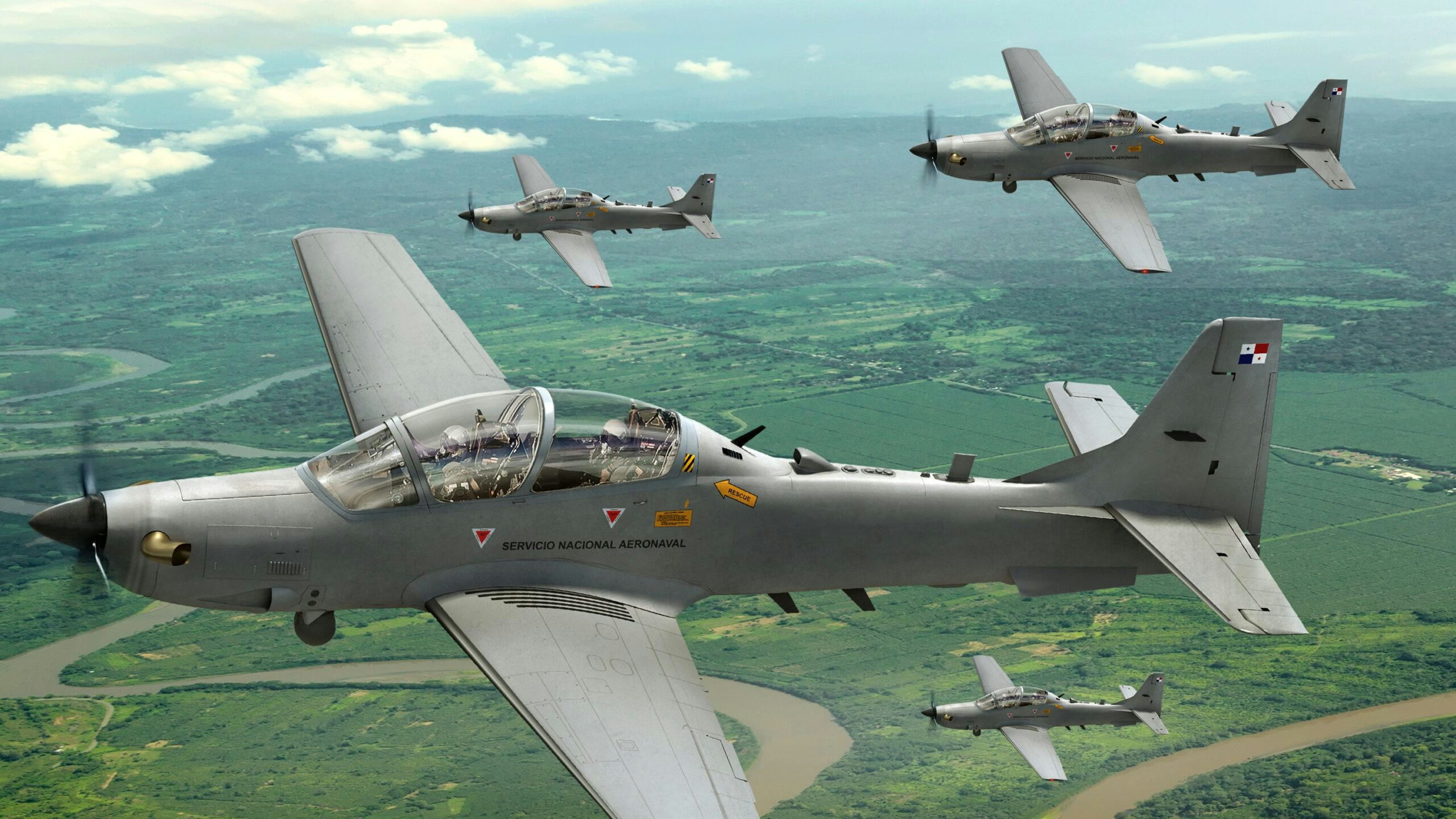
Panama Signs Agreement to Acquire Embraer Super Tucano Aircraft
Strengthening National Security Capabilities
The government of Panama has formalized a contract with Embraer for the acquisition of four A-29 Super Tucano aircraft, marking a pivotal advancement in the country’s efforts to enhance its national security and surveillance operations. These aircraft will be operated by the Panamanian National Air and Naval Service (SENAN), providing a modern and versatile platform for surveillance, reconnaissance, and protection missions.
Bosco da Costa Junior, President and CEO of Embraer Defense & Security, expressed pride in the partnership, stating that Panama’s selection of the Super Tucano—a globally recognized leader in its category—will significantly bolster the nation’s ability to maintain sovereignty. This acquisition aligns with Panama’s broader strategy to modernize and expand its operational capabilities in support of ongoing security initiatives.
Regional Context and Operational Advantages
With this agreement, Panama becomes the eighth Latin American country to incorporate the A-29 Super Tucano into its air force, joining Brazil, Chile, Colombia, Ecuador, Paraguay, Uruguay, and the Dominican Republic. The Super Tucano is renowned for its reliability, low operating costs, and operational flexibility. It has accumulated over 600,000 flight hours and is currently deployed by 22 air forces worldwide.
The aircraft’s versatility enables it to undertake a wide array of missions, including air patrol, special operations, tactical coordination, intelligence, surveillance and reconnaissance (ISR), border monitoring, counter-illicit activity operations, air escort, and pilot training. These capabilities make it a comprehensive solution for countries seeking cost-effective light-attack and surveillance platforms.
Challenges and Industry Implications
Despite the clear benefits, Panama’s integration of the Super Tucano fleet is expected to involve significant logistical challenges. The introduction of the new aircraft will require careful planning to ensure smooth incorporation into existing military frameworks. Potential delays in delivery and the necessity for extensive training programs to prepare personnel for operation and maintenance are anticipated hurdles.
The announcement has attracted attention within the defense sector, with analysts suggesting that Panama’s decision may stimulate further interest in Embraer’s Super Tucano across the region. This development could prompt competing manufacturers to intensify efforts to promote their own light-attack aircraft or emphasize distinctive features to maintain or expand their market share.
As Panama advances with this acquisition, the emphasis will be on effective integration and maximizing the operational potential of the new fleet to reinforce national security objectives.

Etihad Airways Suspends Airbus A380 Flights on Key Route

Aditya Birla Group Seeks Approval for Aircraft Leasing in GIFT City

Qatar Airways Highlights Innovation and Connectivity at Arabian Travel Market 2026

Hong Kong's Five-Year Plan Includes Andrew Fan's Aircraft Parts Processing Hub Proposal

ACIA Aero Leasing Delivers ATR72-600 to Air Nostrum

RTX Appoints Jill Albertelli as Head of Pratt & Whitney

TAT Technologies Joins Beyond Aero Hydrogen Aircraft Program

AURAK Study Highlights Barriers to Air Taxi Adoption in Emerging Economies

Xiamen Air Selects Altitude for 787 Maintenance at Heathrow

Etihad and Swissport Extend Global Partnership
