
Orchestrate AI insights into action

Trending
Categories
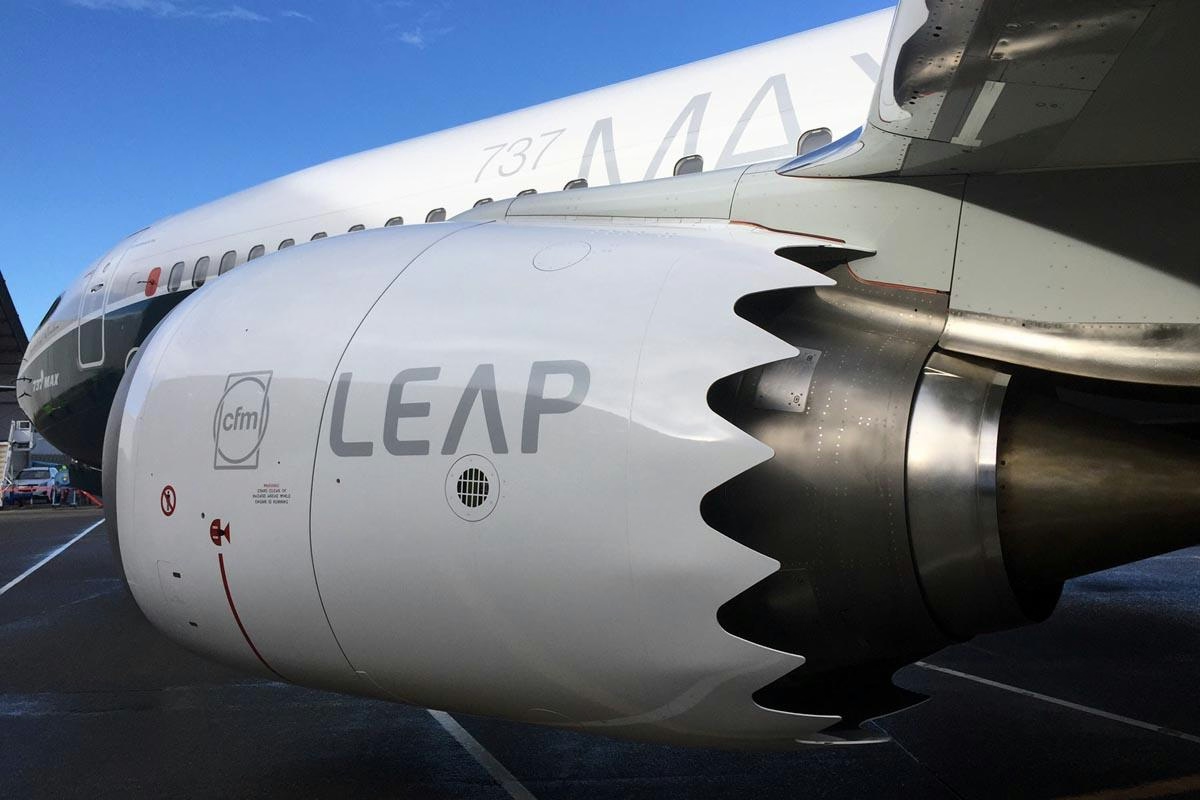
Pegasus Airlines Finalizes Agreements for CFM Leap-1B Engines
Pegasus Airlines Finalizes Agreements for CFM Leap-1B Engines
Fleet Modernization and Strategic Expansion
Pegasus Hava Tasimaciligi AS (Pegasus), a prominent Turkey-based carrier, has finalized agreements to acquire CFM Leap-1B engines, marking a pivotal advancement in the modernization of its fleet. The airline currently operates a varied fleet comprising 40 Boeing 737-800s, 2 Boeing 737-400s, an additional 3 Boeing 737-800s, alongside 2 Airbus A319s and 1 Airbus A320 in partnership with IZair. Under the ownership of ESAS Holding, Pegasus serves 24 domestic destinations and 37 international routes, connecting key cities such as Amsterdam, Berlin, London, Paris, and Zurich.
The acquisition of the Leap-1B engines reflects Pegasus’s commitment to enhancing operational efficiency and reliability amid a dynamic global aviation environment. While the U.S. Federal Aviation Administration (FAA) has recently expanded dust-related inspections for CFM Leap-1A engines in South Asia, the Leap-1B engines targeted by Pegasus remain unaffected by these regulatory measures. This context underscores the critical importance of stringent maintenance and compliance protocols for airlines operating advanced engine technologies.
Competitive Landscape and Industry Trends
Pegasus’s move comes amid intensified competition, with carriers such as Riyadh Air and Air Europa placing substantial orders for CFM engines and Airbus aircraft as part of broader fleet renewal and expansion strategies. Airlines are increasingly leveraging established partnerships with engine manufacturers to secure advantageous terms, while simultaneously investing in maintenance, repair, and overhaul (MRO) capabilities to support their growing fleets. Notably, Safran, a key partner in the CFM joint venture, recently inaugurated a new MRO facility in Hyderabad to meet rising regional demand.
The market for CFM engines remains robust, buoyed by significant recent orders from airlines including Ethiopian Airlines and leasing firms such as Avolon. This sustained demand highlights the strategic value of advanced engine technology in achieving operational efficiency and meeting evolving environmental standards.
Broader Services and Network Development
Beyond its core passenger operations, Pegasus extends maintenance services to other airlines and offers comprehensive crew, pilot, and technical training programs. The airline has also expanded its network through strategic partnerships, including a codeshare agreement with airberlin, which facilitates seamless connections from major German cities to Istanbul and onward to Ankara and Izmir.
By finalizing its agreements for the Leap-1B engines, Pegasus is positioning itself to strengthen operational reliability and maintain a competitive edge in a rapidly evolving aviation market.

Etihad Airways Suspends Airbus A380 Flights on Key Route

Aditya Birla Group Seeks Approval for Aircraft Leasing in GIFT City

Qatar Airways Highlights Innovation and Connectivity at Arabian Travel Market 2026

Hong Kong's Five-Year Plan Includes Andrew Fan's Aircraft Parts Processing Hub Proposal

ACIA Aero Leasing Delivers ATR72-600 to Air Nostrum

RTX Appoints Jill Albertelli as Head of Pratt & Whitney

TAT Technologies Joins Beyond Aero Hydrogen Aircraft Program

AURAK Study Highlights Barriers to Air Taxi Adoption in Emerging Economies

Xiamen Air Selects Altitude for 787 Maintenance at Heathrow

Etihad and Swissport Extend Global Partnership
