
Orchestrate AI insights into action

Trending
Categories
Pitt Meadows Regional Airport: A Hub for Helicopter Maintenance
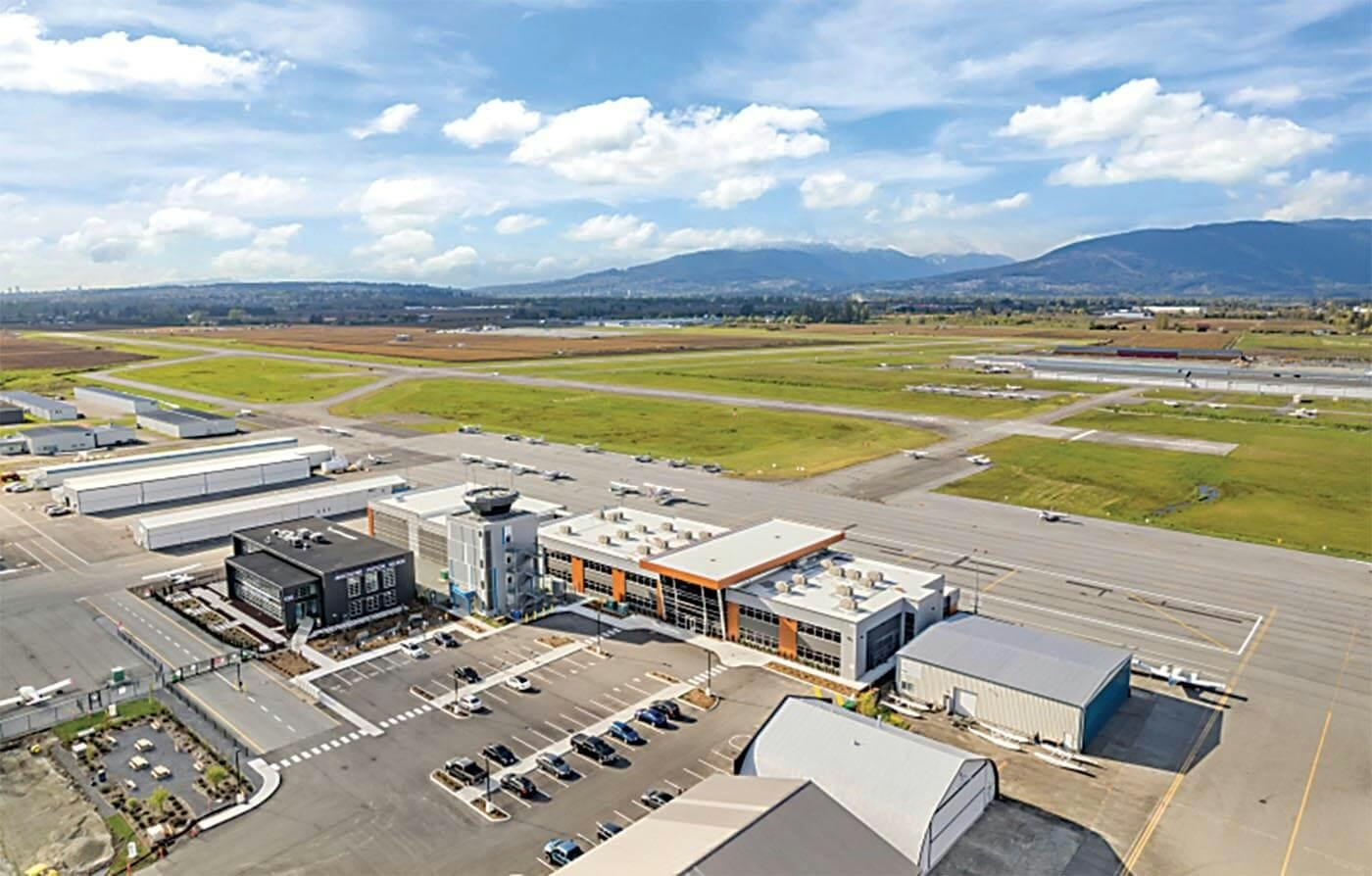
Pitt Meadows Regional Airport: A Growing Hub for Helicopter Maintenance
Nestled in the foothills of British Columbia’s Coastal Mountains, Pitt Meadows Regional Airport (YPK) is emerging as a significant centre for helicopter maintenance, repair, and overhaul (MRO) services. Located just 45 minutes from downtown Vancouver and near popular outdoor destinations, this modest yet evolving airport is strategically positioning itself to attract aerospace businesses seeking a competitive and accessible base in the region.
Strategic Location and Infrastructure Investment
Guy Miller, chief administrative officer and general manager of YPK, underscores the airport’s advantageous location in the Fraser Valley, adjacent to Vancouver International Airport (YVR). He highlights the region’s appeal, noting the comparatively lower cost of living as a key factor for companies considering expansion or relocation. Over the past eight years, Pitt Meadows has invested approximately C$11 million (US$7.9 million) in upgrading its infrastructure, including enhancements to helipads, runways, taxiways, lighting, and signage. These developments have transformed YPK into a modern facility that currently supports a diverse range of operators, from helicopter and fixed-wing aircraft to business jets and private general aviation.
Ashley Byrne, director of administration and operations, emphasizes the airport’s flexibility as a core strength. YPK offers adaptable leasing options and a variety of site configurations, setting it apart from other regional airports. With over 750 acres in total and 300 acres available for future development, the airport boasts a significantly larger land base than many competitors, providing ample room for growth and new MRO facilities.
Challenges and Future Prospects
Despite its promising trajectory, Pitt Meadows faces challenges in establishing itself as a leading helicopter maintenance hub. Regional airports in the United Kingdom, for instance, have made substantial investments in expanding capacity and developing skilled workforces for aircraft painting and maintenance, intensifying competition for international MRO contracts. The economic growth driven by these UK airports may influence market dynamics, encouraging North American counterparts to enhance their maintenance capabilities and workforce development efforts.
Geopolitical uncertainties also factor into the airport’s strategic planning. Potential disruptions to flight operations in the Gulf region due to ongoing conflicts could have ripple effects on global aviation, impacting the positioning and operational strategies of airports like Pitt Meadows that aim to attract international MRO business.
Looking ahead, YPK has ambitious plans, with up to C$120 million (US$86.3 million) earmarked for new projects over the next five years. The airport is prepared to accommodate a range of MRO operations, from mid-sized facilities employing 30 to 50 staff to larger enterprises such as an Airbus Helicopters facility. Currently, the airport features three helipads on its south side, two additional stalls on the north, and is developing a dedicated heli-park capable of housing five large hangars for rotary-wing aircraft.
As land availability tightens across the region, Pitt Meadows Regional Airport is carving out a niche as a flexible and growth-oriented hub for helicopter maintenance, navigating both local competition and evolving global aviation dynamics.

Etihad Airways Suspends Airbus A380 Flights on Key Route

Aditya Birla Group Seeks Approval for Aircraft Leasing in GIFT City

Qatar Airways Highlights Innovation and Connectivity at Arabian Travel Market 2026

Hong Kong's Five-Year Plan Includes Andrew Fan's Aircraft Parts Processing Hub Proposal

ACIA Aero Leasing Delivers ATR72-600 to Air Nostrum

RTX Appoints Jill Albertelli as Head of Pratt & Whitney

TAT Technologies Joins Beyond Aero Hydrogen Aircraft Program

AURAK Study Highlights Barriers to Air Taxi Adoption in Emerging Economies

Xiamen Air Selects Altitude for 787 Maintenance at Heathrow

Etihad and Swissport Extend Global Partnership
