
Orchestrate AI insights into action

Trending
Categories
Qantas Plans to Adopt AI Technology by 2026, Says Hudson
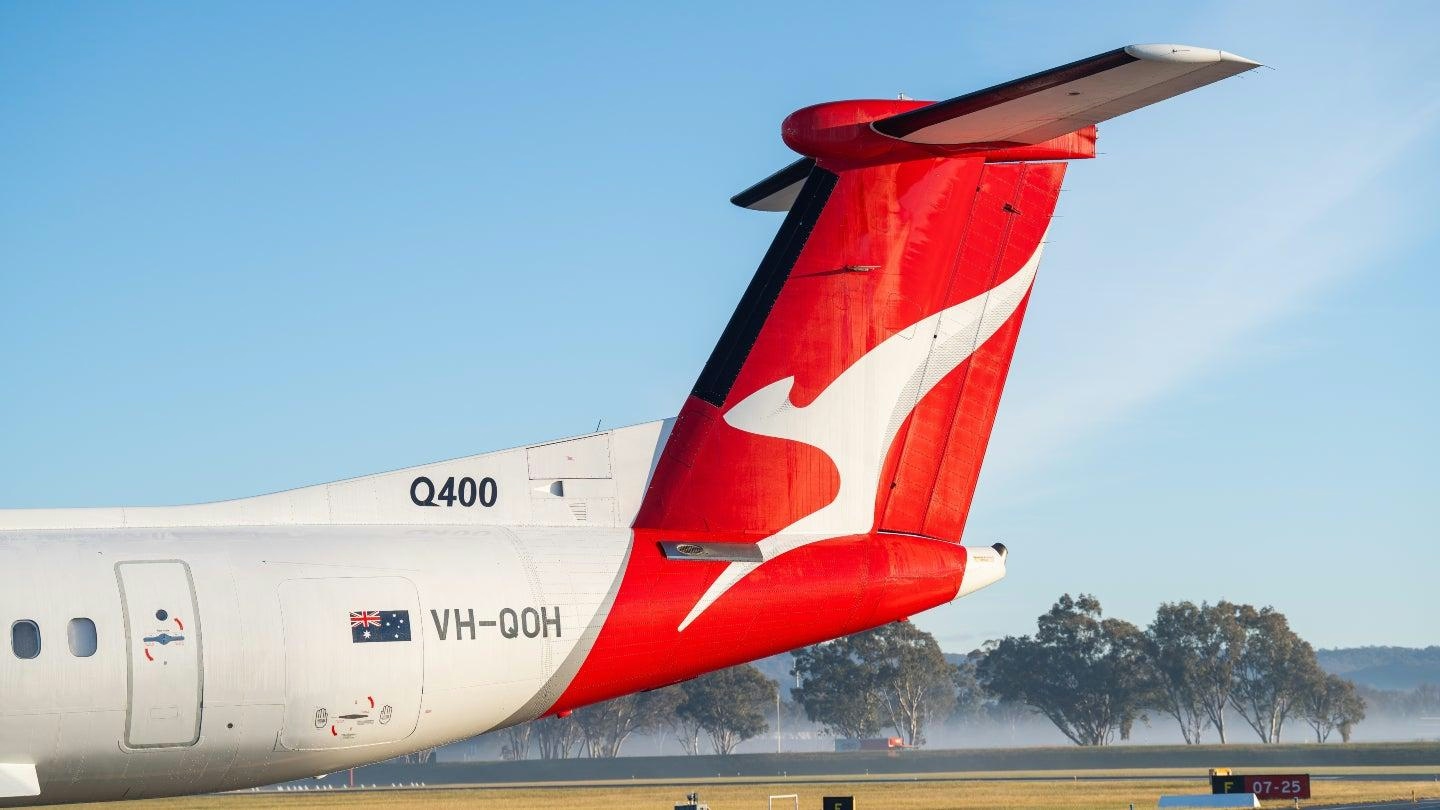
Qantas to Accelerate AI Integration Across Operations by 2026
Qantas is preparing to significantly expand its use of artificial intelligence (AI) throughout its operations by 2026, according to CEO Vanessa Hudson. In an interview for The Australian’s 2026 CEO Survey, Hudson emphasized that the airline has been methodically “laying the foundations” for broader AI adoption. She underscored the urgency for Australia to act swiftly in order to harness the “unprecedented” opportunities presented by AI technology.
This strategic shift follows the recent appointment of Rachel Yangoyan, former CEO of QantasLink, as Qantas’s inaugural chief technology, AI, and transformation officer. The creation of this role highlights the airline’s commitment to digital transformation and innovation.
AI’s Role in Enhancing Efficiency and Customer Experience
Hudson articulated the transformative potential of AI, stating that it can unlock efficiencies previously unattainable and improve both customer experience and employee support. Addressing widespread concerns about AI’s impact on employment, she dismissed “doomsday scenarios” suggesting widespread job losses. Instead, Hudson clarified that AI will not replace the majority of roles essential to airline operations. Rather, it will enable the company to work smarter, enhance service delivery, and equip employees with better tools to succeed.
She acknowledged that AI adoption will inevitably reshape many roles within Qantas, drawing parallels to past technological shifts such as the introduction of email and mobile devices. The airline envisions AI applications spanning predictive maintenance, flight planning, and human resources, with Hudson describing the potential benefits as “enormous.”
A recent trial at Brisbane Airport exemplifies this approach, where Qantas employed cameras and AI to monitor aircraft turnaround times. Hudson explained that preparing an aircraft for its next flight involves completing approximately 50 sequential tasks. By creating a real-time digital record of these operations, AI helps identify the root causes of delays, thereby improving operational efficiency.
Innovation Centre and Industry Challenges
In November, Qantas announced plans to establish a new Product Innovation Centre in Adelaide, dedicated to developing digital systems and AI tools aimed at mitigating travel disruptions. Supported by the South Australian government, the centre is slated to open in March and is expected to generate over 400 high-skilled technology jobs.
Despite these ambitions, Qantas faces broader industry challenges. The State of AI 2026 report reveals a persistent gap between AI strategy and execution, with 66% of companies reporting that AI contributes less than 5% to EBITDA. This shortfall is often attributed to inadequate data infrastructure. Experts emphasize that successful AI integration requires not only advanced technology but also comprehensive, people-centered strategies.
The competitive environment is also intensifying. According to the Fox News AI Newsletter, AI is driving a productivity surge in blue-collar sectors, suggesting that Qantas may encounter increased competition as other airlines adopt similar technologies. Additionally, policy initiatives such as the Trump administration’s efforts to accelerate AI adoption at the federal level could further reshape market dynamics and heighten competitive pressures.
As Qantas advances its AI strategy, the airline will need to carefully navigate these challenges to ensure that its investments yield measurable improvements in both operational performance and customer satisfaction.

Etihad Airways Suspends Airbus A380 Flights on Key Route

Aditya Birla Group Seeks Approval for Aircraft Leasing in GIFT City

Qatar Airways Highlights Innovation and Connectivity at Arabian Travel Market 2026

Hong Kong's Five-Year Plan Includes Andrew Fan's Aircraft Parts Processing Hub Proposal

ACIA Aero Leasing Delivers ATR72-600 to Air Nostrum

RTX Appoints Jill Albertelli as Head of Pratt & Whitney

TAT Technologies Joins Beyond Aero Hydrogen Aircraft Program

AURAK Study Highlights Barriers to Air Taxi Adoption in Emerging Economies

Xiamen Air Selects Altitude for 787 Maintenance at Heathrow

Etihad and Swissport Extend Global Partnership
