
Orchestrate AI insights into action

Trending
Categories
Russian Aircraft Engines Developed to Prevent Accidents
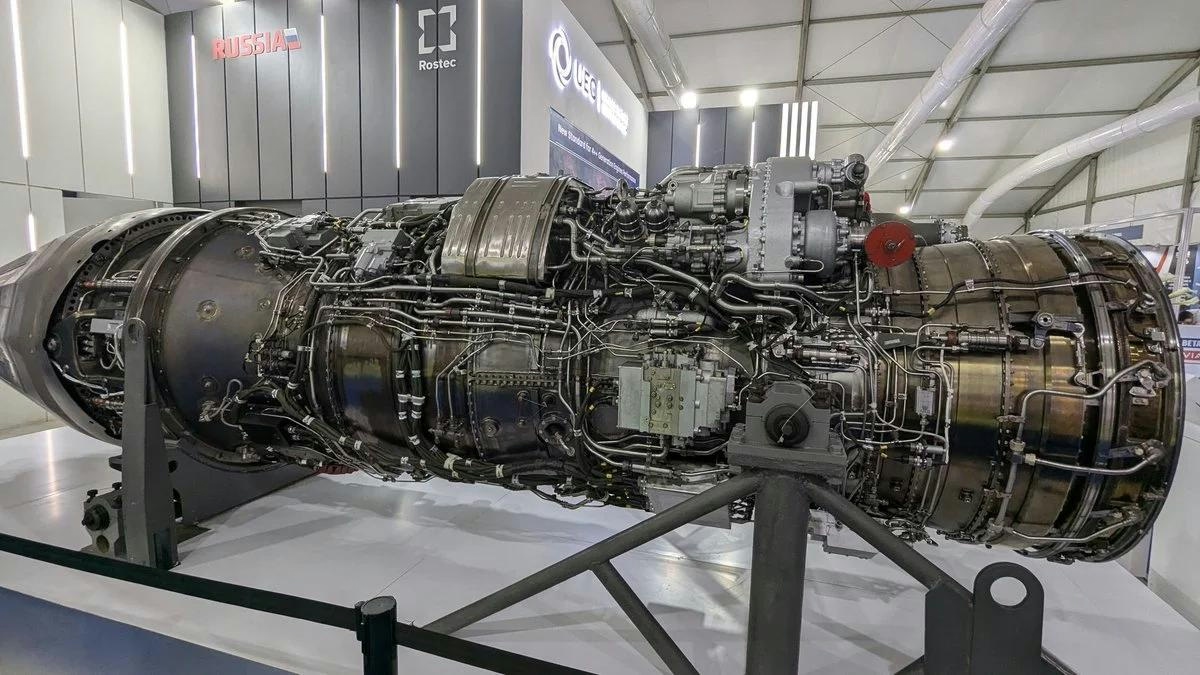
Russian Aircraft Engines Introduce Advanced Safety System to Prevent Accidents
The United Engine Corporation (ODK), a subsidiary of Rostec, has developed a new control and protection system for gas turbine engines (GTE) aimed at preventing accidents caused by sudden fluctuations in fuel consumption. This innovation is designed to improve the reliability and safety of Russian aircraft power plants amid a rapidly changing global aviation environment.
Enhanced Monitoring and Control Mechanism
The newly introduced system continuously tracks the position of the metering needle within the engine’s fuel assembly in real time. Should the needle deviate from its designated parameters—indicating a potential malfunction—the electronic controller promptly detects the anomaly and activates a backup control mechanism. Unlike earlier systems that responded solely to increases in engine speed, this technology addresses the underlying issue by monitoring unauthorized movements of the metering needle. This proactive approach helps to prevent sudden overheating, surges, and possible damage to engine components.
Central to the system’s design are two solenoid valves that automatically regulate fuel supply in cases of excess or deficiency. The electronic controls rapidly restore the engine’s parameters to an optimal operating range, ensuring that thrust remains stable and within required limits.
Implications Amid Geopolitical and Market Challenges
The introduction of this advanced safety technology comes at a time when Russian aircraft engine manufacturers are confronting significant challenges due to Western sanctions. These restrictions have complicated international partnerships and disrupted production plans, prompting Russian firms to explore new markets and collaborations. Notably, the partnership between Hindustan Aeronautics Limited (HAL) and United Aircraft Corporation (UAC) for local production of the SJ-100 in India exemplifies growing interest from countries seeking to circumvent Western sanctions and diversify their aviation suppliers.
These developments are reshaping market dynamics, with increased attention to Russian engines from sanction-affected regions potentially altering competitive balances, particularly in Southeast Asia where demand for new aircraft remains robust. Western engine manufacturers, including those supplying Boeing’s 777X—which is nearing certification—are expected to intensify efforts to maintain market share by advancing their own safety and reliability features.
The emphasis on accident prevention and technological innovation in Russian engine design may thus stimulate broader competition within the industry, encouraging manufacturers worldwide to enhance safety systems and reliability. As the aviation sector adapts to geopolitical and technological shifts, advancements such as ODK’s new engine control system are poised to play a significant role in shaping the future of aircraft safety and market dynamics.

Etihad Airways Suspends Airbus A380 Flights on Key Route

Aditya Birla Group Seeks Approval for Aircraft Leasing in GIFT City

Qatar Airways Highlights Innovation and Connectivity at Arabian Travel Market 2026

Hong Kong's Five-Year Plan Includes Andrew Fan's Aircraft Parts Processing Hub Proposal

ACIA Aero Leasing Delivers ATR72-600 to Air Nostrum

RTX Appoints Jill Albertelli as Head of Pratt & Whitney

TAT Technologies Joins Beyond Aero Hydrogen Aircraft Program

AURAK Study Highlights Barriers to Air Taxi Adoption in Emerging Economies

Xiamen Air Selects Altitude for 787 Maintenance at Heathrow

Etihad and Swissport Extend Global Partnership
