
Orchestrate AI insights into action

Trending
Categories
Singapore Airlines Shares Fall Amid Supply Chain Challenges Ahead of SGX Reopening
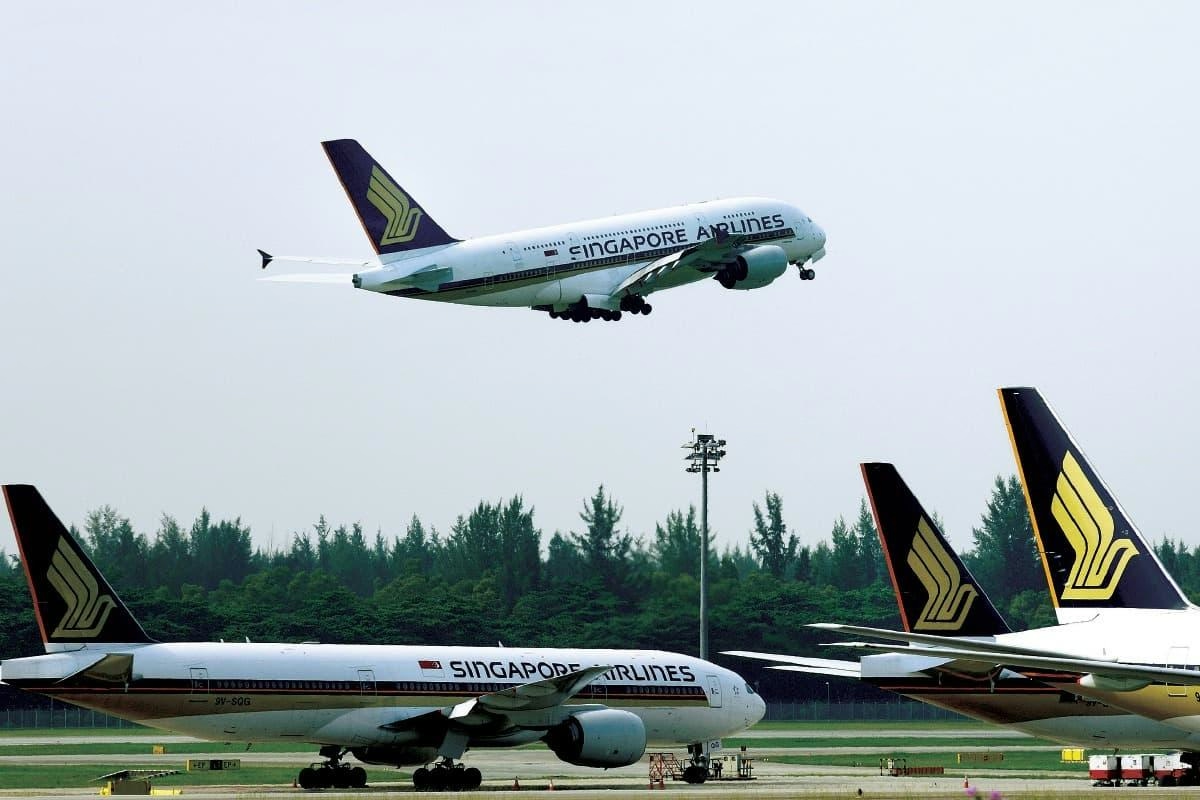
Singapore Airlines Shares Decline Amid Persistent Supply Chain Challenges Ahead of SGX Reopening
Singapore Airlines shares closed marginally lower by 0.15% at S$6.70 on Friday, reflecting ongoing concerns over supply chain disruptions that continue to pressure the aviation sector. The decline coincides with mounting apprehension about delays in aircraft and engine parts, which have significantly increased maintenance and inventory costs for airlines worldwide.
Supply Chain Disruptions and Industry Response
At the recent Singapore Airshow, industry leaders characterized supply delays as the “new norm,” emphasizing that these challenges are unlikely to abate in the near term. Leslie Thng, CEO of Scoot, highlighted the carrier’s need to “secure more spare engines at our own expense” to mitigate operational disruptions. The International Air Transport Association (IATA) reinforced these concerns, warning that supply chain issues will remain a substantial obstacle for airlines throughout 2026.
These difficulties are further exacerbated by broader geopolitical tensions and industrial bottlenecks. On the eve of the airshow, Subhas Menon, outgoing director general of the Association of Asia Pacific Airlines, urged for increased regional investment to bolster the aerospace sector and reduce ongoing supply chain vulnerabilities.
Strategic Measures and Market Outlook
In response to these challenges, Singapore Airlines has taken proactive steps to strengthen its operational resilience. The airline recently extended its component services contract with Collins Aerospace for its Boeing 777 fleet by an additional five years, underscoring the critical importance of dependable maintenance support as carriers are compelled to operate older aircraft for longer periods. IATA estimates that operating aging fleets contributed an additional $11 billion in expenses across the industry last year.
Investor attention is now focused on Singapore Airlines’ forthcoming third-quarter FY2025/26 business update, scheduled for release after market close on February 24. Key concerns include how the airline is managing margin pressures stemming from rising maintenance, leasing, and inventory costs, and whether it can counterbalance these through pricing power or improved yields. There is also apprehension that increased competition on major regional routes may force Singapore Airlines to absorb higher costs rather than pass them on to customers.
Fuel prices added further uncertainty, with Brent crude closing at $68.05 per barrel on Friday, up 0.74%, amid ongoing U.S.-Iran negotiations. The broader Singapore market also retreated, with the Straits Times Index falling 0.8%, ending a three-day winning streak and exerting additional pressure on transport stocks.
As trading resumes on Monday, market participants will be closely monitoring whether aviation shares continue to decline in response to the airshow’s supply chain narratives or if investors will view the dip as a buying opportunity. For Singapore Airlines, the central challenge remains balancing operational resilience—such as stockpiling spare parts—with the risks of capital lock-up and elevated short-term costs. Should supply bottlenecks intensify or fuel prices rise sharply, escalating expenses and potential disruptions to punctuality could further weigh on demand and profitability.
All eyes will be on the February 24 business update, where investors seek clarity on unit revenue trends, capacity management, and the true cost of maintaining Singapore Airlines’ fleet amid ongoing industry turbulence.

Etihad Airways Suspends Airbus A380 Flights on Key Route

Aditya Birla Group Seeks Approval for Aircraft Leasing in GIFT City

Qatar Airways Highlights Innovation and Connectivity at Arabian Travel Market 2026

Hong Kong's Five-Year Plan Includes Andrew Fan's Aircraft Parts Processing Hub Proposal

ACIA Aero Leasing Delivers ATR72-600 to Air Nostrum

RTX Appoints Jill Albertelli as Head of Pratt & Whitney

TAT Technologies Joins Beyond Aero Hydrogen Aircraft Program

AURAK Study Highlights Barriers to Air Taxi Adoption in Emerging Economies

Xiamen Air Selects Altitude for 787 Maintenance at Heathrow

Etihad and Swissport Extend Global Partnership
