
Orchestrate AI insights into action

Trending
Categories
South Korea Orders Fuel Inspections on Boeing Jets Following Air India Crash Report
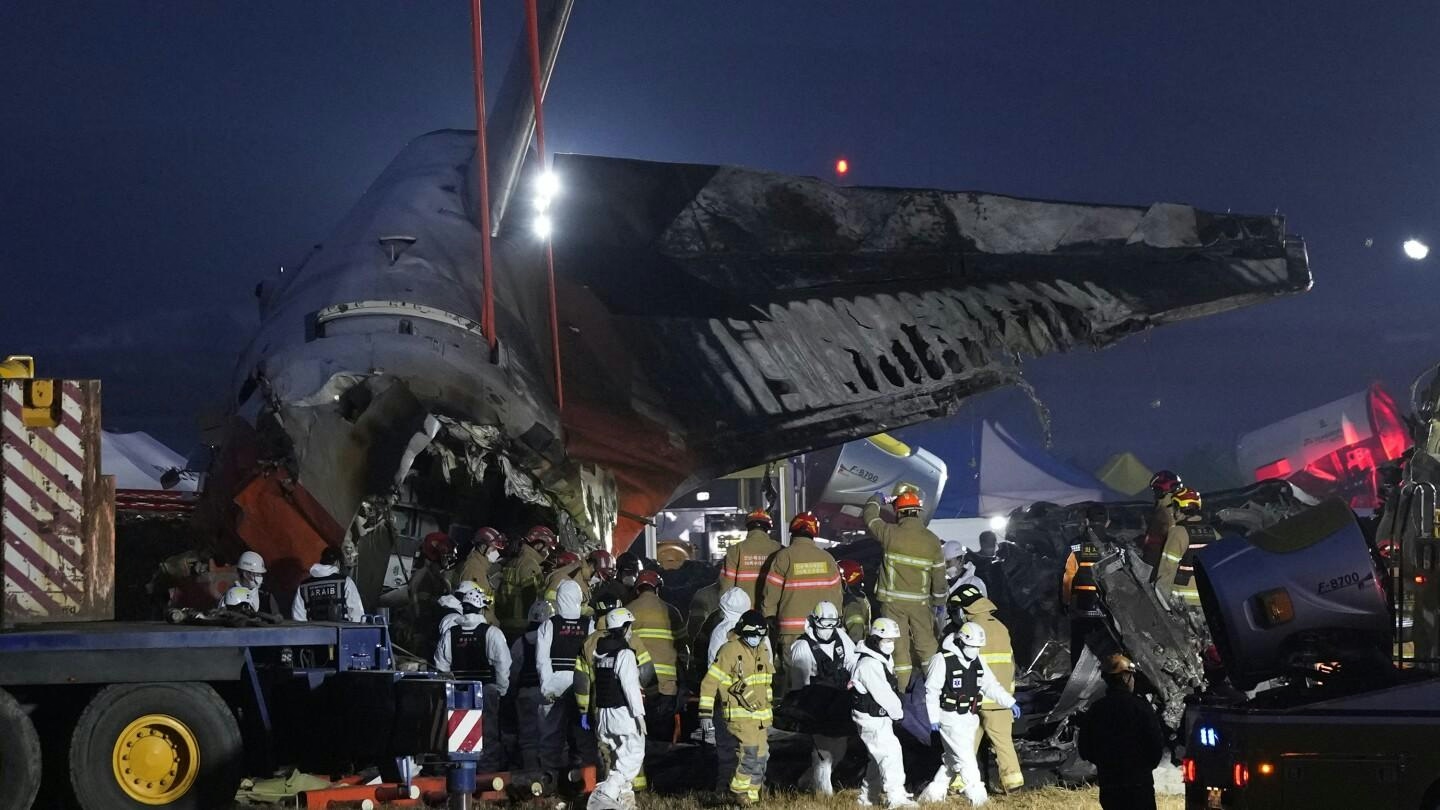
South Korea Orders Fuel Inspections on Boeing Jets Following Air India Crash Report
Urgent Safety Measures in Response to Air India Tragedy
South Korea has mandated immediate inspections of fuel switch locks on all Boeing aircraft operated by domestic airlines, following the fatal crash of Air India Flight AI-171. This directive arises from preliminary findings in the ongoing investigation, which have raised concerns about the reliability of these components. The scrutiny of fuel switch locks has now become a focal point for aviation regulators worldwide.
The crash, which occurred in June, involved a Boeing 787-8 bound for London and resulted in the deaths of 241 of the 242 passengers and crew onboard. Early reports indicate that the aircraft’s engines lost fuel supply shortly after takeoff. Investigators from the Aircraft Accident Investigation Bureau (AAIB) have cited a 2018 advisory issued by the U.S. Federal Aviation Administration (FAA), which warned of potential malfunctions in fuel switch locking mechanisms. This advisory has prompted a global reassessment of safety protocols related to these components.
Regulatory Response and Industry Reactions
South Korea’s Ministry of Transport confirmed that the inspections will adhere to the FAA’s 2018 guidelines, although no specific timeline for completion has been announced. A ministry spokesperson characterized the inspections as precautionary measures aligned with international safety standards. This move follows similar actions by Etihad Airways, which has already initiated inspections of its Boeing fleet in response to the FAA advisory.
Despite the heightened attention on fuel switch locks, both the FAA and Boeing have maintained that these components remain safe and airworthy. Boeing declined to comment directly, referring inquiries to the FAA, which has yet to release a public statement regarding the issue.
Ongoing Investigation and Industry Implications
The investigation into the Air India crash continues, with authorities seeking to determine whether the disaster was caused by mechanical failure, such as a malfunctioning fuel switch, or by pilot error. Air India’s CEO, Campbell Wilson, has urged caution against premature conclusions, emphasizing in an internal memo that the inquiry is far from complete.
This incident has intensified regulatory vigilance and sparked a broader debate within the global aviation community about the necessity of revisiting and potentially strengthening older safety advisories in light of changing operational conditions. As South Korean airlines and others commence their inspections, the aviation industry faces renewed pressure to ensure that all certified components meet the highest standards of safety and reliability.

Etihad Airways Suspends Airbus A380 Flights on Key Route

Aditya Birla Group Seeks Approval for Aircraft Leasing in GIFT City

Qatar Airways Highlights Innovation and Connectivity at Arabian Travel Market 2026

Hong Kong's Five-Year Plan Includes Andrew Fan's Aircraft Parts Processing Hub Proposal

ACIA Aero Leasing Delivers ATR72-600 to Air Nostrum

RTX Appoints Jill Albertelli as Head of Pratt & Whitney

TAT Technologies Joins Beyond Aero Hydrogen Aircraft Program

AURAK Study Highlights Barriers to Air Taxi Adoption in Emerging Economies

Xiamen Air Selects Altitude for 787 Maintenance at Heathrow

Etihad and Swissport Extend Global Partnership
