
Orchestrate AI insights into action

Trending
Categories
Successful Demonstration of Mission Autonomy Technology
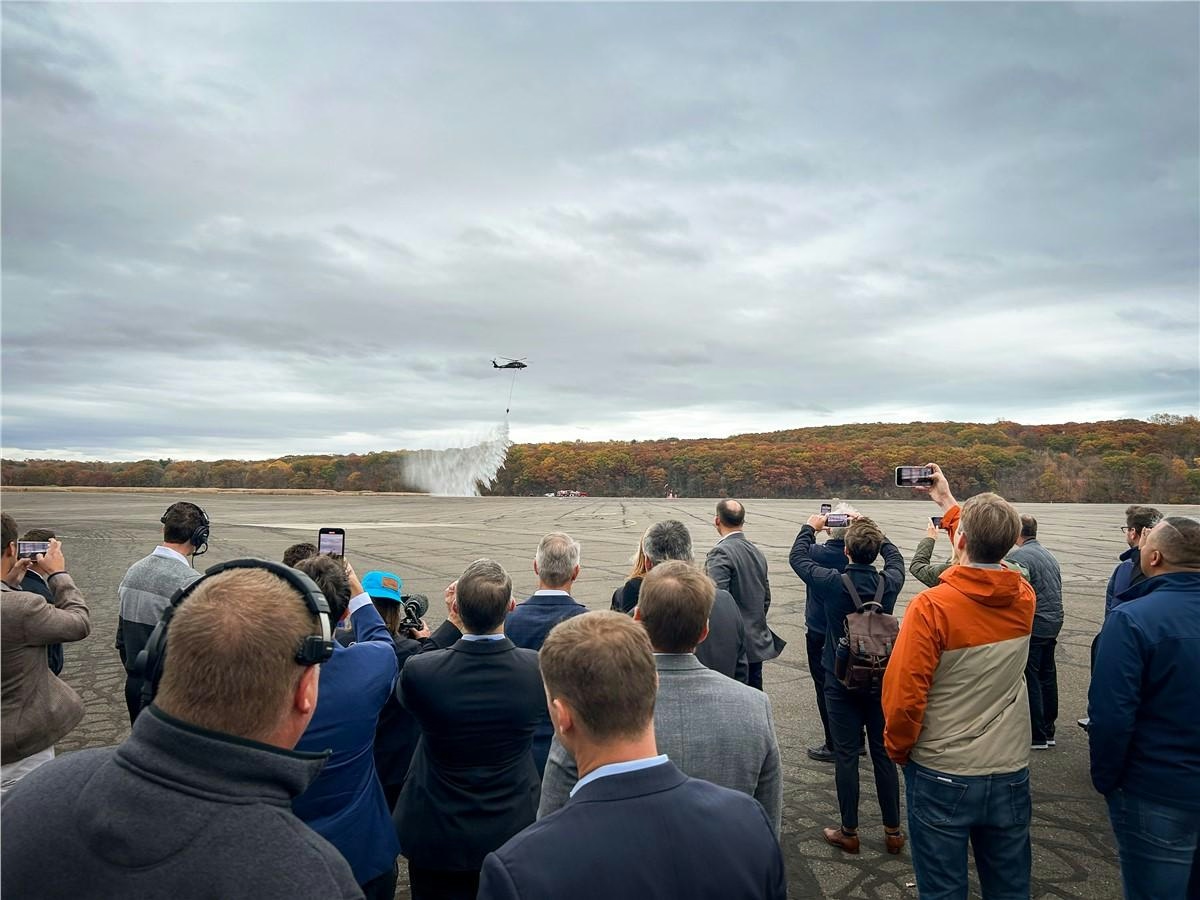
Successful Demonstration of Mission Autonomy Technology for UAVs
Tokyo, March 17, 2026 — Mitsubishi Heavy Industries, Ltd. (MHI) has announced the successful flight demonstration of an AI-powered mission autonomy system designed for Unmanned Aerial Vehicles (UAVs). This breakthrough was achieved using the Hivemind Enterprise AI development environment, developed by U.S.-based Shield AI Inc. Completed within an accelerated timeframe of just eight weeks, the project encompassed AI development, UAV integration, and live flight testing, marking a significant advancement in Japan’s pursuit of cutting-edge autonomous technologies.
Development and Demonstration Milestones
The mission autonomy initiative commenced in September 2025, with flight demonstrations conducted on November 7 in Ibaraki Prefecture and December 18 in Gunma Prefecture. Following extensive training, simulation, and Hardware-in-the-Loop (HIL) testing, the AI system was integrated into the ARMD (Affordable Rapid-prototyping Mitsubishi-Drone) UAV. The successful flights validated both the system’s operational capabilities and the efficiency of the streamlined development process.
Previously, MHI relied on a complex in-house environment composed of multiple open-source tools for coding, AI training, and simulation, which required substantial resources and time. By adopting the Hivemind Enterprise platform, MHI was able to simplify the development workflow and concentrate efforts on enhancing mission autonomy. This collaboration underscores the growing importance of advanced AI platforms in accelerating innovation within the aerospace sector.
Strategic Importance and Industry Implications
Mission autonomy is increasingly recognized as a pivotal technology shaping the future of UAV operations in Japan. MHI has emphasized the critical need for domestic production to safeguard technological sovereignty and national security. The company intends to deepen its partnership with Shield AI to expedite the development and deployment of mission autonomy systems.
Despite these advances, integrating autonomous systems into existing military frameworks presents significant challenges. Key issues include ensuring data security and privacy, navigating complex regulatory environments, and achieving seamless interoperability with current defense infrastructure. The rapid progress demonstrated by MHI and Shield AI is expected to influence market dynamics, potentially spurring increased investment in autonomous technology firms. Competitors may accelerate their own autonomy initiatives to maintain a competitive edge in this evolving landscape.
Globally, the autonomous systems sector is advancing swiftly. Recent successful demonstrations by the U.S. Air Force and General Atomics Aeronautical Systems Inc. have highlighted the potential of advanced manned-unmanned teaming, signaling a broader shift toward integrated autonomous capabilities in defense. This trend is anticipated to drive further innovation and intensify competition among defense contractors worldwide.
MHI remains committed to leveraging state-of-the-art AI technologies to address societal challenges and contribute to a safer, more secure, and comfortable society. The company’s efforts in mission autonomy align with its broader vision of advancing Japan’s technological leadership in aerospace and defense.
About Mitsubishi Heavy Industries Group
Mitsubishi Heavy Industries (MHI) Group is a global leader in energy, smart infrastructure, industrial machinery, aerospace, and defense. Combining advanced technology with extensive experience, MHI delivers integrated solutions aimed at achieving carbon neutrality, enhancing quality of life, and ensuring global safety.
Embraer Delivers 2,000th E-Jet as Airbus A220 Seeks Market Share
iniBuilds Releases Second In-Depth A380 Video
Ryanair and Alaska Airlines Apply AI to Operational Decision-Making

Digital Payments, AI, and Aviation Strengthen Philippines-India Relations
PlaneSense Suspends PC-12 Jet Card Sales
How AI Could Transform Bird-Strike Prevention for Business Aviation
American Airlines and Boeing Complete First 737 MAX Landing Gear Swap
Vietjet and Thales sign major MRO and AI deals in Paris
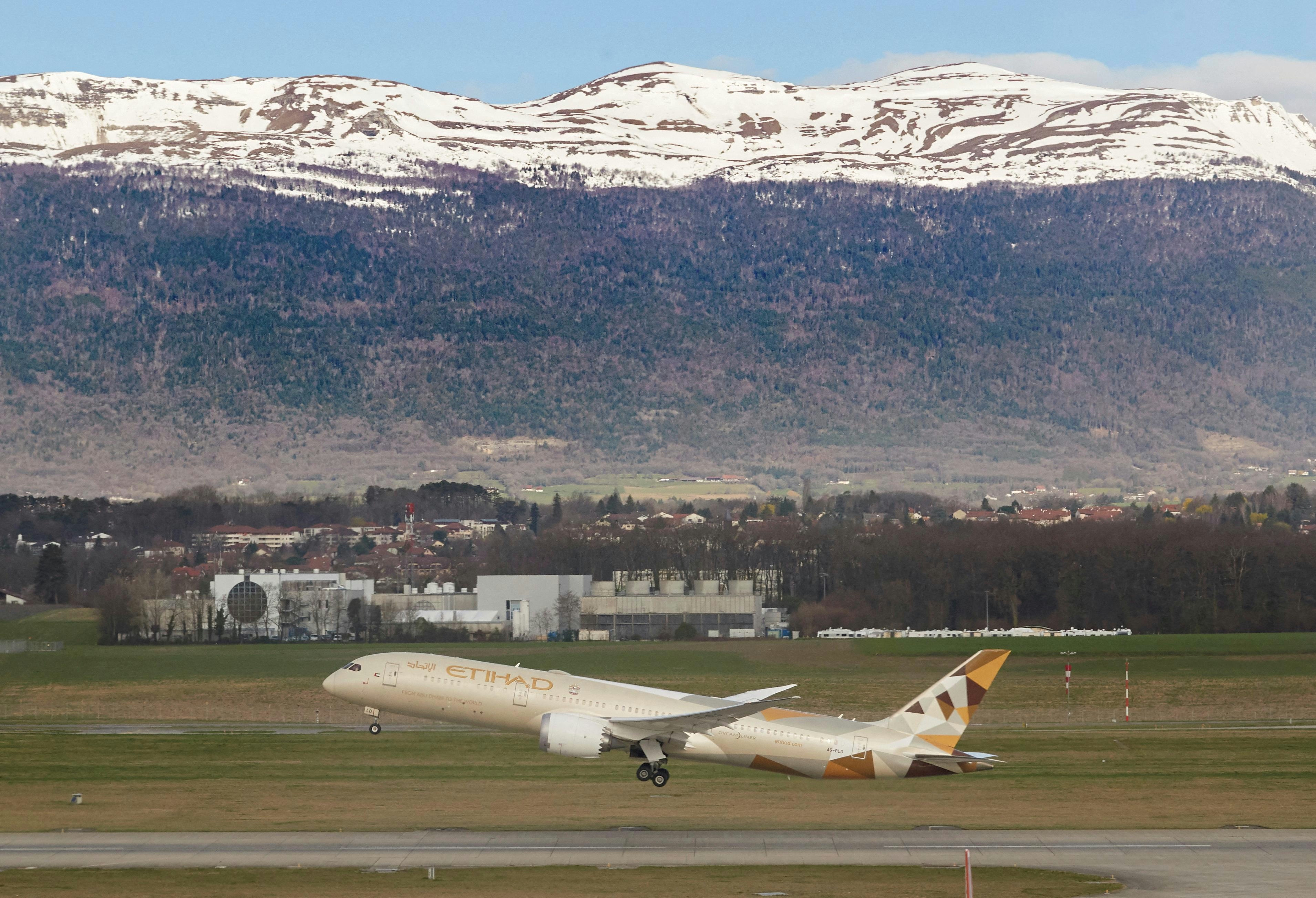
Etihad CEO Cites Aircraft Capacity as Limiting Factor Amid Growth in China and Africa
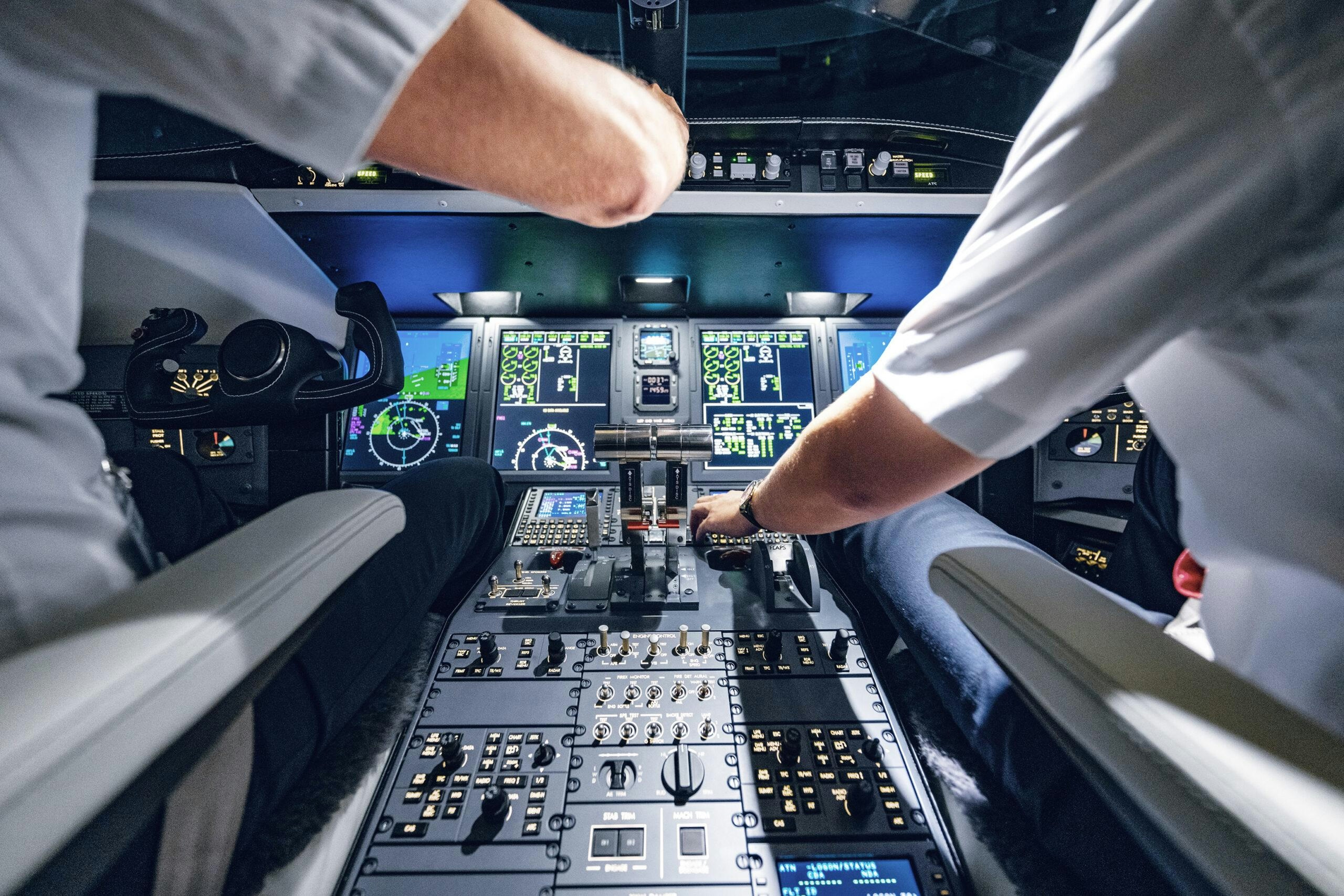
Artificial Intelligence Enters the Cockpit
