Image

AeroGenie — Your Intelligent Copilot.

Ask anything. Analyze everything. Act instantly.

Trending

Categories

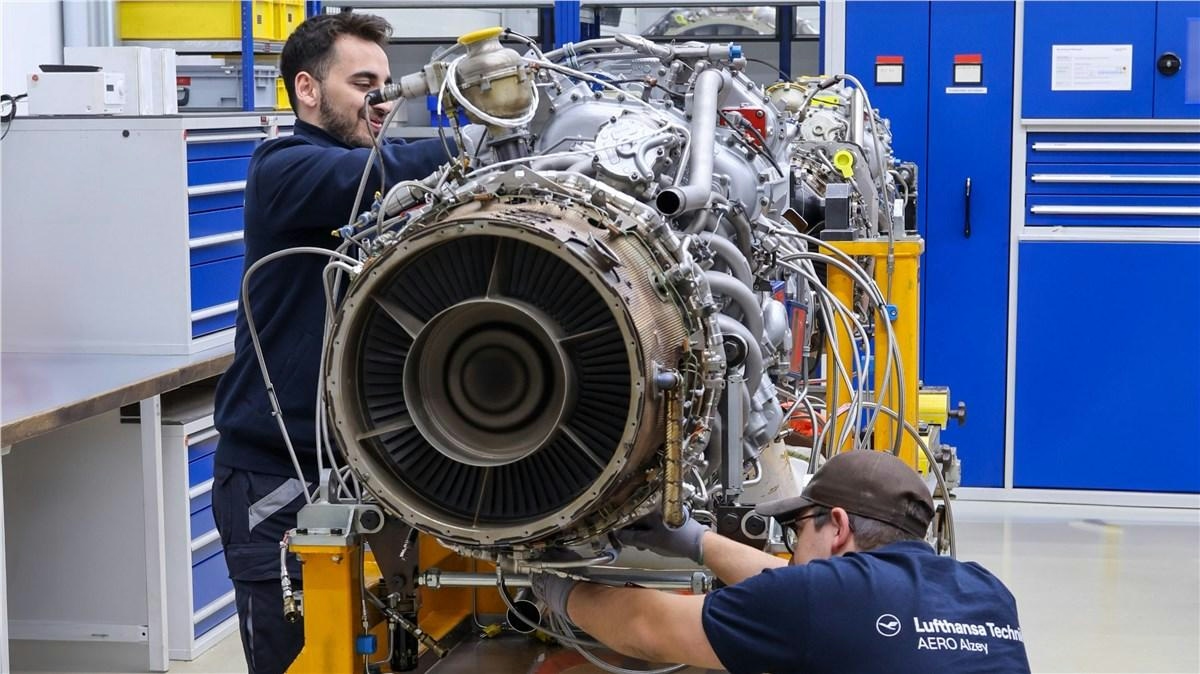
SunExpress Partners with Lufthansa Technik for CFM56 and LEAP Engine Maintenance
January 15, 2026By ePlane AI
SunExpress Partners with Lufthansa Technik for CFM56 and LEAP Engine Maintenance
0
0
SunExpress Airlines
Lufthansa Technik
CFM56 Engine Maintenance

SunExpress Partners with Lufthansa Technik for CFM56 and LEAP Engine Maintenance

European leisure airline SunExpress has formalized two extensive five-year maintenance, repair, and overhaul (MRO) agreements with Lufthansa Technik, encompassing the entire engine fleet of its Boeing 737 aircraft. These contracts cover both the CFM56-7B engines powering SunExpress’s current Boeing 737-800s and the advanced CFM LEAP-1B engines installed on its growing fleet of 737-8 models.

Strengthening Capabilities Across Engine Generations

The collaboration marks a strategic advancement for Lufthansa Technik, reinforcing its stronghold in the established CFM56 market while expanding its presence in the rapidly developing LEAP-1B segment. The majority of maintenance activities will be carried out at Lufthansa Technik’s Hamburg facilities, supplemented by additional capacity and operational flexibility through the XEOS joint venture with GE Aerospace in Poland.

Cemil Sayar, Chief Operating Officer at SunExpress, highlighted the significance of the partnership in maintaining operational excellence, stating, “This strategic partnership reinforces our commitment to maintaining the highest standards of reliability and performance across our Boeing 737 fleet.” Harald Gloy, Chief Operations Officer at Lufthansa Technik, underscored the importance of supporting both legacy and next-generation engine technologies. He noted, “The rollover to the latest-generation types such as the LEAP-1B engine is progressing steadily, but its venerable CFM56-7B predecessor is also still going strong… we are pleased that we can offer SunExpress our enormous expertise for both generations.”

Navigating Industry Challenges and Future Outlook

As SunExpress continues its expansion, the airline faces the dual challenge of sustaining competitive pricing while ensuring the reliability and cost-efficiency of its engine maintenance. Industry analysts suggest that this partnership could establish a new benchmark for service quality in the sector, potentially prompting competitors to seek similar alliances or to invest in their own MRO capabilities to maintain market competitiveness.

The aviation industry’s growing emphasis on engine durability and stringent regulatory inspections—particularly for LEAP engines operating in harsh, dusty environments—may shape SunExpress’s maintenance strategies under the new agreements. Furthermore, ongoing delays in engine deliveries and the extended timeline for certifications across various engine platforms, expected to continue into 2026, could influence the airline’s operational planning and maintenance demands.

By aligning with Lufthansa Technik, SunExpress aims to effectively address these evolving challenges while supporting its fleet growth and upholding high operational standards.

More news
Capital A Reports Net Profit Boosted by One-Time Gain

Capital A Reports Net Profit Boosted by One-Time Gain

Capital A Reports Net Profit Boosted by One-Time Gain Capital A Berhad, formerly known as AirAsia Group, has announced a significant increase in net profit for both the fourth quarter and the full year ending December 31, 2025. This surge follows a major strategic transformation marked by the disposal of its aviation assets to AirAsia X on December 3, 2025, a transaction that has fundamentally altered the company’s business structure. The group’s unaudited financial results, released on February 25, 2026, highlight the impact of this divestment on its overall performance. Fourth Quarter 2025 Financial Performance In the fourth quarter, Capital A’s net profit experienced a dramatic rise, primarily driven by a substantial one-off gain from the sale of its airline business. The group reported revenue of RM1.06 billion, reflecting a 16 percent year-on-year increase in its core non-aviation operations. Earnings before interest, taxes, depreciation, and amortization (EBITDA) rose by 7 percent to RM111 million. However, net operating profit declined by 12 percent to RM45 million, influenced by lower interest income. The standout figure was the profit after tax, which soared to RM9.82 billion, propelled by the exceptional gain from the aviation disposal. Shareholder equity also turned positive, reaching RM937 million. While the headline profit was significantly enhanced by this one-time event, the absence of similar gains in future periods may challenge Capital A’s ability to maintain such elevated profitability. This situation is likely to encourage the company to prioritize operational efficiencies and strategic investments to sustain growth momentum. Core Business Developments Following the separation of its aviation operations, Capital A’s performance now rests on five key non-aviation pillars: Asia Digital Engineering (ADE), Teleport, AirAsia MOVE, Santan, and AirAsia Next. Asia Digital Engineering recorded its strongest quarterly growth, with revenue climbing 31 percent year-on-year to RM247 million. EBITDA for this maintenance, repair, and overhaul unit surged 79 percent to RM55 million, supported by an expanding portfolio of third-party contracts, including work for Air France. Teleport, the group’s logistics arm, continued to expand, benefiting from increased cargo demand and the broader network of the enlarged AirAsia X platform. To support regional expansion into markets such as Thailand, the Philippines, and Bahrain, Capital A is finalizing a US$100 million debt facility for ADE. Full-Year 2025 Summary and Strategic Outlook For the full year, Capital A reported revenue of RM3.39 billion, EBITDA of RM443 million, and a net operating profit of RM171 million. Management has indicated that the group’s “reset” phase is now complete, with a renewed focus on growth initiatives. Asia Digital Engineering is preparing for an initial public offering, supported by a US$50 million pre-IPO capital injection from HPS Investment Partners. Meanwhile, the newly enlarged AirAsia X, which now holds the aviation assets, has set ambitious targets for fiscal year 2026, aiming for RM25 billion in revenue and RM5 billion in EBITDA. Despite these positive developments, Capital A’s recent profit surge, heavily reliant on one-off gains, may attract scrutiny from investors and analysts. The company faces competitive pressures from rivals such as AirAsia and Batik Air, who may respond with pricing strategies or enhanced service offerings to protect their market share. Market perceptions of Capital A’s evolving business model and its prospects for sustainable earnings growth will be critical in shaping investor confidence, potentially influencing the company’s stock performance and capital-raising capabilities. As Capital A embarks on this new phase, its ability to generate consistent growth through its non-aviation businesses will remain under close observation by the market.
UAE Expands Role as Global Center for Aircraft Maintenance and Repair

UAE Expands Role as Global Center for Aircraft Maintenance and Repair

UAE Expands Role as Global Center for Aircraft Maintenance and Repair The United Arab Emirates (UAE) is increasingly establishing itself as a premier global hub for aircraft maintenance, repair, and overhaul (MRO). This development is underpinned by the country’s status as a major aviation market and the home base for rapidly expanding national carriers such as Emirates, Etihad Airways, flydubai, and Air Arabia. These airlines operate extensive, modern fleets and serve tens of millions of passengers annually, generating sustained demand for comprehensive MRO services within the UAE. Strategic Developments and Industry Growth The UAE’s influence in the MRO sector extends well beyond its regional borders, attracting airlines and service providers from around the world. The country exports technical and engineering expertise to international markets, further solidifying its global standing. Key specialized zones, including Dubai South and the Mohammed bin Rashid Aerospace Hub, have witnessed significant growth. These zones have attracted numerous regional and international companies specializing in maintenance services, technical support, and aircraft equipment. The expansion of advanced hangar facilities and heavy maintenance capabilities within these hubs has further enhanced the UAE’s reputation as a center of excellence in the aviation maintenance industry. In 2025, the Mohammed bin Rashid Aerospace Hub entered into strategic agreements with several prominent global players. These include Avia Solutions Group (ASG), the world’s largest provider of Aircraft, Crew, Maintenance, and Insurance (ACMI) services; Atherion Aerospace, a subsidiary of Economic Group Holdings; UUDS, a leader in business aviation; Tariq Al Futtaim Group; and Al Burj Holding. The hub also announced plans for new facilities designed to attract leading global airlines and luxury retail brands, signaling a broadening of its commercial and service offerings. Market research underscores the sector’s robust growth trajectory. BlueWeave Consulting valued the UAE’s aircraft MRO market at approximately $3.06 billion in 2025, projecting a compound annual growth rate (CAGR) of 5.09 percent, which would bring the market to an estimated $4.33 billion by 2032. This expansion is driven by ongoing fleet growth and increased commercial air traffic. According to Grand View Research, the UAE accounted for roughly 2.8 percent of global aircraft MRO revenues in 2024, with expectations for continued growth. Globally, the aircraft MRO market is estimated at around $90 billion, with rising air travel demand and fleet modernization fueling further expansion. Challenges and Competitive Landscape Despite these positive developments, the UAE’s ambitions to become a dominant global MRO center face several challenges. Industry leaders, including Airbus CEO Guillaume Faury, have pointed to persistent supply chain disruptions that could hinder growth and operational efficiency within the sector. Moreover, competition is intensifying as other global maintenance hubs expand their capacities. Dubai Aerospace Enterprise (DAE), a significant competitor within the UAE, is actively scaling up its MRO capabilities. International rivals are also making substantial investments to maintain and enhance their market positions. For instance, RTX recently committed $139 million toward aircraft MRO investments in Singapore, highlighting the increasingly competitive global environment. Nevertheless, the UAE’s proactive approach—characterized by strategic partnerships, substantial infrastructure investments, and a focus on innovation—continues to reinforce its position as a pivotal center for aircraft maintenance and repair. These efforts position the country for sustained growth and influence within the global aviation industry.
Adani Defence Raises Stake in Air Works India to 99.98% Amid MRO Consolidation

Adani Defence Raises Stake in Air Works India to 99.98% Amid MRO Consolidation

Adani Defence Raises Stake in Air Works India to 99.98% Amid MRO Sector Consolidation Adani Defence Systems & Technologies Ltd (ADSTL), a subsidiary of Adani Enterprises, has increased its ownership in Air Works India to 99.98% by acquiring an additional 14.2% stake from Punj Lloyd Aviation Ltd (PLAL). This transaction, effective from March 1, 2026, signifies a near-complete takeover of one of India’s oldest and largest maintenance, repair, and overhaul (MRO) providers, substantially consolidating Adani’s control over the company. Strategic Acquisition Amid Punj Lloyd Liquidation The stake acquisition is part of a broader plan involving the sale of Punj Lloyd’s assets, approved by the National Company Law Tribunal (NCLT), as Punj Lloyd Limited undergoes liquidation. Adani Infra (India) Limited emerged as the successful bidder for Punj Lloyd’s portfolio, which includes its defence unit and the stake in Air Works India. The financial details of the transaction remain undisclosed. This move aligns with Adani Group’s strategic objective to bolster its defence and aerospace capabilities. By integrating Air Works’ comprehensive MRO services into its expanding ecosystem, Adani aims to provide end-to-end solutions across defence manufacturing and aviation services. The acquisition supports India’s ‘Make in India’ and ‘Aatmanirbhar Bharat’ initiatives, reinforcing the country’s drive toward self-reliance in critical industrial sectors. Industry Consolidation and Future Prospects The consolidation of Air Works under Adani’s control reflects a broader trend within the MRO industry, where companies pursue mergers and acquisitions to achieve cost efficiencies and enhance service offerings. Adani’s strengthened position is expected to enable operational synergies and facilitate market expansion in a competitive landscape. Further emphasizing its ambitions, Adani Defence recently entered into a partnership with Leonardo to manufacture helicopters domestically, targeting India’s anticipated demand for over 1,000 helicopters in the coming decade. This collaboration underscores Adani’s commitment to advancing indigenous defence manufacturing capabilities and generating high-skilled employment opportunities in engineering and production. While the expansion presents significant growth potential, it also entails challenges such as securing regulatory approvals and contending with established players in the defence and aerospace sectors. Nevertheless, the near-total acquisition of Air Works India enhances Adani’s capacity to deliver integrated MRO and defence solutions, solidifying its role as a key participant in India’s evolving aerospace industry. With Punj Lloyd Aviation Ltd exiting Air Works India as part of its parent company’s liquidation, the transaction facilitates asset realization for Punj Lloyd while marking a critical consolidation milestone for Adani Enterprises. For Adani shareholders, this development represents a strategic strengthening of the group’s defence and aerospace portfolio in a sector poised for substantial growth.
Comparing the Lengths of the Airbus A350-1000 and Boeing 787-10

Comparing the Lengths of the Airbus A350-1000 and Boeing 787-10

Comparing the Lengths of the Airbus A350-1000 and Boeing 787-10 The Airbus A350-1000 and Boeing 787-10 stand as the largest and most extended variants within their respective widebody aircraft families. Both models are engineered to accommodate high-capacity routes, yet they cater to distinct market segments and present unique advantages for airlines worldwide. Size and Capacity Differences The Airbus A350-1000, Airbus’s premier long-haul aircraft, is notably longer than the Boeing 787-10. The A350-1000 measures approximately 242 feet 1 inch (73.8 meters) in length, whereas the 787-10 is shorter at 224 feet (68.3 meters). Some sources report slightly different figures, citing the A350-1000 at 80.8 meters and the 787-10 at 73.7 meters, highlighting the considerable size disparity between the two jets. This additional length allows the A350-1000 to offer greater passenger capacity and increased cargo volume, making it particularly appealing for airlines operating high-demand, ultra-long-haul routes. Internally, the A350-1000 features a cabin length of 190 feet 5 inches (58.0 meters), surpassing that of the 787-10. This extended cabin space provides airlines with the flexibility to configure seating arrangements that either maximize passenger numbers or enhance premium cabin comfort, depending on market requirements. Range and Market Positioning The A350-1000 also outperforms the 787-10 in terms of range, boasting an advertised capability of 9,000 nautical miles compared to the 787-10’s 6,330 nautical miles. This extended range positions the A350-1000 as an ideal choice for premium, ultra-long-haul services, enabling carriers to expand into new international markets. Air Canada, for instance, has emphasized the operational flexibility afforded by the A350-1000’s size and range, which supports the airline’s strategic growth in global long-distance travel. Conversely, the Boeing 787-10 is optimized for shorter to medium-long haul routes with dense passenger and cargo demand. It is designed to replace aging aircraft such as the 767-400ER, certain 777-200s, and A330-200s on regional international services. By trading some range for increased passenger capacity relative to the 787-9, the 787-10 serves as an efficient solution for high-density routes where range is less critical. Market Dynamics and Industry Implications While the Boeing 787 family has enjoyed robust sales and remains popular—particularly the 787-9, which offers the longest range within the Dreamliner series—Boeing’s commercial airliner division continues to face challenges. Airlines frequently evaluate the strengths of both Airbus and Boeing when making fleet decisions. Recent orders, such as Air Canada’s acquisition of eight A350-1000 aircraft, underscore Airbus’s growing competitive advantage in the long-haul widebody market. As production rates increase to meet rising demand, the choice between the Airbus A350-1000 and Boeing 787-10 will remain a critical factor shaping the future landscape of global air travel. The A350-1000’s superior length, range, and flexibility make it well-suited for long-haul, high-capacity operations, while the 787-10 excels in serving shorter international routes where efficiency and passenger volume are prioritized.
Boeing Strengthens Position in Competition with Airbus

Boeing Strengthens Position in Competition with Airbus

Boeing Strengthens Position in Competition with Airbus Renewed Momentum Amidst Intensifying Rivalry The competition between Boeing and Airbus has entered a critical phase, where securing commercial jet orders is no longer sufficient; the ability to fulfill these orders efficiently has become paramount. This challenge is particularly acute for Boeing CEO Kelly Ortberg and Airbus CEO Guillaume Faury, as both companies strive to consolidate their positions in a market shaped by past setbacks and evolving demands. After enduring years marked by safety failures and regulatory penalties, Boeing is making significant strides to recover lost ground, focusing intently on deliveries—the stage at which the majority of revenue is realized. In 2025, Airbus, headquartered in France with legal domicile in the Netherlands, delivered 793 commercial jets, maintaining a substantial lead over Boeing’s 600 deliveries. This represented a 32% advantage for Airbus, underscoring its current dominance. However, Boeing’s performance in early 2026 signals a notable shift. In January alone, Boeing delivered 46 jets and secured 103 net orders, surpassing Airbus’s 19 deliveries and 49 net orders for the month. This marks the first time in seven years that Boeing has led in annual orders, reflecting a resurgence in customer confidence not witnessed since 2018. Production Challenges and Strategic Responses Airbus’s delivery figures for 2025 exceeded its revised target of 790, which had been lowered from an initial forecast of 820 due to supply chain disruptions involving fuselage panels. The modest increase from 766 deliveries in 2024 highlights ongoing production constraints. Conversely, Boeing’s 2025 deliveries surpassed analyst expectations of 590 and represented a significant recovery from the previous year, when deliveries fell sharply by 35% to 348 amid a prolonged machinist strike and persistent quality control issues. Boeing’s recent progress is largely attributed to CEO Ortberg’s emphasis on enhancing quality controls and improving supply chain coordination. A key strategic move was the re-acquisition of supplier Spirit AeroSystems, a decision prompted by intense scrutiny following a door plug incident on an Alaska Airlines flight in 2024 that exposed lingering safety and production deficiencies. These challenges had previously inflicted tens of billions of dollars in operating losses and severely weakened Boeing’s financial position. Innovation and Market Dynamics Looking ahead, the competition between Boeing and Airbus is increasingly influenced by innovation and strategic positioning. Airbus’s A321XLR, manufactured at its Hamburg facility, continues to disrupt markets and production processes, reinforcing the company’s stronghold in the narrowbody segment. Boeing is actively working to regain market share in this vital category, targeting a 10% increase in deliveries for 2026 with the goal of narrowing the gap with Airbus. Both manufacturers face mounting pressure to accelerate production rates and make critical decisions regarding the development of future aircraft models. While Airbus currently enjoys a delivery lead, Boeing’s recent gains in orders and deliveries indicate that the rivalry remains highly competitive. The coming year will be pivotal as both companies navigate supply chain challenges, regulatory scrutiny, and shifting market demands in their pursuit of global aerospace leadership.
AAR Strengthens Business Aviation Avionics with Otto Instrument Acquisition

AAR Strengthens Business Aviation Avionics with Otto Instrument Acquisition

AAR Strengthens Business Aviation Avionics with Otto Instrument Acquisition Strategic Expansion into Avionics Distribution and Support AAR Corp. (NYSE: AIR) has announced a significant expansion of its business aviation avionics portfolio through a new partnership with Otto Instrument Service. This agreement grants AAR distribution and support rights for the LASEREF IV inertial reference system, a vital avionics upgrade designed to enhance navigation capabilities for business aviation operators. By securing access to this mission-critical inertial reference unit, AAR aims to provide operators with modernized navigation solutions alongside improved technical support, thereby reinforcing its competitive position within the business aviation market. As a prominent provider of aviation services—including parts distribution, repair, and integrated support—AAR is broadening its OEM-backed product offerings with this acquisition. The integration of the LASEREF IV system enables the company to better address the reliability and upgrade demands faced by business jet operators on a daily basis. This development is expected to deepen customer relationships by facilitating timely system upgrades and replacements, which are increasingly essential in the evolving avionics landscape. Operational Challenges and Competitive Landscape While the acquisition of Otto Instrument Service and the LASEREF IV agreement present clear strategic benefits, they also introduce operational complexities. AAR must effectively integrate Otto’s product line into its existing distribution network while maintaining high levels of customer satisfaction with the new system. Furthermore, this move places AAR in more direct competition with established avionics suppliers and manufacturer-led aftermarket programs, notably those from Collins Aerospace and Honeywell. The intensification of competition may exert pressure on profit margins, particularly if rivals adopt aggressive pricing strategies to defend market share. In response, competitors may seek to enhance their own product offerings or expand their distribution capabilities to counterbalance AAR’s growing presence. Nevertheless, AAR’s robust financial standing, coupled with recent leadership changes such as the appointment of Dylan Wolin as Chief Financial Officer, positions the company to manage these challenges effectively and sustain investor confidence. Financial Implications and Market Outlook For investors, the partnership underscores AAR’s commitment to expanding its maintenance, repair, and overhaul (MRO) and distribution services, especially within the specialized domain of cockpit systems support. Analysts have noted that while AAR carries debt levels not fully covered by operating cash flow—introducing some balance-sheet risk should demand for the LASEREF IV system underperform—the company’s earnings have demonstrated rapid growth and are projected to continue on an upward trajectory. This agreement aligns with AAR’s broader strategic objective of deepening its niche in avionics and cockpit systems, even as it navigates increased competition and operational demands. In sum, the acquisition of Otto Instrument Service and the LASEREF IV partnership represent a focused extension of AAR’s business aviation services. This development reinforces the company’s role as a key supplier of advanced avionics and technical expertise to operators worldwide.
Why Pilots Increase Engine Power Before Takeoff

Why Pilots Increase Engine Power Before Takeoff

Why Pilots Increase Engine Power Before Takeoff For many airline passengers, the most tense moment of a flight occurs at the runway threshold, when engines roar to life, brakes remain firmly applied, and the aircraft is poised for departure. Although this may appear as if pilots are simply revving engines in preparation for a race, the procedure is a deliberate and meticulously executed safety measure. It reflects the aviation industry’s unwavering commitment to reliability and risk mitigation. Engine Stabilization: Ensuring Balanced Thrust The primary purpose of advancing the throttles before takeoff is to stabilize the engines. Modern jet engines, particularly the high-bypass turbofans that power today’s long-haul aircraft, do not achieve full thrust instantaneously. The considerable mass of their fan blades and compressor components creates a brief delay between throttle input and engine response. Pilots typically set the engines to an intermediate power level—around 50 to 60 percent N1—to allow internal components to reach a stable operating state. During this interval, advanced digital engine control systems, such as Full Authority Digital Engine Control (FADEC), continuously monitor parameters including fuel flow, air compression, and temperature. This ensures that both engines respond uniformly. Achieving synchronized thrust is critical; if one engine accelerates faster than the other, the resulting asymmetric thrust could cause the aircraft to veer off course before the rudder becomes effective, increasing the risk of a runway excursion. Stabilizing engine power before releasing the brakes guarantees a straight and controlled acceleration down the runway. Ice Shedding in Cold Weather Conditions In colder environments, passengers may observe engines being run at higher power settings for extended periods, sometimes up to 30 seconds. This prolonged spool-up serves not only to stabilize the engines but also to shed ice. When taxiing through slush or freezing conditions, ice can accumulate on the leading edges of fan blades. Even minimal ice buildup can disrupt airflow and degrade engine performance during takeoff. By operating the engines at elevated power levels, pilots ensure that any ice is dislodged prior to departure, thereby maintaining safety and operational efficiency. Industry Challenges and Technological Advancements This routine pre-takeoff procedure also highlights broader challenges within the aviation sector. As airlines incorporate new engine technologies and aircraft variants with higher maximum takeoff weights—such as the latest Boeing 787 models—maintaining engine reliability and safety remains a top priority. Recent developments, including Pratt & Whitney’s recovery from the PW1000G geared turbofan recall and the National Transportation Safety Board’s recommended modifications to the CFM Leap-1B safety system, emphasize the critical nature of thorough pre-takeoff engine checks. Delivery delays and ongoing engine modifications have compelled airlines to adapt swiftly, balancing operational demands with evolving regulatory standards. In response, manufacturers and competitors are accelerating innovation and safety enhancements to meet both market expectations and the highest safety benchmarks. The Sound of Safety Ultimately, the powerful roar of engines before takeoff is not indicative of mechanical distress but rather the audible manifestation of safety protocols in action. It represents a final, vital interaction between pilots and their aircraft, ensuring that every departure begins with precision, confidence, and an uncompromising commitment to passenger safety.
Gulfstream G700 Receives Certification in India

Gulfstream G700 Receives Certification in India

Gulfstream G700 Receives Certification in India Gulfstream Aerospace has announced that its flagship G700 business jet has secured certification from India’s Office of the Director General of Civil Aviation, enabling customer deliveries within the country. This milestone follows recent approvals for the G700 and G800 models in Canada, as well as the G500 and G600, highlighting Gulfstream’s expanding presence in key international markets. Expanding Presence in the Indian Market The G700’s certification in India builds on the momentum established by the earlier approvals of the Gulfstream G600 and G500 in the country last year. Mark Burns, president of Gulfstream, emphasized the growing interest in the company’s next-generation aircraft across India. He pointed to the G700’s advanced technology, enhanced safety features, and industry-leading range and cabin space as significant competitive advantages. Burns described the G700 as offering a “transformative advantage” with its globe-spanning range and the most spacious cabin in the industry, expressing optimism about the continued expansion of the Gulfstream fleet for customers both in India and worldwide. Performance and Cabin Innovations The G700 holds more than 90 city-pair speed records and is capable of flying 7,750 nautical miles (14,353 km) at Mach 0.85 or 6,650 nautical miles (12,316 km) at Mach 0.90. This performance enables nonstop routes such as New Delhi to New York at Mach 0.87 and Mumbai to London at Mach 0.90. The aircraft incorporates the Gulfstream Cabin Experience, which features 100% fresh air circulation, 20 panoramic oval windows, and the industry’s lowest cabin altitude at high elevations, enhancing passenger comfort. Customers can customize the interior with options including high-speed internet, an ultrahigh-definition circadian lighting system, an ultragalley with over 10 feet of counter space, or a grand suite equipped with a fixed bed and shower. Gulfstream’s Next-Generation Fleet and Market Competition Gulfstream’s next-generation fleet, including the acclaimed G500 and G600 models, continues to experience robust global demand, with more than 370 aircraft currently in service and over 150 combined city-pair speed records. These aircraft introduced the Symmetry Flight Deck, which features the industry’s first active control sidesticks and extensive touchscreen technology, setting new standards in flight deck innovation. The G700’s entry into the Indian market occurs amid intensifying competition from rivals such as Bombardier and Dassault. These competitors are expected to respond with their own technological advancements and certifications to maintain market share. Industry analysts anticipate heightened interest in Gulfstream’s offerings, while competitors will likely emphasize their innovations and regulatory approvals to attract prospective buyers. Maintenance and Support Infrastructure Expansion In parallel with the G700’s certification, ExecuJet Haite Aviation Services has obtained certifications from multiple authorities—including the US Federal Aviation Administration (FAA), Qatar Civil Aviation Authority (QCAA), and Vietnam Civil Aviation Authority (CAAV)—to perform both line and heavy maintenance on the Gulfstream G700. ExecuJet Haite’s maintenance, repair, and overhaul (MRO) centers in Tianjin and Beijing Daxing have received FAA approval for comprehensive maintenance checks, while the QCAA has authorized support for Qatar-registered G700 aircraft. This expanded certification portfolio strengthens ExecuJet Haite’s position as a leading business aviation MRO provider in the Asia-Pacific region, supporting the growing Gulfstream fleet, particularly in the high-end charter sector. With these certifications and an expanding support infrastructure, Gulfstream is strategically positioned to capitalize on rising demand in India and across global markets, even as competition within the business jet sector intensifies.
Airbus A340 Pricing Outlook for 2026

Airbus A340 Pricing Outlook for 2026

Airbus A340 Pricing Outlook for 2026 Shifting Market Dynamics and Operational Roles Once emblematic of long-haul international travel, the Airbus A340 quadjet now confronts a markedly challenging market environment. Airlines are increasingly favoring more fuel-efficient twin-engine aircraft, driven by rising fuel costs and the superior operational efficiency of modern models such as the Airbus A350 and Boeing 787 Dreamliner. Consequently, most original operators have retired their A340 fleets, with only a few carriers—including Lufthansa, Swiss International Air Lines, and Edelweiss—maintaining limited numbers of the aircraft, many of which are scheduled for imminent retirement. Despite its waning appeal among passenger airlines, the A340 continues to hold value in specialized sectors. Its four-engine configuration offers distinct advantages for air cargo, VIP transport, and government missions, where enhanced thrust, electrical power, and engine redundancy are critical. This technical edge has also sustained the use of other quadjets, such as the Boeing 747, in comparable roles. Pricing Variability and Market Influences The pricing of the Airbus A340 varies significantly depending on the model, age, and configuration. Industry data from Axon Aviation indicates that the A340-300 averages around $219 million, while the larger A340-600 commands an average price near $275 million. On the secondary market, prices range broadly—from approximately $15 million for older airframes to over $200 million for newer or specially configured variants—with rare examples reaching close to $300 million. These pricing dynamics are further complicated by broader industry trends. Airbus’s production rates and strategic decisions regarding future aircraft development continue to influence market conditions. Meanwhile, Boeing faces its own challenges, including recent orders from smaller carriers for models such as the 737-10 and A220-300. The duopoly of Airbus and Boeing remains unchallenged in the global airliner market, limiting alternatives for airlines as they plan their future fleets. Impact of the COVID-19 Pandemic and Future Outlook The COVID-19 pandemic introduced a temporary production bottleneck that extended the operational lifespan of some four-engine aircraft, including the A340. Delays in new widebody deliveries have compelled airlines to continue deploying these jets on high-demand routes requiring either luxury cabins or high-capacity seating. The relatively low acquisition cost of secondhand A340s has also provided a cost-effective solution for carriers navigating the industry’s recovery phase. Swiss International Air Lines, for example, is reportedly considering extending the use of its A340-300s to accommodate ground times needed for A330 reconfiguration. This development underscores the ongoing need for operational flexibility as airlines adapt to evolving fleet requirements and market conditions. Looking ahead to 2026, the pricing outlook for the Airbus A340 will be shaped by the interplay of these factors: the sustained dominance of Airbus and Boeing, shifting airline strategies, and the specialized operational niches where quadjets continue to offer unique advantages. While the A340’s role as a mainstream passenger aircraft is diminishing, its value persists in targeted applications and as a pragmatic option within a constrained market.
Comparing the Engine Sizes of the Airbus A380 and A320

Comparing the Engine Sizes of the Airbus A380 and A320

Comparing the Engine Sizes of the Airbus A380 and A320 Standing beside an Airbus A380 on the airport ramp, the sheer scale of its engines immediately captures attention. The circular inlet of its Rolls-Royce Trent 900 engine dwarfs a person, resembling a piece of industrial machinery rather than a conventional aircraft component. By contrast, the Airbus A320’s engines, typically the CFM56, appear compact and orderly—still powerful turbofans but modest in comparison to the A380’s imposing powerplants. This visual disparity is underscored by technical specifications such as fan diameter, thrust output, bypass ratio, and core architecture, all of which highlight that these engines belong to fundamentally different classes. The Physics Behind Engine Size The difference in engine size is not merely a matter of scale but is rooted in the principles of physics. The mass of an aircraft dictates the lift required for takeoff and sustained flight, which in turn determines the necessary thrust and engine performance. As an aircraft’s weight increases, so does the force needed to accelerate and maintain flight. This relationship governs both the size and number of engines installed. The Airbus A380, with a maximum takeoff weight (MTOW) of approximately 575 metric tons, is equipped with four Trent 900 engines, each capable of producing up to 84,000 pounds of thrust. Collectively, the A380’s engines deliver over 280,000 pounds of thrust. In contrast, the A320, with an MTOW near 80 metric tons, relies on two CFM56 engines, each generating around 27,000 pounds of thrust. This nearly sevenfold difference in aircraft mass directly translates into a significant disparity in engine size and power output. | Category | Airbus A380 | Airbus A320 | |------------------------|-------------------|-------------------| | Entry Into Service | 2007 | 1988 | | Typical Seating | 500+ | 150–180 | | Maximum Takeoff Weight | ~575 tons | ~80 tons | | Engines | 4 | 2 | The engines on the A380 are not enlarged solely to extend range; rather, their primary function is to generate sufficient thrust to lift the aircraft’s substantial weight. Long-range capability emerges as a secondary benefit of this fundamental requirement. Commercial Implications and Industry Trends The technical divergence between the A380 and A320 engines reflects broader commercial realities. The A380, once Airbus’s flagship for long-haul travel, has experienced declining orders and reduced production rates as airlines increasingly favor more efficient narrowbody jets like the A320 series. Airbus itself has encountered challenges in maintaining A320 production, with recent shortages of Pratt & Whitney engines causing supply-chain disruptions and compelling the company to lower its delivery targets for the year. These developments underscore the critical role that engine technology and availability play in aircraft manufacturing and airline fleet strategies. Market preferences continue to evolve, with airlines prioritizing the flexibility and operational efficiency of narrowbody aircraft. This shift has influenced Airbus’s strategic focus and intensified competitive pressures. Meanwhile, Boeing remains committed to widebody models but faces ongoing difficulties in regaining market share in the narrowbody segment. The pronounced difference in engine size between the A380 and A320 thus encapsulates both the immutable laws of physics and the dynamic forces shaping the aviation industry. As aircraft mass and mission profiles diverge, so too do the engines—and the commercial trajectories—of the aircraft they power.
line










