
Orchestrate AI insights into action

Trending
Categories
Supply Chain Issue Delays Airbus A320neo and Boeing 737 MAX Deliveries
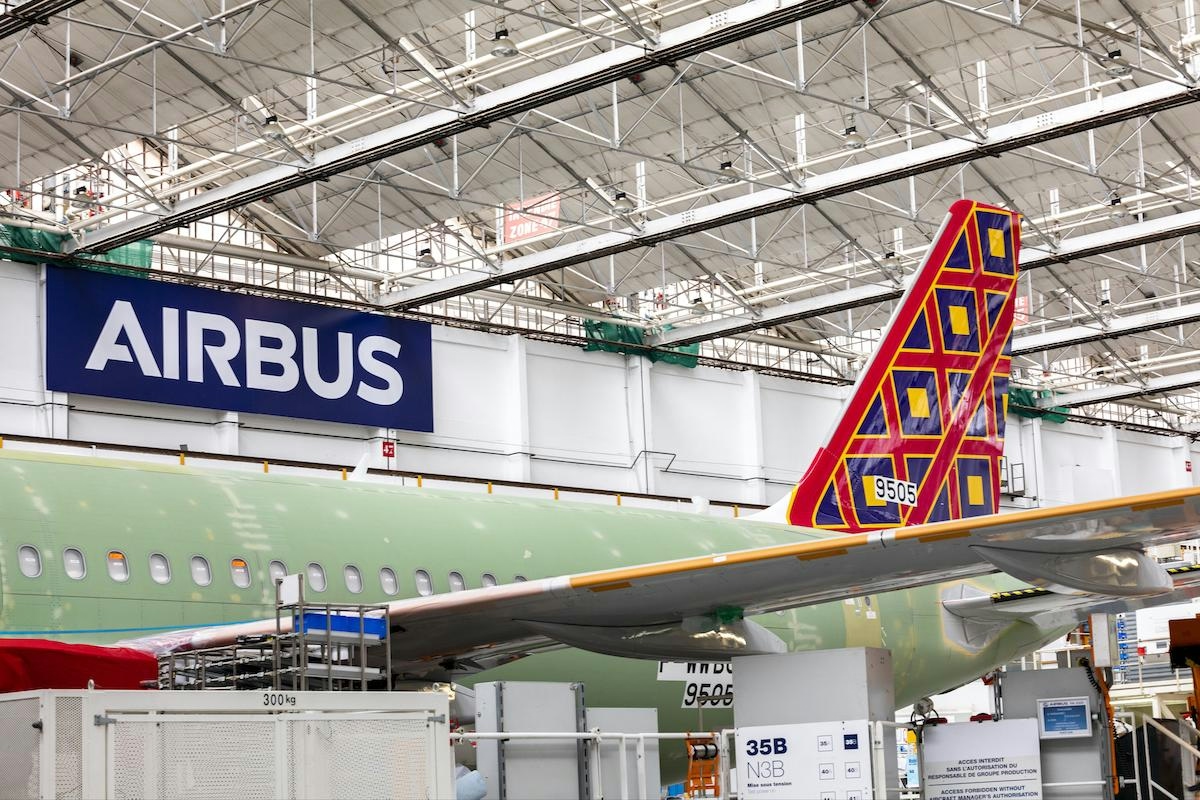
Supply Chain Bottlenecks Delay Airbus A320neo and Boeing 737 MAX Deliveries
Engine Production Constraints Impacting Aircraft Delivery Schedules
The global aviation industry is currently facing significant challenges in delivering new aircraft, not due to limitations in airframe manufacturing or airline demand, but because of a critical bottleneck in engine production. Central to this issue is CFM International, the joint venture between GE Aerospace and Safran, which produces the LEAP engine family powering the Airbus A320neo and Boeing 737 MAX—two of the world’s most widely used narrowbody jets.
Narrowbody aircraft constitute approximately 70% of the commercial fleet worldwide and serve as the backbone of airline operations, particularly on high-frequency, short- and medium-haul routes. Their importance has grown steadily, especially in rapidly expanding markets across Asia and among low-cost carriers. The LEAP engine has become the preferred choice within this segment, offering up to 15% improved fuel efficiency compared to previous-generation engines, alongside reduced emissions and enhanced operating economics. These benefits have led to LEAP engines being selected for an estimated 60 to 70% of new narrowbody aircraft, positioning CFM International as a pivotal player in global aircraft production.
Production Challenges and Industry Implications
The central role of the LEAP engine means that any disruption in its production has immediate and far-reaching effects on both Airbus and Boeing. CFM International aims to deliver over 2,000 LEAP engines in 2026, a record volume driven by robust airline demand and substantial backlogs at aircraft manufacturers. Airbus and Boeing collectively have outstanding orders exceeding 12,000 narrowbody jets, representing several years of future production. Airlines are keen to receive new aircraft as travel demand recovers and older fleets become increasingly costly to operate.
However, the industry is confronting tangible physical constraints. Airbus deliveries in the first quarter of 2026 declined by 16%, hindered by a $175 million delay in a forging press, ongoing component shortages, and a panel quality issue. Additionally, administrative complications delayed the transfer of nearly 20 A320neo-family aircraft to China. Airbus is actively working to realign its production and delivery schedules, with the goal of resuming normal operations by the end of June and maintaining its target of 870 aircraft deliveries for the year.
Boeing, in contrast, recorded its highest quarterly commercial aircraft deliveries since 2019 in the first quarter of 2026, despite a temporary halt in 737 MAX deliveries caused by a wiring issue. The company plans to increase production rates for both the 737 and 787 models throughout the year. Other manufacturers, including Bombardier and Gulfstream, have also experienced delivery delays linked to supply chain disruptions.
The Growing Importance of Engine Manufacturing in Aviation Growth
Despite these obstacles, GE Aerospace reported a significant increase in LEAP engine deliveries during the first quarter of 2026, highlighting the intense demand and the strain on the supply chain. As production scales up, it has become evident that engine manufacturing, rather than airframe assembly, is the primary limiting factor for growth in the global aviation sector. The capacity of CFM International to meet LEAP engine demand now directly correlates with the industry’s ability to expand, underscoring the critical need for enhanced supply chain resilience moving forward.

Etihad Airways Suspends Airbus A380 Flights on Key Route

Aditya Birla Group Seeks Approval for Aircraft Leasing in GIFT City

Qatar Airways Highlights Innovation and Connectivity at Arabian Travel Market 2026

Hong Kong's Five-Year Plan Includes Andrew Fan's Aircraft Parts Processing Hub Proposal

ACIA Aero Leasing Delivers ATR72-600 to Air Nostrum

RTX Appoints Jill Albertelli as Head of Pratt & Whitney

TAT Technologies Joins Beyond Aero Hydrogen Aircraft Program

AURAK Study Highlights Barriers to Air Taxi Adoption in Emerging Economies

Xiamen Air Selects Altitude for 787 Maintenance at Heathrow

Etihad and Swissport Extend Global Partnership
