
Orchestrate AI insights into action

Trending
Categories
The Future of the Boeing 777 Fleet After 2026 Production Ends
The Future of the Boeing 777 Fleet After 2026 Production Ends
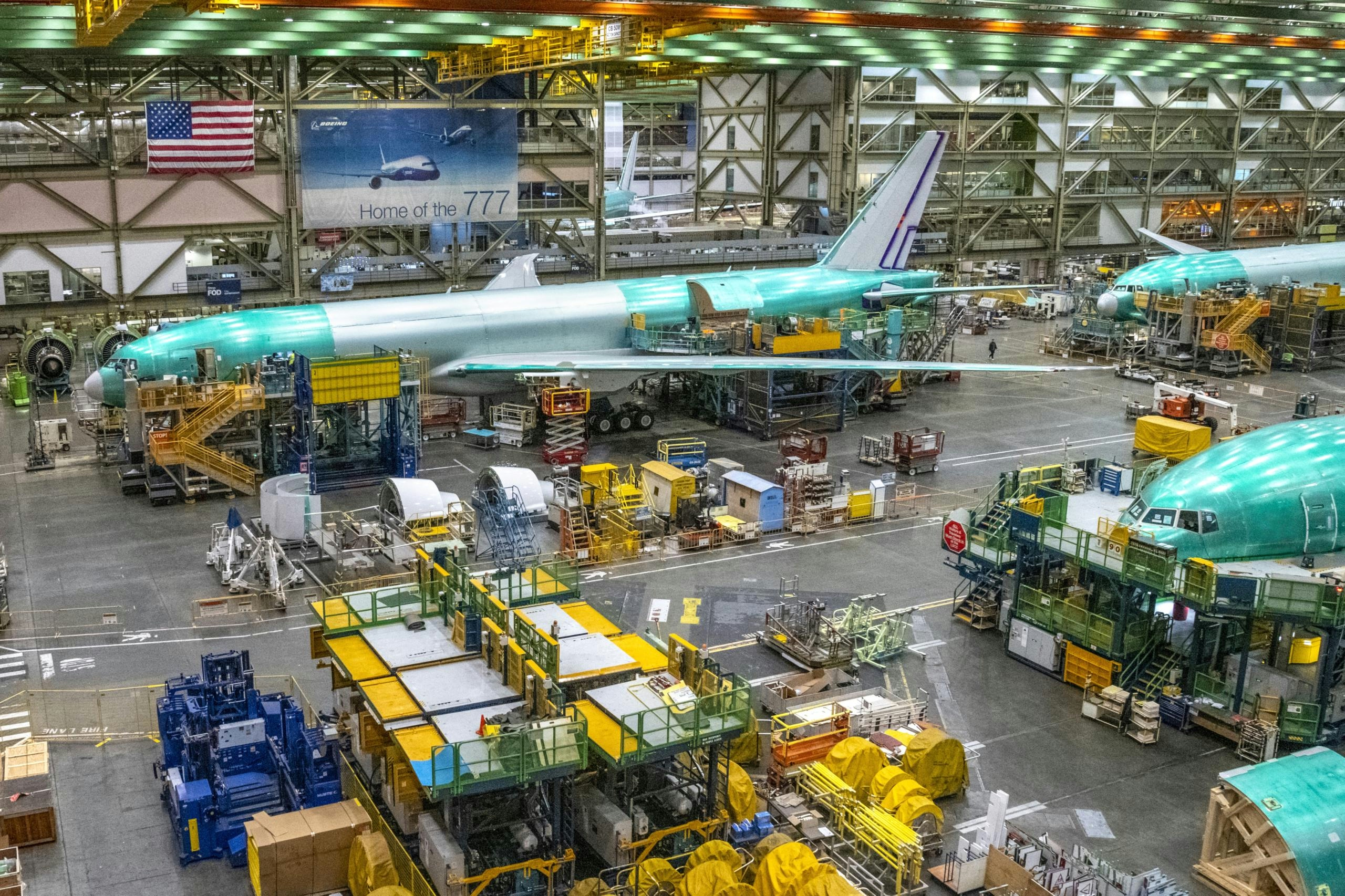
Boeing has officially concluded production of the 777-300ER, bringing to a close nearly three decades of manufacturing one of the aviation industry’s most successful widebody aircraft. The final delivery, made to Ethiopian Airlines in late 2024, marks not only a significant milestone in aircraft production but also signals the beginning of a major transition for global airline fleets. This shift is expected to influence the industry well into the coming decade.
Since its introduction in 1997, the 777-300ER has served as a cornerstone of long-haul air travel, valued for its impressive range, fuel efficiency, and passenger comfort. Airlines around the world have depended on the aircraft for competitive routes spanning the Pacific, Atlantic, and Middle East. However, the cessation of production does not imply that the 777 will disappear from the skies immediately. Instead, airlines now face the complex task of managing the operational lifespan of hundreds of 777s amid evolving economic conditions and tightening regulatory requirements.
Fleet Lifespan and Retirement Outlook
Commercial aircraft typically remain in service for 25 to 30 years before retirement becomes economically necessary. The earliest 777-300ERs, delivered in the late 1990s, are approaching the end of their service lives between 2024 and 2029. Nevertheless, the majority of the active fleet, which was delivered between 2005 and 2020, is expected to remain operational until at least 2030 and potentially as late as 2045.
Industry analysts anticipate a gradual and selective retirement process. Older airframes, particularly those operated by charter or cargo companies and airlines in emerging markets, are likely to be retired first due to increasing maintenance costs. Conversely, well-maintained aircraft operated by major carriers on profitable long-haul routes may continue flying beyond 2032, provided they undergo timely engine and avionics upgrades.
According to FlightAware data, approximately 1,500 Boeing 777s remain active worldwide. Of these, around 300 are over 20 years old, while the majority fall within the 10 to 18 years in service range. This staggered age distribution helps mitigate sudden capacity shortages but presents a multi-year challenge for fleet planning, aircraft procurement, and pilot training.
Market Shifts and Replacement Challenges
With the end of 777 production in 2026, airlines are already confronting the challenge of sourcing suitable replacements. This development has prompted notable market shifts, including increased interest in Airbus’s A350 and A350F models. Major carriers are responding accordingly: Atlas Air Worldwide has committed to acquiring up to 40 A350Fs, while KLM anticipates receiving its first A350 by the end of the summer, signaling a broader industry pivot toward Airbus offerings.
Airlines must carefully coordinate the retirement of their 777 fleets with the delivery schedules of Boeing’s next-generation 777X variants and competing aircraft such as the A350. The pace of these transitions is further complicated by manufacturing constraints and the extensive pilot retraining required for new aircraft types.
Economic and Operational Implications
The future of the 777 fleet carries significant financial considerations. Airlines must balance rising maintenance costs against the capital expenditures necessary for acquiring new aircraft. On high-utilization long-haul routes, a 777-300ER can generate up to $20 million in annual revenue, justifying continued maintenance investments until the aircraft reaches 28 to 30 years of age. Conversely, older jets operating on less profitable routes may face earlier retirement as fuel and component costs escalate.
The conversion of passenger 777s into freighter variants is extending the operational life of some aircraft. Logistics giants such as UPS, FedEx, and DHL are investing heavily in these freighter models, a trend expected to accelerate as passenger demand shifts.
Meanwhile, Boeing’s commercial airplane division anticipates returning to profitability in 2027, a timeline later than previously forecast due to increased costs associated with suppliers like Spirit AeroSystems. This delay highlights the broader challenges facing the industry as airlines and manufacturers navigate the post-777 era.
As the aviation landscape continues to evolve, the legacy of the 777-300ER will endure in the skies for years to come, even as airlines and manufacturers adapt to a new generation of widebody aircraft.

Etihad Airways Suspends Airbus A380 Flights on Key Route

Aditya Birla Group Seeks Approval for Aircraft Leasing in GIFT City

Qatar Airways Highlights Innovation and Connectivity at Arabian Travel Market 2026

Hong Kong's Five-Year Plan Includes Andrew Fan's Aircraft Parts Processing Hub Proposal

ACIA Aero Leasing Delivers ATR72-600 to Air Nostrum

RTX Appoints Jill Albertelli as Head of Pratt & Whitney

TAT Technologies Joins Beyond Aero Hydrogen Aircraft Program

AURAK Study Highlights Barriers to Air Taxi Adoption in Emerging Economies

Xiamen Air Selects Altitude for 787 Maintenance at Heathrow

Etihad and Swissport Extend Global Partnership
