
Orchestrate AI insights into action

Trending
Categories
The Trijet Behind the Growth of European Long-Haul Airlines
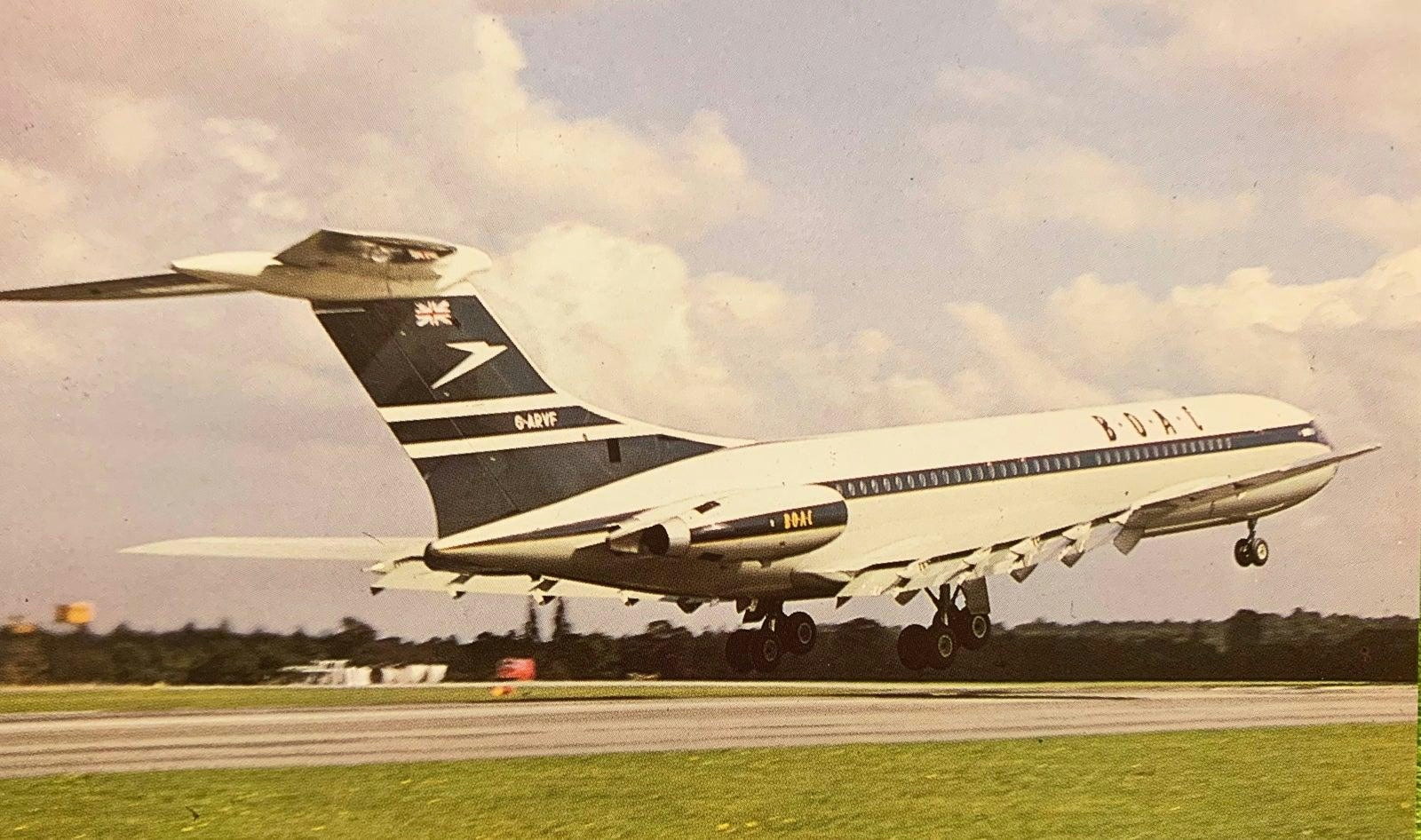
The Trijet Behind the Growth of European Long-Haul Airlines
During the late 1960s and early 1970s, European flag carriers confronted a significant challenge in expanding their long-haul operations. The introduction of the Boeing 747, with its unprecedented passenger capacity, proved ill-suited for many intercontinental routes that prioritized frequency over volume. Airlines required a versatile, long-range widebody aircraft capable of serving thinner transatlantic, African, and Asian routes without the financial risk associated with operating large, half-empty jets.
The McDonnell Douglas DC-10 emerged as the solution to this pressing need. This extended-range trijet, equipped with upgraded engines and essential structural modifications to accommodate heavier fuel loads, quietly revolutionized the intercontinental strategies of Europe’s leading airlines. It became the operational backbone for cross-continental expansion during a period marked by economic volatility and rising operating costs.
A New European Standard in Collaboration and Innovation
The substantial financial demands of acquiring and maintaining modern widebody fleets prompted unprecedented cooperation among European carriers. Four major airlines—KLM, Swissair, SAS, and Union de Transport Aériens (UTA)—formed the KSSU consortium, which standardized aircraft specifications down to galley inserts and cockpit layouts. This collaboration achieved significant economies of scale and operational efficiencies. Maintenance responsibilities were strategically divided: KLM took charge of overhauling the powerful General Electric CF6 engines, Swissair managed heavy airframe work in Zurich, and SAS specialized in component overhauls across Scandinavia.
The long-range DC-10 variant adopted by the KSSU consortium required extensive structural enhancements to support the additional fuel necessary for demanding transatlantic and trans-Asian flights. The aircraft’s maximum takeoff weight increased to 580,000 pounds (263,084 kilograms), necessitating the addition of a two-wheel landing gear leg on the fuselage centerline. This modification was critical to protecting airport runways from the stresses imposed by heavy arrivals and departures.
Navigating Engineering Challenges and Industry Transformation
Despite its operational advantages, the DC-10’s early service years were overshadowed by serious engineering flaws. The most critical issue involved a cargo door design that could appear locked even when internal pins were not fully engaged, leading to catastrophic failures such as the Turkish Airlines Flight 981 disaster. European operators responded with rigorous inspections and demanded permanent design corrections. McDonnell Douglas ultimately installed inspection windows and reinforced locking mechanisms, restoring confidence in the aircraft’s safety.
As the DC-10 facilitated the expansion of European airlines’ global reach, the broader industry landscape continued to evolve. Rising operating costs, geopolitical uncertainties, and increasing sustainability pressures began to reshape airline strategies. These challenges accelerated consolidation within the sector, with major groups such as Lufthansa, Air France-KLM, and International Airlines Group strengthening their market positions to withstand economic headwinds.
Competitors also adjusted their strategies in response. For instance, American Airlines withdrew from the Doha market to concentrate on more promising long-haul routes, while Asia-Pacific carriers experienced moderating growth amid economic and geopolitical pressures. The era of the trijet thus not only marked a technical and operational turning point for European aviation but also laid the groundwork for the ongoing transformation of the global airline industry.
In retrospect, the legacy of the DC-10 extends beyond its engineering achievements; it lies in how the aircraft enabled European carriers to adapt, collaborate, and compete effectively in a rapidly changing world.

Etihad Deploys Widebody Fleet to Meet Strong Demand

Korean Air Finalizes $36.2 Billion Deal with Boeing

Australia’s RFDS Queensland Section Orders Six King Air 260Cs

Korean Air Finalizes Order for 103 Boeing Jets and Engines

Embraer E195-E2 Features Distinctive Engine Placement Among Regional Jets

What Passengers Can Expect on Boeing’s New 777X Jet

How Ethiopian Airlines Became Africa’s Leading Carrier Amid Gulf Competition

Joby Aviation Extends Autonomous Flight Capabilities with Cross-Country Tour
Strengthening Europe's Aviation Supply Chain Amid Uncertainty
The Evolution of the Aircraft Maintenance Engineer Role
