
Orchestrate AI insights into action

Trending
Categories
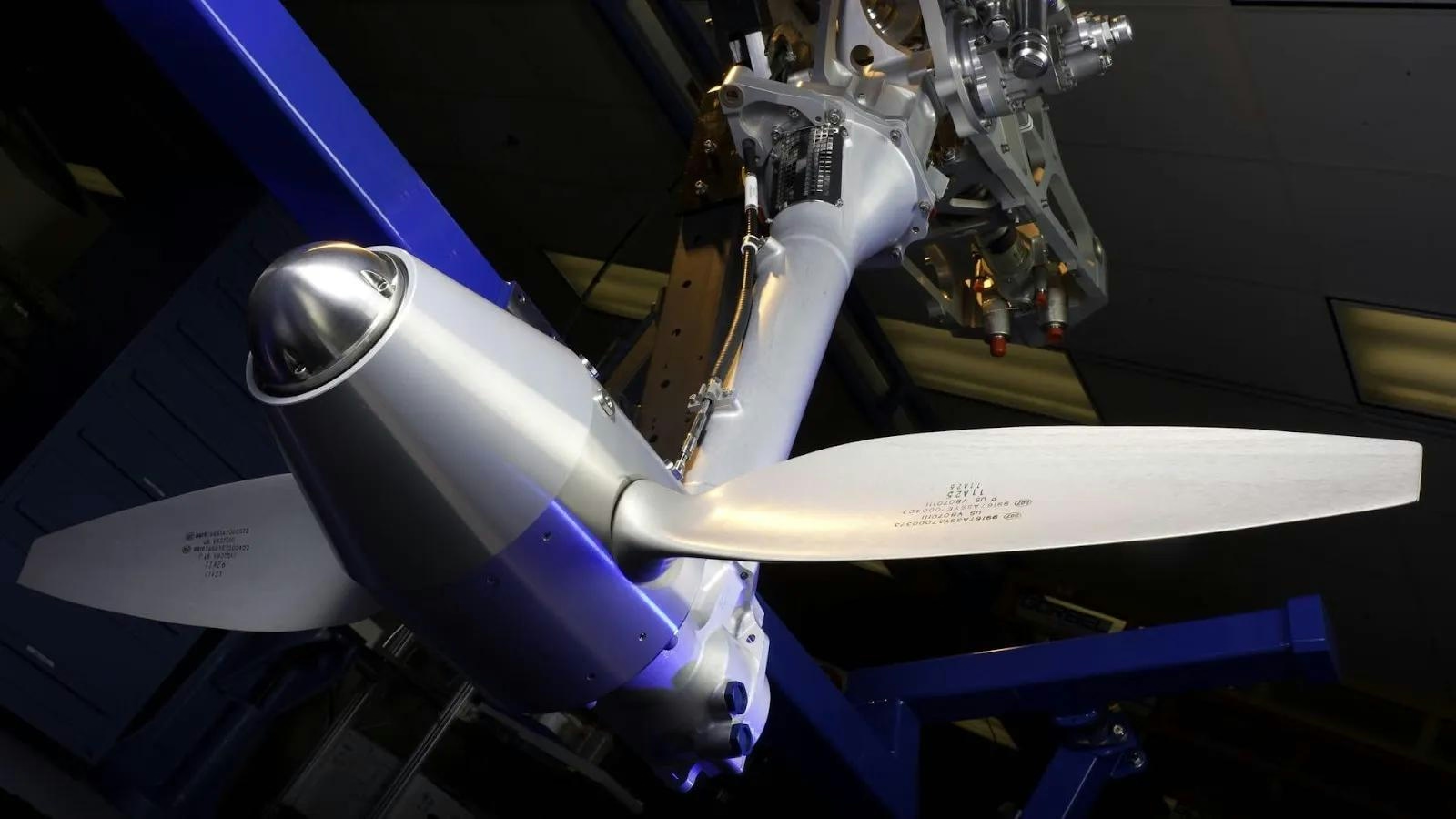
Turboprop Flight Experiences Double Engine Failure
Turboprop Flight Experiences Double Engine Failure
Near-Disaster on Routine Cargo Flight
A routine cargo flight between Atlanta and Charlotte narrowly avoided catastrophe when a twin-engine turboprop suffered a double engine failure, forcing the pilot to glide toward Atlanta’s airport amid deteriorating weather conditions. The incident took place on the evening of November 20, 1983, during the pilot’s first solo flight as pilot-in-command in the AC680W Turbo Commander.
Having recently been upgraded from flying Beech Barons, the pilot had completed a week of training flights before being cleared to operate the aircraft alone. Accompanied by a company mechanic who was troubleshooting a heater issue, the pilot departed Charlotte with full fuel tanks, fully aware of the poor weather forecast in Atlanta and the possibility of diverting to Tallahassee.
The return flight initially proceeded without incident, cruising smoothly at 16,000 feet. However, as the aircraft approached Atlanta, the pilot observed a low fuel indicator light despite the fuel gauges showing adequate levels. Attempts to communicate this concern to air traffic control were hindered by heavy radio traffic. Suddenly, the right engine failed, followed swiftly by the left engine, leaving the aircraft powerless and silently gliding.
Emergency Response and Investigation
With the distance to Atlanta uncertain due to an inoperative Distance Measuring Equipment (DME), the pilot maintained the best glide speed while the mechanic confirmed a total fuel loss, stating, “We have zero fuel pressure!” Efforts to restart the engines were unsuccessful. Meanwhile, dense fog rapidly enveloped Atlanta’s airport, eliminating any possibility of a go-around.
After several tense moments, the pilot declared a mayday and requested clearance to land at the nearest suitable airport, Hartsfield-Jackson International (KATL), which was just below their position. Both the pilot and mechanic escaped the incident unharmed.
The event has prompted heightened scrutiny from aviation authorities. The Federal Aviation Administration (FAA) has launched an investigation into the circumstances surrounding the fuel loss and emergency landing. Industry experts warn that such high-profile incidents can increase passenger anxiety and may temporarily affect the reputation and stock prices of airlines operating similar aircraft. Competitors often capitalize on these moments to highlight their own safety records.
Aviation insurers are also closely monitoring the situation, with expectations that insurance premiums could rise across the industry by 2026 as a consequence of such emergencies. The combination of regulatory review and market reaction underscores the gravity with which the aviation sector regards double engine failures, even when no injuries occur.
This incident serves as a stark reminder of the inherent challenges and risks in aviation, particularly when mechanical issues coincide with adverse weather. The ongoing investigation is expected to influence future training protocols, operational procedures, and insurance practices throughout the industry.

Etihad Airways Suspends Airbus A380 Flights on Key Route

Aditya Birla Group Seeks Approval for Aircraft Leasing in GIFT City

Qatar Airways Highlights Innovation and Connectivity at Arabian Travel Market 2026

Hong Kong's Five-Year Plan Includes Andrew Fan's Aircraft Parts Processing Hub Proposal

ACIA Aero Leasing Delivers ATR72-600 to Air Nostrum

RTX Appoints Jill Albertelli as Head of Pratt & Whitney

TAT Technologies Joins Beyond Aero Hydrogen Aircraft Program

AURAK Study Highlights Barriers to Air Taxi Adoption in Emerging Economies

Xiamen Air Selects Altitude for 787 Maintenance at Heathrow

Etihad and Swissport Extend Global Partnership
