
Orchestrate AI insights into action

Trending
Categories
UAE Prepares Infrastructure and Regulations for Electric Air Taxis Launch Next Year
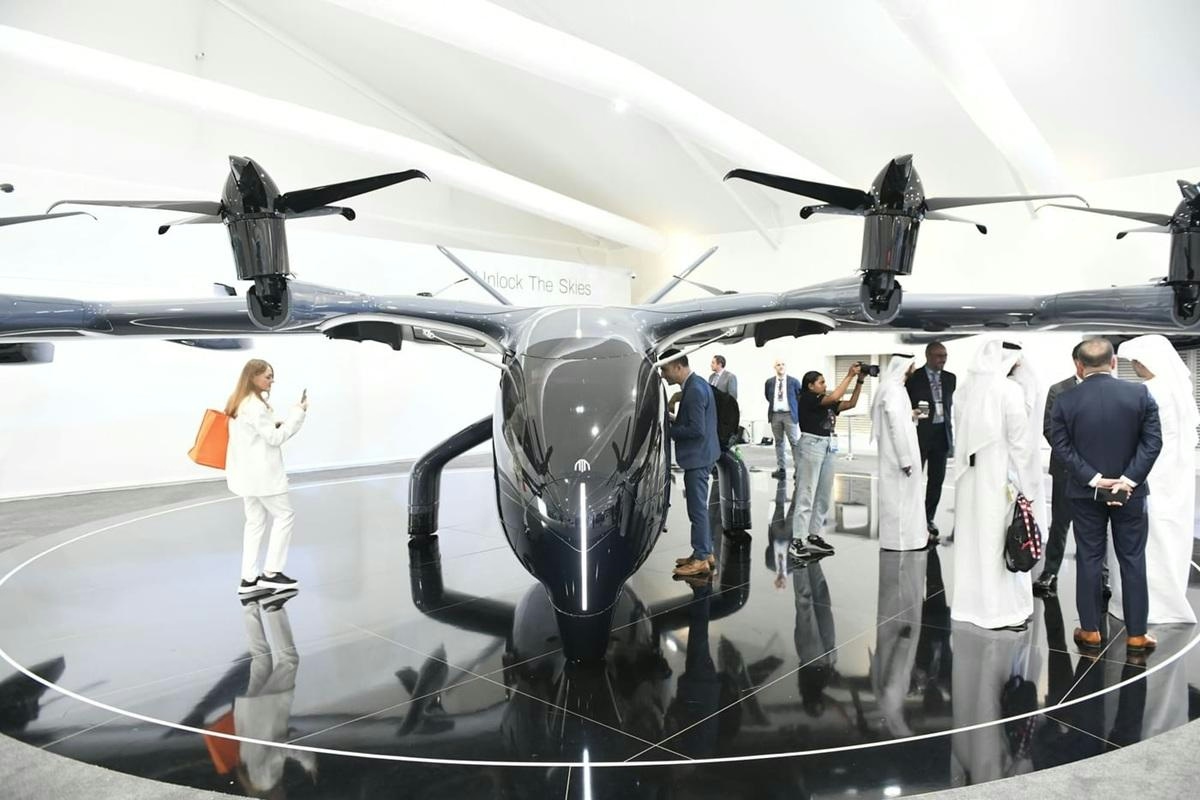
UAE Advances Infrastructure and Regulatory Framework for Electric Air Taxis Launch in 2025
Pioneering Urban Air Mobility in the UAE
The United Arab Emirates is intensifying its efforts to transform urban air mobility, with foundational work already underway for the Dubai International Vertiport (DXV) and the implementation of pioneering regulations governing electric air taxis. Senior officials from the General Civil Aviation Authority (GCAA) recently confirmed that the country is on course to commence commercial electric air taxi services as early as next year. This ambitious initiative aims to position the UAE at the forefront of next-generation air travel, marking a significant milestone in the evolution of urban transportation.
Regulatory and Infrastructure Challenges
Despite the promising outlook, the initiative faces complex challenges, particularly in regulatory and infrastructural domains. Authorities are focused on ensuring that new air taxi operations comply with stringent safety and operational standards. The development of critical infrastructure, including vertiports and charging stations, is progressing steadily. However, experts emphasize that the seamless integration of these new transport modes with existing networks will be essential to the success and public acceptance of electric air taxis.
Safety remains a paramount concern for the GCAA, which is committed to maintaining robust oversight as these emerging technologies are introduced. The UAE’s regulatory framework is attracting close attention from global aviation companies, many of which are eager to enter the market but remain cautious about compliance complexities and operational risks.
Competitive Dynamics and Market Response
The competitive landscape in the region’s urban air mobility sector is rapidly evolving. Uber, through its partnership with Joby Aviation—recently bolstered by the acquisition of Blade Air Mobility for $125 million—has announced plans to offer helicopter and seaplane services, signaling heightened interest in the UAE market. Concurrently, Archer Aviation is accelerating production of its Midnight eVTOL aircraft, with ambitions to launch services within the country, intensifying competition among industry players.
Market reactions have been mixed. While international aviation firms and investors express considerable enthusiasm, some stakeholders are scrutinizing the regulatory framework, questioning whether safety standards can keep pace with the rapid technological advancements. Nonetheless, the UAE remains steadfast in its commitment to revolutionizing urban transportation. The combination of infrastructure investment, regulatory innovation, and strong global interest suggests that electric air taxis could soon become a tangible reality in the nation’s skies, potentially setting a global benchmark for similar initiatives.

Etihad Airways Suspends Airbus A380 Flights on Key Route

Aditya Birla Group Seeks Approval for Aircraft Leasing in GIFT City

Qatar Airways Highlights Innovation and Connectivity at Arabian Travel Market 2026

Hong Kong's Five-Year Plan Includes Andrew Fan's Aircraft Parts Processing Hub Proposal

ACIA Aero Leasing Delivers ATR72-600 to Air Nostrum

RTX Appoints Jill Albertelli as Head of Pratt & Whitney

TAT Technologies Joins Beyond Aero Hydrogen Aircraft Program

AURAK Study Highlights Barriers to Air Taxi Adoption in Emerging Economies

Xiamen Air Selects Altitude for 787 Maintenance at Heathrow

Etihad and Swissport Extend Global Partnership
