
Orchestrate AI insights into action

Trending
Categories
US and Global Partners Address AI-Driven Changes in Travel Payment Systems

US and Global Partners Address AI-Driven Changes in Travel Payment Systems
The United States has joined forces with a coalition of countries—including the United Kingdom, Singapore, the United Arab Emirates, India, Germany, Australia, Japan, South Korea, and Canada—to confront the rapid transformation of travel payment systems driven by artificial intelligence. As major corporations such as Visa, Mastercard, OpenAI, and Google accelerate the integration of AI into booking and payment processes, the travel industry is preparing for profound changes anticipated by 2026.
AI Agents Reshape Travel Payments
By 2026, AI-powered agents are expected to become central to how travelers book and pay for flights and accommodations. These digital agents, supported by leading payment and technology companies, will automate much of the booking process, enabling travelers to establish spending limits and preferences. Airlines including Emirates, Lufthansa, Delta, British Airways, and Singapore Airlines are actively preparing for a fundamental shift in service distribution and pricing models as AI-driven systems become standard.
Visa and Mastercard have announced that their automated digital agents will comply with self-imposed spending controls, providing consumers with greater oversight while streamlining transactions. Recent fintech research indicates that 77 percent of users now rely on AI during their shopping journeys, reflecting a significant shift in consumer behavior and expectations.
Leading Countries in AI Travel Payment Adoption
Countries with advanced digital payment infrastructures are leading this transformation. The anticipated impact on the global travel payment landscape varies among these nations. The United States, with OpenAI and Visa’s cross-integration, is expected to experience very high adoption. The United Kingdom’s strong fintech sector and airline digitization position it for high adoption, while Singapore’s 77 percent AI shopping adoption base also forecasts very high impact. The UAE’s automation in aviation and luxury travel, India’s rapid digital payments and online travel agency growth, Japan’s digital tourism frameworks, and South Korea’s mobile-first AI commerce integration all contribute to high adoption levels. Germany, Canada, and Australia are also notable players, with medium to medium-high anticipated outcomes.
These countries are poised to set the pace for global adoption, shaping how tourism and business travel payments are processed worldwide.
Challenges and Industry Response
Despite the promising outlook for AI-driven travel payments, the transition faces significant challenges. The Global Business Travel Association (GBTA) has identified obstacles such as limited AI adoption, fragmented data systems, and inconsistent traveler experiences. Market responses remain mixed, with some companies emphasizing governance, security, and data quality to build trust in AI-powered commerce.
Industry leaders, as discussed at the Skift Data + AI Summit, stress the importance of clear ownership, robust technical foundations, and transparency to ensure successful implementation. The recent sale of American Express Global Business Travel (Amex GBT) to Long Lake Capital Management highlights the evolving role of AI in the sector and may prompt other travel management companies to accelerate their AI adoption efforts to maintain competitiveness.
Looking Ahead
As artificial intelligence continues to reshape travel payments, the industry confronts both opportunities and challenges. The coming years will test the ability of airlines, payment providers, and technology firms to deliver secure, seamless, and trustworthy experiences for travelers around the world.
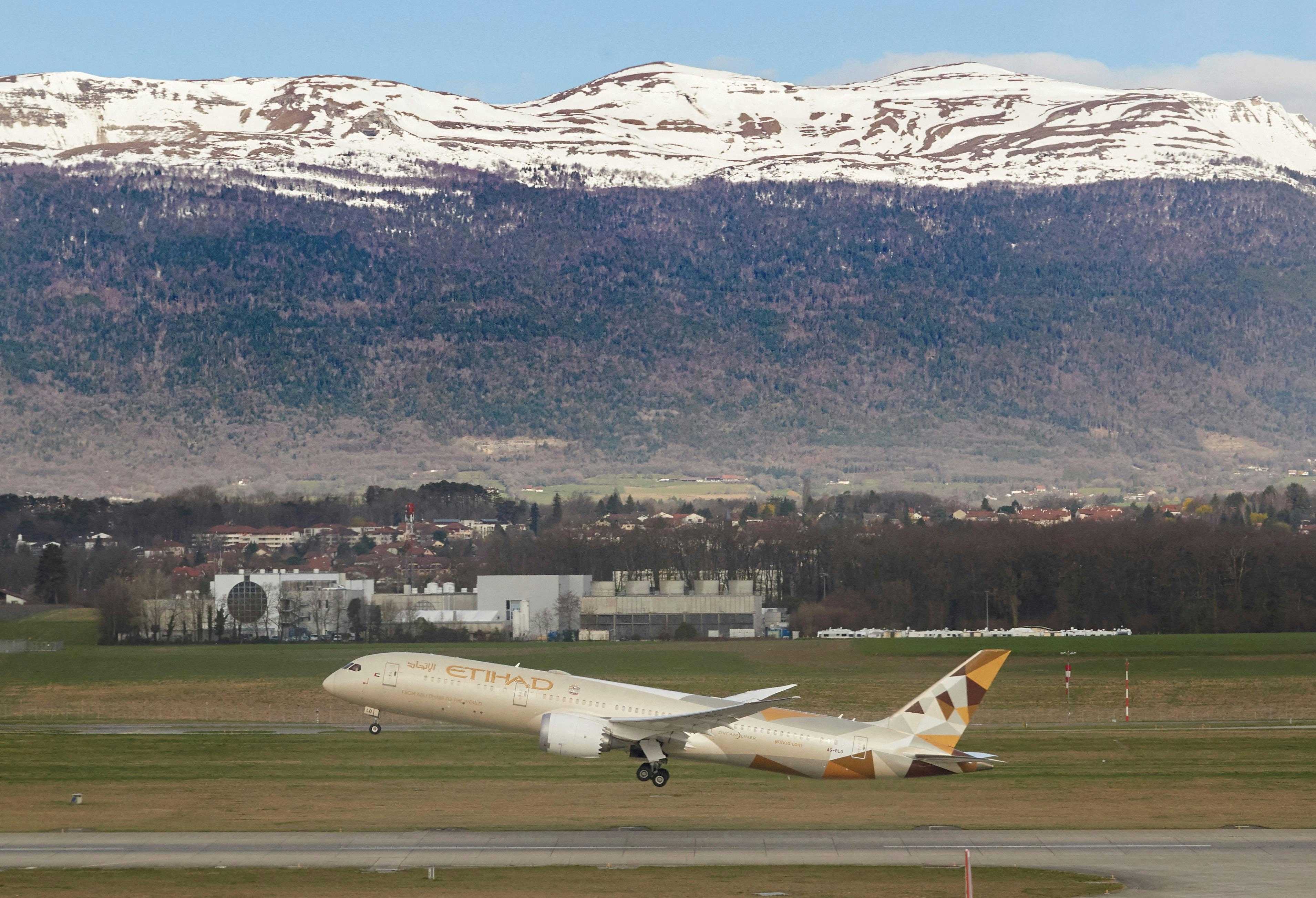
Etihad CEO Cites Aircraft Capacity as Limiting Factor Amid Growth in China and Africa

How Southwest Airlines is using technology, data and AI to strengthen CX while keeping the human touch

Red Sea Airlines to Lease Two Boeing 737 MAX 8 Aircraft

Su-30 and Su-34 Fighter Jets' Engines Contribute to Urban Heat
Airlines Urge Increased Competition in Used Jet Engine Parts Market
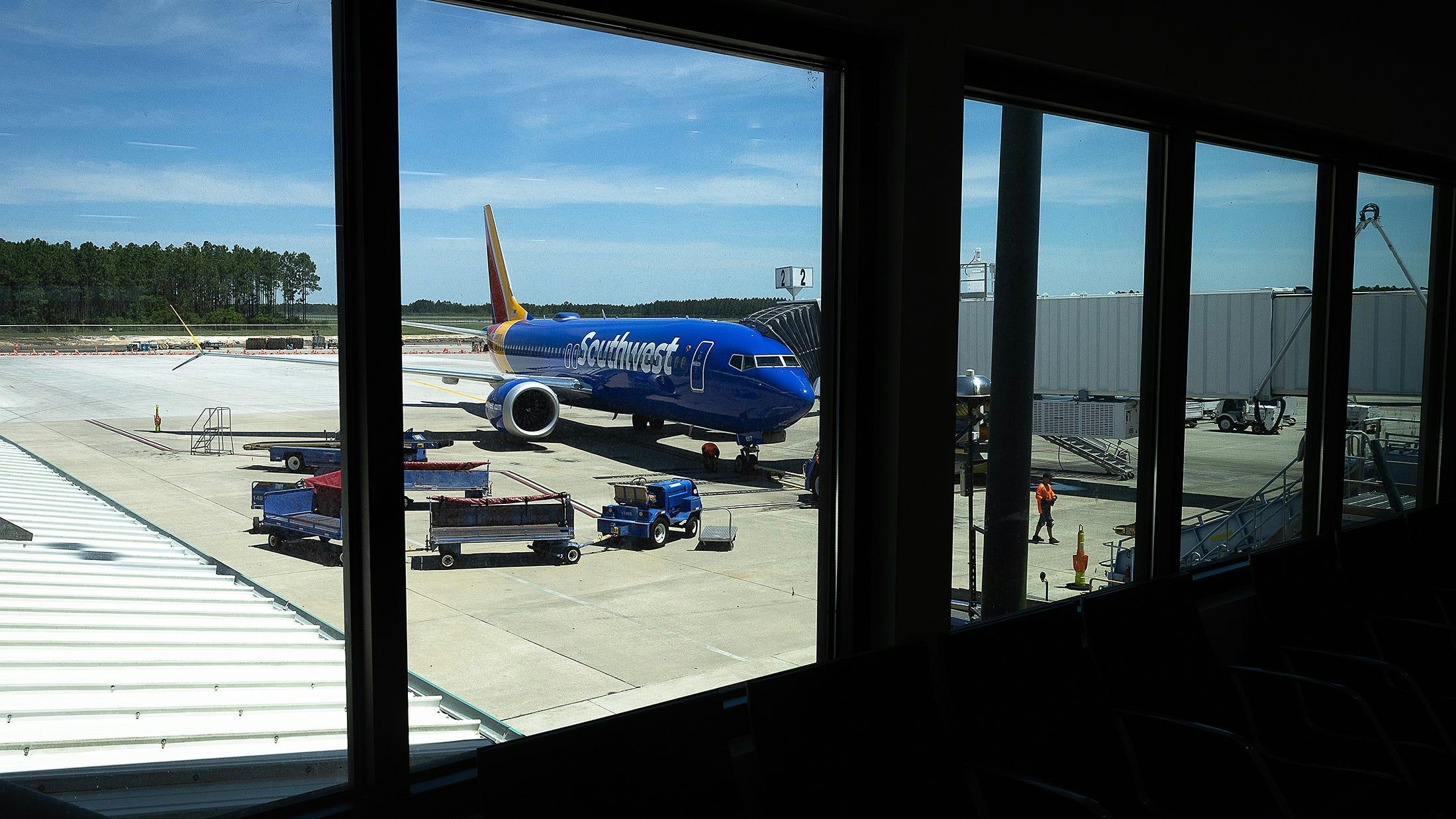
Future Developments Planned for NWF Beaches Airport

airBaltic Files for Chapter 11 Bankruptcy Protection
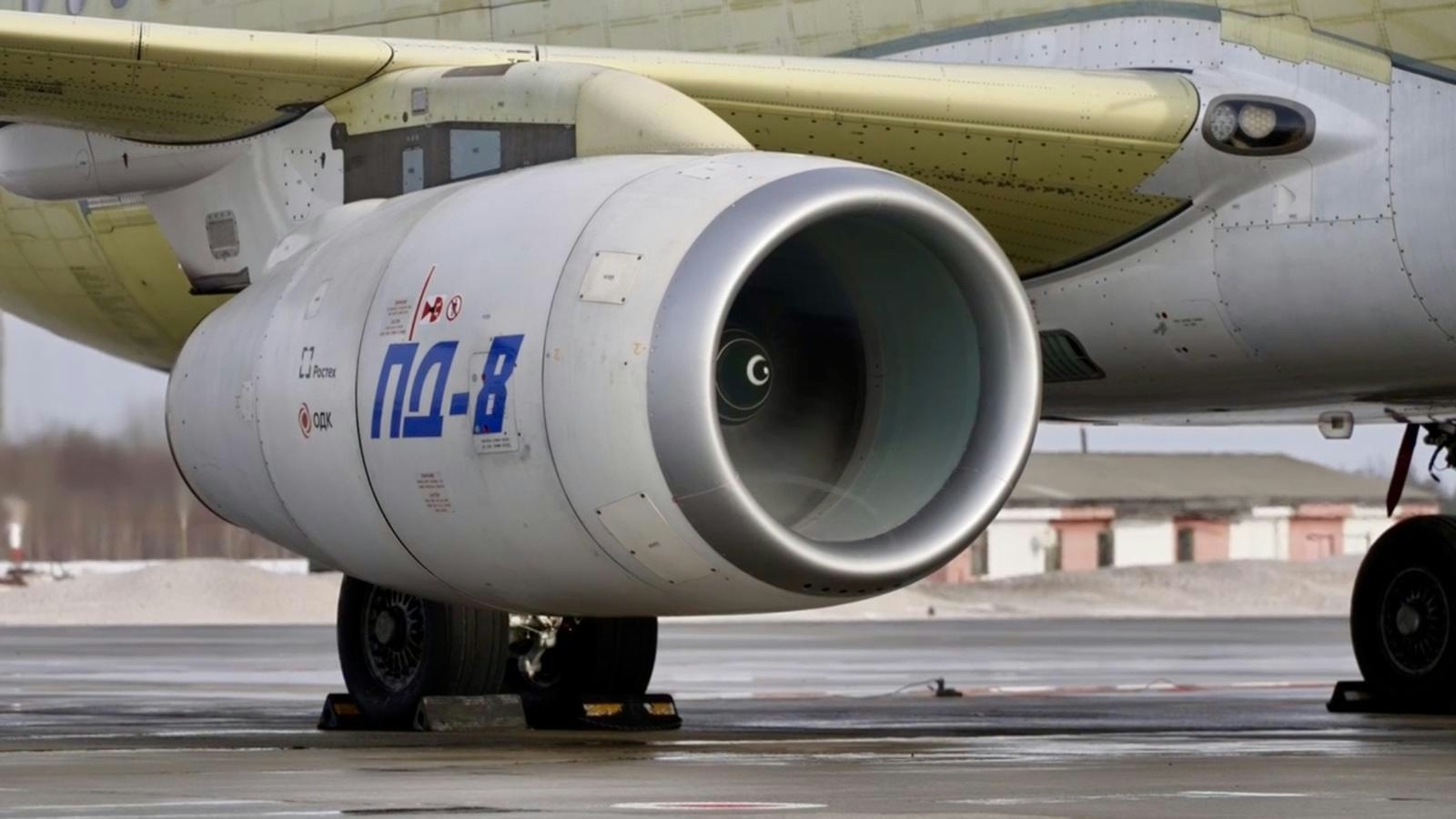
PD-8 Engine Encounters Corrosion Issues from Saltwater Exposure

Weekly Summary: August Deliveries, Year-to-Date Orders, and 4.1 Million Share Buyback
Linking Ireland’s Aircraft Leasing Industry to Elite Football
