
Orchestrate AI insights into action

Trending
Categories
US firm showcases laminar-flow drone flight, advances 90-year-old tech
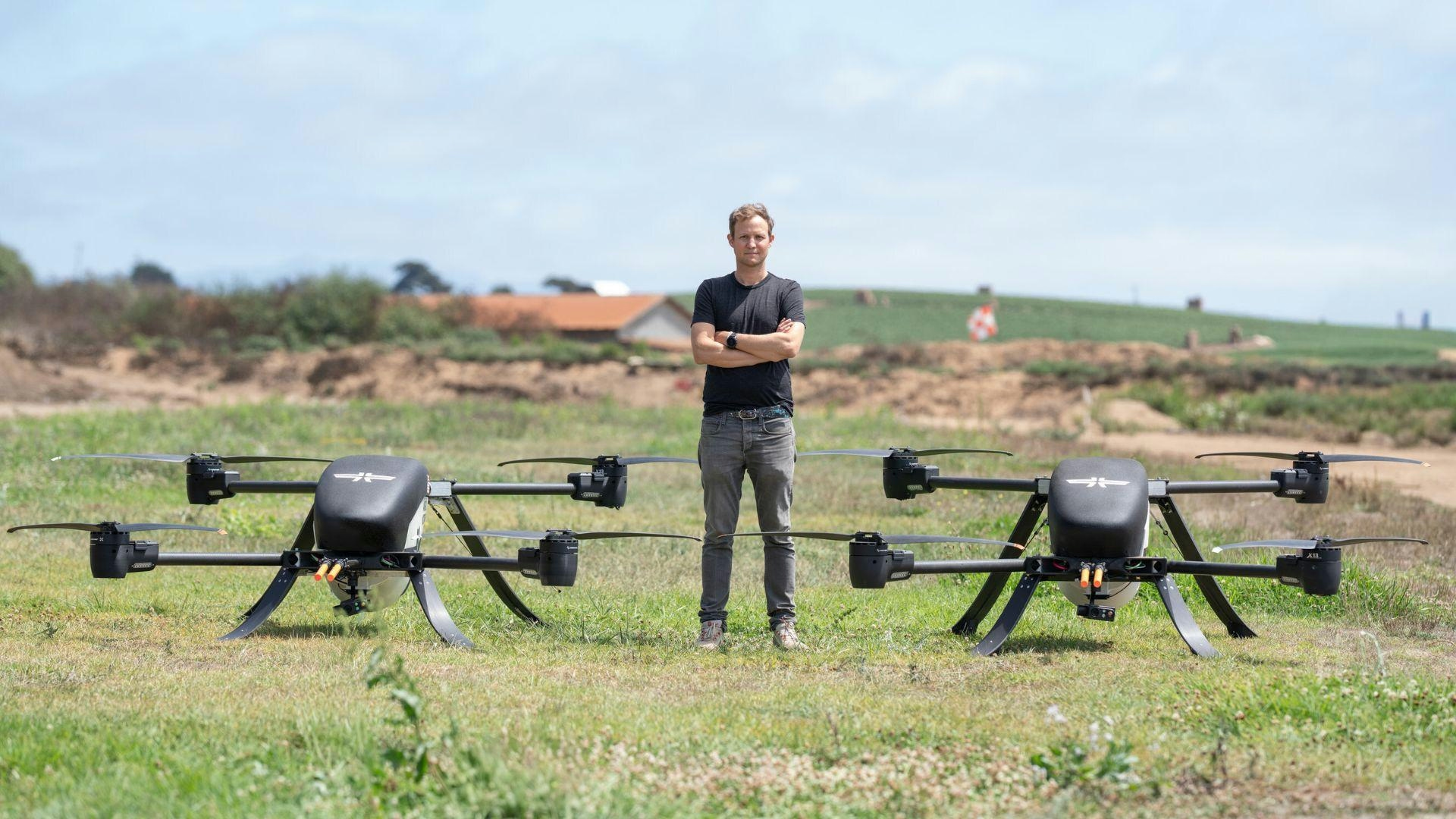
US Firm Revives Laminar-Flow Technology with Successful Drone Flight
Laminar flow technology, hailed by NASA as “the holy grail of aviation,” has been a subject of research since the 1930s. Its primary goal is to reduce aerodynamic drag by minimizing airflow disruption, thereby enhancing efficiency. Otto Aerospace, a US-based company, has recently demonstrated significant progress in this long-standing field by completing a successful flight test of its unmanned Energy Web Aircraft (EWA) drone, showcasing the practical viability of laminar-flow design in contemporary aviation.
Flight Test Validates Aerodynamic Efficiency
The flight test took place at Spaceport America within New Mexico’s White Sands Missile Range airspace, where Otto Aerospace confirmed the predicted aerodynamic benefits of its laminar-flow drone under real-world conditions. The company operates under a 24-month contract with the Defense Advanced Research Projects Agency (DARPA) and the Operational Energy Capability Improvement Fund (OECIF) to advance research for DARPA’s EWA program. This initiative aims to develop long-distance, laser-based power transfer through airborne relays, a role well-suited to Otto’s highly efficient drone platform.
Otto Aerospace emphasized that the recent flight was self-funded and conducted independently of its DARPA and OECIF contract. Scott Drennan, president and CEO of Otto Aerospace, stated, “This aircraft proved what we’ve modeled for years, that high-efficiency laminar-flow aerodynamics can deliver extraordinary endurance and performance.” He further highlighted the company’s contribution to advancing DARPA’s research objectives and praised the team for executing a flawless flight campaign that pushes the boundaries of aerodynamic science.
Broader Implications and Future Prospects
Beyond defense applications, Otto Aerospace is leveraging its laminar-flow expertise in the commercial aviation sector. Last year, the company introduced the Phantom 3500, a windowless private jet that replaces traditional windows with digital screens to optimize the airframe for transonic laminar flow. The twin-engine jet is designed to achieve a range of 3,200 nautical miles and a cruising altitude of 51,000 feet, with a first flight anticipated in the latter half of 2027. According to Drennan, the Phantom 3500 builds upon insights gained from the earlier Celera 500 demonstrator, which helped refine flight parameters to maximize laminar flow efficiency.
The recent drone flight test also serves as a critical validation platform for Otto’s laminar-flow research, generating data that will inform future energy-relay unmanned aerial vehicle (UAV) concepts as well as the company’s broader commercial and defense programs. Drennan noted that the data collected “opens new possibilities for energy-efficient aviation.”
Challenges and Industry Context
Despite these technological advances, Otto Aerospace faces significant challenges. The advanced air mobility sector is subject to rigorous regulatory scrutiny, and new technologies must navigate complex approval processes. Additionally, competitors such as DJI, which has recently encountered regulatory hurdles from the Federal Communications Commission (FCC), may intensify their own research and development efforts in response to Otto’s progress. Market reactions are likely to be mixed; while investors may view Otto’s innovation as a major breakthrough in drone technology, uncertainties surrounding regulatory approval and the pace of adoption temper enthusiasm.
As Otto Aerospace continues to develop laminar-flow technology, its achievements have the potential to influence the future of both unmanned and commercial aviation, potentially setting new standards for efficiency across the industry.

Etihad Airways Suspends Airbus A380 Flights on Key Route

Aditya Birla Group Seeks Approval for Aircraft Leasing in GIFT City

Qatar Airways Highlights Innovation and Connectivity at Arabian Travel Market 2026

Hong Kong's Five-Year Plan Includes Andrew Fan's Aircraft Parts Processing Hub Proposal

ACIA Aero Leasing Delivers ATR72-600 to Air Nostrum

RTX Appoints Jill Albertelli as Head of Pratt & Whitney

TAT Technologies Joins Beyond Aero Hydrogen Aircraft Program

AURAK Study Highlights Barriers to Air Taxi Adoption in Emerging Economies

Xiamen Air Selects Altitude for 787 Maintenance at Heathrow

Etihad and Swissport Extend Global Partnership
