
Orchestrate AI insights into action

Trending
Categories
Virgin Australia to Increase Capacity as Aircraft Deliveries Accelerate
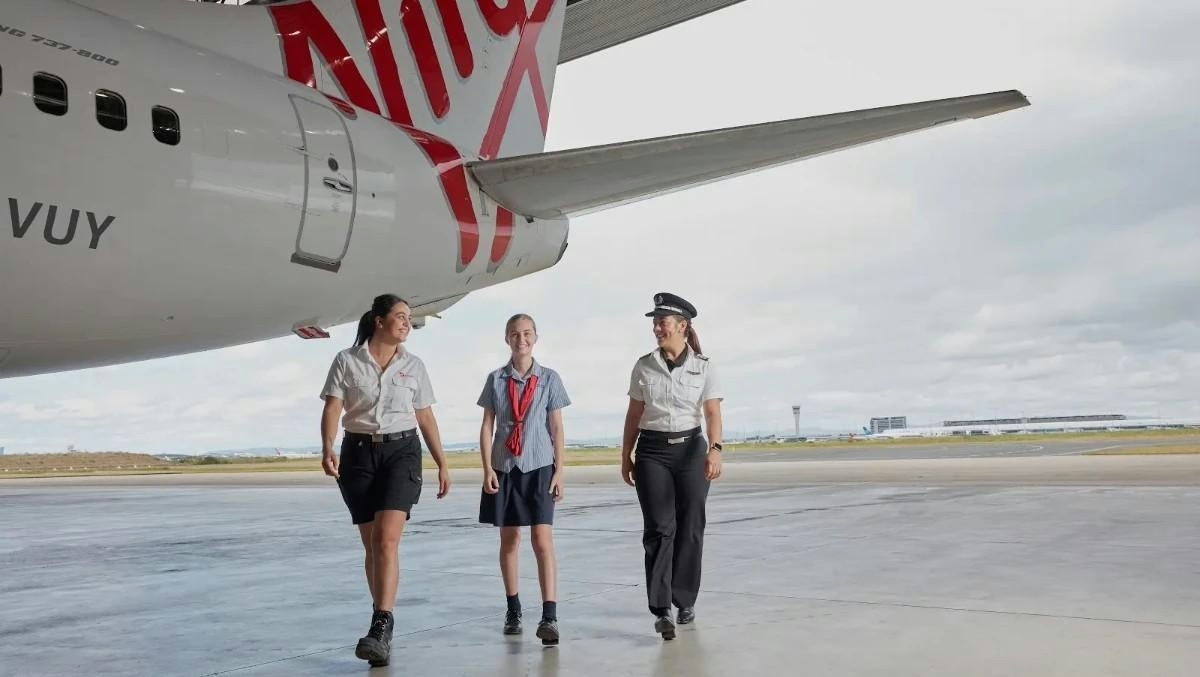
Virgin Australia to Increase Capacity as Aircraft Deliveries Accelerate
Fleet Renewal and Expansion Plans
Virgin Australia is poised to advance its fleet renewal program significantly in the second half of its 2026 fiscal year, which concludes on 30 June. The airline anticipates receiving seven additional aircraft during this period, complementing deliveries made in the first half and enabling it to meet its annual target for new aircraft arrivals. This milestone is particularly noteworthy given the widespread delivery delays that have disrupted the global aviation industry in recent years.
The airline’s regional arm, Virgin Australia Regional Airlines (VARA), is also set to receive four Embraer E190-E2 jets within the same fiscal year. These new additions will facilitate the retirement of older aircraft, thereby modernizing the regional fleet and enhancing operational efficiency.
Operational Environment and Market Challenges
Despite the accelerated pace of aircraft deliveries, Virgin Australia is maintaining a relatively cautious approach to capacity and network growth. The airline’s first-half results, released on 27 February 2026, highlighted ongoing volatility in the operating environment. The conflict in the Middle East has introduced fresh uncertainties, particularly affecting international operations. Virgin Australia’s strategy of partnering with international carriers rather than operating its own long-haul flights has helped mitigate exposure to global disruptions. However, its close alliance with Qatar Airways has resulted in some operational setbacks, as numerous international flights operated by Qatar on Virgin Australia’s behalf have been cancelled due to the conflict.
The broader aerospace sector is witnessing a surge in demand, with commercial aircraft orders rising sharply in January 2026, signaling renewed confidence in the industry. Nonetheless, persistent supply chain challenges—especially in the manufacturing of widebody freighters—continue to limit capacity growth. The slowdown in passenger aircraft deliveries and ongoing bottlenecks have constrained airlines’ ability to expand rapidly. Additional uncertainties related to tariffs and the need to strengthen supply chains to meet future demand further complicate the outlook.
Strategic Positioning Amid Competitive Pressures
Virgin Australia’s efforts to increase capacity come at a time when competitors are likely to adopt similar expansion strategies, potentially intensifying competition and exerting downward pressure on fares. The airline’s measured growth approach, combined with its ongoing fleet renewal, positions it to navigate these challenges while maintaining operational resilience.
As Virgin Australia contends with these industry headwinds, the timely delivery of new aircraft will be critical to its capacity expansion and fleet modernization efforts, even as it operates within a dynamic and uncertain market environment.

Etihad Airways Suspends Airbus A380 Flights on Key Route

Aditya Birla Group Seeks Approval for Aircraft Leasing in GIFT City

Qatar Airways Highlights Innovation and Connectivity at Arabian Travel Market 2026

Hong Kong's Five-Year Plan Includes Andrew Fan's Aircraft Parts Processing Hub Proposal

ACIA Aero Leasing Delivers ATR72-600 to Air Nostrum

RTX Appoints Jill Albertelli as Head of Pratt & Whitney

TAT Technologies Joins Beyond Aero Hydrogen Aircraft Program

AURAK Study Highlights Barriers to Air Taxi Adoption in Emerging Economies

Xiamen Air Selects Altitude for 787 Maintenance at Heathrow

Etihad and Swissport Extend Global Partnership
