
Orchestrate AI insights into action

Trending
Categories
Which Airport Handles the Most Boeing 777-300ER Flights?
Which Airport Handles the Most Boeing 777-300ER Flights?
The Boeing 777-300ER has been a pivotal aircraft in global long-haul aviation since its commercial introduction by Air France in 2004. With over 830 units delivered, the aircraft has maintained a significant presence in airline fleets worldwide. Although Boeing ceased production of the 777-300ER in late 2024, more than 800 remain in active service as of mid-2023, according to ch-aviation. As the aviation sector prepares for the arrival of the next-generation Boeing 777X, the 777-300ER continues to serve as a critical link between major international hubs.
Dubai International Airport: The Global Leader in 777-300ER Traffic
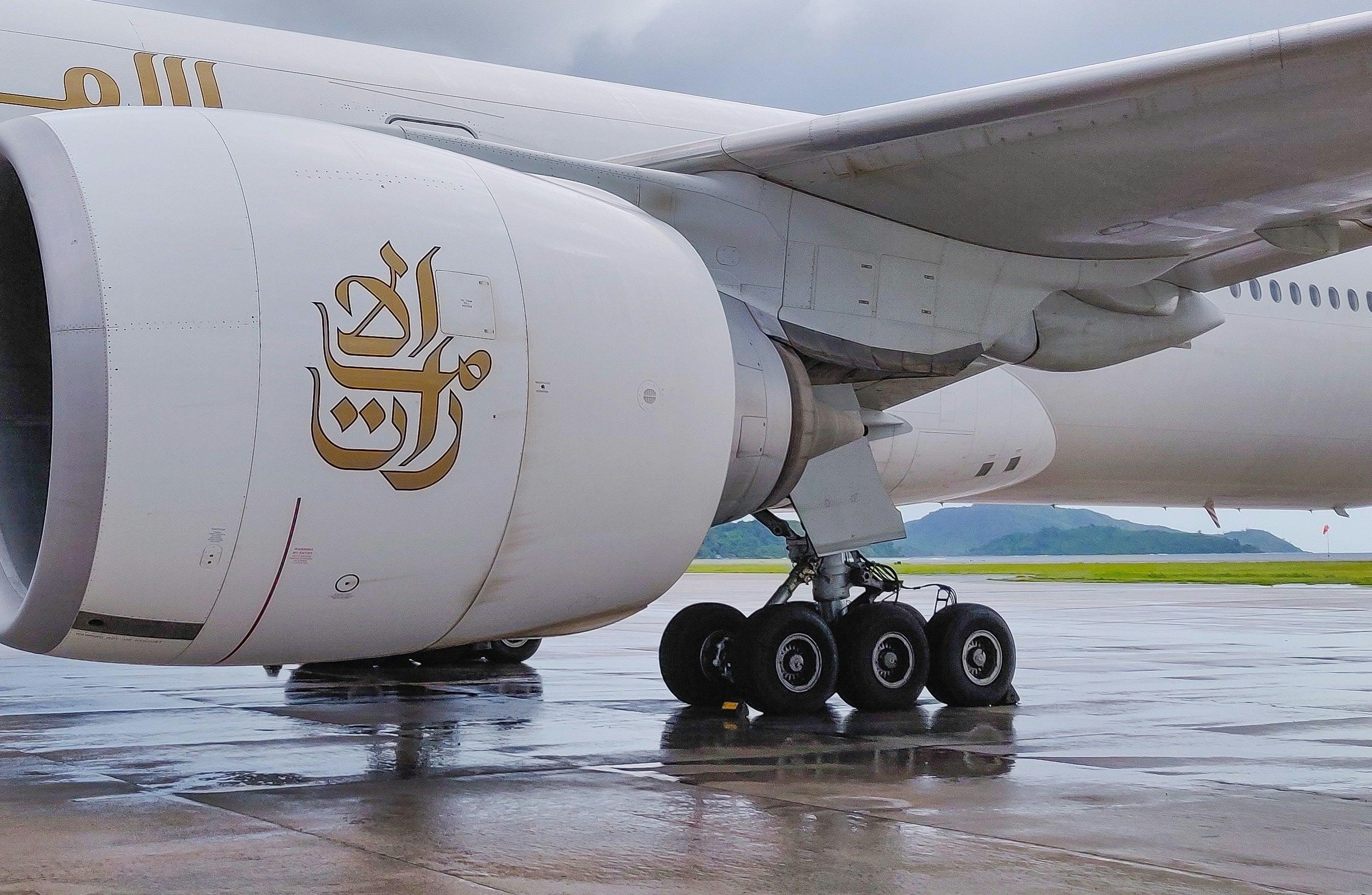
Dubai International Airport (DXB) stands out as the foremost airport handling Boeing 777-300ER flights. Aviation analytics firm Cirium projects that Dubai will record nearly 50,000 departures of the 777-300ER in 2026, a figure more than twice that of any other airport worldwide. This dominance is largely attributable to Emirates, the largest operator of the 777-300ER, which currently fields 119 aircraft of this type, with 90 actively flying.
Following Dubai, Hamad International Airport (DOH) in Doha ranks second with just under 20,000 departures, primarily supported by Qatar Airways. Paris Charles de Gaulle Airport (CDG) holds third place with nearly 15,000 departures, reflecting its role as a major European hub for long-haul widebody operations, including those by Air France, Emirates, Cathay Pacific, and Korean Air.
The top ten airports by projected 777-300ER departures in 2026 are led by Dubai International, followed by Hamad International, Charles de Gaulle, Heathrow, Taiwan Taoyuan, Hong Kong International, Suvarnabhumi, Singapore Changi, Istanbul Airport, and John F. Kennedy International.
Rio de Janeiro Galeão: An Emerging Strategic Hub
While Dubai dominates in overall 777-300ER departures, Rio de Janeiro Galeão International Airport (GIG) has recently gained prominence as a strategic hub for this aircraft type. Emirates operates a daily service linking Dubai, Rio de Janeiro, and Buenos Aires, highlighting GIG’s increasing importance in long-haul connectivity. This route is particularly notable amid growing e-commerce cargo volumes, positioning Galeão as a vital gateway for both passenger and freight traffic in the region.
Evolving Patterns and Future Prospects
The operational landscape for the 777-300ER is undergoing change. Air France-KLM is reportedly considering the replacement of its 777-300ER fleet, a development that could significantly impact demand at key European airports. Additionally, Emirates’ recent decision to suspend service to Algeria due to diplomatic tensions may lead to shifts in flight routes and airport utilization for the aircraft.
Despite these evolving dynamics, the Boeing 777-300ER remains a mainstay at many of the world’s busiest airports, continuing to facilitate intercontinental travel and global commerce as the aviation industry transitions toward the next generation of widebody aircraft.

Etihad Airways Suspends Airbus A380 Flights on Key Route

Aditya Birla Group Seeks Approval for Aircraft Leasing in GIFT City

Qatar Airways Highlights Innovation and Connectivity at Arabian Travel Market 2026

Hong Kong's Five-Year Plan Includes Andrew Fan's Aircraft Parts Processing Hub Proposal

ACIA Aero Leasing Delivers ATR72-600 to Air Nostrum

RTX Appoints Jill Albertelli as Head of Pratt & Whitney

TAT Technologies Joins Beyond Aero Hydrogen Aircraft Program

AURAK Study Highlights Barriers to Air Taxi Adoption in Emerging Economies

Xiamen Air Selects Altitude for 787 Maintenance at Heathrow

Etihad and Swissport Extend Global Partnership
