
Orchestrate AI insights into action

Trending
Categories
Why Airbus Added Extra Wheels to the A350-1000
Why Airbus Added Extra Wheels to the A350-1000
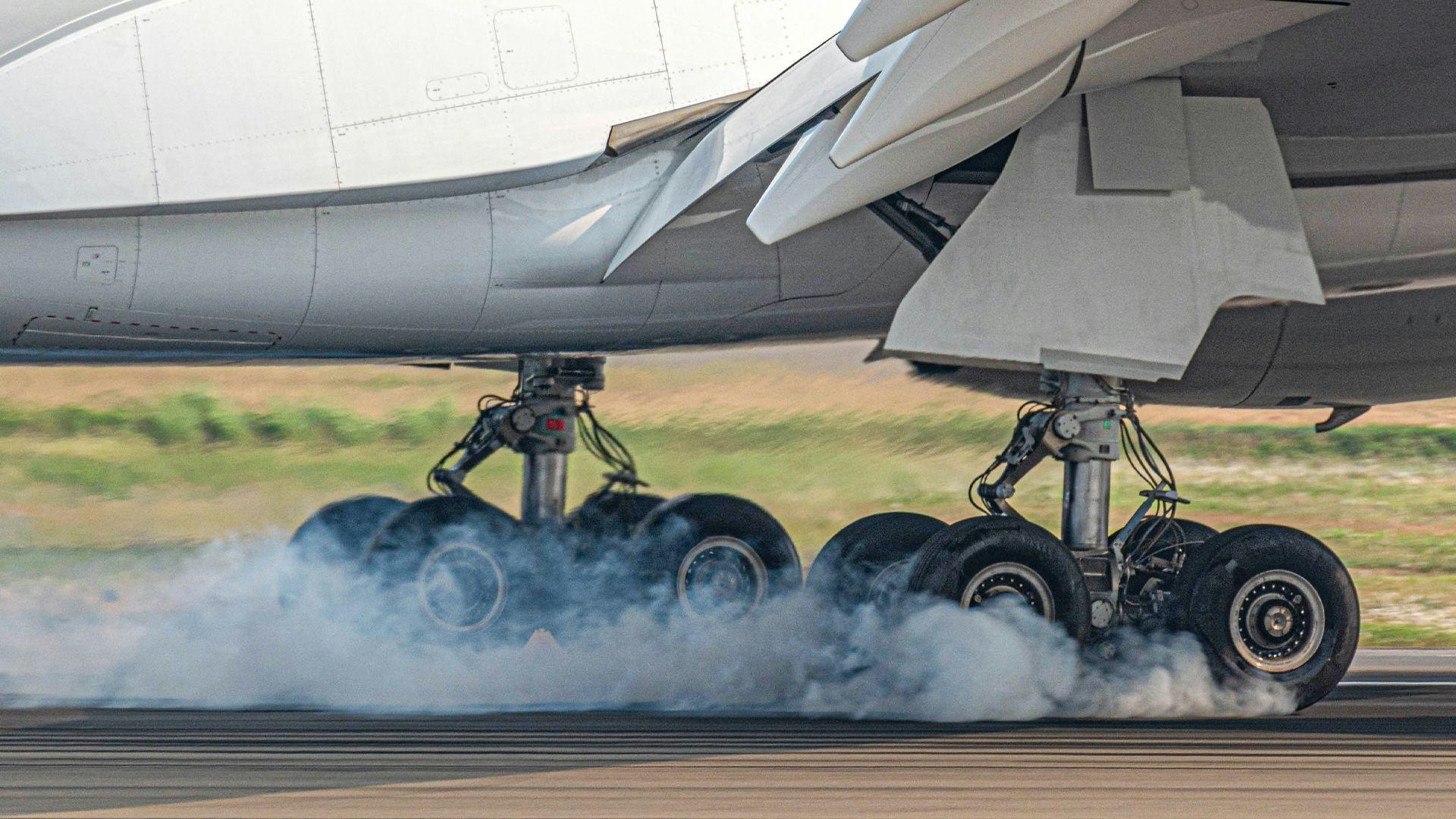
The Airbus A350-1000 distinguishes itself on airport ramps with six wheels on each main landing gear, totaling twelve main wheels—four more than its smaller sibling, the A350-900. This modification is not merely aesthetic but a strategic engineering response to the A350-1000’s significantly higher maximum takeoff weight, which exceeds 700,000 pounds (320,000 kilograms). The additional wheels enable Airbus’s largest twin-engine jet to distribute its weight more evenly, reduce runway pressure, and enhance braking capacity during landings.
Engineering for Heavier Loads
Landing gear plays a vital role in aircraft safety and performance, supporting the plane on the ground, absorbing landing impacts, and facilitating taxiing and takeoff. For widebody aircraft such as the A350-1000, the landing gear must endure substantial forces. Upon landing, the gear absorbs both the aircraft’s vertical weight and the dynamic forces generated by descent. To manage these stresses, landing gear systems incorporate shock-absorbing struts filled with hydraulic fluid and compressed nitrogen, which dissipate energy and protect the airframe.
A fundamental principle in landing gear design is the distribution of weight. Each tire has a maximum load capacity, and by increasing the number of wheels, Airbus ensures the A350-1000’s weight is spread across more tires. This reduces the load borne by each tire and minimizes wear on runways. This consideration is particularly important for airports worldwide, which use a pavement classification number (PCN) to indicate the maximum force their runways can sustain. By reducing pressure per tire, the A350-1000 can operate at a broader range of airports without necessitating costly runway reinforcements.
Operational and Market Impacts
The addition of extra wheels to the A350-1000 required significant engineering adjustments to maintain structural integrity and aerodynamic efficiency. The redesign demanded careful balancing to ensure that the aircraft’s overall performance was not compromised by the increased complexity and weight of the new landing gear system.
Market responses to the A350-1000’s design have been varied. Air Canada has praised the aircraft’s operational flexibility and long-range capabilities, viewing the additional wheels as a practical solution for global operations. Conversely, United Airlines’ commitment to the A350-1000 remains uncertain, influenced in part by ongoing disputes with Rolls-Royce over engine deliveries. Meanwhile, competitors are pursuing alternative strategies: All Nippon Airways is focusing on cabin enhancements, and Starlux Airlines is expanding its fleet with leased A321neos, underscoring the competitive and evolving nature of the long-haul aircraft market.
A Small Change with Significant Impact
As the A350-1000 becomes increasingly common at major airports in cities such as New York, Los Angeles, and Chicago, its distinctive landing gear serves as a visible reminder of how seemingly minor design changes can yield substantial operational benefits. By distributing its weight across additional wheels, Airbus has equipped its flagship twinjet to meet the complex demands of modern air travel, effectively balancing engineering innovation, airport infrastructure constraints, and market expectations in a single, tangible advancement.

Etihad Airways Suspends Airbus A380 Flights on Key Route

Aditya Birla Group Seeks Approval for Aircraft Leasing in GIFT City

Qatar Airways Highlights Innovation and Connectivity at Arabian Travel Market 2026

Hong Kong's Five-Year Plan Includes Andrew Fan's Aircraft Parts Processing Hub Proposal

ACIA Aero Leasing Delivers ATR72-600 to Air Nostrum

RTX Appoints Jill Albertelli as Head of Pratt & Whitney

TAT Technologies Joins Beyond Aero Hydrogen Aircraft Program

AURAK Study Highlights Barriers to Air Taxi Adoption in Emerging Economies

Xiamen Air Selects Altitude for 787 Maintenance at Heathrow

Etihad and Swissport Extend Global Partnership
