
Orchestrate AI insights into action

Trending
Categories
Why the U.S. Vice President Uses a Boeing 757 Instead of a Widebody Jet
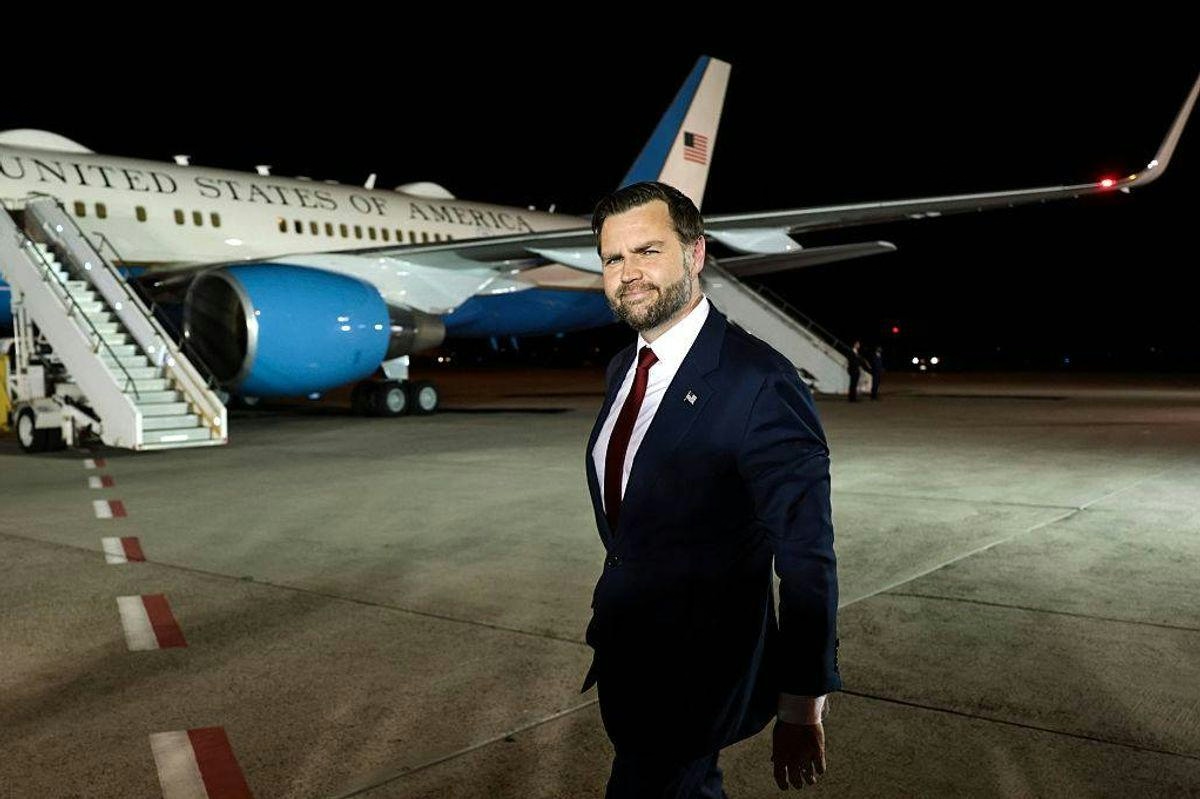
Why the U.S. Vice President Uses a Boeing 757 Instead of a Widebody Jet
The Vice President of the United States predominantly travels aboard a Boeing C-32, a modified version of the Boeing 757-200, rather than a larger, four-engine widebody aircraft. Operating under the call sign “Air Force Two” when the Vice President is onboard, the C-32 may appear an unconventional choice for such a prominent figure, especially given the expanding scope of the Vice President’s domestic and international responsibilities.
The decision to utilize the 757-based C-32 is grounded in practical considerations. Unlike the President, whose travel often involves large delegations and extensive security arrangements, the Vice President’s missions demand greater flexibility. These include frequent domestic trips, multi-stop itineraries, and an increasing number of international visits that require access to a wider variety of airports.
Operational Flexibility and Airport Access
One of the primary advantages of the Boeing 757 is its capability to operate from shorter runways and smaller airports that are inaccessible to larger widebody jets. This operational flexibility is essential for the Vice President’s travel schedule, which frequently involves rapid, multi-city stops and destinations lacking the infrastructure to accommodate larger aircraft. The 757’s established global support network and proven reliability further ensure that the Vice President’s travel remains efficient and dependable.
Purpose-Built for Diplomatic Missions
The C-32 is far more than a standard commercial airliner. Its interior is specifically configured for executive transport, featuring a private stateroom, conference areas, secure communications, and dedicated seating for staff and press. This design supports the Vice President’s evolving diplomatic role by enabling secure communication with Washington, facilitating policy coordination, and allowing preparation for high-level engagements while in transit.
Unlike the President’s entourage, which often necessitates the capacity of a widebody aircraft, the Vice President typically travels with smaller, focused teams. The C-32’s size and layout are optimized for these working delegations, providing an efficient platform for sustained diplomatic activity without the logistical complexities associated with larger jets.
Range and Mission Requirements
Although the Vice President’s travel includes significant international components, the C-32’s range of approximately 5,500 nautical miles (10,186 kilometers) suffices for most missions. Transatlantic flights and many transpacific routes fall within this range, while longer journeys to Asia or the Middle East can generally be managed with a single refueling stop. This operational range aligns well with the Vice President’s typical travel patterns, rendering the extended range of a widebody aircraft unnecessary for most assignments.
Looking Ahead
The U.S. Air Force is preparing to transition to new presidential aircraft, including a Qatari-donated Boeing 747-8i and Boeing’s VC-25B, though these platforms remain under development and are not yet operational for vice presidential use. Meanwhile, Boeing’s recent resurgence in profitability and aircraft deliveries indicates progress in overcoming previous challenges. However, ongoing supply chain disruptions and geopolitical tensions, particularly with China, continue to present risks.
In conclusion, the Boeing 757-based C-32 remains the preferred aircraft for the Vice President due to its unique combination of range, efficiency, operational flexibility, and suitability for the Vice President’s evolving mission profile.

Etihad Airways Suspends Airbus A380 Flights on Key Route

Aditya Birla Group Seeks Approval for Aircraft Leasing in GIFT City

Qatar Airways Highlights Innovation and Connectivity at Arabian Travel Market 2026

Hong Kong's Five-Year Plan Includes Andrew Fan's Aircraft Parts Processing Hub Proposal

ACIA Aero Leasing Delivers ATR72-600 to Air Nostrum

RTX Appoints Jill Albertelli as Head of Pratt & Whitney

TAT Technologies Joins Beyond Aero Hydrogen Aircraft Program

AURAK Study Highlights Barriers to Air Taxi Adoption in Emerging Economies

Xiamen Air Selects Altitude for 787 Maintenance at Heathrow

Etihad and Swissport Extend Global Partnership
