
Orchestrate AI insights into action

Trending
Categories
Wizz Air Chooses Pratt & Whitney Engines for Up to 177 A321neos
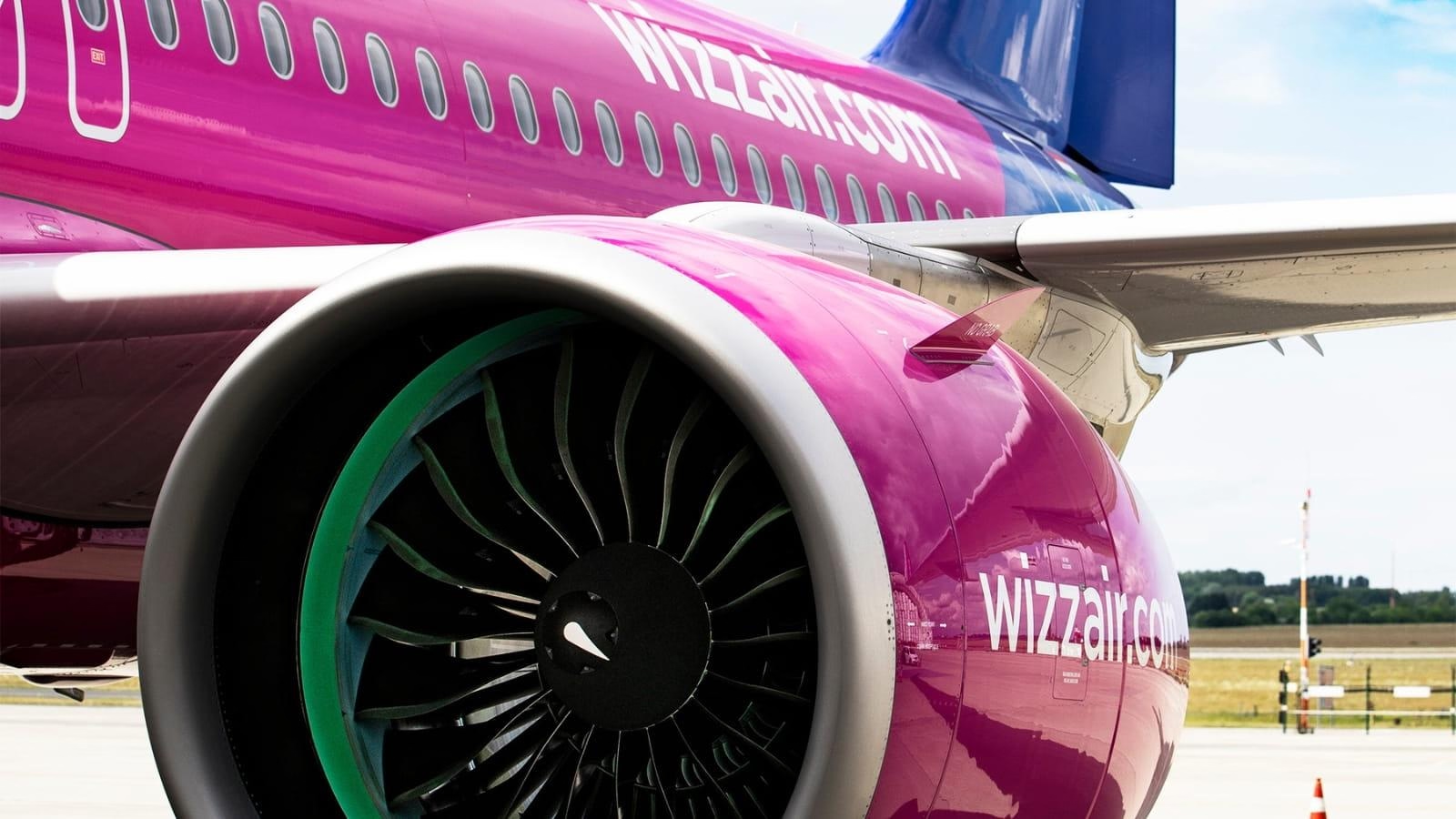
Wizz Air Selects Pratt & Whitney Engines for Up to 177 Airbus A321neos
Wizz Air has confirmed its decision to equip up to 177 new Airbus A321neo aircraft with Pratt & Whitney engines, reinforcing a long-standing partnership with the American engine manufacturer. The agreement was officially signed at the Paris Air Show on June 17, 2025, by Wizz Air CEO József Váradi and Pratt & Whitney Commercial Engines President Rick Deurloo.
Strengthening a Strategic Partnership
This latest commitment follows a competitive evaluation process that included consideration of CFM International engines. Despite recent operational challenges, including the temporary grounding of a significant portion of its fleet due to unexpected maintenance issues with existing Pratt & Whitney engines, Wizz Air chose to maintain its relationship with the company. The airline had previously selected Pratt & Whitney’s geared turbofan (GTF) engines for 276 Airbus A320neo, A321neo, and A321XLR aircraft in orders placed in 2016 and 2020. With the new order, Wizz Air’s total commitment to Pratt & Whitney-powered aircraft rises to 453.
“Our relationship with Pratt & Whitney has been instrumental in supporting our growth strategy, which will enable Wizz Air to have a fleet of 500 aircraft within a decade,” Váradi stated. He highlighted the GTF engine technology as the most economical solution, offering superior fuel efficiency, quieter operation, and reduced emissions, all of which contribute to a lower cost base for the airline.
Currently, Pratt & Whitney engines power Wizz Air’s fleet of 163 A320neo family aircraft, while 73 A320ceo family aircraft operate with IAE V2500 engines. Rick Deurloo described the new agreement as “another important milestone in our long-standing relationship with Wizz Air and a vote of confidence in the GTF engine,” noting that Pratt & Whitney has exclusively powered the airline’s growth since 2003.
Industry Context and Future Outlook
Wizz Air’s decision comes amid heightened scrutiny over the reliability and maintenance costs associated with Pratt & Whitney’s engines. The recent groundings have attracted attention from competitors and industry analysts, raising questions about the long-term operational efficiency of the selected powerplants. Market observers suggest that rival carriers, such as Ryanair, may reconsider their engine strategies in light of Wizz Air’s experience, while other low-cost airlines are likely to monitor the situation closely when planning future fleet acquisitions.
Pratt & Whitney’s ongoing development of advanced technologies, including the hybrid-electric PW1100G engine, remains under close observation by investors and industry stakeholders. These innovations could significantly influence future market dynamics and help address current reliability concerns.
As Wizz Air advances its ambitious fleet expansion, its continued reliance on Pratt & Whitney engines will remain a key focus for industry competitors and analysts alike. The performance of the new engines is expected to have broader implications for trends within the low-cost carrier sector.

Etihad Airways Suspends Airbus A380 Flights on Key Route

Aditya Birla Group Seeks Approval for Aircraft Leasing in GIFT City

Qatar Airways Highlights Innovation and Connectivity at Arabian Travel Market 2026

Hong Kong's Five-Year Plan Includes Andrew Fan's Aircraft Parts Processing Hub Proposal

ACIA Aero Leasing Delivers ATR72-600 to Air Nostrum

RTX Appoints Jill Albertelli as Head of Pratt & Whitney

TAT Technologies Joins Beyond Aero Hydrogen Aircraft Program

AURAK Study Highlights Barriers to Air Taxi Adoption in Emerging Economies

Xiamen Air Selects Altitude for 787 Maintenance at Heathrow

Etihad and Swissport Extend Global Partnership
