
图像

AeroGenie — 您的智能副驾驶。

问任何问题。分析一切。立即行动。

热门趋势

Categories

BA CTO: No Engines Delivered On Time in 2025
October 14, 2025By ePlane AI
BA CTO: No Engines Delivered On Time in 2025
0
0
British Airways
Engine Delivery Delays
MRO Europe

British Airways CTO Highlights Critical Engine Delivery Delays in 2025

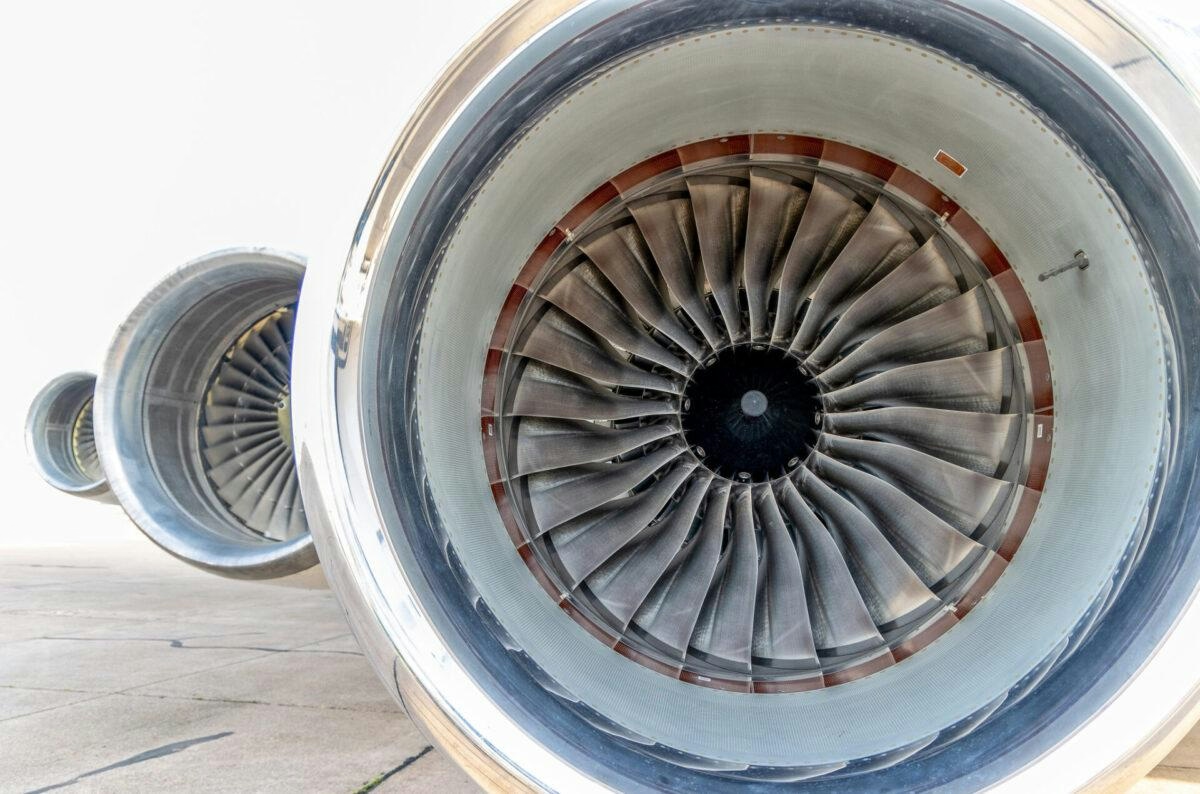
At the MRO Europe 2025 conference held at London’s Excel Centre, British Airways’ Chief Technical Officer, Andy Best, delivered a candid and sobering assessment of the airline’s operational challenges. Best revealed that throughout 2025, none of the engines supplied to British Airways arrived on schedule, underscoring significant disruptions within the airline’s supply chain.

Operational Impact and Industry Challenges

Best emphasized the direct consequences of these delays on British Airways’ ability to meet its commitments to passengers. He stressed that the airline’s relationship with its customers is founded on a contract to ensure safe and timely travel from point A to point B. The failure of engine suppliers to deliver on time, he noted, transfers risk into the airline’s operations, forcing British Airways to manage these risks proactively to maintain service standards.

The CTO also expressed dissatisfaction with the aftermarket service sector, describing the airline’s confidence in service provision as “not great.” This strained relationship with suppliers has contributed to increased operational costs and intensified pressure on maintenance schedules. The ongoing delays threaten to erode customer satisfaction and place additional strain on British Airways’ partnerships with engine manufacturers.

These challenges have attracted scrutiny from investors and industry analysts, who are closely monitoring the airline’s capacity to navigate these risks. Meanwhile, competitors may leverage British Airways’ difficulties by emphasizing their own reliability and parts availability, potentially shifting market dynamics.

A Call for Industry Collaboration

Best was clear that his remarks were not intended as a complaint but as a call to action for the entire aviation sector. He urged all stakeholders, including British Airways, suppliers, and service providers, to collaborate in addressing the persistent supply chain issues. “If you want to transform and make change, come and work with us,” he invited, highlighting the necessity of collective effort to overcome these challenges.

The broader aviation industry is contending with a severe shortage of capacity to repair and maintain engines, a problem that extends well beyond British Airways. A recent study by the International Air Transport Association (IATA) estimates that supply chain disruptions could cost airlines more than $11 billion in 2025, intensifying operational and financial pressures across the sector.

As the MRO Europe conference continues from October 14 to 16, British Airways’ forthright assessment underscores the urgent need for coordinated solutions to restore reliability and confidence within the global aviation maintenance and supply chain ecosystem.

More news
Locatory.com Gains Traction Among Aviation MROs and Suppliers

Locatory.com Gains Traction Among Aviation MROs and Suppliers

Locatory.com Gains Traction Among Aviation MROs and Suppliers In the dynamic aviation sector, maintenance, repair, and overhaul (MRO) providers along with their suppliers are increasingly adopting digital platforms to enhance procurement processes, accelerate sales, and broaden their global reach. With nearly two-thirds of aviation professionals exploring artificial intelligence and automation to minimize unexpected downtime through predictive maintenance, digital solutions have become indispensable for operational efficiency. Locatory.com’s Expanding Role in Aviation Procurement Locatory.com has established itself as a significant contributor to this digital transformation by offering tools that align with current industry trends and deliver measurable improvements. The platform now supports over 25,000 aviation professionals, facilitating the sourcing of aircraft parts, consumables, chemicals, equipment, and related services. Users have reported a transition from slow, reactive supply chains to systems characterized by speed, transparency, and actionable performance metrics. A notable example is Cyprus-based MRO provider C.A.S., which utilized Locatory.com to revamp its procurement process. This overhaul resulted in faster response times, enhanced inventory management, and access to a wider supplier network. These improvements have reduced operational delays and unlocked new business opportunities, underscoring the tangible benefits of digital procurement platforms. On the supplier side, companies such as Executive Jet Support have experienced increased international visibility and more streamlined sales processes. Users emphasize that Locatory.com fosters trust and transparency—critical elements for repeat business and sustainable growth within aviation supply chains. Market Trends, Challenges, and Competitive Dynamics The global MRO market is projected to reach approximately US$137 billion by 2032, while aerospace parts manufacturing could surpass US$1.5 trillion. Despite this promising growth, the industry faces significant challenges. Inefficient request-for-quote (RFQ) processing often results in slow and disorganized quoting, leading to missed business opportunities. Buyers frequently have limited visibility into the full spectrum of available suppliers, while operational bottlenecks in production and logistics disrupt schedules and inflate costs. Additionally, prolonged sales cycles caused by manual quote tracking hinder timely decision-making and reduce conversion rates. These inefficiencies contribute to late deliveries, inventory imbalances, and restricted market access, collectively costing the industry billions annually through supply chain disruptions and aircraft downtime. Locatory.com addresses these issues by functioning as a centralized digital marketplace tailored specifically for aviation maintenance and supply. Its key features include instant connectivity to a global network of over 25,000 professionals and rapid RFQ initiation, averaging just 17 minutes. Despite its growing momentum, Locatory.com faces considerable challenges. Competition from established MRO platforms remains intense, and continuous innovation is essential to maintain a competitive edge amid rapid technological advancements. Seamless integration with the diverse systems already employed by aviation MROs and suppliers also presents a significant hurdle. Market responses have been mixed; while early adopters embrace the platform’s efficiencies, more traditional players remain cautious about new entrants. In turn, competitors are expected to enhance their own offerings, intensifying market competition and driving further innovation. As the aviation industry continues its digital evolution, platforms like Locatory.com are positioned to play a pivotal role, contingent upon their ability to adapt to shifting demands and sustain their advantage in an increasingly competitive landscape.
58 Pilots Graduate from Ethiopian University

58 Pilots Graduate from Ethiopian University

Ethiopian Aviation University Graduates 58 New Pilots Amidst Growing Global Demand On January 17, 2025, Ethiopian Aviation University, the academic institution owned by Ethiopian Airlines, celebrated the graduation of 457 aviation professionals, including 58 newly qualified pilots. Representing 12 countries, this diverse cohort marks a significant milestone as they prepare to enter an industry undergoing rapid technological and operational transformation. A Diverse and Skilled Cohort The graduating class comprised 58 pilots, 115 aircraft maintenance technicians, and 284 cabin crew members. The students hailed from Ethiopia, Cameroon, Chad, Gabon, Italy, Madagascar, Malawi, Nigeria, Senegal, Tanzania, Uganda, and Yemen, underscoring the university’s international reach and influence. Ethiopian Airlines Group CEO Mesfin Tasew highlighted the institution’s pivotal role in the airline’s success and the broader aviation sector. He remarked, “Ethiopian Aviation University has been the backbone of Ethiopian Airlines’ success for decades, training the skilled professionals behind the airline’s operations. By training aviation professionals from around the world, we proudly share our expertise and contribute to the growth of the global aviation industry.” Tasew further emphasized the graduates’ potential as future leaders in aviation, reflecting the university’s commitment to shaping the sector’s next generation. Preparing for a Technologically Advanced Aviation Industry As the aviation industry increasingly integrates artificial intelligence and digital technologies, the demand for highly trained and adaptable professionals is intensifying. The entry of these new pilots and specialists into the workforce comes at a time when airlines worldwide are competing to secure talent capable of navigating complex technological changes. This competition has prompted many carriers to invest in their own training programs or establish partnerships with educational institutions to ensure a reliable pipeline of qualified personnel. Industry experts note that the success of institutions like Ethiopian Aviation University is critical to developing a workforce prepared for the future challenges of aviation. Continuous investment in education and training is essential to sustaining growth, resilience, and innovation within the sector. Expanding Educational Excellence in Africa Ethiopian Aviation University has broadened its academic offerings in recent years, providing a comprehensive range of short-term, medium-term, undergraduate, and graduate programs. Recognized by the International Civil Aviation Organization (ICAO) as a Regional Training Center of Excellence, it stands as the largest aviation training center on the African continent. The latest graduates are expected to play a vital role in advancing the aviation industry both regionally and globally, as the sector adapts to evolving technologies and market demands.
The Engine Behind Boeing’s Latest Widebody Aircraft

The Engine Behind Boeing’s Latest Widebody Aircraft

The Engine Behind Boeing’s Latest Widebody Aircraft When Boeing unveiled the 787 Dreamliner, it marked a transformative moment in the evolution of long-haul air travel and widebody aircraft design. More than a mere successor to models like the Boeing 767 and Airbus A330, the Dreamliner introduced a fundamental shift through its extensive use of composite materials, advanced aerodynamic features aimed at reducing fuel consumption, and a modern cockpit equipped with standard head-up displays. Central to the aircraft’s promise of enhanced efficiency was the performance of its engines. The 787-10: Efficiency and Innovation in Focus The 787-10, the largest and most capable variant of the Dreamliner family, embodies Boeing’s commitment to efficiency and innovation. Launched in 2013 and taking flight in 2017, this model extends the composite airframe to its maximum length, accommodating approximately 330 passengers in a typical two-class configuration. Although its range is shorter than that of the 787-9, the 787-10 is optimized for high-density, long-haul, and premium regional routes. This makes it an attractive option for airlines aiming to replace aging widebodies such as the Airbus A330-300, Boeing 777-200, and early Airbus A340 models. Major international carriers including Singapore Airlines, United Airlines, Etihad Airways, and ANA have incorporated the 787-10 into their fleets, valuing its balance of capacity, efficiency, and reliability. The aircraft’s economic viability depends heavily on high utilization rates, which in turn place considerable importance on engine durability and extended time-on-wing performance. Consequently, engine selection for the 787-10 is especially critical, often more so than for its smaller Dreamliner counterparts. Engine Options and Market Preferences Boeing offers two exclusive engine choices for the 787 family: the Rolls-Royce Trent 1000 and the GE Aerospace GEnx. Both engines were developed specifically to meet the Dreamliner’s unique performance and environmental requirements. Initially, orders for the 787’s engines were fairly evenly divided between the two manufacturers. However, the 787-10 variant has seen a noticeable shift in airline preference, with market adoption increasingly favoring one engine over the other. Boeing’s dual-supplier strategy was designed to encourage competition and innovation while providing airlines with flexibility. The Rolls-Royce Trent 1000 employs the company’s signature three-shaft architecture, a design honed through multiple widebody programs. In contrast, the GE GEnx incorporates technological advancements tailored to the Dreamliner’s high bypass ratio and stringent environmental targets. Challenges Facing Boeing’s Widebody Portfolio Despite the technological advancements embodied in the 787-10, Boeing faces significant challenges in scaling up production and maintaining its market position. Lingering concerns from past safety incidents—including the 737 Max crashes and the midair door plug event—have affected the company’s reputation and disrupted delivery schedules. Regulatory scrutiny remains intense, with the Federal Aviation Administration (FAA) closely overseeing certification timelines for new models such as the 737 MAX 10. Decisions regarding emissions waivers also carry implications for Boeing’s stock performance. Additionally, Boeing’s 777F freighter model confronts difficulties in meeting evolving fuel-efficiency standards, prompting the company to seek regulatory waivers to sustain air cargo operations. Market dynamics are further complicated by intensifying competition from Airbus in the long-haul widebody segment. Some carriers, including Southwest Airlines, have postponed the introduction of new Boeing models amid ongoing certification challenges, reflecting a cautious stance in an uncertain industry environment. As Boeing navigates these multifaceted challenges, the performance and reliability of the 787-10 and its engines remain pivotal to the company’s efforts to restore confidence and uphold its competitive standing in the global widebody aircraft market.
UBTech Shares Rise After Airbus Orders Humanoid Robots

UBTech Shares Rise After Airbus Orders Humanoid Robots

UBTech Shares Rise Following Airbus Order for Humanoid Robots Shares of UBTech Robotics, a China-based robotics manufacturer, surged by as much as 8% in Hong Kong trading after the company announced that Airbus SE has placed an order for its Walker S2 humanoid robots. The robots are intended for deployment at Airbus’s aircraft manufacturing facilities, although specific details regarding the order’s size, pricing, delivery schedule, and the number of units involved were not disclosed by either party. Strategic Expansion and Industry Implications This agreement represents a significant milestone for UBTech, underscoring China’s strategic ambitions in the humanoid robotics sector. The company has reported securing over 1.4 billion yuan (approximately US$201 million) in orders for humanoid robots slated for 2025. UBTech has set ambitious production targets, aiming to manufacture 5,000 units in 2026 and doubling that output to 10,000 units in 2027. This rapid scale-up reflects the company’s commitment to commercializing humanoid robotics on a large scale, despite concerns within the industry about potential market saturation and regulatory scrutiny over a possible bubble. UBTech and Airbus have indicated plans to explore broader applications of robotics within aviation manufacturing, suggesting the potential for a long-term partnership. However, it remains unclear whether the Walker S2 robots will be introduced initially through a limited pilot phase or integrated more extensively across Airbus’s production lines. The Airbus deal follows UBTech’s earlier agreement with Texas Instruments, where its robots were deployed in semiconductor manufacturing. This cross-sector demand highlights the increasing appeal of humanoid robotics among major industrial players. The trend has contributed to a doubling of the Solactive China Humanoid Robotics Index over the past two years, as Chinese robotics firms continue to secure contracts with global manufacturers. Regulatory and Competitive Landscape Should the Walker S2 robots be deployed at Airbus facilities in Europe, they will be subject to the EU Machinery Regulation (EU) 2023/1230, which comes into effect in January 2027. This regulation introduces mandatory health and safety requirements, expanded oversight for autonomous mobile robots and AI-based safety functions, and conformity assessment procedures including CE marking. UBTech has yet to disclose how it plans to address these regulatory requirements. The new rules also create opportunities for system integrators, compliance consultancies, and service providers to assist with EU deployments and regulatory compliance. UBTech faces competition from other robotics firms, notably AGIBOT, which has established global sales leadership and made significant technological advances. According to Morgan Stanley, approximately 25 companies are positioned to dominate the humanoid robot market, which is projected to exceed $5 trillion by 2050. Nonetheless, analysts anticipate that widespread adoption will remain gradual until at least 2035, as the industry contends with technical, regulatory, and market challenges. Investor enthusiasm for the sector is further reflected in the rise of the RISE US Humanoid Robot ETF, signaling growing expectations for expansion within the US robotics industry. UBTech’s latest deal with Airbus not only elevates its market profile but also highlights the accelerating integration of humanoid robotics into global manufacturing, even as the industry navigates regulatory hurdles and intensifying competition.
Boeing’s Widebody Jet Sales Surge Signals Shift in Global Air Travel

Boeing’s Widebody Jet Sales Surge Signals Shift in Global Air Travel

Boeing’s Widebody Jet Sales Surge Signals Shift in Global Air Travel Boeing, the United States’ premier aerospace manufacturer, is witnessing a remarkable resurgence in commercial aircraft sales, particularly within the widebody jet segment. In 2025, the company secured approximately 1,175 gross aircraft orders—more than double the previous year’s total and surpassing its chief competitor, Airbus. This surge is largely driven by renewed demand for widebody aircraft such as the Boeing 787 Dreamliner, which experienced one of its strongest order years since its launch, alongside sustained interest in large twin-aisle jets designed for long-haul international routes. Industry Recovery and Market Outlook This increase in orders coincides with the global aviation industry’s recovery from the disruptions caused by the COVID-19 pandemic. Airlines are actively seeking efficient, long-range aircraft to rebuild capacity and accommodate the resurgence in travel demand. Boeing’s Commercial Market Outlook for 2025–2044 projects that global air traffic will more than double over the next two decades, necessitating a significant expansion of the world’s aircraft fleet. Widebody and long-range jets, including the 787 and the forthcoming 777X, are expected to be instrumental in connecting international markets and supporting this anticipated growth. Challenges Amid Growth Despite this positive momentum, Boeing continues to face considerable challenges. The company is working to scale up production following recent setbacks, including two fatal crashes involving the 737 Max and a widely publicized midair door plug incident. These events have led to heightened regulatory scrutiny, with the Federal Aviation Administration (FAA) closely overseeing emissions waivers and certification timelines for new models such as the 737 MAX 10. Nevertheless, investor confidence has rebounded, with JPMorgan recently raising its stock target for Boeing to $245, citing expectations of a cash-flow turnaround by 2026. Competitive Dynamics and Passenger Benefits The competitive landscape remains intense as airlines worldwide expand their long-haul fleets, incorporating not only Boeing’s Dreamliner but also Airbus’ A330 and A350 models. This rivalry is influencing airline strategies as carriers seek to offer more direct, long-distance routes and enhanced passenger experiences. For travelers, the surge in widebody jet orders translates into tangible benefits. New aircraft enable airlines to launch more direct, long-haul flights between major cities, reducing the need for layovers. Modern jets like the Boeing 787 feature advanced cabin amenities, including improved climate control systems, larger windows, and enhanced noise reduction, all of which contribute to greater comfort on extended journeys. Additionally, newer widebody models offer improved fuel efficiency and lower emissions compared to older fleets, aligning with the aviation industry’s growing emphasis on sustainability. While Boeing’s sales surge signals renewed strength in global air travel, the company’s ability to meet this demand will depend on overcoming production challenges and navigating complex regulatory requirements. As airlines continue to invest in next-generation widebody jets, passengers can anticipate expanded route options, improved comfort, and greater access to international destinations—heralding a significant shift in the future of global aviation.
French Aircraft Design Claims to Reduce Energy Consumption by Elevenfold

French Aircraft Design Claims to Reduce Energy Consumption by Elevenfold

French Startup Unveils Aircraft Design Claiming Elevenfold Energy Reduction As the aviation industry grapples with the urgent need to reduce its environmental footprint amid escalating climate change concerns, innovative solutions are emerging to address the sector’s complex decarbonization challenges. Despite growing adoption of sustainable aviation fuels (SAF), energy-efficient designs, and electric propulsion, the high costs and long service lives of aircraft continue to impede rapid transformation. Against this backdrop, Eenuee, a startup based in Saint-Étienne, France, has introduced a bold new concept aimed at revolutionizing regional air mobility. The Gen-ee Project: A Leap in Efficiency and Accessibility Eenuee’s Gen-ee project envisions a 100% electric aircraft capable of carrying up to 19 passengers over distances of 500 kilometers while consuming eleven times less energy than conventional planes. This dramatic improvement in energy efficiency could significantly reshape short-haul aviation, particularly in regions where rail and public transport infrastructure are limited or impractical. By combining accessibility with sustainability, the Gen-ee aims to open new routes and connect remote areas without the need for extensive airport infrastructure. Central to the Gen-ee’s innovation is its lifting-body fuselage, developed in partnership with Duqueine Group, a specialist in composite materials. Departing from the traditional tubular aircraft design, this aerodynamic form enhances performance and reduces energy consumption. The aircraft’s all-electric propulsion system promises quieter, cleaner flights, aligning with global efforts to reduce aviation’s environmental impact. Further expanding its versatility, Eenuee is developing a variant of the Gen-ee capable of water takeoffs and landings. This model incorporates hydrofoils—underwater wings that minimize drag at high speeds—drawing inspiration from high-speed racing boats. Such a design could facilitate smoother operations on water, enabling access to remote locations otherwise difficult to reach by conventional means. Industry Context and Challenges The aviation sector is accelerating its transition toward cleaner technologies, with SAF adoption playing a pivotal role in reducing greenhouse gas emissions without necessitating new airport infrastructure. Manufacturers are also deploying advanced systems to optimize flight paths, improve air traffic management, and adjust trajectories to minimize contrail formation—an often-overlooked contributor to global warming comparable in effect to carbon dioxide emissions. Despite these advances, the path to decarbonized air travel remains fraught with challenges. Industry leaders, including Bill Gates and the International Air Transport Association, stress the critical need for continued innovation and robust government policies to drive emissions reductions. Competitors are investing heavily in similar efficiency measures and exploring emerging technologies to maintain competitiveness in a rapidly evolving market. Eenuee’s Gen-ee project, with its targeted first flight in 2029, offers a certified, efficient, and low-noise solution tailored to regions such as Auvergne-Rhône-Alpes, where mountainous terrain complicates transport connectivity. By enabling economically viable routes that were previously unprofitable, the initiative supports both regional development and environmental stewardship. As the aviation industry confronts the dual imperatives of climate responsibility and market demand, projects like Gen-ee underscore both the potential and the obstacles inherent in achieving a zero-carbon future. The race continues for innovative solutions capable of delivering cleaner skies without sacrificing connectivity.
Boeing Surpasses Airbus Orders in 2025 as Deliveries Total 600

Boeing Surpasses Airbus Orders in 2025 as Deliveries Total 600

Boeing Surpasses Airbus in 2025 Aircraft Orders as Deliveries Reach Seven-Year High In a notable shift in the aerospace industry, Boeing has overtaken Airbus in aircraft orders for the first time since 2018, signaling a significant development in the longstanding competition between the two manufacturers. In 2025, Boeing secured 1,173 net orders, surpassing Airbus’s 889 net orders and ending a seven-year period of Airbus dominance in order volumes. Boeing’s gross orders reached 1,175, compared to Airbus’s 1,000. Strong Demand for Boeing’s 737 MAX and 787 Dreamliner The surge in Boeing’s orders was primarily driven by the popularity of its 737 MAX family, which accounted for 591 new orders and 447 of the company’s total 600 deliveries. The fourth quarter alone saw the delivery of 117 737 MAX aircraft. Alaska Airlines emerged as a significant customer, placing its largest-ever order in December for 105 Boeing 737-10s. This order increased Alaska’s total 737 MAX order book to 174 aircraft, alongside an additional purchase of five 787 Dreamliners. Boeing’s 787 Dreamliner series also experienced strong demand, particularly from Middle Eastern carriers such as Qatar Airways and Etihad Airways. Overall, Boeing received orders for 381 aircraft in the 787 family, with other notable customers including Turkish Airlines, British Airways, Alaska Airlines, and Gulf Air. The momentum continued into 2026, with Delta Airlines ordering 60 Dreamliners and Aviation Capital Group acquiring 50 737 MAX jets. Delivery Figures and Industry Challenges Despite Boeing’s impressive order performance, Airbus maintained its lead in deliveries, delivering 793 aircraft in 2025 compared to Boeing’s 600. Nevertheless, Boeing’s delivery total represents its highest output in seven years. Both companies continue to grapple with challenges such as engine and supply chain constraints, which have impeded production and delivery schedules. Airbus, for example, revised its delivery targets last year following a major recall of its A320 family due to concerns over solar radiation affecting flight control data. Boeing has faced intense scrutiny following several high-profile incidents, including two fatal 737 MAX crashes in Indonesia and Ethiopia, as well as the June 2024 Air India crash. The company also encountered renewed criticism after a door plug incident on an Alaska Airlines 737 MAX. However, after extensive safety evaluations, the Federal Aviation Administration (FAA) expressed renewed confidence in Boeing, permitting an increase in production from 38 to 42 jets per month. The 737 MAX 10 recently advanced to the second phase of FAA certification after delays related to engine de-icing issues. Market Response and Competitive Outlook The market has shown interest in Boeing’s recovery, though industry analysts and competitors remain cautious about the company’s ability to sustain its delivery momentum. Rival manufacturers are focusing on strategies to reclaim market share, particularly in the highly competitive narrowbody segment where Boeing has recently made significant gains. As Boeing and Airbus continue to navigate operational and regulatory challenges, the competition for market leadership in the global aviation industry remains intensely contested.
Why the Airbus A380 Uses Two Different Engine Types

Why the Airbus A380 Uses Two Different Engine Types

Why the Airbus A380 Uses Two Different Engine Types The Airbus A380, often described as a “flying apartment building” due to its immense double-deck fuselage, represents a remarkable feat of aerospace engineering. Weighing approximately 560 tons, this widebody aircraft relies on four powerful engines that generate thrust comparable to a small rocket launch. While passengers enjoy the spacious cabin and onboard amenities, the true engineering marvel lies beneath the wings, where the choice of engines plays a critical role in the aircraft’s performance and operational strategy. Engineering Challenges Behind the A380’s Powerplant Developed during the 1990s, the Airbus A380 faced unprecedented engineering challenges, particularly in terms of propulsion. As the aircraft’s design evolved, its maximum takeoff weight approached 1.3 million pounds (575 tonnes), necessitating a combined thrust output of up to 300,000 pounds. This requirement pushed engine technology to new limits. Unlike twin-engine aircraft such as the Boeing 777, which are “takeoff-thrust limited” and require engines capable of sustaining flight safely in the event of an engine failure, the four-engine A380 was “climb-thrust limited.” Losing one engine resulted in only a 25% reduction in total thrust, shifting the emphasis from raw takeoff power to efficient and sustained climb performance. This unique operational profile demanded the development of entirely new engine designs tailored to these specific needs. The Rationale for Offering Two Engine Options Airbus’s decision to provide airlines with a choice between two engine types—the Rolls-Royce Trent 900 and the Engine Alliance GP7200, a collaboration between General Electric and Pratt & Whitney—was a strategic move shaped by market and operational considerations. By involving both manufacturers, Airbus aimed to appeal to a broader range of airlines, each with established preferences and maintenance infrastructures. However, this dual-engine approach introduced significant complexity. Airlines and maintenance teams had to manage two distinct engine models, each with unique parts, service requirements, and supply chains. This multiplicity increased logistical challenges and operational costs. Market responses to the dual-engine offering were mixed. Some carriers preferred the reliability and performance characteristics of one engine over the other, resulting in varied adoption rates across the fleet. Meanwhile, competitors such as Boeing emphasized the simplicity and cost-effectiveness of their single-engine widebody aircraft, positioning them as easier to maintain and operate. Regulatory and Competitive Influences The development and deployment of the A380’s engines were also heavily influenced by regulatory and competitive pressures. Stringent noise regulations, particularly at London Heathrow Airport, compelled both Rolls-Royce and the Engine Alliance to refine their engine designs to reduce noise emissions without compromising performance. This regulatory environment spurred a technological competition between the two manufacturers, each striving to meet the demanding operational and environmental standards imposed on the A380. The legacy of the A380’s dual-engine strategy continues to resonate within the aerospace industry. Ongoing negotiations between Airbus and engine manufacturers such as Pratt & Whitney highlight the competitive dynamics that persist in the commercial aircraft engine market. The A380 remains a distinctive example of an era when airlines could select their powerplants, a choice that introduced both innovation and complexity to the world’s largest passenger aircraft.
'Miracle on the Hudson' Survivor Advocates for Increased American Airlines Staffing

'Miracle on the Hudson' Survivor Advocates for Increased American Airlines Staffing

'Miracle on the Hudson' Survivor Advocates for Increased American Airlines Staffing Seventeen years after the extraordinary emergency landing of US Airways Flight 1549, a survivor has joined efforts to advocate for increased flight attendant staffing on American Airlines’ widebody aircraft. The incident, famously known as the “Miracle on the Hudson,” remains a powerful reminder of the critical role crew members play in ensuring passenger safety during crises. Remembering the Miracle on the Hudson On January 15, 2009, Flight 1549 suffered a catastrophic dual engine failure after colliding with a flock of Canada Geese shortly after departing LaGuardia Airport. Captain Chesley “Sully” Sullenberger and First Officer Jeffrey Skiles executed a remarkable water landing on the frigid Hudson River, saving all 150 passengers and five crew members aboard the Airbus A320. The swift and composed actions of the flight attendants—Doreen Welsh, Donna Dent, and Sheila Dail—were instrumental in facilitating a rapid and orderly evacuation, preventing loss of life. Denise Lockie, who was seated in 2C during the emergency, now lends her voice to the Association of Professional Flight Attendants (APFA) in their campaign against reductions in flight attendant staffing on widebody jets. Reflecting on the chaos following the impact, Lockie described the scene as one of panic and confusion, with passengers screaming, crying, and praying. She highlighted the indispensable role of the flight attendants, noting their calm demeanor and clear instructions amid the trauma and fear that gripped the cabin. The Staffing Debate and Industry Challenges Lockie and the APFA emphasize that adequate staffing is a matter of “life and death.” Their campaign responds to a recent Federal Aviation Administration (FAA) decision permitting American Airlines to operate its new Boeing 787-9 Dreamliner with only seven flight attendants—one fewer than the number of emergency exits. The APFA has strongly opposed this move, warning that reducing crew numbers could jeopardize passenger safety during emergencies. This debate over staffing levels arises amid broader challenges facing American Airlines and the aviation industry at large. The carrier must navigate a complex landscape marked by the need to maintain operational reliability and grow premium revenue, while contending with rising costs, labor disputes, and increased regulatory scrutiny. The FAA’s ruling has raised concerns about compliance and potential legal risks, while also prompting competitors to reconsider their pricing, service, and efficiency strategies in a fiercely competitive market. Market analysts observe that American Airlines’ ability to sustain profitability amid economic volatility and intense competition will be closely monitored. The industry anticipates growing class divides in 2026, with low-cost carriers particularly vulnerable to economic downturns. In this context, decisions regarding staffing and service levels carry significant implications not only for safety but also for financial performance. For Denise Lockie and the APFA, the enduring lesson of the Miracle on the Hudson is unequivocal: in moments of crisis, every crew member is vital. As airlines pursue operational efficiencies, survivors and unions alike urge regulators and executives to prioritize the human element at 35,000 feet.
flydubai Implements Amperity’s AI Customer Data Platform to Enhance Customer Experience

flydubai Implements Amperity’s AI Customer Data Platform to Enhance Customer Experience

flydubai Implements Amperity’s AI Customer Data Platform to Enhance Customer Experience Advancing Personalisation Through Data Integration flydubai has announced a strategic partnership with Amperity, an AI-powered customer data platform, as part of its broader digital transformation initiative aimed at elevating passenger experience through enhanced personalisation and data-driven insights. This collaboration will enable flydubai to unify traveller data in real time across multiple customer touchpoints, supporting the airline’s transition toward modern retailing and an Offer-Order-based ecosystem. By utilising Amperity’s AI-driven identity resolution and airline-specific data models, flydubai seeks to develop a comprehensive, unified profile of each customer. This approach is intended to facilitate more relevant engagement and improve operational efficiency throughout the passenger journey. Mohammed Hareb AlMheiri, Chief Procurement & Technology Officer at flydubai, highlighted the airline’s growth since 2009, carrying over 120 million passengers, and emphasised the importance of understanding customer preferences and behaviours to enhance experiences at every interaction. He noted that the partnership with Amperity will enable flydubai to deliver more timely and relevant communications tailored to evolving travel needs. The Amperity platform will integrate customer data from diverse systems, including passenger communications, airport check-in, inflight recognition, customer service, and marketing. This unified customer view is designed to power both personalised engagement and operational excellence, reinforcing flydubai’s commitment to a seamless and customer-centric travel experience. Data Privacy and Security Considerations As airlines increasingly adopt AI-driven platforms to manage and personalise customer data, concerns regarding data quality and privacy have become prominent within the industry. The Forbes Research 2025 AI Survey reveals that 67% of chief marketing officers identify data privacy as a primary concern, while 49% of executives in sectors such as energy and professional services highlight challenges related to data quality. Additionally, only 57% of surveyed executives express confidence in their organisations’ data governance practices for AI initiatives. These findings underscore the critical need for robust data management and security frameworks as airlines integrate advanced technologies. flydubai has reaffirmed its commitment to data security, ensuring that all passenger information is handled in compliance with leading international standards and the Dubai Electronic Security Centre’s Information Security Regulation (ISR) framework. This approach guarantees the confidentiality and integrity of customer data throughout its lifecycle. Derek Slager, Co-founder and CTO of Amperity, remarked that flydubai represents a new generation of airlines redefining customer-centricity. He emphasised that airlines require platforms capable of managing the speed, scale, and diversity of modern travel data. With Amperity, flydubai can leverage every data point—from bookings and loyalty programmes to day-of-travel interactions—to deliver highly personalised experiences. Positioning for Future Innovation flydubai’s adoption of Amperity’s AI customer data platform reflects its ongoing investment in service innovation and digital-led experiences, positioning the airline at the forefront of customer-centric transformation within the aviation industry. As the sector continues to evolve, competitors are also expected to increase their investments in AI-driven solutions to maintain market relevance. Major technology companies, including Alphabet, are already utilising their expertise in AI platforms to support similar advancements in customer experience, signalling a broader industry shift toward data-driven personalisation.
line









