Image

AeroGenie — Your Intelligent Copilot.

Ask anything. Analyze everything. Act instantly.

Trending

Categories

Key Aviation Experts to Watch in June 2025

June 29, 2025By ePlane AI
Key Aviation Experts to Watch in June 2025
0
0
RS&H
Airport Infrastructure
Aviation Architecture

Key Aviation Experts to Watch in June 2025

Fabio Bendaña’s Strategic Role at RS&H

In June 2025, RS&H, a prominent national architecture, engineering, and consulting firm, announced the appointment of Fabio Bendaña as Associate Vice President for its aviation market services. In this capacity, Bendaña will spearhead terminal design projects while also playing a critical role in strategic planning, project management, and business development. His leadership is expected to significantly advance RS&H’s portfolio of airport infrastructure initiatives, positioning him as a key figure in the firm’s ongoing growth.

Bendaña brings more than two decades of experience in aviation architecture, having contributed to projects across five continents. His expertise spans a diverse range of facilities, from large commercial airports to smaller general aviation sites. He holds a master’s degree in chemical engineering from Louisiana State University and a master’s in architecture from Florida International University, underscoring a multidisciplinary foundation that informs his approach to complex aviation projects.

Industry Context and Challenges

Bendaña’s appointment arrives at a critical juncture for the aviation sector, which in 2025 faces considerable challenges. According to forecasts by CAE, the industry must recruit approximately 1.5 million professionals worldwide to meet growing demands. This workforce shortage coincides with ongoing global pressures and rapid technological advancements that are reshaping the market landscape.

Recent innovations showcased at the Paris Air Show, such as Beta Technologies’ Alia CX300 electric aircraft and Liebherr’s folding wingtips for the Boeing 777X, exemplify the pace of change within the industry. These developments are expected to influence strategic priorities for firms like RS&H, as they adapt to new technologies and evolving customer expectations.

Navigating a Shifting Competitive Landscape

The competitive environment in aviation is also undergoing transformation. Industry players are increasingly leveraging foreign aerospace investments to mitigate tariff concerns and are capitalizing on rising European defense budgets aimed at strengthening air power. In this context, Bendaña’s combined expertise in design and strategic planning is anticipated to be instrumental in helping RS&H navigate these shifts.

As the aviation sector confronts workforce shortages and embraces technological innovation, leaders such as Bendaña will play a vital role in guiding firms through this period of transformation and growth, ensuring continued leadership in airport infrastructure development.
More news
Precision Aviation Group Expands Safran Electrical & Power Repair Network to Five Facilities
Precision Aviation Group Expands Safran Electrical & Power Repair Network to Five Facilities

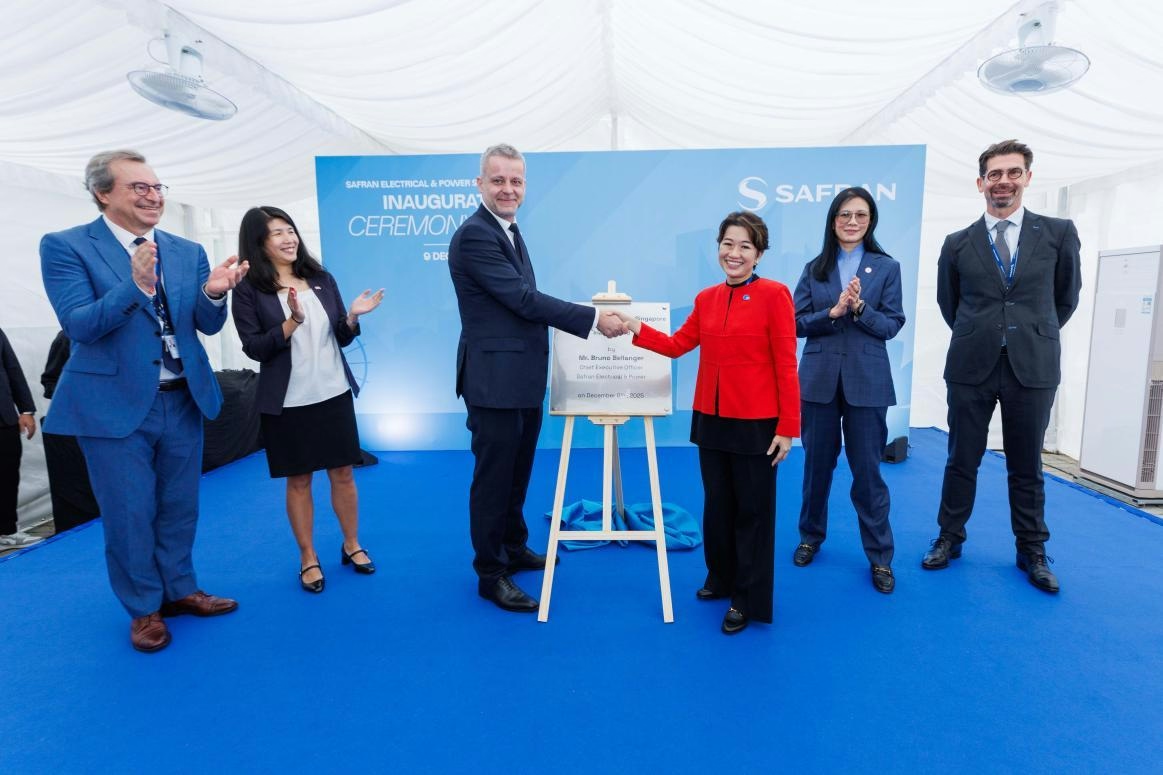
Precision Aviation Group Expands Safran Electrical & Power Repair Network to Five Facilities ATLANTA, April 2, 2026 – Precision Aviation Group (PAG), a prominent global provider of aftermarket aviation and aerospace services, has announced the expansion of its Safran Electrical & Power Authorized Repair Center (ARC) Network with the addition of EFIX in Brazil and PAG Australia in Queensland. This strategic growth increases PAG’s total number of Safran-authorized repair centers to five, enhancing its OEM-approved maintenance, repair, and overhaul (MRO) capabilities across critical international markets. Strengthening Global Repair Capabilities With the integration of EFIX and PAG Australia, PAG now operates ARC facilities in Atlanta, Georgia; British Columbia, Canada (PAI Canada); Glasgow, Scotland (Tuner Aviation); Brazil (EFIX); and Queensland, Australia (PAI Australia). This expansion reflects PAG’s commitment to delivering authorized repair and distribution services that meet stringent OEM standards while providing localized support to customers worldwide. Jordan Webber, Vice President of Component Services at PAG, emphasized the significance of this development, stating, “This expansion reflects the continued investment we’re making across our Component Services organization to meet OEM standards while supporting customers where they operate. Adding EFIX and PAG Australia to the Safran Electrical & Power ARC Network allows us to extend trusted, authorized repair and distribution capabilities into new regions while maintaining the quality, consistency, and reliability our customers expect.” Safran Electrical & Power, a global leader in aircraft electrical systems, established its ARC Network to uphold consistent quality, compliance, and performance standards among its approved service providers. By extending its network into South America and the Asia-Pacific region, PAG aims to reduce turnaround times and improve service reliability for its diverse customer base. Industry Implications and Challenges While this expansion offers significant advantages, it also introduces challenges related to integrating new technologies across a wider network and sustaining a competitive edge amid evolving market demands. Industry analysts suggest that both investors and customers will closely monitor the reliability and efficiency of the enlarged network. In response, competitors may accelerate enhancements to their own repair infrastructures or invest in emerging technologies to preserve market share. Recent innovations by Safran, including the assembly of the first turbogenerator for the Electra EL-9 and advancements in hybridization for the Silvercrest business jet engine, highlight the company’s ongoing commitment to technological progress. These developments are expected to influence broader industry dynamics and shape competitive strategies as the aerospace sector continues to evolve. Company Profiles Precision Aviation Group offers comprehensive MRO and supply chain services across the aerospace and defense sectors, supporting airline, business, general aviation, military, and rotary wing operators. Operating 26 repair stations across 28 global locations and encompassing over 1.2 million square feet of facilities, PAG manages more than 200,000 product lines through its Inventory Supported Maintenance, Repair, and Overhaul (ISMRO®) model. Safran is an international high-technology group active in aviation, defense, and space, employing 100,000 people and generating €27.3 billion in sales in 2024. The company holds leadership positions in its core markets and is publicly traded on Euronext Paris. Safran Electrical & Power remains a key player in aircraft electrical systems and electrification initiatives worldwide.
ZeroAvia’s Electric Aircraft Engine Progresses Toward FAA Certification
ZeroAvia’s Electric Aircraft Engine Progresses Toward FAA Certification

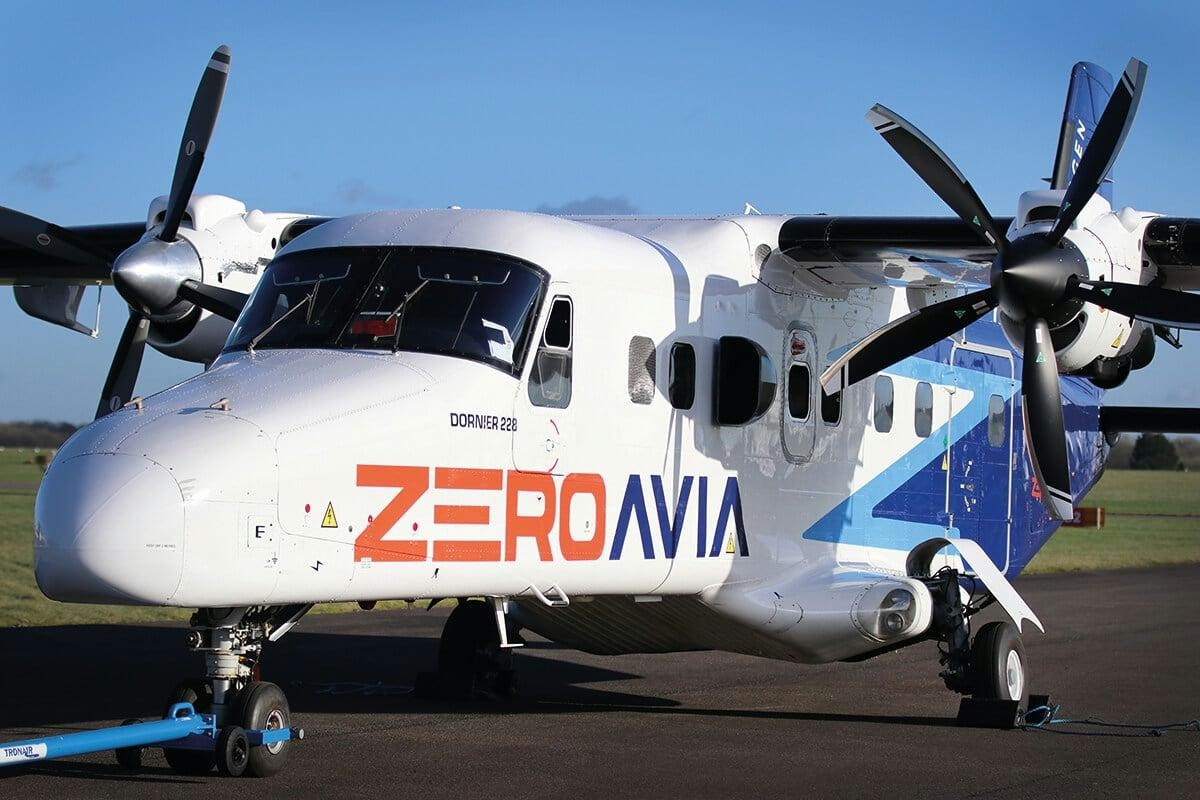
ZeroAvia’s Electric Aircraft Engine Advances Toward FAA Certification ZeroAvia, a prominent developer of hydrogen-electric aircraft powertrains operating in both the United States and the United Kingdom, is making notable progress toward securing Federal Aviation Administration (FAA) certification for its 600-kilowatt electric engine. This engine constitutes half of the company’s ZA600 hydrogen-electric propulsion system. Recently, the FAA published special conditions for the engine, establishing additional safety standards tailored to the novel characteristics of electric propulsion. These conditions are designed to ensure a level of safety equivalent to existing airworthiness regulations, reflecting the agency’s commitment to integrating emerging technologies within established frameworks. The company aims to achieve full certification of the ZA600 system by the end of 2026. This propulsion system is engineered to reduce emissions by approximately 90% and lower operating costs by around 40%. In August, ZeroAvia and the FAA reached consensus on the proposed special conditions, marking a significant regulatory milestone. Val Miftakhov, ZeroAvia’s founder and CEO, described the publication of these special conditions as a major achievement that highlights the company’s aerospace maturity and clarifies the path toward type certification. Regulatory Progress and Market Position The 600-kilowatt engine is designed not only for integration into the ZA600 powertrain but also for standalone applications, including uncrewed drones, electric vertical takeoff and landing (eVTOL) air taxis, and general aviation aircraft. In addition to the FAA’s special conditions, ZeroAvia received a G-1 issue paper in 2025, which clarified applicable airworthiness regulations and assisted in finalizing the engine’s design. Across the Atlantic, the U.K. Civil Aviation Authority (CAA) granted ZeroAvia design organization approval (DOA) in October, authorizing the company to design and hold type certificates for propulsion systems under U.K. commercial aviation regulations. Despite these regulatory advances, ZeroAvia faces challenges, particularly funding pressures that have delayed the certification timeline for the 600-kilowatt engine. Nevertheless, the company’s progress is attracting growing market interest in hydrogen-electric powertrains, as airlines and manufacturers increasingly seek cleaner propulsion alternatives. Competitors such as Collins Aerospace and Molicel Batteries, supporting Vaeridion’s electric microliner project, are also accelerating the development of hybrid-electric and fully electric propulsion systems in response to rising demand. ZeroAvia’s strategy includes retrofitting existing aircraft to operate on hydrogen-electric powertrains. Its airline customers include major carriers such as United Airlines, American Airlines, Alaska Airlines, and Scotland’s Loganair. The company is collaborating with airframe manufacturers like Textron and de Havilland Canada to integrate its engines both as line-fits and in the development of future clean-sheet aircraft designs. To facilitate adoption, ZeroAvia is developing in-house solutions for hydrogen production, mobile storage, and dispensing, while working closely with airports to prepare infrastructure for new propulsion technologies. Technical Overview of the ZA600 Propulsion System At the core of ZeroAvia’s propulsion solution is the electric propulsion system (EPS), which combines the 600-kilowatt engine with a proprietary inverter to power a direct-drive motor. This system targets fixed-wing commercial aircraft with seating capacities between 10 and 20 passengers and operational ranges of up to 300 nautical miles. The propulsion system relies on hydrogen fuel cells to generate electricity, which then powers electric motors driving the aircraft’s propulsors. ZeroAvia asserts that its technology is twice as efficient as traditional turbine engines, enabling equivalent trips with half the energy consumption and producing only water as a byproduct. The ZA600 powertrain incorporates four 200-kilowatt fuel cells supplied by gaseous hydrogen tanks. While these fuel cells are larger and heavier than conventional jet engines, the system is well-suited for small aircraft up to the size of regional turboprops. As ZeroAvia continues to address regulatory, technical, and financial challenges, its advancements reflect a broader industry shift toward sustainable hydrogen-electric propulsion in aviation.
Croatia Airlines Reports Strongest First Quarter Amid Rising Fuel Costs

Croatia Airlines Reports Strongest First Quarter Amid Rising Fuel Costs

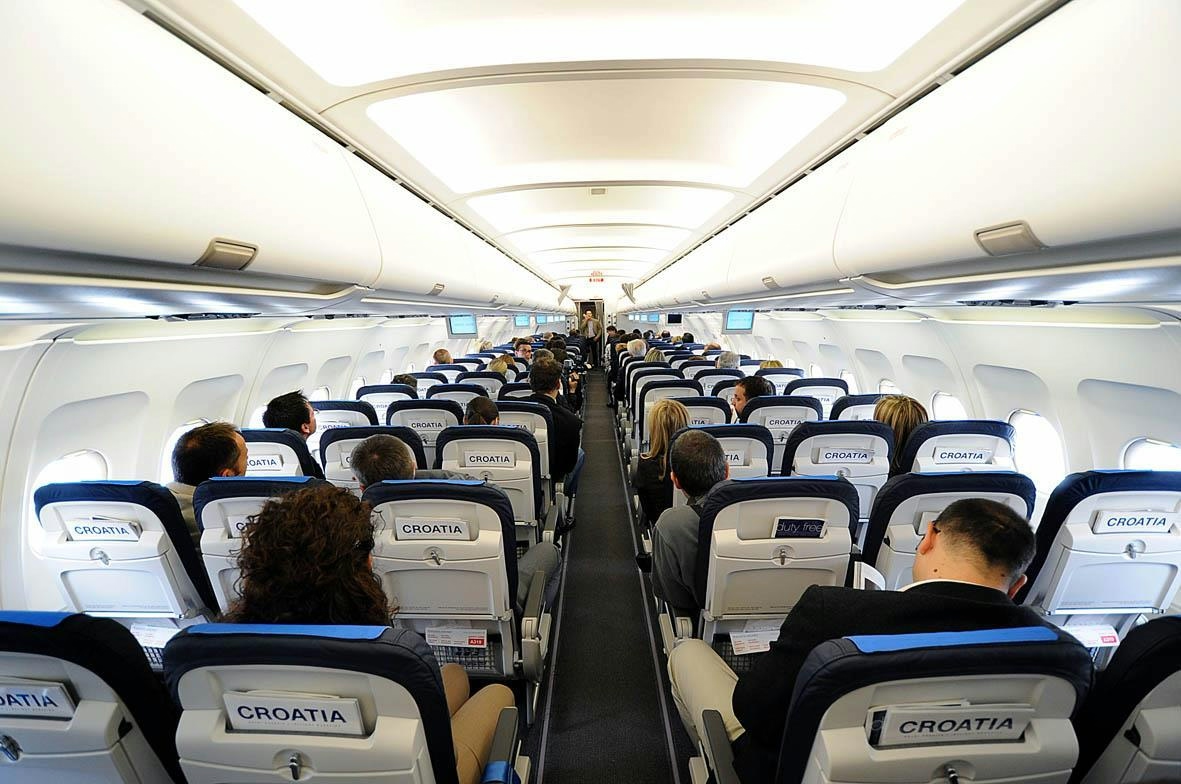
Croatia Airlines Reports Strongest First Quarter Amid Rising Fuel Costs Record Passenger Growth Despite Industry Challenges ZAGREB, 2 April 2026 – Croatia Airlines has announced its most successful first quarter to date, transporting over 405,000 passengers in the first three months of 2026. This represents a 22% increase compared to the same period last year, with approximately 74,000 additional passengers, setting a new record for the national carrier. The airline’s strong performance coincides with its largest-ever project: the modernisation of its fleet through the introduction of new Airbus A220 aircraft. This growth, however, unfolds amid significant challenges facing the aviation sector. The ongoing conflict in the Middle East has caused a sharp rise in jet fuel prices, a critical operational cost for airlines worldwide. Geopolitical instability has disrupted global energy markets, compelling carriers, including Croatia Airlines, to raise fares and adjust flight networks and schedules. Some airlines have been forced to take longer routes due to altered flight paths, further increasing operational expenses. The financial strain from these elevated fuel prices is expected to intensify over the next one to three months as airlines’ fuel hedging contracts are tested by continued market volatility. Strategic Response to Rising Costs and Supply Chain Pressures In response to these pressures, Croatia Airlines has implemented crisis management measures aimed at optimising flight operations, carefully managing costs and revenues, and maintaining a stable and reliable flight network. The airline emphasises that preserving connectivity remains a top priority, alongside ensuring competitive ticket pricing and scheduling. Nonetheless, the industry anticipates a potential decline in demand, particularly among price-sensitive travellers, as higher fares may suppress air travel and further challenge profitability in the coming months. Beyond fuel costs, Croatia Airlines is also grappling with increased supply chain pressures. Geopolitical tensions and heightened demand from the global defence sector have driven up the cost and reduced the availability of aircraft spare parts, a difficulty shared across the aviation industry. In light of these challenges, some airlines, such as Alaska Air Group, have sought alternative fuel sourcing strategies, including expanding supply from regions like Singapore to mitigate cost impacts. Croatia Airlines is actively adjusting both its operational and commercial strategies to navigate these evolving conditions. The airline underscores its vital role in connecting Croatia with Europe and the wider world, supporting tourism, economic development, and mobility for its citizens. As the national carrier, Croatia Airlines stresses the importance of maintaining stable air connectivity during periods of global uncertainty, ensuring that the broader public interest is served even as the industry confronts unprecedented challenges.
Fidelity and AFG Collaborate on Aircraft Leasing and Acquisition for Nigerian Airlines
Fidelity and AFG Collaborate on Aircraft Leasing and Acquisition for Nigerian Airlines

Fidelity and AFG Collaborate on Aircraft Leasing and Acquisition for Nigerian Airlines Strategic Partnership to Transform Aircraft Financing Fidelity Bank has entered into a strategic partnership with Frankfurt-based Aircraft Finance Germany (AFG) aimed at facilitating aircraft leasing and acquisition for Nigerian airlines. Announced at the inaugural Nigerian Aircraft Acquisition and Investment Summit in Lagos, this collaboration marks a significant shift from the traditional model of outright aircraft purchases toward a more sustainable lease-based approach tailored for domestic operators. The initiative seeks to alleviate the financial burden of large upfront capital expenditures, enabling airlines to expand their fleets more efficiently. Stanley Amuchie, Executive Director at Fidelity Bank, emphasized the importance of combining local financial resources with international technical expertise. He noted that aviation demands specialized knowledge and that the partnership leverages AFG’s aircraft sourcing capabilities alongside Fidelity’s structured finance solutions. “By combining AFG’s sourcing capabilities with our structured finance solutions, we’re enabling operators to enter the market without the burden of massive upfront capital. You pay lease rentals, scale your business, and compete effectively,” Amuchie explained. This model is designed to empower Nigerian carriers to grow their operations and enhance regional connectivity without the constraints of traditional financing. Industry Context and Market Challenges Fidelity Bank has a history of supporting Nigerian airlines, including major carriers such as Air Peace, particularly during periods when other financiers were reluctant to invest in the sector. Under the new partnership, AFG will identify aircraft suited to the specific operational needs of Nigerian airlines, while Fidelity will provide the necessary financial backing. Amuchie highlighted the flexibility this arrangement offers, stating, “You don’t have to wait to have all the money to buy aircraft. You pay lease rentals and can own the business. That’s what we want to achieve here.” The partnership enters a competitive and rapidly evolving aircraft leasing market, which is currently undergoing significant consolidation. A notable example is Dubai Aerospace Enterprise’s recent $7 billion acquisition of Macquarie AirFinance, a move that is reshaping industry dynamics. Such consolidation may prompt competitors to respond with further mergers or aggressive pricing strategies to maintain market share. While some industry observers view consolidation as a path to greater efficiency, others express concerns about diminished competition and potential price increases for airlines. Beyond global market trends, Fidelity and AFG must also navigate Nigeria’s distinct regulatory and operational environment, which presents unique challenges compared to other regions. Ensuring compliance with local regulations and adapting to the specific conditions of the Nigerian aviation sector will be critical to the partnership’s success. Outlook for Nigerian Aviation Chris Najomo, Director General of the Nigeria Civil Aviation Authority (NCAA), described the partnership as a pivotal development for the country’s aviation industry. He acknowledged Fidelity’s ongoing support for Air Peace and expressed optimism about the collaboration’s impact. “It’s a major step that has just happened between Fidelity and AFG. You all know that Fidelity has played a role in supporting the biggest airline, Air Peace,” Najomo said. He further indicated that the partnership is expected to introduce more modern aircraft into Nigeria within the next five to six months, providing operators with new opportunities to expand and modernize their fleets. Looking forward, Fidelity Bank envisions Nigeria emerging as a central hub for aviation in Africa. The partnership with AFG is positioned to drive growth within the industry and enhance connectivity across the continent, reinforcing Nigeria’s strategic role in regional air transport.
Air Côte d’Ivoire Obtains $62 Million Loan for MRO Center
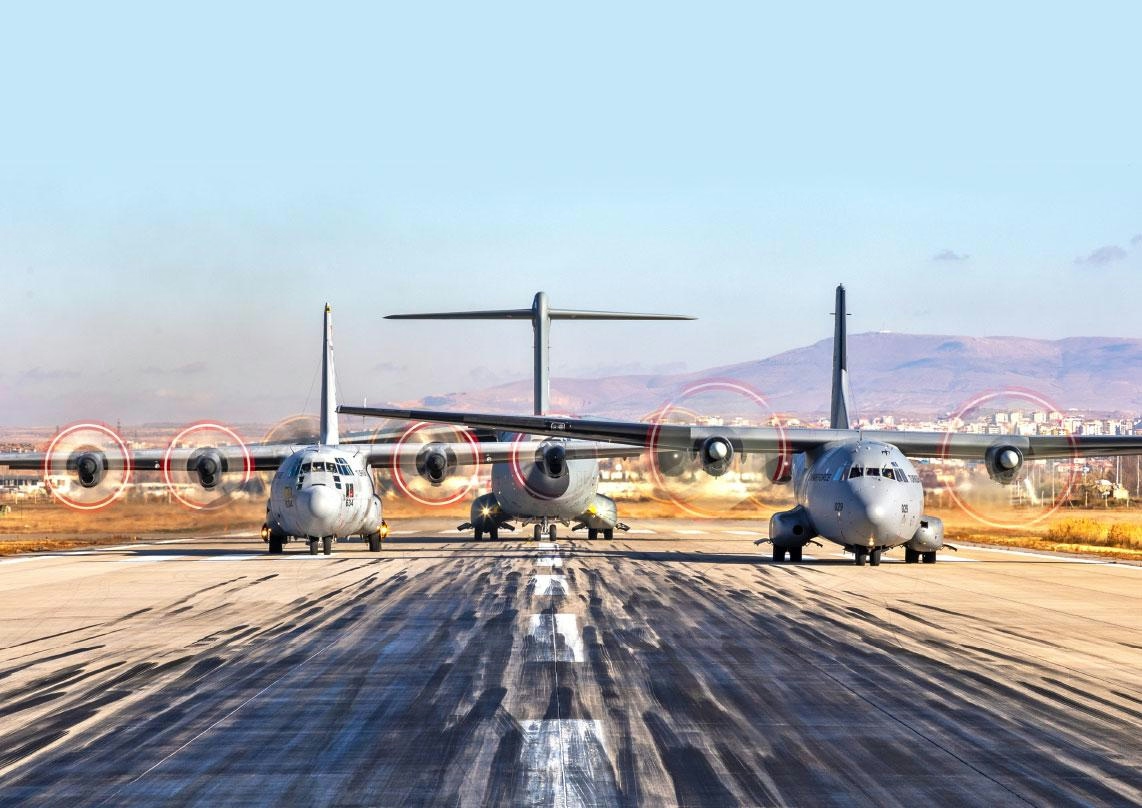
Air Côte d’Ivoire Obtains $62 Million Loan for MRO Center

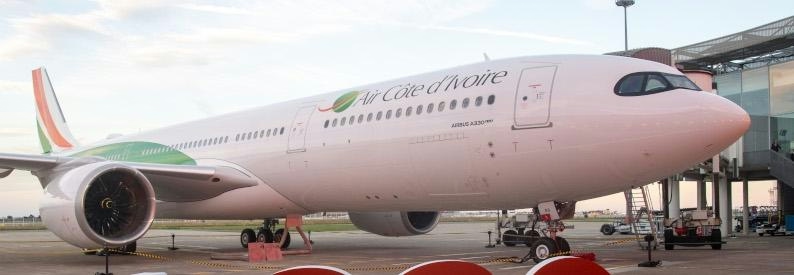
Air Côte d’Ivoire Secures $62 Million Loan to Develop Regional MRO Center Air Côte d’Ivoire has obtained a loan of XOF35 billion CFA francs (approximately USD 62 million) from the West African Development Bank (Banque Ouest Africaine de Développement – BOAD) to establish a regional maintenance, repair, and overhaul (MRO) center in Abidjan. Announced by BOAD on March 27, the facility is intended to service both Air Côte d’Ivoire’s fleet and those of third-party operators across West and Central Africa. The initiative aims to alleviate operational constraints and reduce maintenance costs within the region’s aviation sector. Addressing Industry Challenges Amid Global Disruptions The launch of this MRO center comes at a critical juncture for the aviation industry, which continues to face significant challenges due to global supply chain disruptions. These disruptions have affected the availability and pricing of spare parts and materials, potentially complicating the timely completion and efficient operation of the new facility. Furthermore, broader economic uncertainties, including geopolitical tensions such as the ongoing conflict involving Iran, may influence regional demand for MRO services and alter market dynamics. In response to these pressures, regional competitors are increasingly focused on enhancing their own MRO capabilities. Insights from the recent African MRO Summit indicate that airlines are seeking to leverage local maintenance ecosystems to improve competitiveness and reduce reliance on international supply chains. Air Côte d’Ivoire’s successful acquisition of financing may encourage other African carriers to pursue similar funding avenues to sustain and strengthen their market positions. Expansion Plans and Fleet Modernization In parallel with the MRO project, Air Côte d’Ivoire has signed a Letter of Intent with the African Development Bank (AfDB) to secure financing for aircraft acquisition, pilot and technician training, and sustainable aviation initiatives. The airline has placed an order for four Embraer E175 jets, with options for an additional eight, scheduled for delivery beginning in the first half of 2027. This fleet renewal will coincide with the gradual retirement of its four DHC-8-Q400 turboprops. Currently, Air Côte d’Ivoire’s fleet comprises five Airbus A319-100s, two A320-200s, one inactive A320-200N, and two recently added A330-900N aircraft. As the airline advances its expansion and modernization efforts, the success of the new MRO center will depend on securing continued financial support and effectively navigating the evolving challenges and competitive landscape of the regional aviation industry.
Türkiye’s ASFAT Begins CN-235 Military Aircraft Maintenance Exports

Türkiye’s ASFAT Begins CN-235 Military Aircraft Maintenance Exports

Türkiye’s ASFAT Expands Military Aircraft Maintenance Services Internationally Türkiye has taken a significant step in the global military maintenance, repair, and overhaul (MRO) market by securing its first international contract to service a CN-235 transport aircraft from the Senegal Air Force. The aircraft recently arrived at the 2nd Air Maintenance Factory Directorate in Kayseri, where the maintenance work will be conducted. This milestone marks the inaugural occasion that Military Factory and Shipyard Management Inc. (ASFAT) has provided maintenance services for a foreign military aircraft, signaling Türkiye’s growing presence in the international defence MRO sector. Strategic Facility and Expertise in Kayseri The Kayseri facility, operated under the Turkish Ministry of National Defence, has long served as a central hub for the heavy maintenance and overhaul of CN-235 aircraft within the Turkish Air Force. Leveraging this established infrastructure and technical expertise, ASFAT is now extending its services to international clients. The facility’s experience includes significant projects such as the retrofit and modification of Türkiye’s fleet of nine A400M strategic transport aircraft, carried out in collaboration with Airbus. This background has equipped the Kayseri directorate with substantial capabilities in managing complex military transport aircraft maintenance. Senegal’s CN-235 fleet consists of two transport variants and a maritime patrol aircraft, which are employed for tactical transport, maritime security operations in the Gulf of Guinea, and medical evacuation missions. The CN-235’s operational flexibility—its ability to operate from short or semi-prepared runways combined with a moderate payload capacity—has made it a preferred choice for air forces operating in regions with limited infrastructure. Historically, heavy maintenance for the CN-235 has been concentrated in Europe through Airbus Defence and Space and in Indonesia via PT Dirgantara Indonesia. This often necessitated long ferry flights and extended aircraft downtime for operators. By offering maintenance services at Kayseri, Türkiye provides a geographically strategic and potentially more accessible alternative for CN-235 operators across Africa, the Middle East, and neighboring regions. This development could attract additional international clients seeking to reduce turnaround times and logistical complexities associated with maintenance. Market Context and Challenges ASFAT’s entry into the export market occurs amid a complex and evolving global landscape. Industry analysts have noted potential challenges, including market saturation. For instance, the CEO of Danish Air Transport recently pointed to a downturn in the European ACMI (Aircraft, Crew, Maintenance, and Insurance) sector caused by oversupply, suggesting that similar pressures could impact demand for military aircraft maintenance services. Conversely, competitors may attempt to capitalize on the ongoing growth in the military aircraft market, as forecasted by Aviation Week, to secure contracts and strengthen their market positions. The military aviation sector is experiencing uneven growth, with some regions expanding while others face stagnation or decline. This dynamic environment is likely to influence the overall demand for maintenance services and shape ASFAT’s prospects in the international arena. With the Senegal contract, the 2nd Air Maintenance Factory Directorate in Kayseri has positioned itself as a new contender in the global military aircraft maintenance market. Türkiye’s strategic location and expanding technical capabilities enable it to serve CN-235 operators across a wide geographic area, potentially laying the groundwork for further international expansion despite the challenges posed by the shifting global market.
Ed Bastian Credits Employee Focus for Delta’s Recovery and Resists AI Disruption
Ed Bastian Credits Employee Focus for Delta’s Recovery and Resists AI Disruption

Ed Bastian Credits Employee Focus for Delta’s Recovery and Resists AI Disruption Delta Air Lines has solidified its position as a leading force in the global aviation industry, commanding the highest market capitalization among airlines worldwide, a dominant share of the U.S. domestic market, and top rankings in premium customer satisfaction. This remarkable turnaround, achieved just two decades after the company’s bankruptcy, is credited by CEO Ed Bastian to a steadfast commitment to employees and premium service offerings. A People-First Strategy Driving Transformation As the longest-serving active CEO among major U.S. carriers, Ed Bastian has overseen Delta’s expansive growth, particularly in the premium travel segment. The airline’s strategic investments in branding, customer experience, and a highly profitable partnership with American Express—which now generates over $8 billion annually and accounts for approximately 10% of Delta’s total revenue—have been instrumental in this ascent. Central to Delta’s success is its culture of profit-sharing, which has distributed billions to employees and contributed to the airline’s consistent recognition on the Fortune 100 Best Companies to Work For and World’s Most Admired Companies lists. Bastian’s leadership philosophy is deeply rooted in his early career experiences at PwC and PepsiCo, where he learned the importance of attention to detail and the value of nurturing talent. Growing up in a large family of eight siblings further shaped his organizational and leadership skills. His return to Delta at half his previous salary to lead the company’s bankruptcy restructuring marked a turning point. He implemented a people-first, culture-driven “turnaround playbook” that repositioned Delta from a commodity carrier to a loyalty-focused, premium brand. Bastian emphasizes that sharing profits with employees creates a virtuous cycle, enhancing service quality, brand loyalty, and shareholder returns. Navigating Crises and Industry Challenges The employee-centric approach was particularly evident during the COVID-19 pandemic. Rather than resorting to furloughs, Delta asked employees to voluntarily take unpaid leave while maintaining their jobs, benefits, and travel privileges. This strategy preserved trust and morale during a period of unprecedented disruption. Bastian underscores that culture, more than strategy, is the most challenging and vital competitive advantage to cultivate. He credits consistent, transparent communication throughout the crisis with sustaining employee confidence. Financially, Delta’s results validate this approach. The airline now generates nearly $5 billion in free cash flow and captures close to 25% of the industry’s total profit pool. Nonetheless, the company faces ongoing challenges, including rising labor costs, potential regulatory impacts on credit card partnerships, fluctuating jet fuel prices, and staffing shortages at the Transportation Security Administration. While competitors’ responses remain uncertain, Delta’s unwavering focus on premium services and employee engagement continues to distinguish it in a fiercely competitive market. A Cautious Embrace of Technology On the technological front, Bastian adopts a measured stance. He advocates for “augmented intelligence” rather than full artificial intelligence, emphasizing that in an industry grounded in human experience, technology should serve to enhance—not replace—personal service. He firmly rejects the idea of deploying AI in the cockpit, though he acknowledges its utility in operational areas such as air traffic control. “People still want to do business with people,” Bastian asserts, highlighting the enduring importance of human connection to Delta’s success. Bastian’s accessible leadership style, characterized by a public email address and a hands-on approach to customer feedback, ensures he remains closely connected to both employees and travelers. As Delta confronts ongoing industry headwinds, this people-first strategy remains the foundation of its recovery and continued leadership.
Outlook for Next-Generation Aircraft Propulsion Systems
Outlook for Next-Generation Aircraft Propulsion Systems

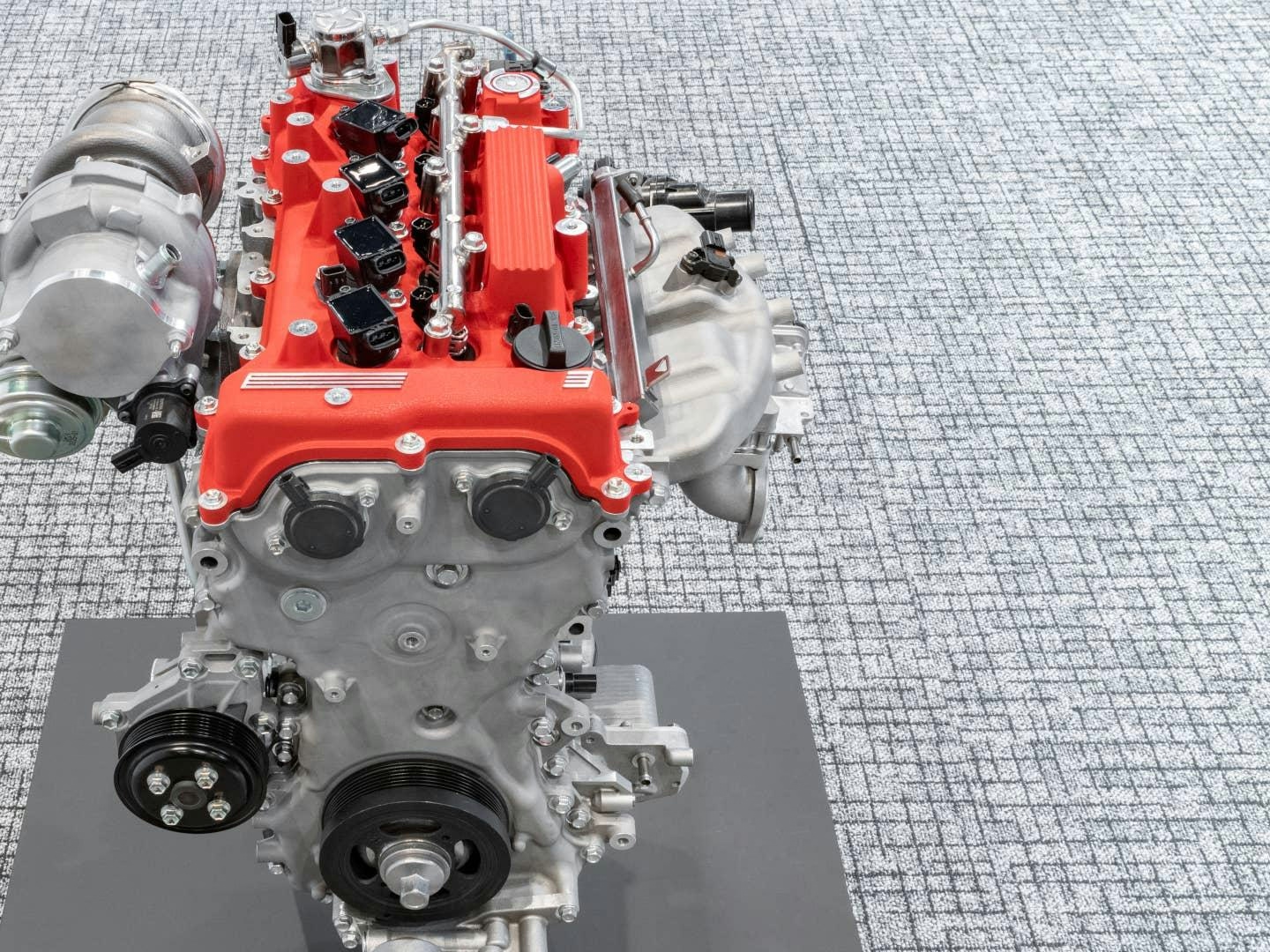
Outlook for Next-Generation Aircraft Propulsion Systems The global market for next-generation aircraft propulsion systems is on the cusp of substantial growth, with revenues expected to increase from USD 5.48 billion in 2025 to approximately USD 23.37 billion by 2035. This expansion corresponds to a robust compound annual growth rate (CAGR) of 15.61%, driven primarily by the aviation industry's commitment to developing cleaner, smarter, and more efficient propulsion technologies. Market Overview Next-generation propulsion technologies encompass a diverse range of innovations, including hybrid-electric and fully electric systems, hydrogen fuel propulsion, and advanced turbine designs. These advancements are supported by critical components such as energy storage solutions and power electronics. The market extends across commercial and military aircraft sectors, as well as emerging fields like advanced air mobility (AAM) and electric vertical takeoff and landing (eVTOL) vehicles. This broad scope reflects a clear industry shift toward sustainable and high-performance aviation. The sector is evolving beyond traditional engine technologies, integrating electric powertrains, hydrogen fuel systems, and cutting-edge turbine advancements into both new aircraft models and retrofitted existing fleets. This comprehensive approach is evident across commercial airlines, defense applications, and the rapidly developing eVTOL industry, with efficiency and sustainability serving as central pillars of development strategies. Key Growth Drivers Major airlines are accelerating the adoption of next-generation propulsion systems. For example, American Airlines has committed to purchasing 100 hydrogen-electric engines from ZeroAvia for regional aircraft, aiming to achieve near-zero in-flight emissions. These engines are anticipated to enter service by the late 2020s, marking a significant transition from pilot projects to commercial viability. Technological advancements are also shaping the future of aircraft propulsion. Manufacturers are designing fleets with advanced propulsion systems to enhance efficiency and reduce environmental impact. Airbus is developing single-aisle models that promise 20 to 30 percent improved fuel efficiency, hydrogen-compatible designs, and aerodynamic enhancements, targeting deployment by the late 2030s. Although widespread hydrogen adoption faces infrastructure challenges, demand for cleaner alternatives and hybrid technologies remains strong. The propulsion market is experiencing renewed competition. Rolls-Royce is preparing to re-enter the narrow-body engine segment with its UltraFan 30, challenging the longstanding duopoly of CFM and Pratt & Whitney. Meanwhile, ITP Aero anticipates continued growth driven by commercial aerospace demand and new commitments to programs such as the EJ200 engine. In addition, the advanced air mobility sector is approaching commercial launch, with eVTOL vehicles poised to replace helicopters in select roles. The drone market is also witnessing rapid innovation, with companies like HOBBYWING developing integrated propulsion solutions for multirotor and VTOL drones, thereby expanding the application of next-generation propulsion technologies. Market Segmentation and Outlook In 2025, conventional turbofan and turboprop engines maintained a dominant 58 percent market share, owing to their reliability and established maintenance practices. However, the market is rapidly diversifying as electrification and hydrogen propulsion gain traction, particularly for shorter routes and specialized applications. The outlook for next-generation aircraft propulsion is multifaceted. Incremental efficiency improvements in established engines, growing electrification for regional and urban mobility, and the long-term potential of hydrogen propulsion collectively contribute to a dynamic and evolving market. As technological, regulatory, and infrastructure challenges are addressed, this sector is poised to play a pivotal role in shaping the future of sustainable aviation.
Efficiency Gains in New Engine Models Compared to Older Generations

Efficiency Gains in New Engine Models Compared to Older Generations

Efficiency Gains in New Engine Models Compared to Older Generations The engine remains the foremost determinant of aircraft fuel efficiency, despite notable advances in aerodynamics and materials. While improvements in airframe design have contributed to reduced fuel consumption, it is the propulsion system that primarily dictates how much fuel an aircraft consumes. Interestingly, older aircraft retrofitted with modern engines can often rival or even surpass the efficiency of newly designed aircraft, underscoring the critical role of engine technology in aviation performance. Evolution of Jet Engine Technology In the early Jet Age, engine manufacturers focused predominantly on increasing power output, with fuel efficiency considered a secondary priority. As jet engines matured and achieved the necessary thrust levels, the industry’s emphasis shifted toward reducing operational costs, particularly fuel expenses, which constitute a significant portion of airline budgets. This shift has been further accelerated by the aviation sector’s commitment to carbon neutrality by 2050, where more efficient engines are essential to lowering emissions and complying with increasingly stringent environmental regulations. The progression of jet engine technology has seen a transition from turbojets to turboprops and ultimately to turbofans, which now dominate commercial aviation. Turbojets operate by compressing air, mixing it with fuel, and combusting the mixture before expelling exhaust gases to generate thrust. Turboprops, while similar in principle, use the turbine to drive a propeller, offering improved fuel economy at the expense of speed. Turbofan engines enhance efficiency by incorporating a large fan at the front, allowing a substantial volume of air to bypass the engine core. This bypass air requires less energy to move, resulting in increased thrust and improved fuel efficiency. A key advancement in turbofan design has been the increase in bypass ratios—the ratio of air that bypasses the core compared to the air passing through it. Modern engines feature significantly higher bypass ratios than their predecessors, enabling them to produce greater thrust with only marginal increases in fuel consumption, or in some cases, even less. Measuring Modern Efficiency and Emerging Challenges Fuel consumption varies with flight conditions and aircraft configurations, yet clear efficiency trends are evident. For instance, the Boeing 737 MAX, equipped with the CFM LEAP-1B engine, achieves a 15% reduction in specific fuel consumption compared to the earlier CFM56-7B engine, which itself improved fuel efficiency by 8% over previous models. Despite these gains, the integration of advanced technologies presents new challenges. High-performance cooling systems necessary for modern engine components increase production complexity and costs, paralleling trends observed in other high-tech industries such as semiconductor manufacturing. Market reception remains cautious, as airlines and consumers assess whether these efficiency improvements translate into meaningful reductions in operating expenses or enhanced performance. Competitors may respond by developing alternative engine architectures that offer more cost-effective or specialized solutions. Additionally, the adoption of new engine models faces regulatory and supply chain obstacles, particularly in competitive and geopolitically sensitive markets like China. Trade barriers and logistical disruptions can slow the deployment of advanced engines, affecting the overall pace of efficiency improvements across the global aviation industry. While modern jet engines deliver substantial efficiency improvements over older generations, fully capitalizing on these advancements requires navigating a complex interplay of technological innovation, economic considerations, and regulatory frameworks.
Double Taxation of Airline Leasing Poses Risk to National Civil Aviation

Double Taxation of Airline Leasing Poses Risk to National Civil Aviation

Double Taxation of Airline Leasing Poses Risk to National Civil Aviation Complexities of Double Taxation in International Business Ukrainian enterprises engaged in cross-border transactions face significant financial challenges due to the misapplication of international tax laws, particularly in sectors dependent on foreign loans, leasing, or property rentals. Despite the existence of international conventions aimed at preventing double taxation, many companies find themselves taxed twice on the same income. This issue arises from misunderstandings surrounding key tax concepts such as income classification, profit determination, and the source of income. International agreements on the avoidance of double taxation are designed to ensure that a company registered in one jurisdiction but earning income in another does not bear an excessive tax burden. In principle, these treaties prevent the same income from being taxed twice simply because it crosses national borders. However, as Igor Sukholit, audit and taxation partner at Consulting Group "Pareto" LLC, explains, the practical application of these conventions is often complicated. For instance, a Ukrainian IT firm providing software development services to a Japanese client must pay tax on its profits in Ukraine, while the Japanese client may be required to withhold a repatriation tax on the payment, remitting it to Japan’s budget. Such scenarios are common in international commerce and are reflected in the tax codes of many countries. Under Ukraine’s Tax Code, residents making income payments to non-residents sourced from Ukraine must withhold a 15% tax unless an international treaty provides otherwise. This withholding obligation applies broadly to all business entities, including individual entrepreneurs and companies operating under simplified tax regimes. However, income earned by non-residents through permanent establishments in Ukraine is exempt from this withholding tax. Implications for the Aviation Sector The problem of double taxation is particularly pronounced in the airline leasing industry. Ukrainian carriers leasing aircraft from foreign lessors risk being taxed twice on lease payments, which substantially increases their operational expenses. This added financial burden may compel airlines to raise ticket prices or accept diminished profit margins, thereby weakening their competitive position in both domestic and international markets. In response to these tax challenges, airlines are already adjusting their strategies. Some are shifting towards domestic lessors to avoid the pitfalls of double taxation, while others are renegotiating lease agreements to reduce tax liabilities. Airlines and lessors that can adeptly navigate these complex tax environments stand to gain a competitive advantage by optimizing their financial and operational frameworks. Industry data reveals growing concern among aviation stakeholders regarding the long-term consequences of double taxation. There is an emerging consensus that leasing models and tax strategies will require fundamental reassessment as the sector adapts to the evolving regulatory landscape. Calls for Greater Clarity and Reform Although international tax conventions exist to prevent double taxation, inconsistent application and the complexity of national tax legislation often leave businesses vulnerable. Experts stress the urgent need for clearer guidance and more effective enforcement of international agreements to shield Ukrainian companies—particularly those in critical sectors such as civil aviation—from undue financial strain. Absent meaningful reform, the double taxation of airline leasing threatens not only the financial viability of individual carriers but also the overall stability and competitiveness of Ukraine’s civil aviation industry.
line