
画像

エアロジニー — あなたのインテリジェントな副操縦士。

何でも尋ねてください。全てを分析してください。即座に行動してください。

現在のトレンド

Categories

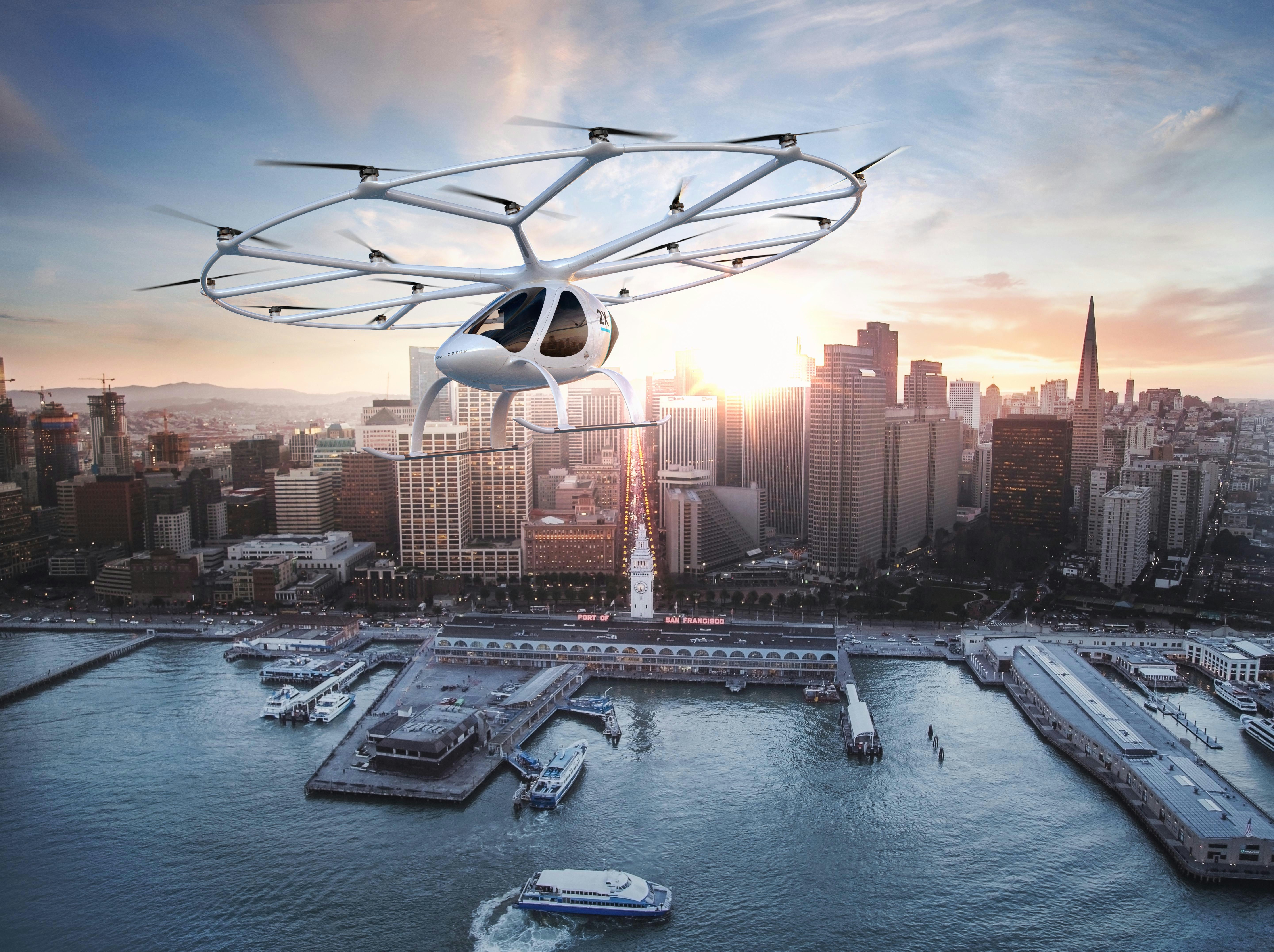
Air Taxis: Innovation or Overhyped Promise?
February 13, 2026By ePlane AI
Air Taxis: Innovation or Overhyped Promise?
0
0
Air Taxis
eVTOL Aircraft
Urban Air Mobility
DGCA Regulation

Air Taxis: Innovation or Overhyped Promise?

The Confederation of Indian Industry (CII) has recently proposed the establishment of pilot air taxi corridors utilizing electric vertical take-off and landing aircraft (eVTOLs), aiming to transform urban transportation. These aircraft, capable of vertical ascent like helicopters and designed for short urban routes, could potentially reduce travel times between key locations such as Gurugram and central Delhi or Connaught Place and Jewar airport to under 30 minutes. The Directorate General of Civil Aviation (DGCA) has already issued preliminary guidelines concerning vertiport infrastructure and eVTOL certification, indicating a growing regulatory focus. Industry stakeholders, including InterGlobe Enterprises in collaboration with US-based Archer Aviation, have announced intentions to launch electric air taxi services in India. Concurrently, start-ups supported by institutions like IIT-Madras are developing indigenous prototypes, signaling a burgeoning domestic interest in this emerging sector.

Global Progress and Persistent Challenges

While the conceptual framework for urban air mobility is taking shape worldwide, air taxis remain distant from becoming a routine mode of daily commuting. In the United States, the Federal Aviation Administration (FAA) is actively developing certification protocols and conducting pilot programs, yet large-scale commercial passenger operations await final regulatory approval. The United Kingdom’s Vertical Aerospace anticipates commencing operations in the latter half of this decade. Dubai has initiated vertiport construction and test flights, cautiously projecting commercial launches. Saudi Arabia has entered agreements with Joby Aviation, and China is advancing rapidly on certification processes. Despite these developments, no major global city currently offers regular, scaled air taxi services to the public.

Market responses to these advancements are varied. Companies such as Archer Aviation and Vertical Aerospace have made notable progress, while others face delays and skepticism. Eve Air Mobility is progressing with flight testing and customer acquisition, but even leading firms like Joby Aviation acknowledge the inherent risks and complexities involved in launching aerial ridesharing services. Nevertheless, the urban air mobility sector continues to attract significant investment and sustained interest.

India’s Position: Navigating Between Progress and Challenges

India occupies a middle ground in the global air taxi race, neither trailing significantly nor leading. While the requisite technology exists, the primary challenge lies in developing a safe, affordable, and equitable ecosystem. Urban airspace in India is already congested with commercial aircraft, helicopters, drones, and defense operations. Integrating potentially dozens or hundreds of daily low-altitude eVTOL flights will necessitate a sophisticated urban air traffic management system. Although India’s regulatory framework is evolving, it remains under development, with certification processes expected to span several years. The seamless integration of eVTOL operations with existing aviation systems adds further layers of complexity.

Infrastructure and Accessibility Concerns

The CII’s proposal to utilize rooftops as vertiports offers an efficient use of urban space but raises significant practical challenges. Rooftops are not inherently suitable for aviation operations; they require structural reinforcement, comprehensive fire safety measures, emergency evacuation protocols, controlled access, passenger handling facilities, and high-capacity charging infrastructure. Urban local bodies would need to revise building regulations to accommodate these requirements, prompting questions about the financial responsibility for such modifications—whether it would fall on private developers or state authorities.

Industry projections in India suggest that initial fares for short inter-city air taxi trips could amount to several thousand rupees. While some developers argue that scaling operations could eventually reduce costs, early services are expected to be premium offerings, likely accessible only to a wealthy minority. This raises critical questions about whether air taxis will effectively alleviate urban congestion or remain a luxury mode of transport for the affluent.

The Road Ahead

Significant challenges persist, including regulatory hurdles, safety concerns, and potential opposition from local communities. Although electric propulsion eliminates tailpipe emissions, the overall environmental impact depends on factors such as battery production and lifecycle emissions. As India and the global community observe the unfolding of urban air mobility, the promise of air taxis remains compelling but far from assured.

More news
Student Pilot Causes Fuel Starvation Due to Improper Fuel Management

Student Pilot Causes Fuel Starvation Due to Improper Fuel Management

Student Pilot’s Fuel Mismanagement Results in Forced Landing Near Wayside, Texas A solo cross-country flight undertaken by a student pilot ended abruptly in a forced landing after the Piper PA-28-140 experienced a total loss of engine power attributed to fuel starvation. The incident occurred near Wayside, Texas, when the pilot, unable to restore engine power despite attempting to switch fuel tanks, was compelled to land the aircraft in an open field. During the emergency landing, the plane’s left wing struck a metal fence post, sustaining significant damage. Investigation Reveals Improper Fuel Management Pre-flight records and the pilot’s own account confirmed that the aircraft departed with a full fuel load of 50 gallons, evenly distributed between the left and right wing tanks. The student pilot reported switching fuel tanks every 30 minutes during the approximately 2.4-hour flight. However, post-accident examination revealed a critical discrepancy: the right fuel tank was completely empty while the left tank remained full. This finding indicated a failure to properly manage the fuel system, leading to fuel starvation despite the presence of usable fuel onboard. An engine test conducted after the accident found no mechanical faults, effectively ruling out engine failure as a cause. Investigators determined that the loss of power was directly linked to the student pilot’s mismanagement of the fuel system. Notably, the pilot had not obtained the required instructor endorsement for the solo cross-country flight, raising further concerns about training and oversight. Industry Response and Broader Safety Implications The National Transportation Safety Board (NTSB) identified the probable cause of the accident as improper fuel management by the student pilot. This incident has intensified scrutiny of pilot training programs and fuel management protocols within the aviation community. Industry experts emphasize the critical importance of comprehensive instruction and vigilant supervision for student pilots to prevent similar occurrences. In the wake of this event, some operators have temporarily grounded comparable aircraft models to review and enhance safety procedures. Competitors in the aviation sector are also reinforcing their fuel management systems and safety measures. This heightened focus on fuel system reliability coincides with broader industry concerns, exemplified by recent actions such as Air India’s grounding of a Boeing 787 following a pilot’s report of a potential defect in the engine fuel control switch—a component under investigation in connection with a previous crash. The NTSB’s February 2024 accident report serves as a valuable educational resource, aimed at helping pilots and operators learn from past incidents and strengthen best practices in flight safety.
Japanese eVTOL to Enhance Inter-Island Emergency Medical Transport

Japanese eVTOL to Enhance Inter-Island Emergency Medical Transport

Japanese eVTOL to Enhance Inter-Island Emergency Medical Transport Revolutionizing Medical Evacuations in Taiwan’s Penghu Islands While electric vertical takeoff and landing (eVTOL) aircraft have primarily been associated with urban air mobility and air taxis, their potential applications extend significantly beyond daily commutes. One of the most promising uses lies in emergency medical evacuation, especially in regions where challenging geography and adverse weather conditions hinder conventional transport methods. A recent agreement between Japan’s SkyDrive and Taiwanese drone operator 7A Drones aims to transform emergency medical flights across Taiwan’s Penghu Islands, a remote archipelago comprising 90 islands where inter-island travel remains difficult and time-consuming. Currently, emergency evacuations in the Penghu Islands depend largely on helicopters and ferries, both of which are vulnerable to weather disruptions and limited infrastructure. This is particularly critical for residents of Hujing Island, a small community of 860 people served by only one public clinic. Rapid access to advanced medical facilities in Magong City is essential for this population. Under the new partnership, 7A Drones will acquire and operate up to ten SkyDrive SD-05 eVTOL aircraft, specifically to improve emergency medical transport between Magong and Hujing Island. Deployment Timeline and Market Expansion The first SD-05 aircraft is scheduled for delivery in 2028, aligning with SkyDrive’s anticipated full-scale commercialization of the model. Four additional units are expected in 2029, with the remaining five to follow thereafter. This agreement represents SkyDrive’s inaugural Letter of Intent (LoI) in the Asian market, marking a significant step in the company’s global expansion. SkyDrive has also made progress in the United States, where SAI Flight, a private charter operator based in South Carolina, has committed to purchasing ten SkyDrive aircraft and collaborating with Greenville Downtown Airport to develop efficient eVTOL routes. The SD-05 model builds upon the company’s earlier SD-03, once recognized as the world’s smallest eVTOL. Designed for short urban flights of up to 15 kilometers (9 miles) at speeds reaching 100 kilometers per hour (62 miles per hour), the SD-05 features a three-seat configuration and panoramic windows, enhancing comfort and visibility. These characteristics make it particularly well-suited for rapid, short-range medical missions in challenging environments. Challenges and Competitive Landscape Despite the promising outlook, the initiative faces significant obstacles. Securing regulatory approvals and obtaining sufficient funding for certification remain critical challenges before the SD-05 can enter operational service. The broader eVTOL market is becoming increasingly competitive, with growing interest in sustainable urban air mobility in Japan and beyond. For instance, AirX recently placed an order for up to 50 Eve Air Mobility eVTOLs, valued at $150 million. Other manufacturers, including Electra, are also exploring inter-island transport solutions, intensifying competition and driving innovation within the sector. As SkyDrive and 7A Drones advance their collaboration, their efforts could establish a new benchmark for the application of eVTOL technology in addressing real-world challenges faced by remote and underserved communities. This partnership holds the potential to save lives and fundamentally reshape emergency medical transport across island regions.
Senators Budd, Welch, Luján, and Curtis Introduce Bipartisan Aviation Support Bill

Senators Budd, Welch, Luján, and Curtis Introduce Bipartisan Aviation Support Bill

Senators Introduce Bipartisan Bill to Streamline FAA Certification for Advanced Air Mobility **Washington, D.C.** — A bipartisan coalition of senators has introduced the Aviation Innovation and Global Competitiveness Act, a legislative effort aimed at modernizing and accelerating the Federal Aviation Administration’s (FAA) type certification process for Advanced Air Mobility (AAM) aircraft. Spearheaded by Senator Ted Budd (R-N.C.), the bill is co-sponsored by Senators Peter Welch (D-Vt.), Ben Ray Luján (D-N.M.), and John Curtis (R-Utah). The legislation seeks to establish clear timelines and standards for FAA certification, reduce bureaucratic delays, and improve transparency for industry applicants, all while upholding stringent air safety requirements. Addressing Industry Challenges and Innovation The bill emerges amid growing pressure on the aviation sector to adapt to rapid technological advancements, particularly in electric vertical take-off and landing (eVTOL) aircraft. Advocates contend that streamlining the certification process is essential for American AAM companies to remain competitive on the global stage and to sustain the United States’ leadership in aviation innovation. Senator Budd emphasized the transformative potential of emerging aircraft technologies, noting that the current certification process lacks clarity and efficiency, which hampers the development of next-generation aviation solutions. “This legislation will ensure the FAA prioritizes timely certification, allowing manufacturers to focus on developing groundbreaking technology rather than navigating bureaucratic hurdles,” he stated. Senator Welch underscored the importance of supporting emerging companies, referencing Vermont-based Beta Technologies’ milestone electric flight. He argued that enhancing FAA certification transparency and reducing procedural gridlock are critical to maintaining the nation’s competitive edge. “This bipartisan legislation will bolster America’s legacy of global leadership in aviation and support American ingenuity and jobs,” Welch said. Senator Curtis highlighted the necessity of regulatory frameworks that keep pace with innovation. He described the bill as a means to bring greater clarity and accountability to the FAA certification process, thereby enabling AAM companies to compete effectively and sustain U.S. leadership in the future of flight. Broad Support and Ongoing Challenges The legislation has attracted backing from a wide array of lawmakers, including Senators Cynthia Lummis (R-Wyo.), Tim Sheehy (R-Mont.), Jerry Moran (R-Kan.), Alex Padilla (D-Calif.), and Todd Young (R-Ind.). In the House of Representatives, companion legislation has been introduced by Representatives Troy E. Nehls (R-Texas-22), Jimmy Panetta (D-Calif.-19), and Jay Obernolte (R-Calif.-23). Industry groups and major manufacturers have also expressed support for the bill. Endorsers include the Aerospace Industries Association, Airports Council International – North America, Archer Aviation, Beta Technologies, Boeing, among others, reflecting a broad consensus on the need for regulatory modernization. Despite this support, the bill faces challenges inherent in navigating the complex regulatory environment of the aviation industry. Balancing the interests of airlines, manufacturers, labor unions, and other stakeholders remains a delicate task. While some industry voices praise the bill’s potential to stabilize and foster growth, others have raised concerns regarding funding details and the extent of regulatory reforms. Competitors and advocacy groups may scrutinize whether the legislation sufficiently addresses their interests and maintains an equitable balance between industry demands and regulatory oversight. As the United States continues to lead in AAM technology development, lawmakers and industry leaders recognize that aligning the bill with broader federal budget priorities and stakeholder concerns will be critical to its successful implementation. The Aviation Innovation and Global Competitiveness Act represents a significant legislative effort to promote innovation, economic growth, and sustained American leadership in the evolving aviation sector.
Amazon to Launch Drone Delivery in Chicago Suburbs

Amazon to Launch Drone Delivery in Chicago Suburbs

Amazon to Launch Drone Delivery Service in Chicago Suburbs Amazon is preparing to expand its Prime Air drone delivery program to the Chicago suburbs, marking the largest deployment of the service to date. The company will operate from two fulfillment centers located in Markham and Matteson, each outfitted with between 12 and 20 drones. The launch is scheduled for late spring or early summer, aiming to serve a broad suburban area within a 7.5-mile radius. Service Coverage and Technology The drone delivery service will cover residents in Tinley Park, Midlothian, Homewood, Flossmoor, Dolton, Blue Island, Chicago Heights, and Country Club Hills. Amazon’s MK30 drone, which weighs 83 pounds and can carry packages up to five pounds, will be the primary vehicle for deliveries. This capacity is significant, as it allows the drones to handle approximately 60% of the 25 million items stocked at the Markham and Matteson fulfillment centers. Josh Brundage, senior manager of commercial operations for Prime Air, described the facilities as the largest type of building Amazon utilizes, featuring dedicated Prime Air Drone Delivery Centers (PADCCs) established on-site. These centers are typically set up in sections of the fulfillment centers’ parking lots, enclosed within fenced areas close to the main buildings, where all necessary infrastructure is installed. Customers opting for drone delivery will receive an aerial satellite image of their property, enabling them to select from predetermined drop-off points such as driveways or backyards. Amazon develops detailed maps for each new market, combining proprietary and public data to identify the safest and most convenient delivery locations. Drone Specifications and Operational Details The MK30 drones cruise at speeds of approximately 73 miles per hour and operate at altitudes between 200 and 300 feet above ground level. Equipped with six vertical propellers for lift and tandem wings for cruise flight, these drones are engineered to function in light precipitation and winds exceeding 20 miles per hour. Brundage emphasized the robustness of the drones, noting that they are significantly larger and more sophisticated than typical consumer drones. As a Part 135 FAA-certified carrier, Amazon holds its drones to rigorous commercial aviation standards. Advanced onboard perception systems enable the drones to detect and avoid obstacles, ensuring the delivery zone is clear before releasing packages from about 13 feet above the ground. Deliveries will be conducted during daylight hours, beginning 30 minutes before sunrise and concluding 30 minutes after sunset. Pricing, Challenges, and Market Context While pricing for the Chicago rollout has not been announced, Amazon’s existing drone delivery services charge Prime members $4.99 per delivery and non-members $9.99, with some locations offering free shipping on larger orders. The company aims to complete deliveries within two hours, with plans to reduce this timeframe further. The expansion faces several challenges, including regulatory approval, public acceptance, and competition from other drone delivery providers such as Walmart’s Wing and Zipline. Although many consumers welcome faster delivery options, concerns about privacy and safety persist. Competitors may respond by enhancing their own drone capabilities or lobbying against regulatory changes that could advantage Amazon. Amazon views the Chicago-area launch as a critical milestone in scaling its drone delivery operations across the United States.
Examining Aviation Liberalization Within SAATM

Examining Aviation Liberalization Within SAATM

Examining Aviation Liberalization Within SAATM The Case for Prioritizing Air Cargo As Africa progresses with the implementation of the Single African Air Transport Market (SAATM), aviation experts are increasingly advocating for the liberalization of air cargo to be treated as a distinct and urgent priority, separate from passenger travel. They emphasize that air cargo plays a vital role in driving trade, supporting key industries, and linking African economies to both regional and global markets. Experts warn that relegating cargo to a secondary status risks impeding economic growth, disrupting supply chains, and constraining the continent’s broader economic potential. Currently, the SAATM liberalization agenda predominantly focuses on passenger traffic rights, while cargo operations remain restricted by regulations that fail to account for their unique operational dynamics. Industry data reveals that approximately 65 percent of global air cargo is transported by dedicated freighter aircraft rather than passenger planes. Unlike passenger flights, freighters operate primarily in response to supply-chain demands and are less influenced by the political complexities that often affect passenger aviation. Ahmed Raafat, Air Cargo Manager at Cairo Airport Company and a prominent advocate for cargo liberalization within SAATM, has called for a separate regulatory track for cargo. Addressing the ACI Africa subcommittee on cargo, Raafat underscored the importance of distinguishing cargo liberalization from passenger matters, noting, “65 percent of the total movement of the global air cargo industry is moved by freighters.” While acknowledging the benefits of passenger liberalization, he cautioned against allowing its challenges to hinder progress in cargo: “If it comes with obstacles and constraints for liberalisation, we can postpone it a little bit and focus on the cargo liberalisation alone.” Economic Implications and Regulatory Challenges Industry observers concur that prioritizing air cargo liberalization could unlock substantial economic benefits. Freighters transport perishable goods, medical supplies, and critical industrial components—sectors where delays can cascade through supply chains, undermining manufacturing, export competitiveness, and the reliability of regional trade corridors. Establishing a dedicated regulatory framework for cargo, including tailored traffic rights, capacity rules, and digital customs facilitation tools, could help African states reduce delays, lower costs, and improve trade reliability. Nonetheless, the path to liberalization faces significant challenges. Increased competition among airlines, geopolitical volatility, and fluctuating outbound travel demand—as recently highlighted by Korean Air—may complicate the market environment. Additionally, the private aviation sector is contending with rising operational costs driven by new taxation policies, according to ACC Aviation. Airlines and operators may therefore need to implement strategic adjustments to maintain resilience and deliver value, adapting to evolving market conditions as observed in the business aviation sector. Toward a Cargo-Focused Liberalization Strategy A phased, cargo-centric liberalization approach has the potential to strengthen intra-African trade, bolster e-commerce and small businesses, and align with broader continental development initiatives such as the African Continental Free Trade Area (AfCFTA). By decoupling cargo from passenger aviation in regulatory terms, Africa could accelerate economic integration and industrial development, positioning air cargo as a foundational element of the continent’s growth trajectory. As SAATM advances, industry leaders are united in their call for air cargo to be granted its own dedicated pathway within Africa’s aviation future.
Air Force Collaborates with Collins and Shield AI to Develop Software for Combat Cloud Applications

Air Force Collaborates with Collins and Shield AI to Develop Software for Combat Cloud Applications

Air Force Advances Combat Cloud Software with Collins Aerospace and Shield AI The U.S. Air Force has formally designated Collins Aerospace and Shield AI as principal partners in the development of advanced mission autonomy software for its Collaborative Combat Aircraft (CCA) program. Announced on February 12, this initiative aims to equip drones with the capability to operate alongside manned fighter jets, executing complex missions with minimal human oversight. Progress in Flight Testing and Software Development Following the announcement, General Atomics, a prominent drone manufacturer, revealed it has already conducted flight tests of its YFQ-42A aircraft integrated with Collins Aerospace’s autonomy system. Concurrently, Shield AI announced plans to commence flight testing of its software on Anduril Industries’ YFQ-44A drone in the near future. The mission autonomy software under development is designed to enable CCAs to perform sophisticated tasks such as rerouting around no-fly zones, avoiding or engaging obstacles, and adapting to unforeseen conditions based on simple commands from human pilots. This represents a significant advancement beyond basic flight autonomy, which typically encompasses standard operations like takeoff, navigation, and landing. Since April 2024, Anduril and General Atomics have been publicly competing to produce the first CCA airframes, achieving milestones including initial flights and official designations. However, the development of the software backbone for these semi-autonomous drones has largely remained confidential. In July 2024, Air Force officials disclosed that five companies were engaged in mission autonomy software development but withheld their identities for security reasons. Aviation Week later reported in September 2025 that Collins Aerospace and Shield AI had been selected to advance the program, though formal confirmation was only provided recently. Integration and Industry Dynamics The Air Force’s statement emphasized the integration of both companies’ software into the Autonomy Government Reference Architecture (A-GRA), an open standard designed to ensure interoperability and facilitate rapid deployment of optimal algorithms across any compliant platform. Col. Timothy Helfrich, portfolio acquisition executive for fighters and advanced aircraft, underscored the importance of verifying A-GRA across multiple partners, stating that it prevents reliance on a single solution or vendor. Instead, the approach fosters a competitive ecosystem where the best algorithms can be swiftly deployed to warfighters on any A-GRA-compliant platform, regardless of the algorithm provider. Collins Aerospace is collaborating with General Atomics, while Shield AI is partnered with Anduril. This alignment highlights the ongoing dynamic between established defense contractors and Silicon Valley startups competing for leadership in the CCA program. Collins Aerospace brings decades of defense industry experience, contrasting with Shield AI, a venture-backed company founded in 2015. Despite the program’s forward momentum, significant challenges remain. Ensuring seamless interoperability among diverse software and hardware from multiple vendors, integrating advanced autonomous systems into existing military frameworks, and addressing cybersecurity vulnerabilities are critical hurdles. Nonetheless, market reactions have been positive, with investors expressing confidence in the CCA program’s potential to enhance U.S. military capabilities. Competitors have responded by showcasing successful test flights, underscoring the effectiveness of their technologies and the rapid progress being made in this next generation of combat aviation.
FL Technics Acquires Job Air Technic

FL Technics Acquires Job Air Technic

FL Technics Finalizes Acquisition of Job Air Technic, Expanding European MRO Network FL Technics has officially completed its acquisition of Job Air Technic, marking a significant step in strengthening its presence within the European aircraft maintenance, repair, and overhaul (MRO) industry. The transaction, initially announced in early 2025, was concluded following the fulfillment of all regulatory and contractual requirements, integrating Job Air Technic into FL Technics’ growing international network. Strategic Integration and Industry Implications The integration of Job Air Technic into the FL Technics Group is expected to enhance the combined entity’s technical capabilities and operational capacity. By incorporating the Czech company’s expertise, FL Technics aims to expand the range of maintenance services available to airlines, lessors, and operators across Europe. Both companies are committed to maintaining the high standards of safety, quality, and reliability that have defined their operations. Zilvinas Lapinskas, CEO of FL Technics, emphasized the strategic importance of the acquisition, noting that Job Air Technic’s established operations complement FL Technics’ expansion plans in Central Europe. He highlighted the additional maintenance capacity the acquisition provides in a region of growing significance for the company’s customer base. Imrich Czere, CEO of Job Air Technic, contextualized the deal within the broader industry trend of consolidation in the MRO sector. He expressed optimism about the opportunities the acquisition presents for Job Air Technic’s future development as part of a global group. Challenges and Market Response Despite the promising outlook, the integration process poses several challenges. FL Technics must carefully manage the transition of personnel, align operational procedures, and realize the anticipated synergies. Maintaining service quality and reliability during this period is critical, especially given the increasingly competitive labor market for skilled MRO professionals amid declining workforce confidence. The acquisition has elicited a mixed response from the market. Some competitors and customers have expressed skepticism regarding potential effects on service quality and pricing. Rival firms may respond by enhancing their service offerings or negotiating more advantageous terms with aircraft manufacturers to protect their market positions. Nevertheless, FL Technics remains committed to fostering collaboration between teams, sharing expertise, and driving operational efficiencies. Job Air Technic will continue its daily operations while gradually integrating into FL Technics’ organizational structure. “With the transaction now complete, we are focused on the next phase—integrating our teams and ensuring customers benefit from the added scale, expertise, and flexibility this acquisition brings,” Lapinskas stated. This acquisition aligns with FL Technics’ broader strategy to expand its MRO footprint across Europe and address the long-term demand for high-quality aircraft maintenance services amid ongoing sector consolidation and labor market challenges.
Joby Aviation Gains Manufacturing Support from Toyota

Joby Aviation Gains Manufacturing Support from Toyota

Joby Aviation Gains Manufacturing Support from Toyota Toyota Deepens Commitment to Air Taxi Startup Toyota Motor Corporation is intensifying its support for Joby Aviation Inc., the electric air taxi startup, by actively engaging in its manufacturing operations and exploring a more substantial role in production. Having invested nearly $1 billion and becoming Joby’s largest shareholder, the Japanese automaker has deployed a team of approximately 200 employees to assist with critical parts supply, workforce training, and assembly line expertise. Central to this collaboration is the adoption of the Toyota Production System (TPS), a renowned lean manufacturing methodology designed to enhance efficiency and scalability. Sandy Lobenstein, Toyota’s group vice president of flying mobility, emphasized the integration of TPS principles during a recent visit to Joby’s factory. She noted that these innovations are instrumental in reducing lead times and facilitating production scale-up, reflecting Toyota’s commitment to applying its manufacturing expertise to the emerging urban air mobility sector. Scaling Production Amid Industry Challenges Joby Aviation, headquartered in Santa Cruz, California, is among a select group of startups developing electric vertical takeoff and landing (eVTOL) aircraft intended for short, battery-powered commuter flights. Currently producing one aircraft per month, the company plans to increase output to four per month by 2027, with ambitions to manufacture up to 500 aircraft annually as it expands its facilities in California and Ohio. Despite Toyota’s backing, both companies face significant challenges. Toyota CEO Koji Sato has highlighted seven new obstacles confronting Japan’s automakers, including securing scarce resources and adapting to evolving global regulations. These industry-wide pressures complicate Toyota’s partnership with Joby, which must also navigate the risks associated with launching an aerial ridesharing service, scaling production, and complying with shifting regulatory frameworks. The urban air mobility market remains highly competitive, with rivals accelerating their own air taxi development efforts and market sentiment closely tied to regulatory progress. Joby’s shares have declined approximately 23% this year, pressured by a $1 billion equity and convertible bond offering announced last month. Nevertheless, the stock rose 2.9% to $10.16 as of mid-morning trading in New York on Friday. The company is still awaiting full certification for commercial flight operations from the U.S. Federal Aviation Administration and other regulatory bodies. Although Joby had initially targeted the launch of commercial passenger service in Dubai early this year, the timeline has been delayed. Eric Allison, Joby’s chief product officer, stated, “We are targeting to be able to start carrying passengers this year.” Advancing Toward Certification and Production With certification pending and the final $250 million tranche of Toyota’s $894 million funding yet to be released, Joby continues to assemble prototype aircraft and rigorously test components and manufacturing processes. While the company has not disclosed specific defect rates, Allison indicated that the number of non-conforming parts is “trending in the right direction.” Toyota’s current involvement remains primarily advisory, supplying key subcomponents for Joby’s aircraft motors. Kevin Voelkel, Toyota’s North American manufacturing chief, has visited Joby’s facilities to share insights on operational efficiency and safety. The two companies are now considering a strategic manufacturing alliance to further solidify their partnership ahead of Joby’s planned production ramp-up. As both firms confront regulatory and industry headwinds, their collaboration highlights the complexities and potential of the rapidly evolving urban air mobility sector.
Sheltair Opens New MRO Hangar at Tampa International Airport

Sheltair Opens New MRO Hangar at Tampa International Airport

Sheltair Expands General Aviation Services with New MRO Hangar at Tampa International Airport Sheltair Aviation, a leading fixed-base operator, has inaugurated a new Maintenance, Repair, and Overhaul (MRO) hangar at Tampa International Airport, marking a significant enhancement in the airport’s general aviation infrastructure. The state-of-the-art facility, situated on the north side of Runway 10-28 at 4300 W. Tampa Bay Boulevard, was officially opened in a ceremony attended by airport officials and Sheltair representatives. Advanced Facility Designed for Large-Cabin Aircraft The newly opened hangar encompasses 50,880 square feet of dedicated hangar space, complemented by 8,344 square feet allocated for offices and workshops. Additionally, a 50,000-square-foot apron provides ample room for aircraft staging and fueling operations. The facility is engineered to accommodate large-cabin and narrow-body aircraft, including up to three Boeing Business Jets simultaneously. A specialized tail door system facilitates the servicing of larger airframes, while a foam fire suppression system compliant with National Fire Protection Association standards ensures safety during full MRO operations. Brett Fay, Vice President of General Aviation at Tampa International Airport, highlighted the significance of the expansion, stating, “The opening of this new hangar facility is another clear indicator of the continued growth of general aviation at Tampa International Airport. Sheltair’s newest investment responds directly to increasing demand while enhancing the level of service and infrastructure available to our customers.” Strategic Growth Amidst Competitive Market Dynamics This development represents Sheltair’s ninth hangar complex at Tampa International Airport, following a major expansion in 2023 that added four hangars adjacent to its main complex on the south side of the airport’s crosswind runway. Lisa Holland, President and CEO of Sheltair, emphasized the forward-looking approach behind the project: “From day one, our goal was to create a facility that not only meets today’s operational needs but anticipates tomorrow’s. The completion of this new facility is the culmination of years of thoughtful planning, investment, and collaboration.” Despite the promising outlook, Sheltair faces challenges inherent to expanding its maintenance operations. The regional market remains competitive, with several established maintenance providers vying for business aviation clients. Securing major maintenance contracts will be essential for the new hangar’s sustained success. Furthermore, the company must navigate the logistical complexities associated with managing a larger and more sophisticated operation. The opening has already generated increased interest among business aviation operators seeking enhanced maintenance options in the Tampa Bay area. This development may prompt existing MRO providers to adjust pricing strategies or improve service offerings in response to heightened competition. Sheltair’s latest investment not only reflects the growing demand for general aviation services at Tampa International Airport but also underscores the dynamic and competitive nature of the regional MRO market.
Crystal Cabin Award 2026 Showcases Innovation in Aircraft Interiors

Crystal Cabin Award 2026 Showcases Innovation in Aircraft Interiors

Crystal Cabin Award 2026 Showcases Innovation in Aircraft Interiors The Crystal Cabin Award 2026 has revealed 24 finalists across eight categories, highlighting significant advancements in aircraft interior design that emphasize comfort, accessibility, and sustainability. These innovations also address critical industry priorities such as digitalisation, operational efficiency, and safety. The winners will be announced on 14 April 2026 at the Aircraft Interiors Expo (AIX) in Hamburg, Germany, the foremost global event dedicated to aircraft cabin innovation. Industry Context and Innovation Highlights This year’s selection of finalists presents a diverse array of solutions, ranging from reimagined cabin layouts and premium suites to cutting-edge digital services, robotics, circular materials, and optimized crew processes. These innovations emerge at a crucial juncture for the aviation sector, as manufacturers and operators contend with increasing production rates and evolving aircraft strategies. Leading manufacturers Airbus and Boeing face complex management challenges as they adapt to shifting market demands and future fleet planning. Meanwhile, competitors such as Embraer are intensifying their focus on E2 aircraft sales and expanding into defense and electric vertical takeoff and landing (eVTOL) markets. Gulfstream Bizjet’s strong sales performance and Textron Aviation’s record revenues further underscore the intensifying competition within the industry. The introduction of disruptive aircraft models, including the A321XLR and Saab’s first software-defined fuselage, highlights the dynamic environment in which these cabin innovations are being developed. Advancing Accessibility for Inclusive Air Travel The Accessibility category underscores the commitment to barrier-free and inclusive air travel, with finalists addressing mobility, independence, and comfort for all passengers. Airbus, in collaboration with Ipeco Holdings and AMF-Bruns, presents the Airspace U Suite – A UNIVERSAL Space for Everybody. This innovative cabin concept enables wheelchair users to remain in their own chairs throughout the flight, eliminating the need for manual transfers. The design incorporates flexible seating arrangements and secure restraint systems that support semi-private, face-to-face, and premium configurations tailored to diverse passenger needs. Diehl Aviation introduces the Adaptive User Routing System (AURS), an inclusive cabin concept designed to make aircraft lavatories accessible to blind and deaf passengers. The system combines an accessible layout with a digital interface, visual safety announcements, and tactile orientation aids to enhance usability. RAVE Aerospace (formerly Safran Passenger Innovations) debuts Live Transcription and Translations, a feature that displays real-time, multilingual cabin announcements as text on seatback screens. Available in both standard and accessible modes, this innovation significantly improves communication for all passengers. Redefining Passenger Experience Through Cabin Concepts The Cabin Concepts category presents comprehensive visions for the future of aircraft interiors. All Nippon Airways, in partnership with Acumen Design Associates, is shortlisted for THE Room FX, a design that merges two seats into a compact structure to optimize space and comfort. The innovative mechanism allows the backrest to remain fixed while the leg rest extends to create a continuous lie-flat surface, striking a balance between passenger comfort and increased seating capacity. Design Investment, collaborating with Air France and Stelia Aerospace, offers the Air France First Class Suite, which features distinct sitting and sleeping areas within a private suite, each equipped with a 32-inch screen. The design incorporates a split mattress and a “ribbon” element that connects the zones, alongside privacy curtains and tablet-controlled functions, enhancing the luxury and functionality of the passenger experience. As the aviation industry undergoes rapid technological transformation and faces heightened competition, the Crystal Cabin Award finalists exemplify how innovation in aircraft interiors is shaping the future of air travel by addressing evolving passenger needs while supporting broader industry developments.
line









