
AIによるインサイトを行動へとつなげる

現在のトレンド
Categories
Examining Aviation Liberalization Within SAATM
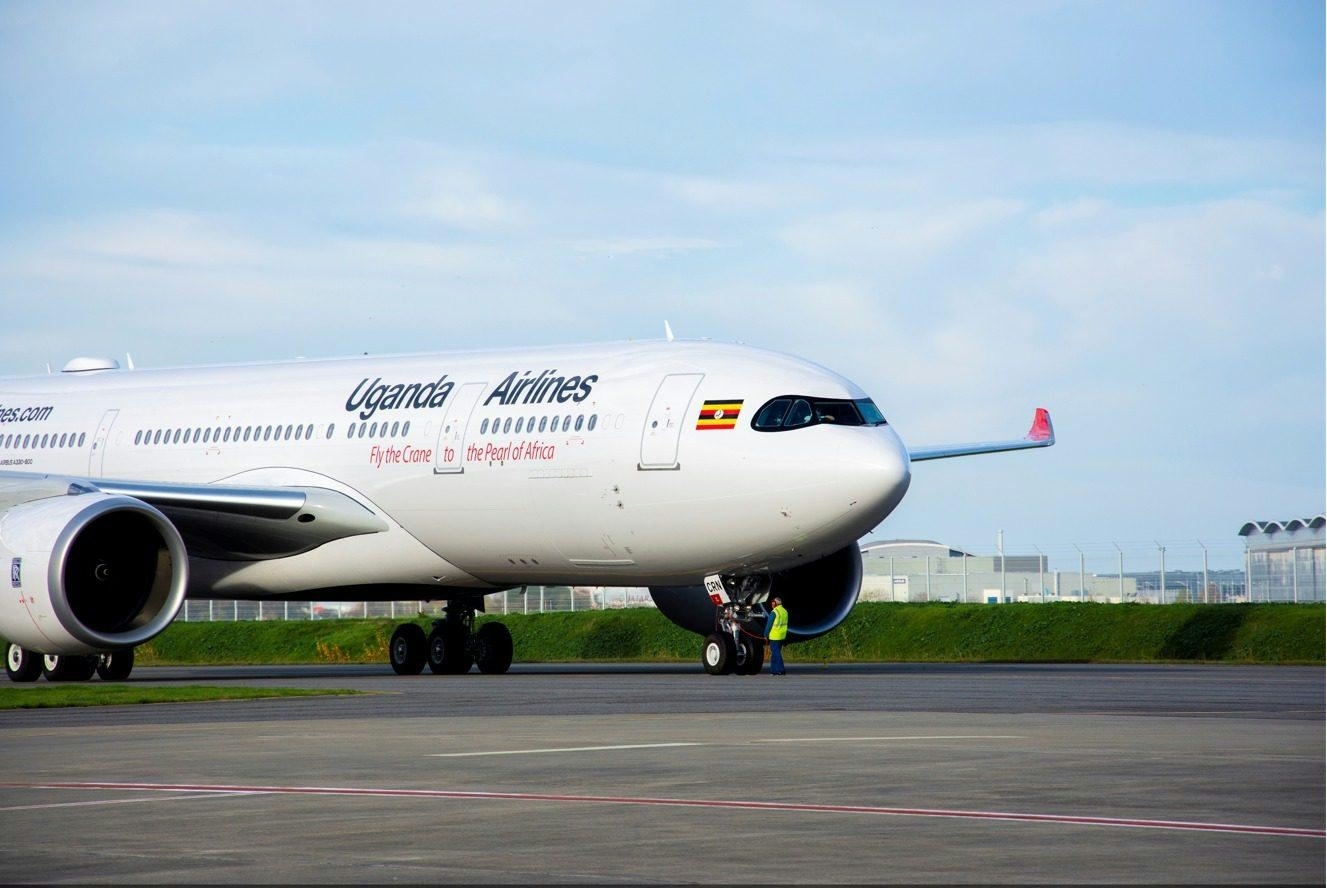
Examining Aviation Liberalization Within SAATM
The Case for Prioritizing Air Cargo
As Africa progresses with the implementation of the Single African Air Transport Market (SAATM), aviation experts are increasingly advocating for the liberalization of air cargo to be treated as a distinct and urgent priority, separate from passenger travel. They emphasize that air cargo plays a vital role in driving trade, supporting key industries, and linking African economies to both regional and global markets. Experts warn that relegating cargo to a secondary status risks impeding economic growth, disrupting supply chains, and constraining the continent’s broader economic potential.
Currently, the SAATM liberalization agenda predominantly focuses on passenger traffic rights, while cargo operations remain restricted by regulations that fail to account for their unique operational dynamics. Industry data reveals that approximately 65 percent of global air cargo is transported by dedicated freighter aircraft rather than passenger planes. Unlike passenger flights, freighters operate primarily in response to supply-chain demands and are less influenced by the political complexities that often affect passenger aviation.
Ahmed Raafat, Air Cargo Manager at Cairo Airport Company and a prominent advocate for cargo liberalization within SAATM, has called for a separate regulatory track for cargo. Addressing the ACI Africa subcommittee on cargo, Raafat underscored the importance of distinguishing cargo liberalization from passenger matters, noting, “65 percent of the total movement of the global air cargo industry is moved by freighters.” While acknowledging the benefits of passenger liberalization, he cautioned against allowing its challenges to hinder progress in cargo: “If it comes with obstacles and constraints for liberalisation, we can postpone it a little bit and focus on the cargo liberalisation alone.”
Economic Implications and Regulatory Challenges
Industry observers concur that prioritizing air cargo liberalization could unlock substantial economic benefits. Freighters transport perishable goods, medical supplies, and critical industrial components—sectors where delays can cascade through supply chains, undermining manufacturing, export competitiveness, and the reliability of regional trade corridors. Establishing a dedicated regulatory framework for cargo, including tailored traffic rights, capacity rules, and digital customs facilitation tools, could help African states reduce delays, lower costs, and improve trade reliability.
Nonetheless, the path to liberalization faces significant challenges. Increased competition among airlines, geopolitical volatility, and fluctuating outbound travel demand—as recently highlighted by Korean Air—may complicate the market environment. Additionally, the private aviation sector is contending with rising operational costs driven by new taxation policies, according to ACC Aviation. Airlines and operators may therefore need to implement strategic adjustments to maintain resilience and deliver value, adapting to evolving market conditions as observed in the business aviation sector.
Toward a Cargo-Focused Liberalization Strategy
A phased, cargo-centric liberalization approach has the potential to strengthen intra-African trade, bolster e-commerce and small businesses, and align with broader continental development initiatives such as the African Continental Free Trade Area (AfCFTA). By decoupling cargo from passenger aviation in regulatory terms, Africa could accelerate economic integration and industrial development, positioning air cargo as a foundational element of the continent’s growth trajectory.
As SAATM advances, industry leaders are united in their call for air cargo to be granted its own dedicated pathway within Africa’s aviation future.

Etihad Airways Suspends Airbus A380 Flights on Key Route

Aditya Birla Group Seeks Approval for Aircraft Leasing in GIFT City

Qatar Airways Highlights Innovation and Connectivity at Arabian Travel Market 2026

Hong Kong's Five-Year Plan Includes Andrew Fan's Aircraft Parts Processing Hub Proposal

ACIA Aero Leasing Delivers ATR72-600 to Air Nostrum

RTX Appoints Jill Albertelli as Head of Pratt & Whitney

TAT Technologies Joins Beyond Aero Hydrogen Aircraft Program

AURAK Study Highlights Barriers to Air Taxi Adoption in Emerging Economies

Xiamen Air Selects Altitude for 787 Maintenance at Heathrow

Etihad and Swissport Extend Global Partnership
