画像

AIによるインサイトを行動へとつなげる

今すぐAeroGenieのウェイティングリストに登録しよう!

現在のトレンド

Categories

Airline Updates — June 22, 2026
June 22, 2026By ePlane AI
Airline Updates — June 22, 2026
0
0
Korean Air
Cellars In The Sky
Inflight Wine Selection

Airline Updates — June 22, 2026

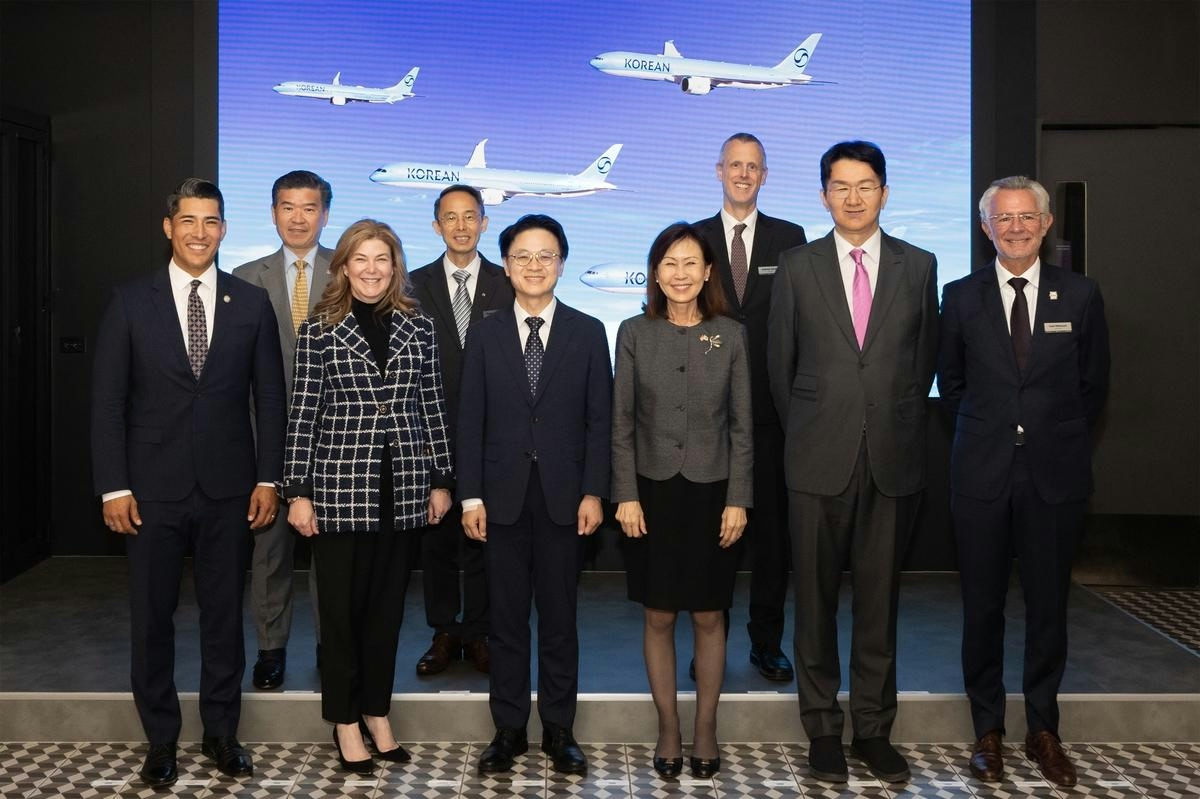
Korean Air Garners Multiple Honors for Inflight Wine Program

Korean Air has been recognized with six awards at the 2026 Cellars in the Sky Awards, highlighting its dedication to delivering a premium inflight experience amid ongoing industry challenges. The airline received one gold, four bronze, and a Highly Commended distinction for its curated wine selection. The standout accolade was awarded to Château Guiraud 2022, which secured gold in the First Class Dessert Wine category with an impressive score of 94 points. This wine was lauded for its golden-amber color and rich texture. Additional bronze awards were given to Shafer One Point Five 2023 in the First Class Red Wine category and Champagne Palmer & Co Grands Terroirs 2015 in the Business Class Sparkling Wine category. Korean Air also achieved third place overall in both the First and Business Class Wine Cellar categories, while Krug Grande Cuvée 173ème Édition earned a Highly Commended mention.

The Cellars in the Sky Awards, organized annually by Business Traveller since 1985, celebrate excellence in airline wine programs through blind tastings conducted by independent experts. Korean Air currently offers an extensive selection of 61 wines across its cabins, with choices carefully matched to inflight menus and regularly refreshed to provide variety for passengers.

Industry Challenges and Strategic Responses

The airline sector continues to face significant headwinds, with profitability halved according to the International Air Transport Association (IATA), largely due to ongoing disruptions in the Middle East and persistently high fuel costs. European carriers are responding through consolidation efforts, exemplified by Lufthansa’s recent acquisition of majority control in ITA Airways. Meanwhile, U.S. airlines are adapting to shifting market conditions; JetBlue, for instance, is reducing its operations in New York while expanding its presence at Fort Lauderdale-Hollywood International Airport.

In parallel, the Federal Aviation Administration (FAA) has allocated substantial infrastructure grants to several U.S. airports aimed at enhancing operational efficiency. While these investments are expected to improve airport capacity and service quality, they may also contribute to increased capital expenditures for the industry.

Expanding Networks in Africa and Europe

Emirates is strengthening its footprint in Africa by introducing four additional weekly flights between Dubai and Accra, Ghana, commencing July 12, 2026. This expansion responds to growing demand for international travel in Ghana and reinforces Emirates’ commitment to the region. The new service, operated by a Boeing 777-300ER, will operate on Tuesdays, Thursdays, Saturdays, and Sundays, complementing the airline’s existing daily flights. The schedule is designed to facilitate seamless connections to major global hubs including Beijing, Seoul, Sydney, Mumbai, and New York JFK, while also improving access for travelers from cities such as Delhi, Boston, Los Angeles, and several European gateways.

In Europe, LOT Polish Airlines, a member of the Star Alliance, will launch twice-weekly flights to Tromsø, Norway, from December 1, 2026, through February 13, 2027. Tromsø, situated more than 300 kilometers north of the Arctic Circle, is renowned as a gateway to the polar regions and a premier destination for viewing the Northern Lights.

As airlines navigate economic pressures, geopolitical uncertainties, and evolving passenger preferences, strategic network expansions, operational adjustments, and sustained investment in customer experience remain critical to maintaining resilience and competitiveness in the global aviation market.

More news
Turkish Airlines Plans to Reintroduce Premium Economy on Widebody Jets by 2028

Turkish Airlines Plans to Reintroduce Premium Economy on Widebody Jets by 2028

Turkish Airlines to Reintroduce Premium Economy on Widebody Jets by 2028 Turkish Airlines has announced plans to reintroduce premium economy cabins on its widebody aircraft by 2028, marking a significant strategic shift under the leadership of its newly appointed Chairman of the Board and Executive Committee, Professor Murat Seker. In a recent interview with Forbes, Seker outlined the airline’s ambitious vision to expand its widebody fleet to more than 800 aircraft by 2033, with an extended target of 800 aircraft by 2036, underscoring the carrier’s commitment to growth and modernization. Strategic Shift Towards Premiumization The decision to bring back premium economy reflects Turkish Airlines’ intent to "premiumize" its long-haul service offerings in response to evolving passenger preferences in the post-pandemic travel environment. According to the airline’s research, approximately two-thirds of long-haul travelers are willing to pay a premium for additional legroom and enhanced comfort, strengthening the business case for reintroducing this cabin class. Seker revealed that the new premium economy would potentially account for 8 to 9 percent of the current economy capacity on widebody aircraft. This initiative follows the airline’s earlier attempt with the "Comfort Class," which operated from 2010 to 2016 but was discontinued due to inconsistent passenger experiences and limited fleet implementation. The forthcoming premium economy product aims to rectify these issues by delivering a more consistent and competitive experience aligned with global industry standards. While the previous Comfort Class featured wider seats, increased recline, and a 2-3-2 seating layout, its timing and configuration were considered suboptimal. Turkish Airlines now seeks to meet rising demand for premium cabins, especially as competitors such as Delta and United continue to invest heavily in their premium economy offerings. Broader Fleet and Service Enhancements Integrating premium economy into the existing operations will require careful management to ensure seamless service across the fleet while maintaining competitive pricing. The airline anticipates intensified competition in the premium economy segment, which may prompt rival carriers to upgrade their products or invest in fleet enhancements to protect market share. In parallel with the premium economy rollout, Turkish Airlines is advancing its broader premiumization strategy. The carrier plans to introduce its fully enclosed Crystal Business Class suite on the Airbus A350 in early 2027, with subsequent retrofits scheduled for Boeing 777 aircraft. Seker projects that overall seat capacity per aircraft will increase by more than 12 percent, with Business Class capacity rising by at least 10 percent. Despite ongoing geopolitical uncertainties in the Middle East and fluctuating fuel prices, Turkish Airlines remains steadfast in its long-term expansion plans. Istanbul Airport, the airline’s central hub, offers strategic access to nearly half of the world’s population, providing flexibility to adapt its network and fleet strategy as necessary. While the widebody and cargo fleet targets remain unchanged, adjustments to the narrowbody fleet plan are possible as the airline aims to serve approximately 350 destinations and achieve annual revenues exceeding $50 billion. As Turkish Airlines prepares to re-enter the premium economy market, its focus on profitable growth and enhanced passenger experience positions the carrier to compete vigorously in an increasingly dynamic global aviation landscape.
Southwest Airlines’ Pay Model Could Raise Senior Boeing 737 Captains’ Salaries Above $450,000 in 2026

Southwest Airlines’ Pay Model Could Raise Senior Boeing 737 Captains’ Salaries Above $450,000 in 2026

Southwest Airlines’ Pay Model Could Elevate Senior Boeing 737 Captains’ Salaries Beyond $450,000 by 2026 Southwest Airlines pilots have consistently ranked among the highest-paid aviators in the United States, and recent compensation data underscores the growing lucrativeness of these roles. According to the 2024 contract negotiated with the Southwest Airlines Pilots Association (SWAPA), first officers with 12 years of service now earn approximately $255 (€222) per hour, while senior captains command around $364 (€316) per hour. When additional elements such as premium pay, retirement contributions, and profit sharing are included, total annual compensation for top-tier captains can surpass $450,000 (€391,000), positioning them among the highest-paid narrowbody pilots globally. The Unique Trip For Pay System Southwest’s compensation structure is distinguished by its Trip For Pay (TFP) system, which diverges significantly from the block hour model prevalent across most major U.S. airlines. Whereas the block hour system remunerates pilots based on the elapsed time from gate departure to arrival, Southwest calculates pay primarily on the distance flown. One TFP corresponds to 243 miles, with pilots receiving an additional 10% pay credit for every 40 miles flown beyond that threshold. This system, established decades ago to support Southwest’s high-frequency Boeing 737 operations, incentivizes productivity in ways that traditional block-hour contracts often fail to capture. The TFP model is closely aligned with Southwest’s operational strategy, which prioritizes frequent departures, short-haul routes, rapid aircraft turnarounds, and high utilization rates. By compensating pilots based on distance rather than elapsed time, the airline encourages efficiency and productivity, frequently resulting in a pay premium. Industry analysts typically apply a conversion factor of 1.15 to 1.16 when comparing TFP earnings to conventional block-hour rates, granting Southwest pilots a notable advantage in compensation relative to many of their peers. Challenges Ahead for Sustaining Elevated Salaries Despite the promising outlook for senior Boeing 737 captains’ salaries to exceed $450,000 by 2026, Southwest faces several challenges that could impact this trajectory. The airline’s strategy to uphold higher fare levels, even in the event of declining jet fuel prices, may be tested as competitors adjust their pricing strategies in response to market conditions. Furthermore, Southwest’s planned introduction of the Boeing 737 MAX 7 in 2027, alongside efforts to maintain flexibility in its fleet composition, could divert focus and resources away from further salary enhancements. The competitive landscape for experienced pilots, including recruitment pressures from the U.S. military, adds another layer of complexity. Southwest will need to continuously justify and sustain its elevated pay scales to attract and retain top talent amid this competition. While most competitors continue to rely on block-hour pay systems, Southwest’s TFP model quietly generates a hidden pay premium, enabling narrowbody pilots to achieve compensation levels more commonly associated with international widebody operations at legacy carriers. As Southwest advances its ambitious compensation plans, the sustainability of the TFP system amid evolving market dynamics and industry competition remains a critical question for the airline and its pilots.
How HAV Maintains the Airlander 10 Airship

How HAV Maintains the Airlander 10 Airship

How HAV Maintains the Airlander 10 Airship The Airlander 10, developed by Bedfordshire-based Hybrid Air Vehicles (HAV), represents a pioneering fusion of lighter-than-air technology and aerodynamic lift. Measuring 98 meters in length, it is the world’s largest aircraft by size and is designed to provide a lower-emission alternative for passenger transport, cargo delivery, and specialized missions. As HAV advances toward commercial deployment, it confronts the distinctive challenge of maintaining an aircraft that diverges significantly from conventional aviation models. Rethinking Maintenance for a Unique Aircraft Unlike traditional airliners that rely on hangars for inspections and repairs, the Airlander 10’s operational concept necessitates a fundamentally different maintenance approach. The airship is intended to remain outdoors for extended periods, tethered to a mooring mast that allows it to rotate with prevailing winds. Instead of using the mast as a temporary stop before moving the aircraft indoors, HAV is developing procedures to conduct much of the required maintenance while the airship remains moored. This approach shifts the focus from adapting the aircraft to existing aviation infrastructure to tailoring maintenance practices specifically for the Airlander 10’s unique design and operational environment. The sheer size of the Airlander 10 presents significant access challenges. To overcome these, HAV has drawn inspiration from the wind energy sector, where technicians routinely perform rope-access work at height on large, exposed structures. By adopting similar rope access techniques and electric ascender systems, engineers can safely and efficiently navigate the airship’s exterior without relying on extensive scaffolding or large platforms. This innovative method allows for more flexible and practical maintenance operations. Building Expertise and Operational Flexibility Initially, HAV collaborated with specialists accredited by the Industrial Rope Access Trade Association (IRATA) to develop its maintenance capabilities. Through a train-the-trainer program, the company is now cultivating an in-house workforce equipped to support ongoing and future Airlander operations. This strategy not only enhances access and safety but also reduces dependence on specialized infrastructure, enabling maintenance activities to be conducted in diverse locations that may lack large hangar facilities. Such flexibility is crucial as the Airlander 10 is deployed across varied environments worldwide. Navigating Industry and Regulatory Challenges HAV’s maintenance innovations emerge amid a complex and evolving aerospace landscape. Regulatory uncertainties persist, with the European Travel Information and Authorization System (ETIAS) not becoming mandatory until April 2027, and ongoing debates surrounding Spain’s implementation of new European Entry/Exit System (EES) border controls. Concurrently, global market volatility—exacerbated by concerns over a potential AI investment bubble, rising oil prices linked to renewed Middle East tensions, and the anticipated initial public offering of SpaceX—may influence investor confidence and funding availability for projects like the Airlander 10. Additionally, robust U.S. employment figures and the prospect of Federal Reserve interest rate hikes add further layers of economic complexity that could impact aerospace innovation financing. Prioritizing Safety and Efficiency Safety remains central to HAV’s maintenance philosophy. The company is committed to developing repeatable and efficient procedures that uphold stringent operational standards. Experience gained from maintaining the Airlander prototype continues to inform ongoing improvements, including refining equipment, optimizing task sequencing, and enhancing the overall technician experience. Looking forward, HAV is exploring emerging technologies such as augmented reality to further support and streamline maintenance operations. As the Airlander 10 moves closer to commercial service, HAV’s adaptive and innovative maintenance approach—shaped by both technical ingenuity and a dynamic industry context—may establish new benchmarks for the future of aviation.
What We Know About Turkey’s F-35-Class Aircraft Engine

What We Know About Turkey’s F-35-Class Aircraft Engine

What We Know About Turkey’s F-35-Class Aircraft Engine Turkey has unveiled plans to develop a new fighter jet engine capable of producing 42,000 pounds of thrust, placing it in the same performance category as the single-engine F-35. This initiative reflects Turkey’s broader ambition to expand its domestic defense aerospace industry, aiming to achieve greater self-reliance and reduce dependence on foreign suppliers amid shifting geopolitical dynamics. The Complexity of Fighter Jet Engine Development The design and manufacture of advanced fighter jet engines represent one of the most challenging endeavors in aerospace engineering. Currently, only a select group of countries possess the comprehensive capability to develop these engines from inception to production. Leading manufacturers include the United States, with Pratt & Whitney and GE Aerospace; the United Kingdom’s Rolls-Royce; France’s Safran; Russia’s NPO Saturn and Klimov; and China’s Shenyang. Other notable contributors to the field include Ukraine’s Ivchenko-Progress and Motor Sich, Japan’s IHI Corporation, and Germany’s MTU Aero Engines. Most nations developing advanced combat aircraft continue to rely on foreign engine suppliers. For instance, Sweden’s Saab Gripen E is powered by the American GE F414 engine, South Korea’s KF-21 and India’s Tejas utilize the GE F404, and the Sino-Pakistani JF-17 Thunder operates with Russia’s Klimov RD-93. Turkey’s own Kızılelma combat drone employs the Ukrainian Ivchenko-Progress AI-322F engine. Breaking into this elite group of engine producers is a formidable challenge. China’s journey to field carrier-capable engines involved decades of reverse engineering, international collaboration, and substantial investment. Similarly, India’s development of the GTRE GTX-35VS Kaveri engine has spanned over thirty years, with operational deployment still pending. Turkey’s KAAN Fighter Jet and Engine Development Efforts Following its removal from the F-35 program in 2017 due to the acquisition of Russian S-400 air defense systems, Turkey accelerated efforts to develop the indigenous KAAN fighter jet. The KAAN, which completed its maiden flight in 2024, incorporates some low-observability features and is projected to enter service between 2028 and 2030. The aircraft has attracted export interest, notably from Indonesia, although prospective buyers have expressed concerns regarding potential U.S. export restrictions, particularly those related to American-made engines. Turkey has consistently emphasized its goal for the KAAN to operate free from U.S. International Traffic in Arms Regulations (ITAR), which would necessitate a fully domestic engine. Despite these ambitions, the KAAN currently remains dependent on U.S.-supplied engines, and Turkey has publicly voiced frustration over delivery delays—a challenge similarly faced by India in its indigenous fighter programs. Implications for Turkey’s Defense Industry and the Global Market Turkey’s pursuit of a domestically produced F-35-class engine forms part of a wider strategy to bolster its defense industrial base, leveraging key companies such as TUSAŞ, ASELSAN, ROKETSAN, and HAVELSAN. This drive toward self-sufficiency has the potential to alter the global defense landscape by intensifying competition among established aerospace contractors. In response, major industry players like Boeing are increasing production of platforms such as the F-15EX, which is positioned as a complementary asset to the F-35. Concurrently, shifts in U.S. Air Force procurement priorities—such as the planned replacement of the A-10 Warthog with the F-35 for combat search-and-rescue missions—underscore the F-35’s growing centrality in modern air combat. These developments may further influence market dynamics as new competitors emerge. Turkey’s success in developing a homegrown fighter jet engine would represent a significant technological and industrial milestone. However, the path ahead remains challenging, and the coming years will be critical in determining whether Turkey can surmount the technical and industrial obstacles to join the ranks of the world’s elite engine producers.
Southwest Airlines to Integrate AWS and AI in Major Aviation Overhaul by 2028

Southwest Airlines to Integrate AWS and AI in Major Aviation Overhaul by 2028

Southwest Airlines to Integrate AWS and AI in Major Aviation Overhaul by 2028 Southwest Airlines has announced an ambitious plan to modernize its technological infrastructure by migrating its core systems to Amazon Web Services (AWS) and embedding artificial intelligence (AI) across its operations by 2028. This comprehensive initiative seeks to replace traditional IT frameworks with scalable, cloud-based solutions, positioning the airline at the forefront of next-generation aviation technology. The strategy focuses on leveraging AWS’s advanced cloud infrastructure to enhance processing speed, reliability, and operational resilience. By transitioning from legacy systems to adaptive, cloud-native platforms, Southwest aims to foster a more responsive and data-driven environment. This shift is expected to eliminate longstanding limitations and enable rapid innovation throughout the airline’s operations. AI Integration to Transform Passenger Experience Central to Southwest’s overhaul is the integration of AI technologies designed to revolutionize the passenger experience. Customer service platforms will be enhanced with AI-powered chatbots capable of delivering faster responses, personalized recommendations, and automated support for common travel inquiries. The airline will also deploy predictive analytics to optimize travel planning and operational forecasting, allowing it to anticipate and mitigate disruptions such as flight delays and maintenance issues before they affect passengers. Within airports and onboard aircraft, AI-driven systems will streamline processes including boarding, baggage handling, and real-time service adjustments. These improvements aim to reduce friction points and elevate the overall travel experience, creating a more intelligent and adaptive aviation ecosystem where passenger satisfaction is prioritized through automation and data-driven decision-making. Strengthening Operational Resilience with Cloud-AI Synergy The integration of AWS and AI is also expected to significantly enhance Southwest’s operational resilience. Distributed cloud architectures will improve system redundancies and modernize disaster recovery protocols, safeguarding airline operations against outages. Real-time predictive maintenance systems will monitor aircraft health, enabling earlier detection of technical issues and optimizing maintenance schedules to maximize aircraft availability while maintaining rigorous safety standards. Furthermore, AI-driven modeling will support network planning and fuel optimization efforts, reducing operational costs and improving route efficiency. This synergy between cloud computing and AI is anticipated to deliver substantial gains in reliability and efficiency across Southwest’s network. Industry Impact and Competitive Response Southwest’s digital transformation is poised to influence the broader aviation industry. The initiative may attract increased investor interest in technology-driven improvements and prompt competitors to accelerate their own technological investments. For instance, American Airlines has partnered with SpaceX’s Starlink to enhance in-flight Wi-Fi, reflecting a wider industry trend toward advanced digital solutions. Nonetheless, Southwest faces challenges including regulatory compliance, complex technological integration, and potential resistance from competitors intent on preserving market share. As the airline advances its AWS and AI strategy, other carriers may be compelled to reassess and upgrade their digital capabilities to remain competitive in an evolving industry landscape. By 2028, Southwest Airlines aims to redefine both the passenger experience and operational framework through its comprehensive adoption of cloud and AI technologies, setting a new standard for innovation in global aviation.
FAA Collaborates with AI Companies to Improve Air Traffic Control Safety

FAA Collaborates with AI Companies to Improve Air Traffic Control Safety

FAA Collaborates with AI Companies to Improve Air Traffic Control Safety The Federal Aviation Administration (FAA) is intensifying its efforts to enhance air traffic control safety through strategic partnerships with leading artificial intelligence (AI) firms. This initiative comes in response to a recent increase in runway incidents and reflects the agency’s broader commitment to modernizing aviation safety protocols by leveraging advanced technology. Partnership with Palantir Technologies Since 2021, the FAA has been working closely with Palantir Technologies, whose AI-driven platform, Foundry, is designed to assist aerospace engineers and analysts in monitoring, analyzing, and visualizing aviation safety data more effectively. The platform facilitates the rapid identification of issues related to aircraft takeoffs and landings, thereby supporting the FAA’s ongoing work in aircraft certification and operational safety. Palantir emphasized that Foundry enables FAA personnel to more efficiently assess whether incidents pose past or future safety risks, enhancing the agency’s ability to respond proactively. Expanding AI Integration and Challenges Ahead Beyond Palantir, the FAA is reportedly exploring collaboration with Air Space Intelligence, a competitor specializing in AI-powered air traffic control systems. These partnerships are part of a wider strategy to deploy AI tools aimed at optimizing airspace management and reducing runway close calls. The agency’s adoption of such technologies underscores a growing recognition of AI’s potential to improve aviation safety. However, integrating AI into existing air traffic control infrastructure presents significant challenges. Ensuring robust data security, managing the transition for air traffic controllers, and harmonizing new AI systems with legacy technologies remain complex tasks. Industry experts caution that while AI holds considerable promise, human oversight will continue to be indispensable in the foreseeable future. Robert Sumwalt, former chair of the National Transportation Safety Board, noted that although AI can enhance the FAA’s awareness of safety risks, over-reliance on automated systems must be avoided. He stressed the importance of maintaining human involvement in data analysis during this intermediate phase of AI adoption. Industry Implications and Future Outlook The aviation sector is closely monitoring the FAA’s AI initiatives, with market responses including increased investment in AI-driven safety solutions. Competitors are also advancing their AI capabilities to keep pace with technological developments. As the FAA progresses with these partnerships and continues to integrate AI into air traffic control operations, artificial intelligence is set to become a critical component in the future landscape of aviation safety.
How Qantas' $128 Billion Fleet Renewal Project Is Reshaping The Airline's Future

How Qantas' $128 Billion Fleet Renewal Project Is Reshaping The Airline's Future

How Qantas' $128 Billion Fleet Renewal Project Is Reshaping The Airline's Future Australia’s flag carrier, Qantas, is undertaking one of the most ambitious fleet renewal programs in contemporary aviation history. Valued at $128 billion, this extensive transformation goes far beyond merely replacing aging aircraft. As new jets begin to arrive and long-anticipated projects approach completion, Qantas is fundamentally redefining how it will connect Australia to the global market for decades ahead. Pillars of Transformation: Four Strategic Projects Central to this overhaul are four major initiatives: Project Winton, Project Sunrise, Project Fysh, and an emerging widebody acquisition plan. Each project targets a specific segment of Qantas’ operations and future growth strategy. Project Winton focuses on revitalizing the domestic and short-haul international network by replacing the long-serving Boeing 737-800s and 717s with 48 Airbus A321XLRs and 29 Airbus A220-300s. These new aircraft offer enhanced fuel efficiency and extended range, modernizing the core of Qantas and QantasLink’s operations and improving overall service reliability. Project Sunrise represents the most ambitious element of the renewal. It involves the acquisition of 12 specially modified Airbus A350-1000ULRs, equipped with an additional 20,000-liter rear center fuel tank. These aircraft are engineered to operate nonstop flights from Australia’s east coast to London and New York—routes that have never before been served on a scheduled basis. However, supply-chain disruptions affecting Airbus deliveries have delayed the launch of these ultra-long-haul services until April 2027. Once operational, the A350-1000ULRs will replace Boeing 787-9s on key long-haul routes, enabling Qantas to expand its network to North and South America, southern Africa, and Europe. Project Fysh, announced in August 2023 and named in honor of Qantas co-founder Sir Hudson Fysh, will introduce 12 standard Airbus A350-1000s and 12 Boeing 787-10s. These aircraft will gradually replace the aging Airbus A330 fleet and eventually the Airbus A380s, further modernizing Qantas’ widebody operations and enhancing passenger experience. In addition to these, a fourth, yet unnamed project is reportedly underway. Qantas is actively considering an order for up to 20 additional widebody jets—either Airbus A350s or Boeing 787s—to accelerate the retirement of its A380s and support further international expansion. Financial Strength and Sustainability Commitments This sweeping renewal program is supported by robust financial performance. In the first half of fiscal year 2026, Qantas reported an underlying profit before tax of A$1.456 billion, marking a 5% increase year-over-year. During this period, the airline invested A$1.8 billion in net capital expenditure. Full-year capital expenditure is projected to reach between A$4.1 billion and A$4.3 billion, rising further to A$5.1 billion to A$5.4 billion in FY2027 as aircraft deliveries accelerate. These figures underscore Qantas’ firm commitment to restoring and enhancing its competitive position in the global aviation market. The economic rationale behind the fleet renewal is compelling. New aircraft models such as the A321XLR, A220, A350, and 787-10 are estimated to be 20 to 30 percent more fuel efficient per seat compared to the aircraft they replace. Financial analysts project that this efficiency could translate into an additional A$150 to A$200 million in annual earnings by 2027. Moreover, the introduction of these modern jets will reduce carbon intensity per passenger kilometer, a critical metric for corporate clients and regulatory compliance. In line with its sustainability goals, Qantas has committed to incorporating a 2 percent sustainable aviation fuel blend by 2026. Challenges and Future Outlook Despite facing challenges such as supply-chain delays and the complexities involved in integrating multiple new aircraft types, Qantas’ fleet renewal program is poised to transform its network, profitability, and competitive standing well into the 2030s and beyond. This comprehensive strategy not only modernizes the airline’s fleet but also positions Qantas to meet evolving market demands and sustainability expectations on a global scale.
China Develops Hydrogen-Powered Plane Amid Oil Supply Concerns

China Develops Hydrogen-Powered Plane Amid Oil Supply Concerns

China Advances Hydrogen-Powered Aviation Amid Global Energy Concerns The aerospace sector is intensifying its pursuit of hydrogen-based propulsion systems, focusing primarily on two technological avenues: turbine engines fueled by liquid hydrogen (LH2) and electric engines powered by hydrogen fuel cells. While Airbus declared in 2025 its commitment to prioritizing hydrogen fuel cell technology, China is actively developing initiatives to modify existing turbine engine designs for hydrogen use. This reflects a broader international competition to establish dominance in next-generation commercial aviation technologies. Technological Challenges and Innovations Both approaches to hydrogen propulsion hold significant promise but face formidable technical challenges, particularly in the storage of hydrogen onboard aircraft. Liquid hydrogen must be maintained at cryogenic temperatures near minus 423 degrees Fahrenheit, necessitating large, heavy storage tanks that pose a critical weight penalty in aviation. To mitigate these issues, the industry is exploring advanced composite dewar tanks, a technology currently under development by NASA for aerospace and rocket applications. Although these innovations offer potential solutions, integrating such systems into commercial aircraft remains a complex and demanding task. Strategic Implications Amid Oil Supply Uncertainty China’s commitment to developing hydrogen-powered aircraft emerges against a backdrop of increasing concerns over the stability of global oil supplies. Geopolitical tensions affecting oil markets have prompted not only China but also European and American competitors to accelerate investments in alternative propulsion technologies, including sustainable aviation fuels and hydrogen. This intensifying competition is expected to influence market dynamics and stimulate further innovation as nations strive to secure technological leadership in the evolving aviation landscape. Regulatory and Market Barriers to Adoption Despite technological progress, the widespread adoption of hydrogen-powered aircraft faces significant regulatory and market challenges. Achieving commercial viability will require global scaling of hydrogen use, necessitating substantial investments by major airports in hydrogen storage infrastructure and the establishment of new supply chain partnerships to ensure reliable hydrogen availability. Governments worldwide will play a pivotal role by supporting infrastructure development, implementing policies to reduce hydrogen production costs, and encouraging sustainable manufacturing practices. The future of hydrogen-powered aviation hinges on coordinated efforts across technology development, regulatory frameworks, and market readiness. As the industry confronts these multifaceted challenges, the trajectory of commercial flight will be shaped by the interplay of environmental imperatives and shifting global energy dynamics.
Unique Capabilities of the Airbus A380 for Airlines

Unique Capabilities of the Airbus A380 for Airlines

Unique Capabilities of the Airbus A380 for Airlines **London, June 21, 2026** — The Airbus A380 continues to hold a significant position within the fleets of several global airlines, particularly at slot-restricted airports and on premium long-haul routes. Although production of the aircraft has ceased, ten carriers still operate the double-decker superjumbo, capitalizing on its unparalleled passenger capacity and range to optimize network efficiency where increasing flight frequencies is not feasible. Strategic Value at Congested Airports Industry data highlights the A380’s critical role at congested hubs such as London-Heathrow, where stringent limits on takeoff and landing slots restrict the ability to add more flights. Airlines like British Airways and Emirates deploy the A380 during peak travel periods to maximize seat availability without the need for additional slot allocations. This strategy enhances revenue potential on high-demand routes by consolidating passenger loads into fewer flights, thereby making the most of limited airport infrastructure. British Airways currently operates the A380 on routes to destinations including Boston, Dallas/Fort Worth, Dubai, Johannesburg, Los Angeles, Miami, Singapore, and San Francisco. While not all these routes face slot constraints, Heathrow’s restrictions often render frequency increases financially impractical. The A380’s large capacity allows the airline to maintain service levels and meet demand efficiently under these conditions. Emirates, the largest operator of the A380 with 116 active aircraft, has committed to flying the type until at least 2041, citing sustained profitability on key routes. Other carriers such as Singapore Airlines and All Nippon Airways (ANA) maintain smaller A380 fleets, while some airlines have begun phasing out the aircraft in response to shifting market dynamics and economic pressures. The high operational costs associated with the A380, combined with a limited operator base, have led several airlines to retire or reduce their fleets, particularly in the aftermath of recent global travel disruptions. Market Reception and Operational Challenges The market response to the A380 has been mixed. Although its specialized cabin configurations and long-range capabilities continue to generate substantial revenue for certain operators, the aircraft did not achieve the commercial breakthrough Airbus initially anticipated. The program ultimately failed to turn a profit, with only 251 units ordered before production ended. Early resistance to the A380 stemmed from changing passenger preferences and concerns over fuel efficiency, prompting many airlines to favor smaller, more flexible widebody jets. Competitors have shifted focus toward profitability and fleet modernization. For example, American Airlines has expressed interest in acquiring new widebody aircraft from Boeing or Airbus, emphasizing operational efficiency and competitive positioning rather than directly addressing the unique advantages of the A380. Despite these challenges, the A380’s engineering remains remarkable. With a maximum takeoff weight of 575 tons and a range nearing 8,000 nautical miles (approximately 15,000 kilometers), the aircraft is considered overbuilt for many contemporary missions. However, these specifications enable airlines to serve high-yield, long-haul routes between major global hubs where capacity and payload are critical. As airlines continue to navigate evolving market conditions, the future of the A380 will hinge on balancing its operational benefits at congested airports against the economic realities of maintaining such a large and specialized fleet. For the time being, the superjumbo remains a strategic asset for carriers aiming to maximize returns on their most valuable routes.
Benefits of Flying on Emirates’ Airbus A380

Benefits of Flying on Emirates’ Airbus A380

Benefits of Flying on Emirates’ Airbus A380 For many travelers, the Airbus A380 is more than just an aircraft; it symbolizes a new standard of comfort and innovation in long-haul air travel. While numerous airlines have phased out the superjumbo, Emirates continues to operate the world’s largest A380 fleet, making the aircraft a cornerstone of its brand and passenger experience. This enduring commitment prompts an examination of what distinguishes the Emirates A380 journey from others. A Distinctive Experience in the Sky The foremost advantage of flying on Emirates’ A380 lies in the noticeably calmer and more comfortable travel experience it provides compared to most other widebody aircraft. The aircraft’s impressive size is only part of the equation; its design offers more usable space per passenger, which significantly reduces noise, congestion, and the feeling of crowding. Passengers frequently comment on the aircraft’s quietness and smooth ride, qualities that are evident even before considering Emirates’ premium onboard services. Emirates has capitalized on these inherent benefits by positioning the A380 as a flagship aircraft rather than merely a high-capacity transport. The airline’s cabin configurations, including the distinctive upper deck and a range of amenities, are meticulously designed to enhance comfort across all travel classes—economy, business, and first. This thoughtful approach ensures that even economy passengers experience a less tiring and more spacious environment compared to alternatives such as the Boeing 777. Design and Operational Excellence Several design and operational factors contribute to the unique appeal of Emirates’ A380. The aircraft’s wide fuselage allows for broader aisles, larger galleys, and more open seating arrangements, which ease congestion during boarding, meal service, and lavatory use. Its four-engine layout and substantial cabin volume also contribute to a quieter and more stable flight, minimizing vibrations and the impact of turbulence. Emirates’ cabin configuration further enhances passenger comfort by prioritizing ease of movement over maximizing seat density. This design philosophy is evident throughout the travel experience, from efficient boarding procedures to the relaxed atmosphere maintained during long-haul flights. Navigating Industry Challenges Emirates’ ongoing investment in the A380 occurs amid significant challenges within the aviation industry. The airline is preparing to introduce its first Boeing 777X by June next year, signaling a continued modernization of its fleet. However, the sector faces persistent difficulties, including technical issues with the Rolls-Royce engines powering the competing Airbus A350-1000 and broader production delays affecting aircraft manufacturers worldwide. Additionally, the ongoing conflict in the Middle East has led to a sharp reduction in available seat capacity, with regional carriers reporting nearly a 35% decline by May. This situation has compelled Emirates and its regional counterparts to make reactive adjustments to routes and schedules, testing their operational agility. Despite these obstacles, Emirates remains confident in its fleet strategy. The airline’s steadfast commitment to the A380, alongside planned investments in next-generation aircraft, reflects its dedication to delivering a superior passenger experience even as the aviation landscape continues to evolve. Conclusion The Emirates A380 distinguishes itself not merely by its size but through a combination of thoughtful design and an operational philosophy centered on passenger comfort and refinement. As Emirates confronts industry challenges and prepares to expand its fleet, the A380 endures as a defining emblem of the airline’s approach to innovation and excellence in long-haul travel.
line