
AIによるインサイトを行動へとつなげる

現在のトレンド
Categories
Turkish Airlines Plans to Reintroduce Premium Economy on Widebody Jets by 2028
Turkish Airlines to Reintroduce Premium Economy on Widebody Jets by 2028
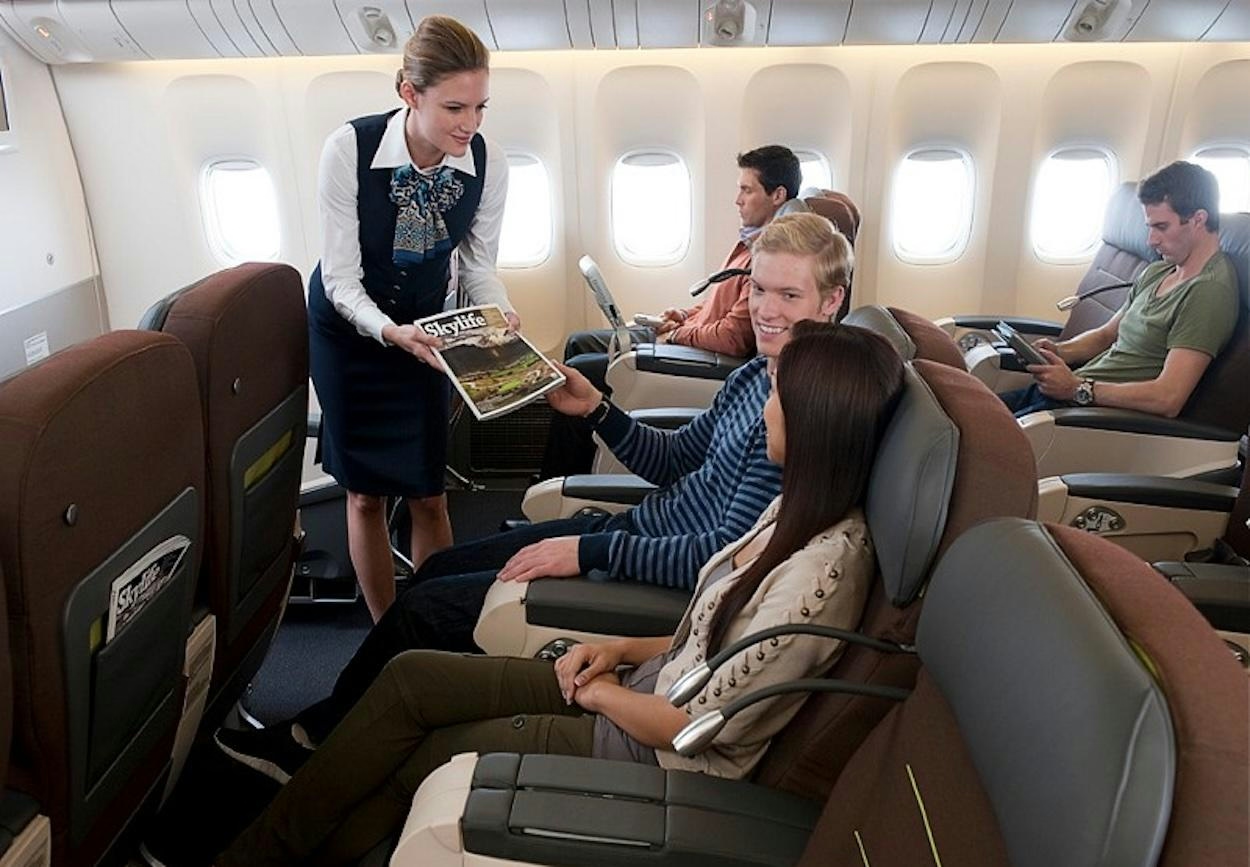
Turkish Airlines has announced plans to reintroduce premium economy cabins on its widebody aircraft by 2028, marking a significant strategic shift under the leadership of its newly appointed Chairman of the Board and Executive Committee, Professor Murat Seker. In a recent interview with Forbes, Seker outlined the airline’s ambitious vision to expand its widebody fleet to more than 800 aircraft by 2033, with an extended target of 800 aircraft by 2036, underscoring the carrier’s commitment to growth and modernization.
Strategic Shift Towards Premiumization
The decision to bring back premium economy reflects Turkish Airlines’ intent to "premiumize" its long-haul service offerings in response to evolving passenger preferences in the post-pandemic travel environment. According to the airline’s research, approximately two-thirds of long-haul travelers are willing to pay a premium for additional legroom and enhanced comfort, strengthening the business case for reintroducing this cabin class. Seker revealed that the new premium economy would potentially account for 8 to 9 percent of the current economy capacity on widebody aircraft.
This initiative follows the airline’s earlier attempt with the "Comfort Class," which operated from 2010 to 2016 but was discontinued due to inconsistent passenger experiences and limited fleet implementation. The forthcoming premium economy product aims to rectify these issues by delivering a more consistent and competitive experience aligned with global industry standards. While the previous Comfort Class featured wider seats, increased recline, and a 2-3-2 seating layout, its timing and configuration were considered suboptimal. Turkish Airlines now seeks to meet rising demand for premium cabins, especially as competitors such as Delta and United continue to invest heavily in their premium economy offerings.
Broader Fleet and Service Enhancements
Integrating premium economy into the existing operations will require careful management to ensure seamless service across the fleet while maintaining competitive pricing. The airline anticipates intensified competition in the premium economy segment, which may prompt rival carriers to upgrade their products or invest in fleet enhancements to protect market share.
In parallel with the premium economy rollout, Turkish Airlines is advancing its broader premiumization strategy. The carrier plans to introduce its fully enclosed Crystal Business Class suite on the Airbus A350 in early 2027, with subsequent retrofits scheduled for Boeing 777 aircraft. Seker projects that overall seat capacity per aircraft will increase by more than 12 percent, with Business Class capacity rising by at least 10 percent.
Despite ongoing geopolitical uncertainties in the Middle East and fluctuating fuel prices, Turkish Airlines remains steadfast in its long-term expansion plans. Istanbul Airport, the airline’s central hub, offers strategic access to nearly half of the world’s population, providing flexibility to adapt its network and fleet strategy as necessary. While the widebody and cargo fleet targets remain unchanged, adjustments to the narrowbody fleet plan are possible as the airline aims to serve approximately 350 destinations and achieve annual revenues exceeding $50 billion.
As Turkish Airlines prepares to re-enter the premium economy market, its focus on profitable growth and enhanced passenger experience positions the carrier to compete vigorously in an increasingly dynamic global aviation landscape.

Etihad and Swissport Extend Global Partnership

Sepehran Airlines B737 Returns to Mashhad After Tyre and Engine Issues

Etihad Deploys Widebody Fleet to Meet Strong Demand

Korean Air Finalizes $36.2 Billion Deal with Boeing

Australia’s RFDS Queensland Section Orders Six King Air 260Cs

Korean Air Finalizes Order for 103 Boeing Jets and Engines

Embraer E195-E2 Features Distinctive Engine Placement Among Regional Jets

What Passengers Can Expect on Boeing’s New 777X Jet

How Ethiopian Airlines Became Africa’s Leading Carrier Amid Gulf Competition

Joby Aviation Extends Autonomous Flight Capabilities with Cross-Country Tour
