
画像

エアロジニー — あなたのインテリジェントな副操縦士。

何でも尋ねてください。全てを分析してください。即座に行動してください。

現在のトレンド

Categories

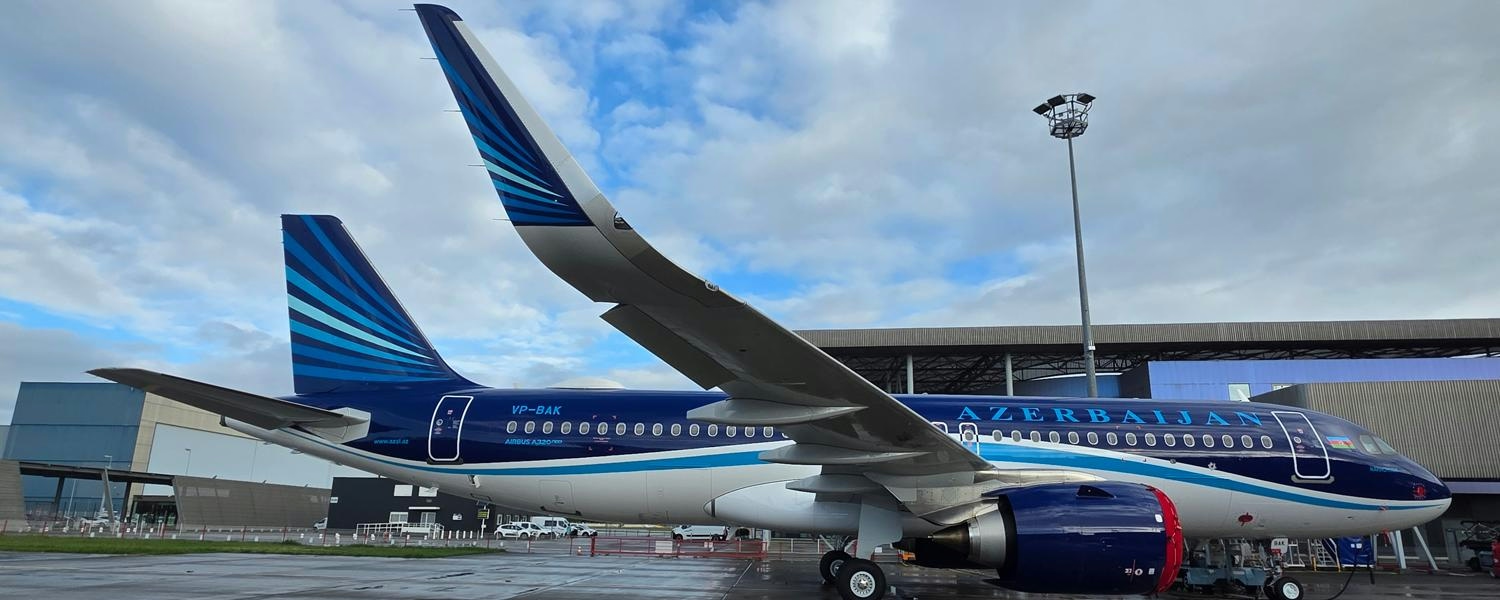
CDB Aviation Delivers Two A320neo Aircraft to Azerbaijan Airlines
October 10, 2025By ePlane AI
CDB Aviation Delivers Two A320neo Aircraft to Azerbaijan Airlines
0
0
CDB Aviation
Azerbaijan Airlines
Airbus A320neo

CDB Aviation Delivers Two A320neo Aircraft to Azerbaijan Airlines

CDB Aviation has successfully delivered two Airbus A320neo aircraft to Azerbaijan Airlines (AZAL), with the second aircraft handed over on October 9 at Blagnac, France. This delivery marks a pivotal advancement in AZAL’s ongoing fleet modernization initiative, which aims to replace older A320 and A319 models with newer, more fuel-efficient jets.

Fleet Modernization and Engine Variants

The latest A320neo delivered to AZAL is equipped with CFM LEAP-1 engines, distinguishing it from the airline’s earlier A320neo aircraft, which feature Pratt & Whitney GTF engines. The leasing agreement for these two aircraft was announced in June 2024, underscoring AZAL’s commitment to upgrading its narrowbody fleet and improving operational efficiency. This move complements a firm order placed by AZAL with Airbus in 2023 for 12 additional A320neo family jets. The first of these, registered as VP-BAK, was delivered in September. Currently, AZAL operates three other A320neo aircraft powered by Pratt & Whitney engines, although two of these remain grounded.

Operational Challenges and Market Context

As AZAL integrates the new A320neo aircraft into its operations, the airline faces several challenges, particularly in maintaining a mixed-engine fleet. Ensuring adequate maintenance support for both CFM LEAP-1 and Pratt & Whitney GTF engines will be critical during this transition. Furthermore, the introduction of these new aircraft occurs amid intensifying competition from regional carriers, many of which are also expanding and modernizing their fleets with similar next-generation models.

Market analysts suggest that AZAL’s fleet expansion may invite increased scrutiny from aviation authorities, especially concerning the airline’s operational capacity and compliance with safety standards. This development could prompt competitors to reassess their own fleet modernization strategies and operational plans to sustain their competitive positions in the evolving regional aviation market.

The delivery of these two A320neo aircraft represents a significant milestone for Azerbaijan Airlines as it seeks to enhance its standing in the regional aviation sector while managing the complexities associated with fleet integration and heightened industry competition.

More news
China Identifies 2026 as a Pivotal Year for Low-Altitude Air Taxi Industry

China Identifies 2026 as a Pivotal Year for Low-Altitude Air Taxi Industry

China Identifies 2026 as a Pivotal Year for Low-Altitude Air Taxi Industry Demonstrations Signal a New Era in Urban Air Mobility In downtown Wuhan, the capital of Hubei Province, a silent aircraft lifted off before an attentive audience, hovering gracefully above the Hongshan Auditorium. This demonstration featured four distinct electric vertical takeoff and landing (eVTOL) vehicles, designed to transport both passengers and goods. Far from a cinematic spectacle, the event was a highlight of Hubei’s provincial economic agenda meeting, underscoring China’s swift transition from conceptual planning to active implementation of its low-altitude economy. This sector has now been elevated to a national strategic priority, reflecting the country’s commitment to advancing urban air mobility. 2026: A Crucial Milestone for Commercial Deployment Industry leaders and regulators increasingly regard 2026 as a decisive year for the commercial introduction of eVTOL air taxis. Several manufacturers are engaged in a competitive race to obtain regulatory certifications and scale up production, aiming to transform the industry from a conceptual phase into a commercially viable enterprise. Huang Xiaofei, vice-president of strategy at Shanghai-based Volant Aerotech, emphasized the significance of this timeline, stating, “The year 2026 will be the crucial node for the low-altitude industry to ‘cross the chasm.’ eVTOL, as the core technological direction of a billion-yuan market, has moved from concept into a commercial sprint phase.” Hubei Province is positioning itself at the forefront of this emerging industry. Local officials report the development of nine eVTOL models, with four already having completed successful test flights. The region’s low-altitude sector has experienced robust growth, with major companies in Wuhan reporting revenue increases exceeding 30 percent this year. This growth has contributed to an aviation industry output valued at 9.6 billion yuan within Hubei alone. Challenges and Global Competition Despite the promising momentum, the industry faces significant challenges. Regulatory complexities, safety concerns, and the need for technological standardization remain critical obstacles that could impede progress. Authorities are tasked with establishing clear airspace management protocols and rigorous safety standards to foster public trust and ensure operational reliability. Additionally, the commercialization of eVTOL services will require substantial investment in infrastructure and coordinated policy support. The global market is closely monitoring these developments. International competitors, such as Archer Aviation in the United States, are accelerating their own eVTOL programs, positioning themselves as leading providers of urban air transit in cities like Los Angeles. This intensifying competition is expected to drive further innovation and investment, as companies and nations compete for leadership in the nascent air taxi sector. As China’s low-altitude economy moves from blueprint to reality, the year 2026 emerges as a pivotal moment that could shape the future of urban air mobility, not only within China but across the global aviation industry.
Investor Dmitry Balyasny Increases Stake in Flying-Taxi Company

Investor Dmitry Balyasny Increases Stake in Flying-Taxi Company

Investor Dmitry Balyasny Increases Stake in Flying-Taxi Company Dmitry Balyasny, founder of Balyasny Asset Management (BAM), has expanded his investment in a leading flying-taxi company, drawing renewed focus to the rapidly evolving air taxi industry. Having immigrated to the United States from the Soviet Union as a child, Balyasny launched his fund in 2001 and now manages approximately $32 billion in assets with a global team exceeding 2,000 professionals. Renowned for his pragmatic approach to market challenges—recently noting, “You could just exit a position”—Balyasny’s investment decisions are closely monitored by both institutional and retail investors. His latest investments target companies developing electric vertical takeoff and landing (eVTOL) aircraft, a technology poised to revolutionize urban transportation. Among the prominent contenders in this sector are Archer Aviation (NYSE: ACHR) and Joby Aviation (NYSE: JOBY), both aggressively pursuing the commercialization of flying taxis. Archer Aviation: Pioneering Urban Air Mobility Founded in 2018, Archer Aviation is focused on creating an all-electric air taxi tailored for short urban routes. Its flagship prototype, the ‘Midnight,’ is designed to carry a pilot and four passengers up to 50 miles at speeds of up to 150 miles per hour. Featuring a 12-rotor configuration, the aircraft offers redundancy to enhance safety. Archer is currently navigating the Federal Aviation Administration (FAA) certification process with the objective of launching commercial operations in the near future. The company has announced ambitious plans to establish air taxi networks in major metropolitan regions. Notably, Archer recently unveiled an initiative to connect Miami, West Palm Beach, Boca Raton, and Fort Lauderdale, including their international airports. These efforts reflect the company’s vision to transform urban mobility by significantly reducing travel times between key city hubs. Competitive Dynamics and Legal Challenges The air taxi market is becoming increasingly competitive, with Archer and Joby Aviation engaged in a legal dispute over alleged trade secret violations. Archer is seeking to dismiss Joby’s lawsuit, describing it as without merit. This legal confrontation underscores the high stakes and intense rivalry as companies compete for technological innovation and regulatory approval. Beyond the air taxi sector, the broader mobility landscape is undergoing significant shifts. Alphabet’s autonomous vehicle division, Waymo, recently secured $16 billion to expand its robotaxi operations worldwide, signaling strong investor confidence in autonomous transportation. Additionally, Uber’s acquisition of SpotHero represents a strategic effort to diversify beyond traditional ride-hailing services, potentially altering competitive dynamics within urban mobility markets. Market Response and Industry Outlook These developments occur amid heightened scrutiny of the transportation sector. A recent white paper highlighting the challenges associated with transitioning to electric vehicles triggered a sell-off in global transport stocks, reflecting investor caution as the industry confronts regulatory, technological, and competitive obstacles. Balyasny’s increased stake in the flying-taxi sector highlights both the promise and complexity of this emerging market. As regulatory approvals, legal disputes, and strategic investments continue to shape the industry, investors and observers remain attentive to which companies will ultimately succeed in bringing flying taxis to commercial reality.
Rapita Systems and Avionyx Announce Avionics Partnership

Rapita Systems and Avionyx Announce Avionics Partnership

Rapita Systems and Avionyx Announce Strategic Avionics Partnership Rapita Systems, a leading provider of qualifiable software verification tools for the aerospace and defence industries, has entered into a strategic partnership with Avionyx, an aerospace engineering firm owned by Joby Aviation. The collaboration aims to accelerate the development and certification of complex avionics programmes across the Americas, with a particular focus on meeting the Federal Aviation Administration’s (FAA) DO-178C Design Assurance Level A (DAL A) standard—the most rigorous safety requirement for flight-critical systems. Addressing Software Compliance Challenges in Aerospace Software compliance remains a critical challenge for new aircraft programmes, including next-generation electric aircraft and unmanned aerial systems. The certification process demands exhaustive testing and verification of every line of code, traditionally requiring years of effort, substantial financial investment, and specialised expertise. By integrating Rapita’s advanced verification tools with Avionyx’s extensive aerospace engineering experience, the partnership seeks to streamline certification workflows. This approach promises to deliver faster and more efficient compliance, even for the most demanding DAL A and multi-core processor projects. Tom Ferrell, General Manager at Avionyx, emphasised the benefits of the collaboration, stating that it offers customers an accelerated and more efficient path to certification. Jamie Ayre, Chief Commercial Officer at Rapita Systems, highlighted the natural alignment between the two companies, noting their shared commitment to supporting high-criticality aerospace projects and addressing the industry’s most complex challenges. Market Context and Competitive Landscape The partnership is expected to significantly enhance the efficiency and reliability of software verification processes. By enabling the identification and resolution of software defects within hours rather than weeks, and increasing automation to reduce dependence on manual testing, the alliance aims to lower development costs for both emerging entrants and established aerospace manufacturers. This will be achieved while maintaining the highest standards of safety and reliability. However, the collaboration enters a competitive market environment marked by evolving dynamics. Established European players such as UARX Space have positioned themselves as leaders in high-reliability avionics, potentially challenging Rapita and Avionyx’s market share. Industry observers are likely to monitor the partnership’s impact closely, as competitors respond with differentiated offerings. For instance, Embention has recently launched a production hub in Los Angeles to enhance support for UAV and eVTOL avionics, while partnerships like that of OGMA and Axiscades aim to strengthen maintenance, repair, and overhaul (MRO) capabilities in India, potentially shifting industry focus and resources. As the avionics sector continues to evolve, the Rapita Systems and Avionyx partnership is strategically positioned to meet the increasing demand for efficient and reliable software certification. Their success will depend on both technological innovation and their ability to navigate a rapidly changing competitive landscape.
Duncan Aviation Names Scott Stoki Vice President of Engine Operations

Duncan Aviation Names Scott Stoki Vice President of Engine Operations

Duncan Aviation Appoints Scott Stoki as Vice President of Engine Operations Duncan Aviation has announced the promotion of Scott Stoki to Vice President of Engine Operations, marking a significant leadership transition within the company’s maintenance, repair, and overhaul (MRO) division. Stoki succeeds Doug Alleman, who will retire at the end of the year after a distinguished 38-year tenure. This change is intended to ensure continuity in leadership and maintain the company’s commitment to delivering advanced engine services and expert support to aircraft operators worldwide. Extensive Experience and Strategic Vision Scott Stoki brings over 20 years of industry experience to his new role, having joined Duncan Aviation in 2005 as an Engine Line Technician. His career trajectory has encompassed a broad range of responsibilities, including technical roles in the hangar, Quality Assurance, and management positions. This diverse background has equipped him with a deep understanding of engine maintenance processes and the ability to develop practical solutions that align with the strategic objectives of flight departments. As Vice President, Stoki will focus on expanding Duncan Aviation’s engine services division, which has seen rapid growth over the past five years. His strategic priorities include enhancing maintenance capabilities across multiple engine platforms to meet evolving market demands, optimizing the company’s 36,000-square-foot Designated Overhaul Facility by streamlining in-house backshop operations such as paint, inspection, and test cell functions, and strengthening parts sourcing strategies to improve efficiency and cost-effectiveness. Additionally, he aims to increase in-house component repair capacity and refine procurement processes in collaboration with Duncan Manufacturing Solutions. These initiatives are designed to improve engine reliability and reduce aircraft downtime, reinforcing the company’s reputation for customer-centric service. Navigating a Competitive and Evolving Market Stoki’s appointment comes amid a period of intensified competition and shifting dynamics within the aviation engine MRO sector. The industry is witnessing a surge in mergers and acquisitions, driven by rapid technological advancements and changing market requirements. Major competitors, including RTX, ST Engineering, and Honeywell, are making substantial investments to enhance their MRO capabilities, thereby heightening competitive pressures. The sector also faces ongoing challenges such as production delays and increased regulatory scrutiny from FAA quality reviews, factors that could affect operational efficiency and market positioning across the industry. Despite these challenges, Duncan Aviation’s leadership expresses strong confidence in Stoki’s ability to steer the engine operations division through this complex environment. Mike Minchow, President of Duncan Aviation, emphasized Stoki’s unique combination of technical expertise and strategic insight, stating that his leadership will be crucial as the company continues to expand its capabilities and uphold its high standards of customer service. Under Stoki’s guidance, Duncan Aviation aims to solidify its standing in a rapidly evolving and increasingly competitive MRO market by prioritizing innovation, operational excellence, and customer satisfaction.
AI Transforms Private Jet Bookings, Saving Time for Wealthy Clients

AI Transforms Private Jet Bookings, Saving Time for Wealthy Clients

AI Transforms Private Jet Bookings, Saving Time for Wealthy Clients Artificial intelligence is revolutionizing the private aviation industry by simplifying a process that has traditionally been complex and opaque. Historically, booking a private jet involved numerous emails and phone calls with concierge agents, often leaving clients uncertain about pricing and availability until late in the transaction. Today, US-based companies such as FlyJets and Elevate Jet are harnessing AI-powered platforms to introduce greater transparency, speed, and personalization to private jet bookings, fundamentally changing the customer experience. Advancements in AI-Driven Booking Platforms These innovative platforms employ large language models (LLMs), proprietary aviation data, and automation to provide instant quotes, match clients with appropriate aircraft, and enable dynamic flight-sharing options. This integration results in a more efficient and user-friendly booking process that is rapidly becoming the industry standard. FlyJets, for instance, has launched JetGPT, a beta conversational assistant powered by LLM technology that replaces traditional search interfaces with an interactive dialogue. JetGPT allows users to access real-time aircraft availability, transparent pricing, empty-leg inventory, and flight-sharing opportunities, all while accommodating budget constraints. Instead of navigating static listings, clients can submit complex natural-language requests, such as sourcing empty legs over multiple days or identifying charters within a specified price range. The system automatically retrieves operator data, applies custom logic to select the most efficient aircraft, generates quotes, and presents booking options directly to users. For example, a user might request a comprehensive list of all empty legs departing from and arriving at Van Nuys Airport within a given month, complete with photographs of each aircraft. JetGPT responds with an exportable list and instant booking capabilities. The platform also supports more detailed prompts, including booking specific jets within budget and reselling seats, with the AI managing both the booking process and seat listings through the FlyJets app and direct notifications. Market Impact and Emerging Challenges The integration of AI into private jet bookings is reshaping the competitive landscape, as companies strive to enhance their AI capabilities or establish strategic partnerships to remain competitive. This technological shift is influencing consumer preferences, with clients increasingly favoring platforms that offer superior, time-saving booking experiences. Nevertheless, the adoption of AI introduces new challenges. Jessica Fisher, CEO and Founder of FlyJets, emphasizes that the company currently prioritizes maximizing search flexibility over full booking automation, citing the difficulty of aggregating usable data from a fragmented marketplace. She explains, “It would be very difficult to display all current aircraft bookable for charter out of a given airport over a long period using ordinary interfaces. A language model makes it much easier to pull this data.” As AI systems handle growing volumes of sensitive personal and travel information, regulatory scrutiny concerning data privacy and security is expected to intensify. Companies will need to implement robust safeguards to maintain client trust and comply with evolving legal frameworks. With AI becoming increasingly integral to private jet bookings, the sector is positioned for continued innovation and heightened competition as technology redefines the landscape of luxury travel.
Hanwha AeroTechnix Completes CFM-7B Engine Teardown

Hanwha AeroTechnix Completes CFM-7B Engine Teardown

Hanwha AeroTechnix Completes First CFM-7B Engine Teardown Amid Market Shifts Miami-based maintenance, repair, and overhaul (MRO) provider Hanwha AeroTechnix has successfully completed its inaugural teardown of a CFM-7B engine for Stratton Aviation, marking a pivotal step in the company’s expansion within the global aviation aftermarket. This accomplishment arrives amid a period of intensified scrutiny and evolving competitive pressures in the engine maintenance sector, driven largely by ongoing supply chain disruptions. Technical Achievement and Industry Recognition Hanwha AeroTechnix highlighted that the successful teardown underscores its sustained investment in technical expertise, operational readiness, and customer-centric execution. Jeff Lewis, chief executive of Hanwha AeroTechnix, described the milestone as a reflection of the confidence placed in the company by its clients and a testament to its commitment to delivering high-quality maintenance solutions aligned with partners’ operational goals. Nicole Sobers, vice president of CFM Engines at Stratton Aviation, commended Hanwha AeroTechnix’s professionalism and technical capability, emphasizing the strong focus on quality demonstrated throughout the process. Context of Market Dynamics and Competitive Landscape The completion of this teardown coincides with complex supply chain challenges affecting the aviation industry. CFM International, the manufacturer of the CFM-7B engine, is currently engaged in a dispute with Pratt & Whitney over engine supplies, prompting Airbus to seek additional engines from CFM. These developments have heightened competition among engine manufacturers and MRO providers, as airlines and lessors strive to secure dependable maintenance and overhaul partnerships. Industry analysts suggest that Hanwha AeroTechnix’s proven capabilities in engine maintenance may provide a competitive edge as airlines and leasing companies reevaluate their MRO relationships. The company’s progress also aligns with growing attention on CFM’s adaptive engine technology and ongoing RISE engine airport trials in Singapore, initiatives that are influencing future industry standards. Hanwha AeroTechnix continues to broaden its service offerings to address the evolving demands of the global aviation aftermarket, maintaining a focus on operational excellence, safety, and fostering long-term customer trust. This latest achievement positions the company to assume a more prominent role in supporting the operational objectives of its partners worldwide amid a shifting market landscape.
Erickson Group Acquires 321 Precision Conversions

Erickson Group Acquires 321 Precision Conversions

Erickson Group Acquires Full Ownership of 321 Precision Conversions Erickson Group, a prominent global aviation and aerospace company, has completed the acquisition of full ownership of 321 Precision Conversions, a specialist in Airbus A321-200PCF freighter conversions. The transaction was executed through Erickson’s subsidiary, Precision Aircraft Solutions, which purchased the remaining minority interest from Air Transport Services Group (ATSG), previously held via ATSG’s subsidiary, Cargo Aircraft Management, Inc. Strategic Integration and Market Positioning This acquisition consolidates Erickson’s presence in the narrowbody freighter conversion market by bringing 321 Precision Conversions under the umbrella of a larger, vertically integrated aerospace group. With full ownership, Erickson intends to more closely align 321 Precision Conversions with Precision Aircraft Solutions’ engineering, certification, and program management capabilities. This integration is expected to accelerate the development of the A321-200PCF platform and enhance its competitiveness within the global cargo aircraft sector. Gary Warner, President of 321 Precision Conversions, emphasized the significance of the acquisition, describing it as a strategic milestone that reinforces the company’s commitment to delivering advanced freighter conversion solutions worldwide. He highlighted that full ownership by Erickson will enable bolder investments in personnel, partnerships, and future conversion programs. Warner also expressed gratitude to ATSG for their longstanding support and collaboration, affirming that ATSG will continue as a valued customer. Dylan Garner, President of Erickson Group, acknowledged ATSG’s partnership in building the A321PCF program and expressed confidence in the platform’s potential and the expertise of the 321 Precision Conversions team. Garner underscored Erickson’s commitment to investing in the program’s next phase of growth, reflecting strong belief in the sustained demand for narrow-body freighters. Todd France, Chief Commercial Officer at ATSG, noted ATSG’s active role in the development and launch of the A321PCF program and welcomed the transition of ownership to Erickson. He expressed optimism that Erickson’s leadership would guide 321 Precision Conversions into its next stage, while reaffirming ATSG’s intention to continue marketing the A321 converted freighter within its broader leasing portfolio. Challenges and Industry Implications As Erickson advances with the integration, the company faces several challenges, including the assimilation of new technologies into existing operations and ensuring a smooth transition for customers. Maintaining a competitive advantage against other key players in the precision conversion and aerospace markets will be essential. Industry analysts suggest that this acquisition may stimulate increased investor interest in advanced aviation and precision technologies, potentially prompting competitors to accelerate their research and development efforts or seek new strategic alliances. Rival firms might also respond with pricing strategies or the introduction of new products to protect their market share. Through this acquisition, Erickson Group aims to leverage its expanded capabilities to foster innovation and growth in the global cargo aircraft sector, positioning 321 Precision Conversions for sustained success amid a rapidly evolving market environment.
UK Airlines Use AI and WhatsApp to Reduce Passenger Queues

UK Airlines Use AI and WhatsApp to Reduce Passenger Queues

UK Airlines Harness AI and WhatsApp to Alleviate Passenger Queues Digital Messaging as a Strategic Response to Staffing Challenges In response to persistent staffing shortages and anticipated border delays, UK airlines and travel operators are increasingly turning to advanced artificial intelligence (AI) and messaging platforms such as WhatsApp to manage passenger flows and reduce airport queues. These digital solutions are being implemented in preparation for longer immigration processing times associated with the forthcoming EU Entry/Exit System, as well as ongoing recruitment difficulties following Brexit, according to communications provider Infobip. Airlines have intensified their use of proactive digital messaging to keep passengers informed well before they arrive at the airport. Automated notifications now extend beyond simple flight updates to include reminders about necessary documentation, live flight status, and the handling of more complex requests such as rebooking and baggage tracking. This approach is designed to divert routine inquiries away from airport counters and call centres, thereby allowing staff to concentrate on issues requiring direct, in-person assistance. WhatsApp has emerged as a particularly effective channel for real-time, two-way communication with UK travellers. Virgin Atlantic, in collaboration with Infobip, piloted a WhatsApp chatbot at London Heathrow, which led to an 11% increase in online check-in rates. This rise in online check-ins contributes to smoother airport operations by reducing congestion at check-in counters and shortening queues during peak travel times. The chatbot also provides real-time flight updates, encouraging passengers to act promptly and navigate the airport more efficiently. Simon Langthorne, Head of CRM at Virgin Atlantic, emphasized that empowering customers with convenient, real-time notifications via WhatsApp not only enhances the travel experience but also optimizes airport operations. Integrating AI: Benefits and Limitations The deployment of agentic AI—systems capable of autonomously performing actions such as changing flights or providing baggage status updates—reflects growing consumer demand for swift and seamless service. Airlines are experimenting with digital service models that lessen dependence on airport staff for routine requests, a strategy driven by rising passenger volumes and the high costs of maintaining large operational teams. Nonetheless, the integration of AI at scale presents significant challenges. Industry stakeholders express concerns regarding the maturity of AI technologies and their ability to make sound independent decisions in complex or exceptional circumstances. Successful implementation requires robust, enterprise-grade infrastructure and seamless integration with existing airline systems. Consequently, the effectiveness of AI in real-world operations has come under increased scrutiny. Responses among competitors vary: some airlines are accelerating their AI initiatives to gain a competitive edge, while others adopt a more cautious stance, underscoring the necessity of human oversight in critical decision-making processes. Enhancing Revenue and Passenger Service Through Conversational Channels Beyond operational efficiencies, conversational platforms like WhatsApp are also being leveraged to support sales processes, enabling passengers to transition from enquiry to booking confirmation within a single chat interface. This integrated approach addresses rising customer expectations for fast and convenient service, particularly during periods of disruption. James Stokes, Head of Enterprise for the UK and Nordics at Infobip, encapsulated the sector’s predicament by noting the immense pressure on the travel industry to deliver smooth passenger experiences despite systemic challenges. As UK airlines continue to explore the potential of AI and messaging technologies, striking the right balance between automation and human judgment remains a central concern, with the overarching aim of enhancing both operational efficiency and the overall passenger journey.
Seven Airlines to Launch Wide-Body Flights in Former Yugoslav Markets

Seven Airlines to Launch Wide-Body Flights in Former Yugoslav Markets

Seven Airlines to Launch Wide-Body Flights in Former Yugoslav Markets The upcoming summer season, spanning from March 29 to October 24, will see seven airlines operating regular wide-body services from former Yugoslav markets. A total of 1,836 wide-body flights have been scheduled in both directions, marking a modest 2.3% increase compared to last year. Nevertheless, this figure remains 25.8% below pre-pandemic levels recorded in 2019, largely due to diminished activity in the Croatian market. Notably, several major carriers that served Croatia seven years ago—such as American Airlines, Air Canada Rouge, Emirates, and Korean Air—are no longer operating there. However, United Airlines is set to introduce a new route from Newark to Split, signaling renewed interest from North American airlines in the region. Regional Capacity and Key Routes Belgrade is expected to lead the region in wide-body capacity this summer. Air Serbia plans to operate 812 flights to and from its hub, utilizing up to four Airbus A330-200 aircraft. This represents a 10.9% increase in operations compared to the previous year. The Serbian carrier will also launch seasonal flights between Belgrade and Toronto from May 23 to September 26. Alongside continued services by China Southern Airlines and Hainan Airlines, Belgrade’s wide-body seat capacity is projected to rise by 8.2%, reaching a total of 283,514 seats. In Zagreb, South Korean low-cost carrier T’way Air will resume its seasonal Seoul-Zagreb service on June 27 using the A330-200, marking its third consecutive year on the route. However, the airline will operate nine fewer roundtrips than last year. Air Transat will also return to Zagreb, maintaining its previous schedule with the A330-200 and resuming service on May 9. Although Air Transat will operate one fewer roundtrip than in the prior season, a one-off Montreal-Zagreb flight will keep the total number of flights consistent with 2025. Despite these efforts, Zagreb’s wide-body capacity is expected to decline by 10.2%, falling to 61,440 seats. United Airlines is poised to drive growth in Croatia’s wide-body capacity this summer by maintaining its Newark-Dubrovnik service with the Boeing 767-400 and adding an additional roundtrip. The airline will also inaugurate Newark-Split flights, offering three weekly rotations between April 30 and September 7 with the Boeing 767-300ER. Meanwhile, TUI Airways has scheduled 88 wide-body operations to Dubrovnik using its Boeing 787-8 aircraft. Competitive Landscape and Operational Challenges The entry and expansion of these seven airlines occur within an increasingly competitive environment. Established carriers such as Ethiopian Airlines and Israir are also expanding their long-haul routes in the region, intensifying competition. Market responses are expected to be mixed; while the availability of direct flights may stimulate passenger demand, concerns remain regarding pricing strategies and service quality. Competitors may respond with strategic adjustments, including increased flight frequencies or promotional offers, to protect their market share. Airlines also face logistical challenges, including securing airport slots and navigating complex regulatory frameworks across the region. These factors could affect the smooth implementation of new wide-body services. Despite these hurdles, the forthcoming summer season reflects cautious optimism for the recovery and growth of long-haul connectivity in the former Yugoslav markets.
Etihad Airways Withdraws Airbus A380 from 6 Major Global Routes

Etihad Airways Withdraws Airbus A380 from 6 Major Global Routes

Etihad Airways Withdraws Airbus A380 from Six Major Global Routes ABU DHABI – Etihad Airways has officially ceased Airbus A380 operations on six key international routes from its Abu Dhabi International Airport (AUH) hub, marking a notable shift in the airline’s long-haul strategy. Once among the few carriers operating the 486-seat superjumbo, the UAE-based airline is streamlining its fleet to better align with evolving market dynamics and operational requirements. Currently, Etihad operates seven active A380s from a fleet of nine, including one aircraft recently returned from storage in France. While the airline continues to deploy the double-decker on select high-demand routes, it has permanently withdrawn the A380 from major airports across Australia, the United States, Asia, and India. Discontinued A380 Routes and Impact The six routes from which the A380 has been withdrawn include John F. Kennedy International Airport (JFK) in New York, Sydney Airport (SYD), Melbourne Airport (MEL), Chhatrapati Shivaji Maharaj International Airport (BOM) in Mumbai, Incheon International Airport (ICN) in Seoul, and King Abdulaziz International Airport (JED) in Jeddah. New York JFK recorded the highest number of A380 departures among these destinations, with 2,413 flights operated between 2015 and 2020, and again from 2024 until mid-2025. Sydney followed closely with 2,194 departures, including periods of twice-daily service. Melbourne and Mumbai experienced shorter durations of A380 deployment, while Seoul and Jeddah saw limited or short-term operations. The withdrawal from Sydney and Melbourne effectively ends Etihad’s A380 presence in Australia, and the cessation of JFK flights removes the aircraft from the U.S. market. Operational and Market Considerations Etihad’s decision reflects broader industry challenges, including rising operational costs, shifting passenger demand, and intensifying competition. The replacement of the A380 with aircraft such as the Airbus A350-1000 may increase operational expenses due to new crew training requirements and adjustments in fleet utilization. While some passengers accustomed to the spacious cabins of the A380 may express disappointment, others may perceive little difference in their travel experience. Meanwhile, competitors like Emirates continue to invest heavily in the A380, potentially positioning themselves to attract travelers seeking the superjumbo experience. Etihad’s withdrawal could prompt competitive responses as airlines vie for market share on high-demand routes. Despite these challenges, Etihad’s robust financial performance—highlighted by a near 50% increase in net profit and ongoing fleet expansion plans—demonstrates the airline’s confidence in managing this transition while maintaining its competitive position. Changes on the New York Route Etihad operated its final A380 flight to New York JFK on June 23, 2025, replacing the aircraft with the Airbus A350-1000, which offers 371 seats across two classes. The A350-1000 introduces Etihad’s latest business class product but eliminates the First Class Apartments and The Residence suites previously available on the A380. This redeployment also frees up A380 capacity for other long-haul markets. Between July and November 2025, Etihad carried 162,677 round-trip passengers on the JFK route, with both seat capacity and traffic declining by approximately 9 to 10 percent compared to the previous year. Current and Future A380 Network Looking ahead, Etihad plans 2,104 A380 departures from Abu Dhabi in 2026, marking its fourth-highest annual deployment. The A380 will continue to serve five destinations: London Heathrow (LHR), Paris Charles de Gaulle (CDG), Singapore Changi (SIN), Narita International (NRT) in Tokyo, and Toronto Pearson (YYZ). Notably, Tokyo Narita will receive its first-ever Etihad A380 service beginning June 17, 2026, while Singapore joined the network last year, expanding Etihad’s high-capacity footprint in Southeast Asia. As Etihad reshapes its long-haul network, the airline remains focused on balancing operational efficiency, passenger preferences, and competitive positioning within a rapidly evolving global aviation landscape.
line









