
AIによるインサイトを行動へとつなげる

現在のトレンド
Categories
UK Airlines Use AI and WhatsApp to Reduce Passenger Queues
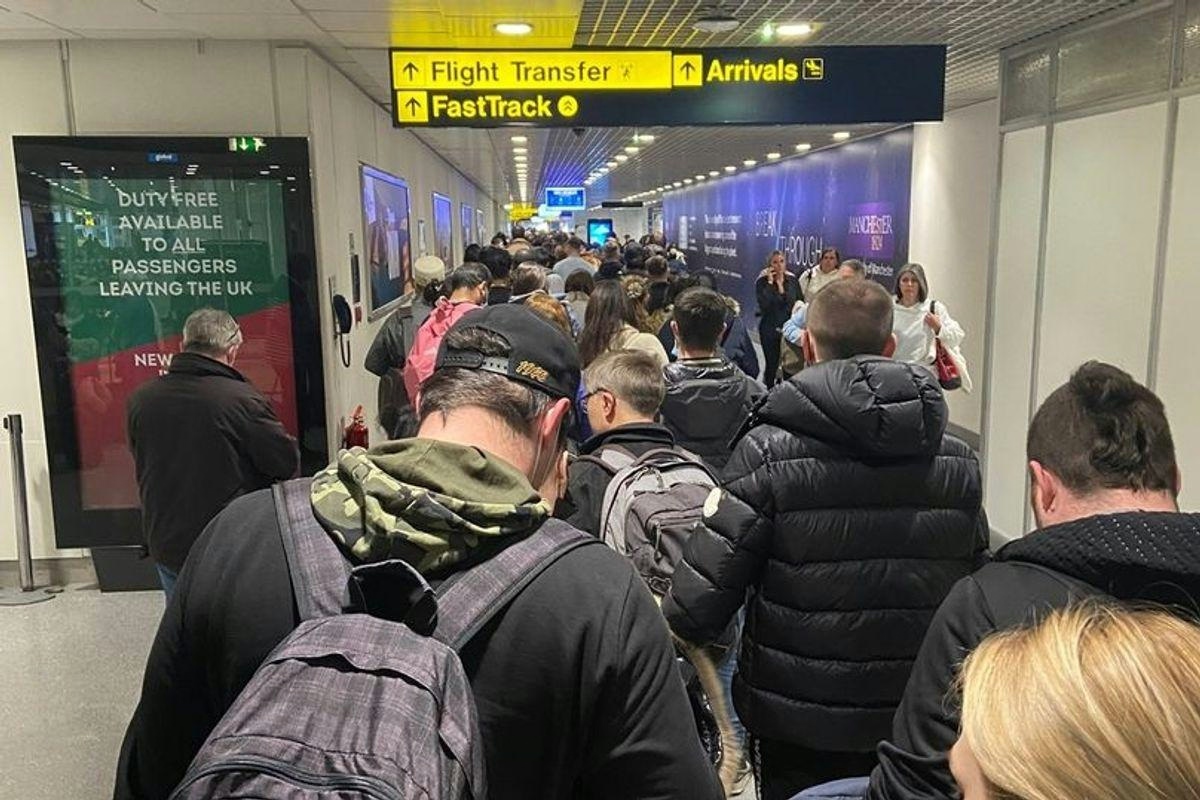
UK Airlines Harness AI and WhatsApp to Alleviate Passenger Queues
Digital Messaging as a Strategic Response to Staffing Challenges
In response to persistent staffing shortages and anticipated border delays, UK airlines and travel operators are increasingly turning to advanced artificial intelligence (AI) and messaging platforms such as WhatsApp to manage passenger flows and reduce airport queues. These digital solutions are being implemented in preparation for longer immigration processing times associated with the forthcoming EU Entry/Exit System, as well as ongoing recruitment difficulties following Brexit, according to communications provider Infobip.
Airlines have intensified their use of proactive digital messaging to keep passengers informed well before they arrive at the airport. Automated notifications now extend beyond simple flight updates to include reminders about necessary documentation, live flight status, and the handling of more complex requests such as rebooking and baggage tracking. This approach is designed to divert routine inquiries away from airport counters and call centres, thereby allowing staff to concentrate on issues requiring direct, in-person assistance.
WhatsApp has emerged as a particularly effective channel for real-time, two-way communication with UK travellers. Virgin Atlantic, in collaboration with Infobip, piloted a WhatsApp chatbot at London Heathrow, which led to an 11% increase in online check-in rates. This rise in online check-ins contributes to smoother airport operations by reducing congestion at check-in counters and shortening queues during peak travel times. The chatbot also provides real-time flight updates, encouraging passengers to act promptly and navigate the airport more efficiently. Simon Langthorne, Head of CRM at Virgin Atlantic, emphasized that empowering customers with convenient, real-time notifications via WhatsApp not only enhances the travel experience but also optimizes airport operations.
Integrating AI: Benefits and Limitations
The deployment of agentic AI—systems capable of autonomously performing actions such as changing flights or providing baggage status updates—reflects growing consumer demand for swift and seamless service. Airlines are experimenting with digital service models that lessen dependence on airport staff for routine requests, a strategy driven by rising passenger volumes and the high costs of maintaining large operational teams.
Nonetheless, the integration of AI at scale presents significant challenges. Industry stakeholders express concerns regarding the maturity of AI technologies and their ability to make sound independent decisions in complex or exceptional circumstances. Successful implementation requires robust, enterprise-grade infrastructure and seamless integration with existing airline systems. Consequently, the effectiveness of AI in real-world operations has come under increased scrutiny.
Responses among competitors vary: some airlines are accelerating their AI initiatives to gain a competitive edge, while others adopt a more cautious stance, underscoring the necessity of human oversight in critical decision-making processes.
Enhancing Revenue and Passenger Service Through Conversational Channels
Beyond operational efficiencies, conversational platforms like WhatsApp are also being leveraged to support sales processes, enabling passengers to transition from enquiry to booking confirmation within a single chat interface. This integrated approach addresses rising customer expectations for fast and convenient service, particularly during periods of disruption.
James Stokes, Head of Enterprise for the UK and Nordics at Infobip, encapsulated the sector’s predicament by noting the immense pressure on the travel industry to deliver smooth passenger experiences despite systemic challenges.
As UK airlines continue to explore the potential of AI and messaging technologies, striking the right balance between automation and human judgment remains a central concern, with the overarching aim of enhancing both operational efficiency and the overall passenger journey.

Etihad Airways Suspends Airbus A380 Flights on Key Route

Aditya Birla Group Seeks Approval for Aircraft Leasing in GIFT City

Qatar Airways Highlights Innovation and Connectivity at Arabian Travel Market 2026

Hong Kong's Five-Year Plan Includes Andrew Fan's Aircraft Parts Processing Hub Proposal

ACIA Aero Leasing Delivers ATR72-600 to Air Nostrum

RTX Appoints Jill Albertelli as Head of Pratt & Whitney

TAT Technologies Joins Beyond Aero Hydrogen Aircraft Program

AURAK Study Highlights Barriers to Air Taxi Adoption in Emerging Economies

Xiamen Air Selects Altitude for 787 Maintenance at Heathrow

Etihad and Swissport Extend Global Partnership
