
画像

AIによるインサイトを行動へとつなげる

今すぐAeroGenieのウェイティングリストに登録しよう!

現在のトレンド

Categories

China Confirms Aircraft Purchase Following Trump’s Visit
May 16, 2026By ePlane AI
China Confirms Aircraft Purchase Following Trump’s Visit
0
0
Boeing
China Aircraft Purchase
General Electric Engines

China Confirms Aircraft Purchase Following Trump’s Visit

Agreement on Aircraft and Components

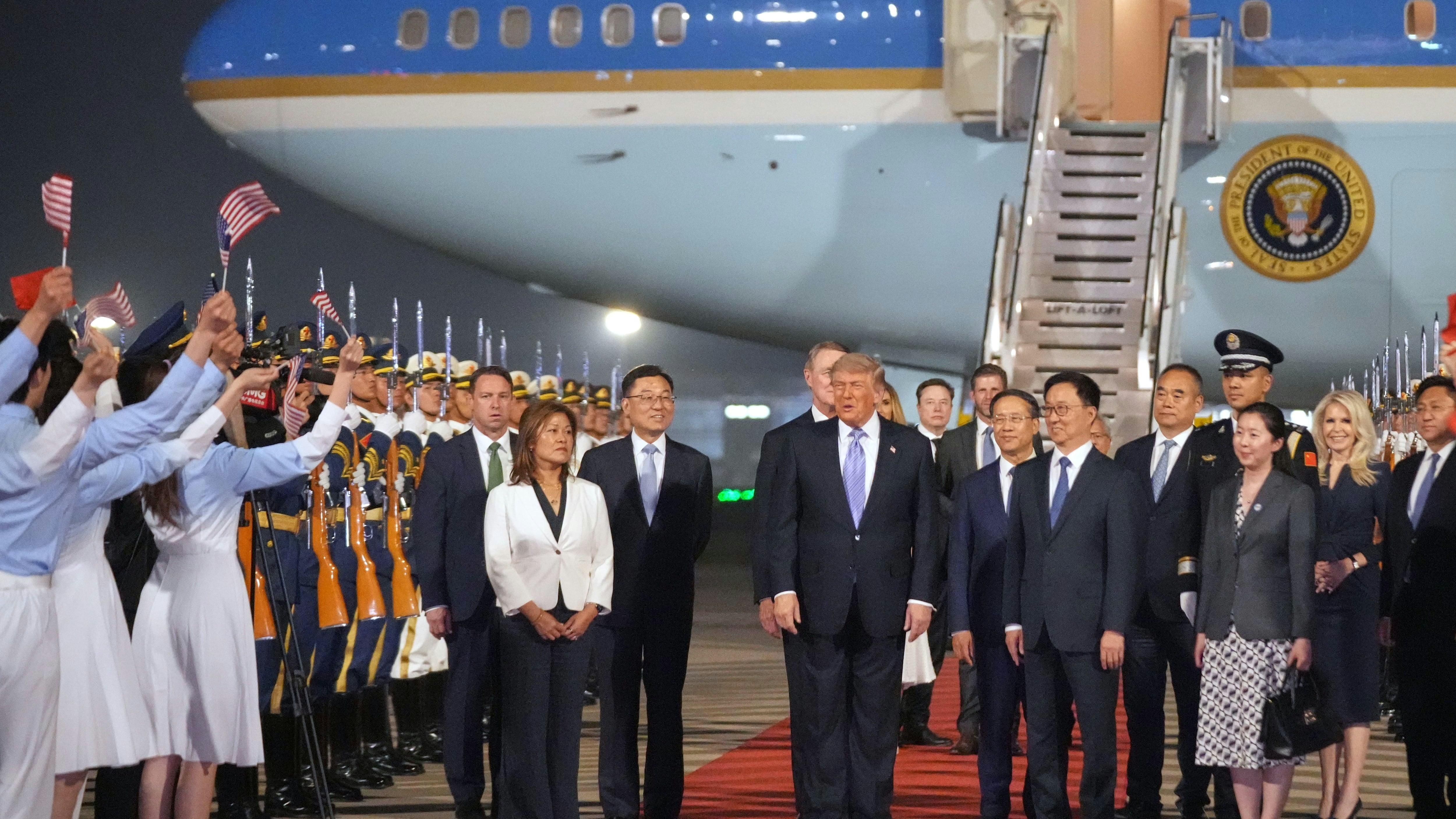
China’s Ministry of Commerce announced on Saturday that it had reached a significant agreement with the United States concerning the purchase of aircraft, jet engines, and related components. The official statement, posted on the ministry’s website, confirmed that both countries had arranged for China to acquire aircraft from the US, with assurances from the US to supply aircraft engines and components. The two sides also agreed to continue advancing cooperation in these sectors.

This development follows US President Donald Trump’s recent visit to China, during which he declared that China would purchase at least 200 aircraft from Boeing and 450 aircraft engines from General Electric. Boeing subsequently confirmed the deal in a brief statement, describing the visit as “very successful” and noting an “initial commitment for 200 aircraft.” This transaction represents Boeing’s first major sale to China in nearly a decade.

Market Reaction and Trade Cooperation

Despite the announcement, the confirmed order of 200 jets falls short of the 500 aircraft anticipated by analysts at Jefferies and is considerably below the potential for up to 750 planes that President Trump had previously suggested. Specific details regarding the models to be purchased were not disclosed. The market response was mixed; some analysts viewed the agreement as a positive step toward improving US-China trade relations, while others expressed disappointment over the lower-than-expected volume.

Beyond the aircraft purchase, the two countries agreed to establish a trade council and an investment council aimed at addressing ongoing concerns in bilateral trade and investment. The deal is expected to have significant implications for global supply chains and may influence market dynamics within the aviation industry, although competitor responses remain uncertain at this stage.

This agreement highlights continued efforts by both nations to foster cooperation in key sectors despite the persistence of broader trade tensions.

More news
What Happens to a Boeing 747 After Retirement

What Happens to a Boeing 747 After Retirement

What Happens to a Boeing 747 After Retirement The Boeing 747, famously dubbed the "Queen of the Skies," transformed long-haul air travel upon its commercial debut in 1970. For decades, its distinctive humpbacked silhouette was synonymous with the jet age, enabling airlines to carry more passengers over greater distances than any other aircraft of its era. However, by the mid-2010s, the emergence of more fuel-efficient twin-engine widebodies began to undermine the economic viability of the 747, prompting many major carriers to retire their fleets. Retirement from passenger service, however, rarely signals the end of a 747’s operational life. The subsequent fate of each aircraft varies depending on factors such as age, condition, and market demand. A significant number are converted into freighters, thereby extending their service life by up to two decades. Others are placed in long-term storage at desert facilities like those in the Mojave, awaiting potential buyers or further decisions. Many are dismantled for parts, with as much as 85 percent of the airframe recycled or repurposed. A select few find unconventional new roles, including architectural installations within office buildings. Freighter Conversion: Extending Operational Life The most common post-retirement path for Boeing 747s is conversion into cargo aircraft. This transformation is often the most economically viable option, frequently adding between 10 and 20 years to the aircraft’s operational lifespan. A distinctive design feature—the hinged nose door introduced in 1968—renders the 747 uniquely capable of handling outsized cargo. This nose-loading capability allows large items such as turbine engines, military vehicles, and industrial machinery to be loaded directly onto the main deck, a feature unmatched by any current production freighter. As of early 2026, approximately 80 to 90 Boeing 747-400 freighters remain active worldwide, operated by carriers including Atlas Air, Cargolux, UPS, and National Airlines. Many of these aircraft began their service lives as passenger jets before undergoing conversion, while others were originally built as freighters. Their continued operation defies earlier forecasts about the 747’s obsolescence, sustained by a cargo market that still values the aircraft’s unique capabilities. Economic Pressures and Fuel Costs The trajectory of retired 747s is increasingly influenced by economic factors, particularly rising fuel prices and supply constraints. The global fuel crisis of 2026 has heightened concerns regarding the viability of older, less fuel-efficient aircraft. Escalating jet fuel costs have compelled airlines to accelerate the retirement of models such as the 747, as operating expenses become prohibitive. This trend is reflected in recent fleet adjustments by major carriers; for instance, Lufthansa has recently withdrawn additional Airbus A340-600s and Boeing 747-400s from service in response to shifting market conditions. Across the industry, the emphasis on fuel efficiency and the adoption of newer aircraft models are reshaping competitive strategies. While the 747’s distinctive cargo capabilities have prolonged its relevance, the prevailing economic realities are increasingly challenging the competitiveness of older jets. Storage and Dismantling: The Final Chapters When a 747 is not immediately converted into a freighter, it often finds its way to desert storage facilities, colloquially known as "boneyards." These locations serve as holding areas where aircraft await potential buyers, further conversion, or eventual dismantling. Even in retirement, the Boeing 747’s legacy endures—whether as a vital component of global cargo operations, a source of valuable spare parts, or a lasting symbol of aviation’s golden era.
United’s Oldest 777 Returns to Boeing, Sparking 777X Speculation

United’s Oldest 777 Returns to Boeing, Sparking 777X Speculation

United’s Oldest 777 Returns to Boeing, Sparking 777X Speculation United Airlines recently made headlines by flying N774UA, the world’s oldest active Boeing 777, back to Boeing’s Paine Field facility. This aircraft, a 777-200 and the second ever built, departed San Francisco on May 14, 2026, as flight UA3821, reportedly for a press or corporate event. While the return of this historic aircraft has captured the attention of aviation enthusiasts, it has also reignited speculation regarding United’s future fleet strategy, particularly the possibility of the airline reconsidering the Boeing 777X. United’s Longstanding Relationship with the 777 and the 777X Question United was the original launch customer for the Boeing 777, a model that has been integral to its long-haul operations for nearly three decades. Despite this legacy, United has yet to place an order for the next-generation 777X, even as other major international carriers such as Lufthansa, Emirates, Qatar Airways, and Cathay Pacific await its delayed entry into service. The 777X program, especially the 777-9 variant, is approaching certification after years of setbacks, with Boeing targeting first deliveries next year. Boeing’s order backlog has surged to 6,216 aircraft as of April, driven by strong demand for both the 787 and 777X families. Although the 777X offers impressive capabilities—including seating for up to 426 passengers in a two-class configuration and a range of 7,285 nautical miles—United’s leadership has expressed reservations about its suitability. Patrick Quayle, United’s Senior Vice President of Global Network Planning and Alliances, has highlighted the airline’s multi-hub strategy, which prioritizes operational flexibility over maximum capacity. Unlike carriers that operate from a single mega-hub, United distributes traffic across seven domestic hubs, making the versatile Boeing 787 family a more appropriate fit for its network. Fleet Strategy and the Role of the 787 and 777X United has made significant investments in the 787-9 and 787-10 models, recently shifting more orders toward the larger 787-10. The Dreamliner’s flexibility enables United to open new routes, adjust capacity to demand, and serve long-haul markets without oversaturating any single destination. While the 787-10 is efficient for high-demand routes, it offers less range than the 787-9 and the 777-200ER. The 787-9, in turn, provides greater range but fewer seats and less cargo capacity than a large 777. This dynamic suggests a potential role for the 777X within United’s fleet. The 777-9 could offer increased seating, enhanced cargo capacity, and a flagship platform for routes with exceptionally strong demand. It might serve as a replacement for the aging 777-300ERs and fill the void left by the retired 747-400s. For the time being, United remains focused on the 787 and its existing 777 fleet. However, the return of N774UA to Boeing, alongside Boeing’s accelerated production and upcoming certifications—including the 737 Max 10 and Max 7—leaves open the possibility of future developments. Meanwhile, United CEO Scott Kirby has warned that rising jet fuel prices could lead to higher fares this summer, adding complexity to the airline’s fleet and network planning. Whether United will ultimately join the 777X program remains uncertain. As Boeing prepares for a pivotal year, industry observers will be closely monitoring any indications of a shift in United’s widebody strategy.
China, France, and U.S. Strengthen Aviation Ties Amid Global Travel Recovery

China, France, and U.S. Strengthen Aviation Ties Amid Global Travel Recovery

China, France, and U.S. Strengthen Aviation Ties Amid Global Travel Recovery Renewed Cooperation in a Growing Market China’s rapidly expanding aviation sector has once again become a focal point for the global aerospace industry as leading companies from the United States and France deepen their partnerships with Chinese airlines. GE Aerospace, a prominent American aircraft engine manufacturer, recently reaffirmed its long-term commitment to supporting China’s aviation market, signaling renewed confidence in the country’s pivotal role in the recovery of global air travel. This announcement coincided with a high-level business delegation from the U.S. visiting China, highlighting the increasingly interconnected nature of the aviation industry despite ongoing geopolitical tensions and supply chain disruptions. The renewed collaboration comes at a critical juncture as China works to restore its international connectivity, expand airline fleets, and boost both outbound and inbound passenger traffic. Significant Orders and Strategic Investments A landmark development underscoring this trend is China’s recent order of 200 Boeing aircraft, marking a significant thaw in U.S.-China aviation relations. This substantial purchase is expected to reshape market dynamics and intensify competition among global aerospace manufacturers. In response, both France and the U.S. are anticipated to increase investments in aviation technology, infrastructure, and strategic partnerships to safeguard their market positions and enhance global travel connectivity. GE Aerospace, which has maintained operations in China for over four decades, is expanding its localized support for Chinese airlines. The company plans to enhance technical servicing, training facilities, and operational assistance to aid the modernization of airline fleets and the growth of international operations. Engines supplied by GE Aerospace and CFM International—a joint venture with France’s Safran Aircraft Engines—currently power thousands of aircraft in China, with nearly 4,600 additional engines on order. China’s Central Role in Global Aerospace The scale of GE Aerospace’s operations in China underscores the country’s critical importance in the global aerospace supply chain. With more than 60 airlines supported and approximately 8,500 aircraft engines currently in service, China represents a vital market for fleet management, impacting fuel efficiency, flight range, maintenance, and reliability. China’s aviation recovery is also essential for the revival of global tourism. Prior to the pandemic, China was among the world’s largest outbound tourism markets and a major destination for international travelers. The renewed confidence from aerospace manufacturers reflects broader expectations of sustained passenger growth across Asia-Pacific aviation corridors. Industry analysts, including those from the International Air Transport Association, project that the Asia-Pacific region will continue to be the primary driver of future air passenger demand. Challenges and Future Outlook Despite these positive developments, challenges remain. Ongoing trade tensions and the necessity for stable diplomatic relations are critical factors in ensuring sustained growth in international travel and tourism. As China, France, and the U.S. strengthen their aviation ties, the global industry is poised for increased competition, innovation, and connectivity, which will play a defining role in shaping the future of international air travel.
China and France Expand Sustainable Aviation Services as Shanghai Boosts Aircraft Maintenance

China and France Expand Sustainable Aviation Services as Shanghai Boosts Aircraft Maintenance

China and France Expand Sustainable Aviation Services as Shanghai Boosts Aircraft Maintenance Advancing Sustainable Maintenance in China’s Aviation Sector China’s aviation industry is undergoing a significant transformation as Liebherr-Aerospace, a Franco-German supplier, expands its maintenance and repair operations in Shanghai. This expansion highlights the increasing emphasis on environmental compliance within airline operations across Asia. Liebherr-Aerospace has introduced advanced corrosion-protection processes for aircraft heat transfer equipment at its Chinese maintenance, repair, and overhaul (MRO) facility. This development allows domestic airlines to access sustainability-focused maintenance services locally for the first time, marking a notable advancement in China’s aviation maintenance capabilities. The move comes amid a backdrop of rapid fleet growth, rising international travel demand, and tightening environmental standards. Chinese airlines, aircraft manufacturers, and global suppliers are adapting to these evolving conditions by integrating European aerospace standards into China’s aviation ecosystem. As international tourism recovers, airlines face mounting pressure to modernize fleets, improve operational efficiency, and reduce environmental risks, making sustainable maintenance solutions increasingly vital. Shanghai’s Emerging Role as an Aviation Maintenance Hub Shanghai is solidifying its status as a strategic hub for aviation maintenance and engineering in Asia. Liebherr-Aerospace’s newly validated coating process, approved by its headquarters in Toulouse, France, employs a trivalent chromium system (TCS) combined with a post-application conversion sealer (PACS). This technology enhances corrosion resistance, surface durability, and paint adhesion for aircraft components subjected to demanding operational conditions. Crucially, approval from China’s aviation regulator enables domestic airlines to utilize these advanced treatments without dependence on overseas facilities. This development is particularly significant as China’s commercial aviation market is projected to become one of the largest globally over the next decade. Despite these advancements, the expansion of sustainable aviation services faces challenges. Elevated fuel prices are affecting airline capacity and maintenance demand, leading carriers to adjust flight schedules and reassess maintenance priorities. These market dynamics may influence the pace at which airlines adopt new maintenance technologies and sustainability initiatives. Furthermore, as China and France deepen their collaboration, competitors in other regions may respond by enhancing their own maintenance capabilities to capture a share of the growing market for sustainable aviation services. Environmental Compliance and Regulatory Evolution Environmental compliance is becoming an increasingly critical concern for airlines and the aviation maintenance sector. There is growing pressure to reduce reliance on hazardous chemicals traditionally used in aircraft component protection. While older chromium-based coatings have proven effective against corrosion, many do not comply with Europe’s REACH regulations, which impose stringent standards for environmental and human safety. Although China has yet to fully adopt REACH, its regulatory framework is evolving to align more closely with international sustainability expectations, impacting both domestic and international carriers operating within its borders. As discussions continue regarding potential Boeing orders from China and the Asia-Pacific region remains the fastest-growing air travel market, the focus on sustainable maintenance, airport infrastructure, and aviation-linked tourism is intensifying. The collaboration between China and France in advancing sustainable aviation services not only reinforces Shanghai’s position as a key maintenance hub but also reflects a broader regional shift toward greener and more resilient aviation practices.
Boeing Confirms Initial Order of 200 Aircraft in China Deal Supported by Trump

Boeing Confirms Initial Order of 200 Aircraft in China Deal Supported by Trump

Boeing Secures Initial Commitment for 200 Aircraft in China Amid Renewed Trade Engagement Boeing confirmed on Friday that China has committed to purchasing 200 aircraft, marking the first significant order from the U.S. aerospace manufacturer in nearly a decade. The announcement came during President Donald Trump’s recent visit to Beijing and is seen as a potential easing of tensions in U.S.-China aviation relations after years of trade disputes that had largely excluded Boeing from the Chinese market. In an official statement, Boeing described the trip as “very successful,” highlighting the reopening of the Chinese market to new aircraft orders. Boeing CEO Kelly Ortberg, who accompanied the U.S. delegation, emphasized that the initial commitment for 200 planes represents only the beginning, with expectations of further orders to follow. The company also expressed gratitude to the Trump administration for facilitating this milestone. Details and Implications of the Deal Although the order is significant, it falls short of earlier projections. Analysts had anticipated a deal involving as many as 500 aircraft, while President Trump suggested the total could eventually reach 750 planes. Speaking to Fox News, Trump underscored the economic benefits, stating, “That’s a lot of jobs.” Onboard Air Force One, he described the agreement as “a promise of 750 planes, which will be by far the largest order ever, if they do a good job with the 200.” China’s previous major order from Boeing occurred in 2017, also during a Trump visit, when the country purchased 300 single-aisle and wide-body aircraft in a deal valued at $37 billion. The current commitment includes a mix of 737 MAX jets alongside larger 787 Dreamliners and 777s. Aviation intelligence firm IBA estimates the 200-aircraft order to be worth between $17 billion and $19 billion, assuming that 80% of the order consists of MAX jets. This valuation could increase to $25 billion if a greater proportion of wide-body aircraft is included. For China, the deal secures additional capacity to support its rapidly expanding aviation market, particularly as domestic production of the COMAC C919 narrow-body jet continues to lag behind expectations. For Boeing, the agreement offers an opportunity to close the gap with European rival Airbus, which has made significant inroads in China in recent years. Market Reactions and Future Prospects While the initial order is smaller than some had hoped, it represents a critical victory for Boeing and may signal a turning point in U.S.-China trade relations. Industry experts note that if the deal expands to the numbers suggested by President Trump, it could become the largest aircraft order in history, surpassing IndiGo’s 500-plane agreement with Airbus. Any future orders are expected to be distributed among China’s three major state-owned carriers. Following Trump’s remarks about the potential size of the order, Boeing’s shares declined nearly 4% on Thursday, reflecting investor disappointment over the smaller-than-anticipated initial commitment. Nevertheless, the agreement is poised to influence global market dynamics and prompt strategic responses from competitors within the aviation sector.
Delta CEO Ed Bastian Denies Using AI-Written Speech at Emory

Delta CEO Ed Bastian Denies Using AI-Written Speech at Emory

Delta CEO Ed Bastian Denies Using AI-Written Speech at Emory, Emphasizes Authenticity Amid Industry Challenges A Commitment to Genuine Communication ATLANTA — In his recent commencement address to Emory University’s class of 2026, Delta Air Lines CEO Ed Bastian delivered a compelling message on the importance of authenticity, particularly in an era increasingly influenced by artificial intelligence. Bastian disclosed that although he initially experimented with AI to draft his speech, he ultimately chose to discard the machine-generated text, opting instead to compose his remarks personally. He explained that while the AI-produced draft was impressively swift, it lacked emotional depth and failed to capture his genuine voice or the significance of the occasion. “It didn’t have my voice or genuine appreciation for this moment,” Bastian remarked, underscoring his belief that the audience deserved a message directly from him rather than an algorithm. This decision resonated strongly with the graduates, earning applause and setting the tone for his broader argument: as automation continues to transform corporate America, the value of human character and interpersonal skills becomes increasingly paramount. Navigating Industry Pressures and Leadership Scrutiny Bastian’s emphasis on authenticity arrives amid a period of intensified scrutiny for Delta. The airline has faced criticism over rising ticket prices and fuel costs, which have fueled skepticism regarding the sincerity of its leadership’s communications. Compounding these challenges, Delta is reportedly contending with a U.S. Trade Commission investigation that could affect its partnership with Joby Aviation, adding regulatory pressure to an already complex environment. In this context, Bastian’s insistence on transparent and heartfelt communication can be interpreted both as a personal conviction and a strategic response to concerns about trustworthiness and corporate integrity. During his address, Bastian framed authenticity as an essential professional asset, urging graduates to safeguard their personal brand and cautioning against shortcuts in career development or communication. Drawing from his own extensive career—beginning at Price Waterhouse, progressing through PepsiCo, and culminating at Delta since 1998—he emphasized that true character is revealed in moments of adversity rather than ease. The Enduring Value of Human Skills in a Technological Age Bastian further highlighted the primacy of interpersonal skills over purely technical expertise, echoing sentiments he expressed earlier this year on Fortune’s Titans and Disruptors of Industry podcast. He asserted that “confidence, drive, and vision only take you so far without genuine appreciation for the people around you,” advising graduates to cultivate humility, active listening, and ethical decision-making. As the airline industry confronts rapid technological advancements alongside heightened public and regulatory scrutiny, Bastian’s rejection of an AI-generated speech underscores a broader debate about the role of technology in professional communication. While competitors and market observers continue to monitor Delta’s strategic moves, Bastian’s message to Emory’s graduates was unequivocal: in an age dominated by automation, authenticity remains the most valuable attribute of effective leadership.
ICAO Chief Warns Aviation Must Accelerate Climate Action or Risk Losing Public Trust

ICAO Chief Warns Aviation Must Accelerate Climate Action or Risk Losing Public Trust

ICAO Chief Urges Aviation to Accelerate Climate Action Amid Growing Challenges As the global aviation sector prepares for the upcoming ICAO Aviation Climate Week, the International Civil Aviation Organization’s Secretary General, Juan Carlos Salazar, has issued a stark warning about the urgent need for accelerated climate action. Emphasizing the sector’s pivotal role in the global economy, Salazar underscored that the future of aviation hinges on its ability to achieve net-zero carbon emissions by 2050. He cautioned that failure to meet this target at the pace demanded by the climate crisis could result in a significant loss of public trust and political support. The Imperative for Decarbonization For decades, civil aviation has been a key driver of globalization and economic development. However, Salazar stressed that the industry must now demonstrate its capacity to adapt to a world increasingly constrained by climate imperatives. “The question is no longer whether aviation can decarbonize—it can,” he stated. “The real test is whether the global community is ready to make the tough choices, and to do so quickly enough.” While recent years have seen incremental improvements through enhanced efficiency, early adoption of sustainable aviation fuels (SAF), and operational optimizations, these measures alone are insufficient. The transformation required is systemic, global, and urgent. This urgency has been highlighted by recent disruptions, particularly in Europe, where geopolitical tensions in the Middle East have exposed the sector’s heavy dependence on fossil fuels. The resulting fuel supply challenges and soaring costs have sparked debates on how to manage immediate jet fuel shortages without undermining climate objectives. Some industry stakeholders have advocated for easing regulatory frameworks such as the European Union’s Emissions Trading System (ETS) and the RefuelEU initiative, seeking temporary relief amid the crisis. Conversely, environmental organizations argue that the current fuel challenges should reinforce, rather than weaken, commitments to stronger climate legislation. Bridging Ambition and Implementation Salazar warned that fragmented or uneven efforts to decarbonize risk not only missing critical climate targets but also eroding the public confidence essential for aviation’s long-term sustainability. ICAO’s Long-Term Global Aspirational Goal of net-zero carbon emissions by 2050 provides a unified direction, yet Salazar emphasized that “ambition without implementation will not deliver results.” He called for the coming decade to be defined by accelerated execution rather than new declarations. Achieving net-zero emissions will require unprecedented levels of investment and international cooperation. Encouragingly, there has been a notable increase in financing and innovation, ranging from advanced propulsion technologies and digitalized operations to large-scale investments in cleaner energy sources. Sustainable aviation fuels are projected to play a decisive role, potentially accounting for over half of the sector’s emissions reductions by mid-century. However, this transition demands substantial investment in production capacity, infrastructure, and supply chains, particularly in emerging and developing economies. To help close the gap between ambition and action, ICAO is expanding initiatives such as the Finvest Hub, which connects decarbonization projects with institutional and private capital, especially in regions with limited access to climate finance. Complementary programs like ACT-SAF and ACT-LTAG are assisting states in developing the necessary policy frameworks and technical expertise to support the energy transition. As the economic risks posed by climate change become increasingly apparent, Salazar concluded that proactive climate risk management is not only an environmental necessity but also a financial imperative. The aviation sector, he asserted, must act decisively or risk being left behind in a rapidly evolving global landscape.
Korean Air to Fully Integrate Asiana Airlines by December

Korean Air to Fully Integrate Asiana Airlines by December

Korean Air to Fully Integrate Asiana Airlines by December 2026 After nearly six years of negotiations, regulatory scrutiny, and industry speculation, Korean Air is set to complete the full integration of Asiana Airlines by December 2026. This milestone marks the conclusion of one of the most protracted airline mergers in recent history, signaling a significant transformation in South Korea’s aviation sector. Finalization of the Merger Agreement The boards of both Korean Air and Asiana Airlines have approved the definitive merger agreement, with legal formalities scheduled for May 14, 2026. The consolidation process began with a share subscription agreement in November 2020 and advanced with Korean Air’s acquisition of a 63.9% stake in Asiana in December 2024. The merger aims to stabilize the domestic aviation market, which has faced considerable challenges due to pandemic-related disruptions. Upon completion, Korean Air will assume all of Asiana’s assets, liabilities, rights, obligations, and personnel, effectively becoming an integrated flag carrier by December 17, 2026. The combined airline will maintain a significant presence at Incheon International Airport while preserving Gimpo Airport as a convenient city hub, thereby enhancing its operational footprint. Regulatory and Operational Challenges Despite the clear trajectory toward integration, Korean Air must still obtain final approval from the Korean Ministry of Land, Infrastructure and Transport (MOLIT). This will be followed by amendments to its Operations Specifications (OpSpecs) to unify Asiana’s aircraft and safety systems under Korean Air’s Air Operator Certificate. Additionally, international regulatory filings will be necessary to harmonize safety management and operational protocols across the expanded network. The process of aligning operational systems and managing cultural integration between the two airlines is expected to be complex. Korean Air is investing in service enhancements, including lounge renovations, catering improvements, and terminal relocations, to elevate the passenger experience. The airline is also standardizing flight crew training and upgrading its Operations and Customer Centre, Cabin Crew Training Centre, and Aviation Health and Medical Centre to support the enlarged workforce. To accommodate the expanded fleet, Korean Air plans to establish a new engine maintenance plant and expand its Engine Test Cell facilities near Incheon. Market Implications and Industry Response The merger has attracted close attention from investors and industry analysts, who are monitoring the realization of financial synergies and operational efficiencies. Competitors are likely to respond with strategic adjustments, such as route realignments and service enhancements, to counterbalance the competitive advantages of the newly integrated carrier. The consolidation will also unify the frequent flyer programs of both airlines, offering customers a single, streamlined loyalty scheme. A Prolonged Path to Integration The integration process has been marked by delays, primarily due to regulatory hurdles and the necessity of multiple government approvals. While mergers of this scale typically conclude within a few years, the Korean Air-Asiana deal has extended to nearly six years, testing the patience of stakeholders and passengers alike. With the final steps now approaching, Korean Air is positioned to complete the merger by mid-December 2026, contingent on the absence of further regulatory obstacles. This development is poised to reshape South Korea’s aviation landscape and establish the combined entity as a formidable competitor in the global airline industry.
Malta Restarts Air Taxi Service to Gozo

Malta Restarts Air Taxi Service to Gozo

Malta Revives Air Taxi Service Connecting Malta and Gozo Malta has announced plans to reinstate an air taxi service linking Malta International Airport with the island of Gozo, aiming to enhance connectivity between the country’s two principal islands. Currently, the only direct connection is via ferry, a mode of transport that has long contributed to Gozo’s sense of “double insularity” and relative isolation from the mainland. Prime Minister Robert Abela introduced the initiative as part of a comprehensive package of over 100 commitments focused on Gozo, ahead of the general election scheduled for May 30. Infrastructure and Implementation Challenges Details regarding the timeline, financial outlay, and infrastructure requirements for the air taxi service remain undisclosed. The government is expected to utilize Gozo’s existing small paved airstrip, which presently serves primarily as a heliport for air ambulance operations. Previous attempts to establish such a service—including a 2016 proposal and a 2021 plan to extend the heliport’s runway—failed to come to fruition. The renewed effort reflects a continued governmental focus on improving transport links to Gozo, though significant logistical and regulatory hurdles persist. Industry Context and Regulatory Environment The initiative emerges amid a complex and rapidly evolving global urban air mobility sector. Regulatory challenges, market competition, and public acceptance continue to shape the viability of air taxi services worldwide. Leading international players such as Joby Aviation and Volocopter are actively developing electric vertical takeoff and landing (eVTOL) aircraft, which represent the technological foundation for such services. Joby Aviation’s partnership with Delta Air Lines is currently under investigation by the U.S. Trade Commission over alleged patent infringements, casting uncertainty over its near-term operations. Furthermore, Joby’s eVTOL aircraft, recently demonstrated in New York, has yet to receive Federal Aviation Administration (FAA) certification and requires substantial infrastructure development before commercial deployment can proceed. Volocopter’s recent launch of the VoloXPro eVTOL, aimed at the general aviation market, further intensifies competition within the sector. These developments highlight the operational and regulatory complexities Malta will need to address in order to successfully implement its air taxi service. Local Safety Considerations On the domestic front, safety concerns have been underscored by a recent go-around incident involving Malta Air, emphasizing the necessity for stringent safety protocols as new aviation services are introduced. The government’s ability to manage these risks, alongside the broader challenges of infrastructure and regulation, will be critical to the project’s success. As Malta advances its air taxi plans, it must carefully navigate both international industry dynamics and local operational realities. The initiative’s outcome will depend on a combination of political commitment, investment, and adaptability within a swiftly changing aviation landscape.
India Expands Aviation Infrastructure Plans

India Expands Aviation Infrastructure Plans

India Expands Aviation Infrastructure Plans India is undertaking its most extensive aviation infrastructure expansion to date, with investments projected to reach up to $40 billion by 2040. This ambitious initiative aims to modernize the country’s aviation sector comprehensively. Airbus forecasts that India’s commercial aircraft fleet will triple to 2,250 by 2035, while the airport network is expected to expand from 149 to over 200 facilities. This growth is complemented by significant investments in maintenance, repair, and operations (MRO) facilities, hangars, vertiports, air traffic control modernization, and the integration of clean-energy aviation assets. Expanding Airport Networks and Infrastructure Over the next four years, airport procurement budgets are estimated between $18 billion and $24 billion, with a strategic shift from focusing solely on mega-hubs to developing a wider network of small and mid-sized airports. This approach is designed to create new opportunities for global investors and aviation companies. Planned upgrades include expanded terminals, longer runways, larger aprons, advanced technology blocks, and enhanced landside infrastructure. Several greenfield projects are underway in locations such as Parandur, Puri, Dholera, Kota, Alwar, Mandi, Raichur, Doloo, Kottayam, Sonepur, and Saharsa. Business aviation is also experiencing significant growth, prompting the development of more than 30 new terminals this decade, representing an investment of $1.2 to $1.8 billion. Additionally, $4 to $5 billion is allocated for cargo infrastructure across 20 to 25 airports. This surge in activity has attracted heightened interest from global aviation firms. Airbus, for example, is targeting India for growth in aircraft sales, including its ACJ TwoTwenty model, while international airlines are seeking to expand their presence and secure market share within the country. Challenges and Industry Response Despite the promising outlook, India’s aviation expansion faces considerable challenges. The scale of investment required to build and maintain new airports is substantial, and the complexity of regulatory approvals poses risks of project delays. Furthermore, the rapid growth necessitates extensive workforce training to manage increased airport operations while maintaining safety and efficiency standards. Nevertheless, India’s aviation infrastructure push is becoming increasingly attractive to investors. Liberalized foreign direct investment norms, strengthened regulatory frameworks, clearer concession models, and broader use of arbitration mechanisms have enhanced contractual certainty. Sonam Chandwani, managing partner at KS Legal & Associates, notes that “India’s aviation-infrastructure push has become far more predictable and investible.” Engineering firms are deepening their involvement in this sector. Tata Projects Ltd. (TPL) Managing Director and CEO Vinayak Pai highlights the company’s expanded roles across airports, MRO complexes, renewable energy bases, and logistics infrastructure. A flagship project is the partnership between TPL, Yamuna International Airport, and Zurich Airport International to develop Delhi’s second international airport at Jewar. This project includes a terminal, a 4-kilometer runway, a cargo terminal, an air traffic control tower, and supporting facilities. Designed for long-term scalability, the airport aims to handle up to 70 million passengers annually and incorporates renewable energy systems, rainwater harvesting, and sustainable construction materials. Construction techniques are becoming increasingly sophisticated, with terminals and rail stations designed as experiential spaces featuring 200-meter clear spans and dense mechanical, engineering, and plumbing systems. Advanced technologies such as Building Information Modeling (BIM), 3D camera monitoring, drone mapping, robotics, and SAP-based enterprise resource planning platforms are now standard, although fully realized digital twins remain under development. International interest in India’s MRO market is also accelerating. TPL is collaborating with Singapore-based ASI Global on turnkey MRO facilities, while competitors are responding with strategic partnerships and investments. For instance, Singapore Airlines continues to support Air India, and there is growing investment in data center infrastructure to meet the increasing demand for artificial intelligence and cloud computing within the aviation sector. As India’s aviation landscape undergoes rapid transformation, the country is positioning itself as a global hub, navigating the complexities of scale, regulation, and technological advancement.
line









