
AIによるインサイトを行動へとつなげる

現在のトレンド
Categories
GE Aerospace Introduces 360 Foam Wash in MRO Facilities
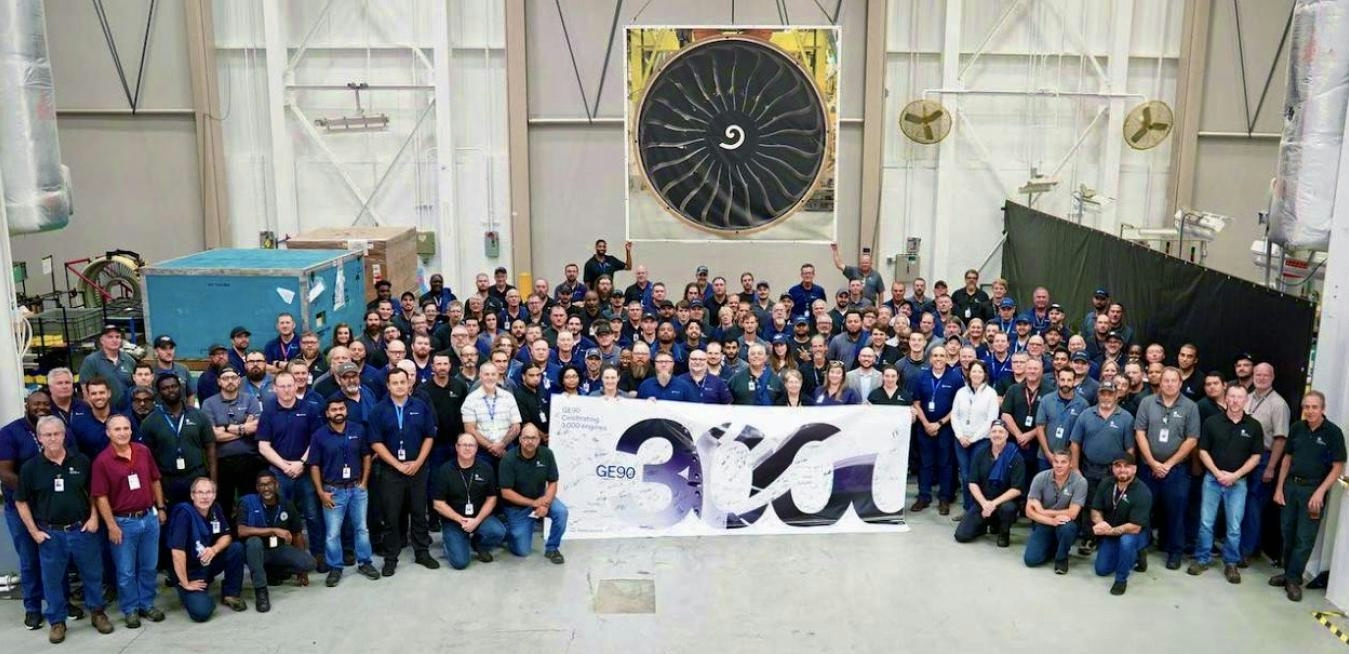
GE Aerospace Introduces 360 Foam Wash Across Global MRO Facilities
GE Aerospace has announced the expansion of its 360 Foam Wash jet engine cleaning system throughout its global maintenance, repair, and overhaul (MRO) network. Initially developed in partnership with Middle Eastern operators to combat the challenges posed by dust and sand exposure, the foam-based cleaning technology is now being deployed more widely as part of the company’s broader efforts to modernize its service offerings.
Advancing Engine Maintenance with Foam Technology
The 360 Foam Wash system replaces conventional water washes by injecting a proprietary foam into the engine’s gas path, effectively removing dust and particulate buildup. According to GE Aerospace, this method reduces exhaust gas temperatures, enhances compressor efficiency, and restores critical performance margins. When applied on-wing, the foam wash can extend engine operating intervals and lower fuel consumption—benefits that are particularly valuable amid ongoing pressures from elevated fuel prices.
All new engines entering GE Aerospace or its partner facilities now undergo foam washing prior to inspection. The cleaner gas path resulting from this process produces higher-quality borescope imagery, which allows for more precise overhaul assessments and reduces the likelihood of rework. This improvement addresses a persistent industry challenge: shortening turnaround times as MRO providers manage increased demand following the pandemic.
Nicole Jenkins, GE Aerospace’s Chief MRO Engineer, emphasized the significance of the rollout, stating, “Expanding 360 Foam Wash across our overhaul network is the next step in advancing engine durability and availability for customers.”
Implementation and Industry Response
The technology has been fully implemented for all GEnx engines in the Middle East, including those operated by carriers such as flydubai. It is also approved for use on the GE90 engine, which powers the Boeing 777, and the CF34 engine commonly found on regional jets. Since initial trials began in 2017, GE Aerospace has completed over 6,500 foam washes on in-service engines, with more than ten airline customers now licensed to perform the procedure independently.
Despite these advancements, the introduction of the 360 Foam Wash system presents certain challenges. Maintenance personnel require comprehensive training to adapt to the new process, and facilities must ensure that the foam wash integrates smoothly with existing workflows. The cleaning cycle itself is longer than traditional methods, typically lasting between four and eight hours per engine, which may affect scheduling and throughput in busy MRO shops. Some industry experts remain cautious about the long-term cost-effectiveness and benefits of the foam wash compared to established cleaning techniques.
Market adoption will also be shaped by broader industry dynamics, including fluctuations in fuel prices that influence airline capacity and maintenance demand. As GE Aerospace expands the use of foam washing, competitors are advancing their own innovations. Rolls-Royce continues to promote its Trent 1000 XE engine, while Pratt & Whitney has introduced the Hot Section Plus upgrade to extend on-wing intervals for its geared turbofan (GTF) engines.
Strategic Context and Future Outlook
The rollout of the 360 Foam Wash system forms part of GE Aerospace’s larger strategy to modernize its MRO operations. This follows a $1 billion investment announced in 2024 and the 2025 opening of the XEOS LEAP overhaul facility in Poland, operated in partnership with Lufthansa Technik. As the company advances this new cleaning technology, the industry will be closely monitoring its operational performance and its impact on the competitive landscape of engine maintenance.

Etihad Airways Suspends Airbus A380 Flights on Key Route

Aditya Birla Group Seeks Approval for Aircraft Leasing in GIFT City

Qatar Airways Highlights Innovation and Connectivity at Arabian Travel Market 2026

Hong Kong's Five-Year Plan Includes Andrew Fan's Aircraft Parts Processing Hub Proposal

ACIA Aero Leasing Delivers ATR72-600 to Air Nostrum

RTX Appoints Jill Albertelli as Head of Pratt & Whitney

TAT Technologies Joins Beyond Aero Hydrogen Aircraft Program

AURAK Study Highlights Barriers to Air Taxi Adoption in Emerging Economies

Xiamen Air Selects Altitude for 787 Maintenance at Heathrow

Etihad and Swissport Extend Global Partnership
