
AIによるインサイトを行動へとつなげる

現在のトレンド
Categories
Textron Aviation Unveils Cessna Citation Ascend with PW545D Engines
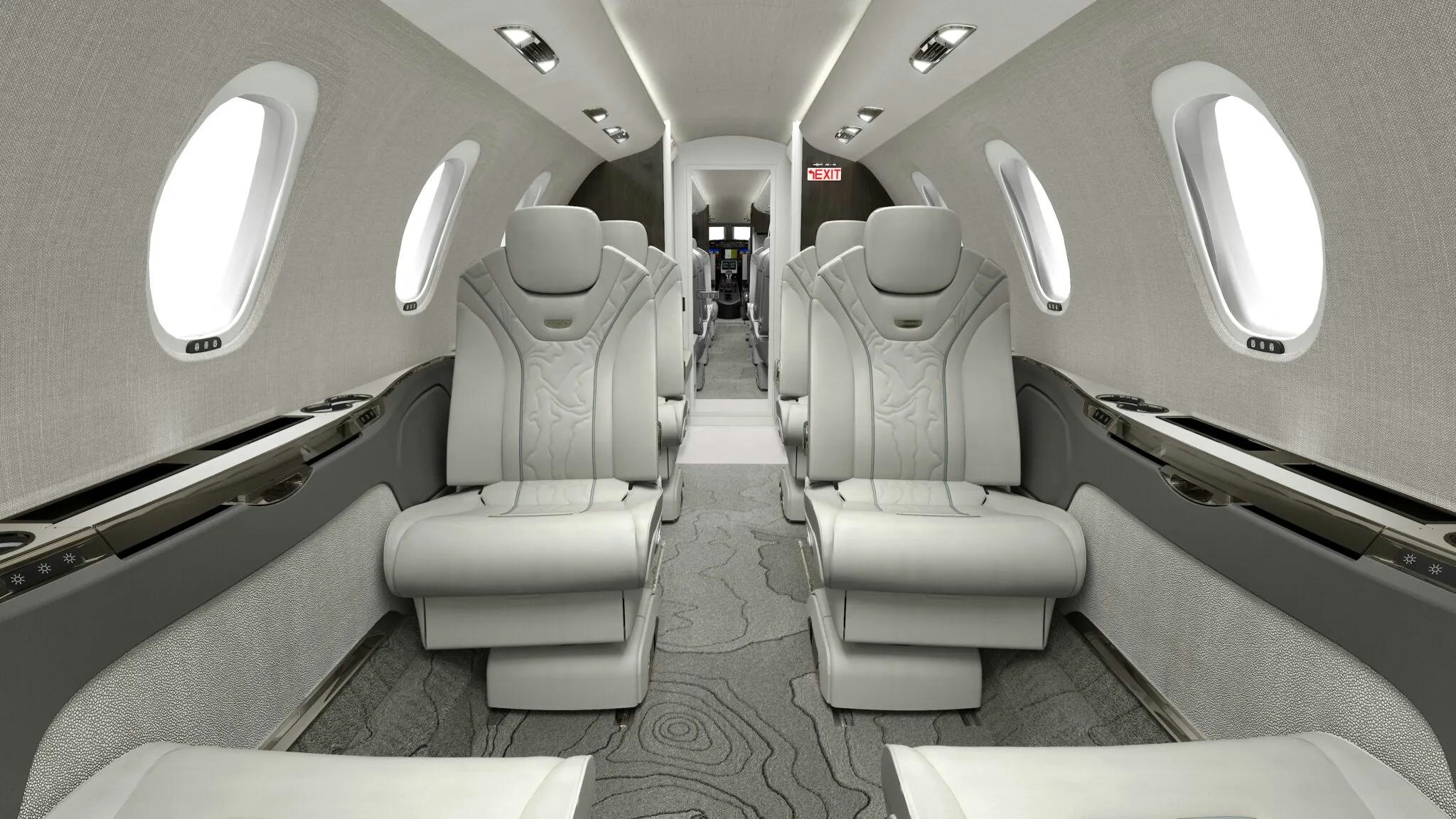
Textron Aviation Launches Cessna Citation Ascend with Advanced PW545D Engines
At the National Business Aviation Association’s annual meeting in Las Vegas, Textron Aviation unveiled its newest business jet, the Cessna Citation Ascend. This latest addition to the Cessna Citation family is powered by twin PW545D engines developed by Pratt & Whitney Canada, a division of RTX (NYSE: RTX). These engines incorporate Full Authority Digital Engine Control (FADEC) technology, which enables auto-throttle functionality aimed at simplifying engine management, enhancing fuel efficiency, and reducing pilot workload.
The PW545D engines feature significant improvements in both compressor and turbine components, resulting in lower fuel consumption and reduced operating temperatures. Scott McElvaine, vice president of Sales and Marketing at Pratt & Whitney Canada, highlighted the enduring partnership between the two companies, noting that their collaboration spans more than six decades. The PW500 engine family, which includes the PW545D, has accumulated approximately 27 million flight hours across seven aircraft models in 71 countries. Pratt & Whitney Canada has produced over 5,300 units of the PW500 series, with nearly 4,900 currently in active service.
Market Positioning and Industry Context
The Citation Ascend is positioned to compete in the midsize business jet segment, a market dominated by established players such as Gulfstream and Bombardier. Textron Aviation is preparing for the aircraft’s entry into service, with FAA certification expected by late 2025. The jet is slated for its official debut at NBAA-BACE 2025, where industry analysts will closely evaluate its advanced features and technological innovations. Textron faces the dual challenge of meeting stringent regulatory requirements and satisfying customer demands for performance and comfort, while also contending with competitive pressures from rival manufacturers who are likely to emphasize their own technological advancements and pricing strategies.
In parallel developments within the aerospace sector, Pratt & Whitney Canada recently secured a 14-year maintenance and support contract with Lufthansa Airlines and Austrian Airlines. This agreement covers 41 APS5000 auxiliary power units (APUs) installed on Boeing 787 Dreamliner fleets, ensuring ongoing maintenance for these critical systems that provide power when the main engines are inactive.
Additionally, Raytheon, another RTX business unit, has commenced initial production of its SharpSight multi-domain surveillance radar system. Designed for high-altitude, real-time imaging and wide-area tracking under diverse weather conditions, this system represents a significant advancement in surveillance technology. Raytheon and Anduril Industries have also completed a static fire test of an advanced solid rocket motor under a contract with the Air Force Research Laboratory Munitions Directorate, reflecting broader efforts to expand rocket motor manufacturing capacity amid increasing global demand.
Meanwhile, Wizz Air continues to address engine-related operational challenges. The airline currently has 38 aircraft grounded due to inspection delays, a reduction from a previous peak of nearly 60. Despite ongoing supply bottlenecks involving Pratt & Whitney engines, Wizz Air aims to restore its entire fleet to service by the end of 2027.

Etihad Airways Suspends Airbus A380 Flights on Key Route

Aditya Birla Group Seeks Approval for Aircraft Leasing in GIFT City

Qatar Airways Highlights Innovation and Connectivity at Arabian Travel Market 2026

Hong Kong's Five-Year Plan Includes Andrew Fan's Aircraft Parts Processing Hub Proposal

ACIA Aero Leasing Delivers ATR72-600 to Air Nostrum

RTX Appoints Jill Albertelli as Head of Pratt & Whitney

TAT Technologies Joins Beyond Aero Hydrogen Aircraft Program

AURAK Study Highlights Barriers to Air Taxi Adoption in Emerging Economies

Xiamen Air Selects Altitude for 787 Maintenance at Heathrow

Etihad and Swissport Extend Global Partnership
