画像

AIを活用して見積もり機会における収益を3倍に増やしましょう!

見積もり自動化の30分間のライブデモにご参加ください。

現在のトレンド

Categories

VertiPorts and Joby Aviation to Demonstrate Electric Air Taxi at NYC East 34th Street Heliport
May 1, 2026By ePlane AI
VertiPorts and Joby Aviation to Demonstrate Electric Air Taxi at NYC East 34th Street Heliport
0
0
Joby Aviation
Electric Air Taxi
Urban Air Mobility

VertiPorts and Joby Aviation to Demonstrate Electric Air Taxi at NYC East 34th Street Heliport

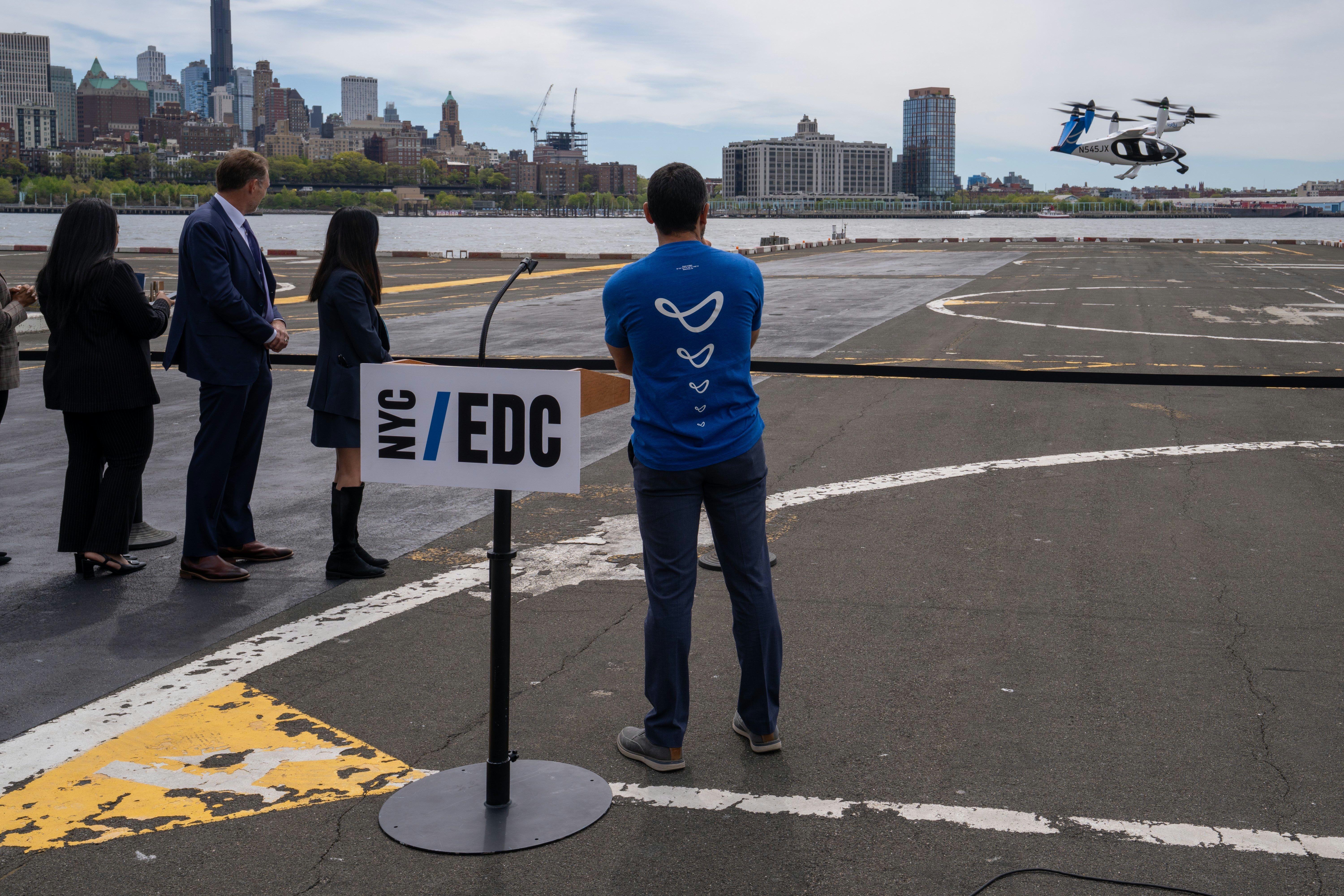
New York, May 1, 2026 – VertiPorts by Atlantic is set to host a live demonstration of Joby Aviation’s all-electric vertical takeoff and landing (eVTOL) aircraft at Manhattan’s East 34th Street Heliport. Scheduled for Friday, May 1, from 12:00 p.m. to 1:30 p.m. ET, the event represents a significant advancement in the development of zero-emission urban air mobility. City officials, transportation leaders, and community members will gather to observe the potential future of urban transportation firsthand.

Showcasing Next-Generation Urban Air Mobility

The demonstration will feature Joby’s eVTOL air taxi arriving and departing from the heliport, showcasing how existing aviation infrastructure can be adapted to accommodate innovative aircraft within dense urban environments. Attendees will have the opportunity to witness live flight operations over Midtown Manhattan and document the aircraft after landing. Key figures participating in the event include Kevin Cox, CEO of VertiPorts by Atlantic; Greg Bowles, Chief Policy Officer of Joby Aviation; and Robert Wiesenthal, CEO of Blade.

This event highlights the growing momentum behind advanced air mobility solutions as cities seek to alleviate congestion and reduce commute times. Market responses have been largely positive, with urban centers expressing strong interest in integrating electric air taxis into their transportation ecosystems.

Challenges and Industry Context

Despite the enthusiasm, the path to commercial deployment remains complex. VertiPorts and Joby Aviation continue to navigate regulatory scrutiny as authorities assess the safety and integration of eVTOL operations within busy urban airspace. Competition in the sector is intensifying, with companies such as Archer Aviation competing for market share and engaging in legal disputes. Notably, the US International Trade Commission has initiated an investigation into Joby Aviation concerning potential import violations, underscoring the competitive pressures in this emerging industry.

Public acceptance also remains a critical factor. While electric air taxis promise reduced emissions and faster travel times, communities are weighing these benefits against concerns related to noise pollution, safety, and the management of urban airspace.

Nonetheless, the New York City demonstration is widely regarded as a pivotal moment in advancing the adoption of electric air taxis and the development of the necessary supporting infrastructure.

About VertiPorts by Atlantic and Atlantic Aviation

VertiPorts by Atlantic, a subsidiary of Atlantic Aviation, specializes in developing and operating vertiport infrastructure to support advanced air mobility. Drawing on Atlantic Aviation’s extensive experience across more than 100 locations in North America, VertiPorts aims to integrate eVTOL operations with a strong focus on safety, customer experience, and sustainability.

Atlantic Aviation operates over 105 fixed base operations (FBOs) throughout North America, offering comprehensive services for business aviation, including fueling, ground handling, and hangar facilities. The company is recognized for its sustainability initiatives, such as expanding electric ground support equipment and preparing infrastructure to accommodate eVTOL aircraft.

For further information, visit VertiPorts by Atlantic and Atlantic Aviation.
More news
NUATE decries surge in wet-leasing, labels it threat to Nigerian jobs

NUATE decries surge in wet-leasing, labels it threat to Nigerian jobs

NUATE Condemns Rising Wet-Leasing Trend as a Threat to Nigerian Employment The National Union of Air Transport Employees (NUATE) has expressed serious concerns over the increasing reliance on wet-leasing arrangements within Nigeria’s aviation sector. Wet-leasing, which involves airlines leasing aircraft complete with foreign crew, maintenance, and insurance (ACMI), is viewed by the union as a significant threat to domestic employment and aviation safety standards. Impact on Nigerian Workforce and Aviation Safety In a statement released on Workers’ Day, NUATE President Ben Nnabue criticized the growing prevalence of wet-leased aircraft operating in Nigerian airspace. He argued that such contracts systematically displace qualified Nigerian pilots, engineers, and cabin crew, effectively bypassing collective labour agreements. Nnabue described the situation as creating a two-tier system where foreign crews operate under foreign regulations, undermining local labour standards. “Wet-leasing is dangerous to Nigerian aviation,” he asserted. “With the calibre of licensed professionals and AOC holders we have, it is indefensible that domestic carriers still wet-lease aircraft under arrangements that violate Nigerian labour standards.” The union further warned that wet-leasing erodes local capacity building and diminishes decades of investment in indigenous expertise. By outsourcing maintenance to foreign teams, Nigerian engineers are deprived of critical hands-on experience with modern aircraft, hindering the development of technical skills within the country. Moreover, many wet-lease contracts involve atypical or self-employment arrangements for crews, resulting in reduced job security and fewer social protections compared to direct employment. Economic Pressures and Industry Response Industry analysts attribute the surge in wet-leasing partly to the financial challenges confronting Nigerian airlines, notably the ongoing jet fuel crisis. While some companies, such as Dangote, have managed to benefit from the situation, many local carriers face soaring operational costs that exacerbate job insecurity. The difficulty in accessing foreign currency for dry leases or outright aircraft purchases has left wet-leasing as the only viable option for numerous operators. By late 2025, over 75% of aircraft operating in Nigeria were reportedly under wet-lease agreements. This growing dominance of foreign wet-lease operators has sparked calls for increased regulatory scrutiny and protective measures. Nigerian airlines and labour groups are advocating for policies that prioritize the employment of local personnel and restrict the use of foreign crews. Market responses may include tighter oversight of foreign carriers and adjustments by international operators to align with evolving local regulations. Government Initiatives and Infrastructure Modernization In response to these challenges, the Federal Executive Council (FEC) approved the establishment of a Nigerian Aircraft Leasing Company in April 2026. This initiative is designed to promote dry leasing, allowing airlines to lease aircraft hulls while employing Nigerian crews and maintenance teams, thereby fostering local job creation and technical development. NUATE also called on the Federal Government to provide a special grant for the overhaul of the Nigerian Airspace Management Agency’s (NAMA) ageing navigational aids and to acquire advanced radar systems from Indra of Spain. President Nnabue emphasized the urgency of modernizing airspace infrastructure, recalling the fire at Murtala Mohammed International Airport that destroyed critical communication systems. He stressed the importance of safeguarding the integrity of Nigeria’s aviation architecture to ensure continued safety and operational efficiency.
TrueNoord Names Arcus as Majority Investor

TrueNoord Names Arcus as Majority Investor

TrueNoord Names Arcus as Majority Investor TrueNoord has announced that Arcus Infrastructure Partners will acquire a majority stake of approximately 74% in the regional aircraft leasing company. Founding investor Freshstream will re-invest to retain the remaining share, marking a significant milestone in TrueNoord’s growth strategy. This transaction is expected to provide the company with stable capital to support future aircraft acquisitions as it continues to expand its global leased fleet, which includes Embraer, ATR, Airbus, and De Havilland Canada jets and turboprops. Strategic Partnership and Growth Prospects Anne-Bart Tieleman, CEO of TrueNoord, welcomed Arcus as a new long-term investor, underscoring the firm’s commitment to supporting the company’s expansion within the 50–150 seat regional aircraft leasing sector. She highlighted that Arcus is investing not only in TrueNoord’s business development expertise and experienced team but also in its dynamic brand. Tieleman also expressed gratitude to Freshstream and previous investors, including BlackRock and Patria, whose foundational support over the past decade has enabled TrueNoord to establish itself as a leading specialist lessor. Michael Allen, Partner and Head of Transport at Arcus, praised TrueNoord’s accomplishments, emphasizing the company’s critical role in providing connectivity across numerous cities and nations worldwide. He noted, “Anne-Bart and team have done a phenomenal job building the TrueNoord platform over almost a decade, and the regional aircraft which they own and lease provide critical connectivity across dozens of cities and nations worldwide, powering economic and social development.” Allen expressed enthusiasm about partnering with TrueNoord for the next phase of its growth. Rayhan Davis, Managing Partner at Freshstream, reflected on TrueNoord’s remarkable growth from a fleet of just three aircraft to one of the largest pure-play regional aircraft lessors globally. He described the company’s trajectory as exceptional and aligned with Freshstream’s strategy of backing entrepreneurial businesses and their management teams. Davis welcomed Arcus’s involvement as a positive step for the company’s continued development. Market Challenges and Industry Implications While the investment signals strong confidence in TrueNoord’s growth potential, the company will continue to face structural challenges within the aviation market. Regions such as Africa present both significant opportunities and obstacles; demand for regional aircraft remains robust, yet access to leasing markets is often constrained. Successfully navigating these complexities will be essential as TrueNoord seeks to leverage its new capital and broaden its global footprint. Market analysts anticipate that Arcus’s majority investment may prompt competitors to reassess their strategies. Some industry players are expected to closely monitor TrueNoord’s expansion and adapt to the evolving dynamics within the regional aircraft leasing sector. This development is likely to reinforce TrueNoord’s market position while potentially catalyzing further shifts across the industry as rivals respond to the company’s enhanced financial backing and growth ambitions.
Lufthansa Marks 100th Anniversary with New Uniforms Designed by BOSS

Lufthansa Marks 100th Anniversary with New Uniforms Designed by BOSS

Lufthansa Celebrates 100 Years with New Uniforms by BOSS Lufthansa is marking its centenary with the introduction of a new uniform collection for its employees, created in partnership with the prestigious fashion house BOSS. Scheduled for rollout in the fourth quarter of 2026, the collection embodies a fusion of tradition, innovation, and sustainability—principles that have defined Lufthansa’s identity throughout its 100-year history. A Modern Take on Tradition and Sustainability The redesigned uniforms retain Lufthansa’s iconic dark blue and yellow color scheme, refreshed through the use of contemporary, eco-friendly materials and adaptable designs. The collection allows employees to mix and match pieces, enhancing comfort and flexibility while promoting resource efficiency. This initiative reflects Lufthansa’s growing commitment to sustainability, a critical focus as the aviation industry faces mounting pressure to mitigate climate change and reduce environmental impact. The development process involved comprehensive consultations with staff from various departments to ensure the uniforms meet practical workplace needs while aligning with the airline’s evolving brand image. Jens Ritter, CEO of Lufthansa Airlines, highlighted the importance of the new attire, stating, “It is our business card and stands for quality, reliability, and the unmistakable style that our passengers experience on every journey with Lufthansa.” Challenges Amidst Celebration The centennial milestone and uniform launch coincide with a turbulent period for Lufthansa. Ongoing labor strikes by pilots and flight attendants have caused significant operational disruptions, including widespread flight cancellations and delays. These challenges have strained relations between management and employees and have affected passenger perceptions. While some customers appreciate the refreshed look and renewed emphasis on employee experience, others remain frustrated by service interruptions. Market responses to the new uniforms have been mixed, mirroring broader uncertainties within the aviation sector. Lufthansa’s recent decision to reduce 20,000 flights and its continued efforts to secure sustainable aviation fuel underscore the operational and environmental pressures confronting the airline. Furthermore, the centenary celebrations have been overshadowed by fuel shortages and increasing legal challenges, casting uncertainty over Lufthansa’s future growth trajectory. Setting New Standards in Aviation Branding Despite these obstacles, the collaboration with BOSS signals Lufthansa’s ambition to redefine standards in aviation fashion and corporate identity. By prioritizing premium design and sustainability, the airline aims to boost employee morale and enhance customer engagement, reinforcing its status as a leading global carrier. As the aviation industry evolves, Lufthansa’s innovative approach to uniform design may serve as a model for how airlines worldwide integrate style, sustainability, and operational resilience into their brand strategies.
HAL Appoints New Leadership to Guide Aviation Strategy

HAL Appoints New Leadership to Guide Aviation Strategy

HAL Appoints New Leadership to Guide Aviation Strategy Hindustan Aeronautics Limited (HAL), India’s premier government-owned aerospace enterprise, has appointed Ravi K as its new Chairman and Managing Director, effective from Friday. He succeeds D K Sunil, who retired on April 30. Ravi brings over three decades of expertise spanning aerospace, manufacturing, and electronics. Prior to this appointment, he served as Director (Operations) at HAL, where he was instrumental in enhancing the company’s operational capabilities. Navigating a Changing Aviation Landscape Ravi’s leadership begins amid a period of significant transformation and intensified competition within the global aviation sector. Airlines and aerospace companies worldwide are contending with rising fuel costs and market uncertainties, challenges underscored recently by leadership shifts at AirAsia X and network expansions by Malaysia Airlines. Industry analysts anticipate that HAL’s strategic decisions will come under increased scrutiny as competitors recalibrate their approaches to safeguard market share in this evolving environment. Vision and Strategic Priorities In outlining his vision for HAL, Ravi emphasized the company’s ambition to emerge as a globally competitive force in aerospace and defense. Central to this vision are innovation, the integration of artificial intelligence, and a commitment to operational excellence. His prior tenure as Executive Director of the LCA Tejas Division saw him play a key role in securing major contracts with the Indian Armed Forces. Under his stewardship, HAL has bolstered indigenous capabilities within the LCA Tejas program and expanded into civil manufacturing alongside maintenance, repair, and overhaul (MRO) services, thereby diversifying its revenue streams. Looking forward, Ravi intends to strengthen HAL’s production capacity and cultivate deeper partnerships with private sector entities to enhance the company’s market presence. These strategic initiatives are considered vital for HAL to remain agile and competitive amid the dynamic conditions characterizing the aviation industry. As HAL embarks on this new chapter under Ravi’s guidance, the company confronts both significant opportunities and challenges in sustaining its competitive advantage and advancing India’s aerospace and defense ambitions.
Airbus Aims to Align Production and Deliveries Ahead of Second Half

Airbus Aims to Align Production and Deliveries Ahead of Second Half

Airbus Aims to Align Production and Deliveries Ahead of Second Half Challenges in Production and Delivery Schedules Airbus is striving to realign its aircraft production and delivery schedules by the end of June, following recent disruptions caused by quality issues and administrative delays. The European aerospace leader has encountered significant obstacles, including an 11% decline in first-quarter commercial aircraft revenues and an 84% drop in adjusted earnings. Despite these setbacks, Airbus remains committed to its full-year target of delivering 870 aircraft. The primary challenge originated late last year when deviations in the thickness of forward fuselage panels were identified on A320neo-family jets, raising concerns about structural integrity. Chief Executive Guillaume Faury described the corrective process—replacing the affected panels—as “quite a bit of work,” but emphasized that progress is steady. He anticipates the issue will be “almost completely behind us” by the end of the first half. Faury explained that the resources required to replace the panels are substantial, necessitating a careful balance between expediting deliveries and managing repair workloads. “We’re trying to find a good balance between delivering to customers as quickly as possible and managing resources so we can repair multiple aircraft simultaneously,” he said. Impact of Administrative Delays and Inventory Build-Up In addition to the panel issue, an administrative delay hindered the transfer of nearly 20 aircraft to China, causing a “desynchronisation” between production and deliveries, according to Faury. He noted that China represents a significant market, and the delay of almost 20 aircraft in a single quarter, particularly the first, had a notable impact. Airbus’s financial disclosures revealed that inventories increased by €5.2 billion in the first quarter, reaching €46.9 billion, largely due to the hold-up in China. Deliveries to the Chinese market have since resumed. Faury highlighted that the inventory build-up reflects ongoing production ramp-up efforts. However, he acknowledged that the delivery schedule remains dependent on engine shipments from Pratt & Whitney. The number of engines Pratt & Whitney is set to deliver this year remains “frozen and stable,” forming the basis for Airbus’s annual delivery target. While disagreements persist between Airbus and Pratt & Whitney in other areas, the engine delivery count for the year is not among them. Outlook for the Coming Months Although Airbus is experiencing another year of backloaded deliveries, Faury expressed confidence that resolving the Chinese administrative issues and advancing panel repairs will help restore balance. “We believe we should be reasonably back to where we should have been by the end of the first half,” he stated. He added that undelivered aircraft from the first quarter will be delivered in the second quarter, in addition to the planned deliveries for that period. Airbus continues to monitor geopolitical developments in the Middle East for any potential operational impacts and remains focused on achieving targeted production rates across its aircraft models. Barring unforeseen disruptions, the company expects to have the “vast majority” of affected aircraft delivered and production and deliveries resynchronized by the end of June.
Safe skies and smart systems: The DIALOG vision for human-AI teaming

Safe skies and smart systems: The DIALOG vision for human-AI teaming

Safe Skies and Smart Systems: The DIALOG Vision for Human-AI Teaming As global air traffic continues to increase and the aviation industry faces growing sustainability challenges, technological innovation has become indispensable. Artificial intelligence (AI) and automation offer the potential to optimize flight routes, reduce fuel consumption, and enhance airspace capacity. However, in the safety-critical domain of Air Traffic Management (ATM), the integration of AI extends beyond technical considerations; it fundamentally involves fostering human trust, ensuring safety, and enabling effective collaboration between humans and machines. The EU-funded DIALOG project addresses these challenges by uniting leading research institutions, academic partners, and Air Navigation Service Providers, including SINTEF, Deep Blue, DSNA, ONERA, Radboud University, and DFS. Together, they are developing the Teamwork Assistant, an AI-driven support system designed to augment rather than replace human air traffic controllers. Human-AI Teaming: A Human-Centered Approach Unlike traditional automation systems that often require humans to conform to inflexible algorithms—potentially diminishing situational awareness and increasing cognitive load—DIALOG adopts a human-centered, operationally grounded methodology. The project aims to tailor AI capabilities to complement human strengths and limitations, thereby preserving the critical decision-making skills of air traffic controllers. Central to this approach are principles of transparency and reliability, ensuring that controllers can comprehend the AI’s actions, reasoning, and objectives. This clarity fosters trust and facilitates efficient teamwork. Human agency and accountability remain paramount; operators retain ultimate control and the ability to override or adjust AI recommendations, maintaining responsibility for final decisions. Furthermore, the AI system is designed to develop shared mental models with controllers, adapting to their understanding of the airspace and providing contextually relevant support rather than imposing machine-centric workflows. Validation and Early Outcomes In March 2026, the DIALOG Teamwork Assistant underwent rigorous validation involving licensed air traffic controllers operating within realistic simulation environments. Led by Deep Blue’s human factors specialists, these trials evaluated the system’s technical performance, its impact on cognitive workload, and collected direct feedback from end-users. Preliminary findings have been encouraging. Controllers reported that the Teamwork Assistant helped sustain their focus, alleviated mental fatigue during repetitive tasks, and enhanced their confidence when managing complex decision-making scenarios. Addressing Broader Challenges in AI Integration Despite these promising developments, the integration of AI into ATM raises broader concerns. Balancing human involvement with increasingly autonomous AI systems presents complex questions regarding accountability and safety. The sector must also confront risks such as cyber threats, economic disruption, and the concentration of power within technological infrastructures. Market dynamics are evolving rapidly in response. Investment in AI-driven aviation technologies is accelerating, prompting the creation of new economic and social frameworks to manage this transition. Concurrently, competitors are advancing smart systems and augmented reality (AR) technologies. Companies such as Apple, Snap, Warby Parker, and Google are pioneering AI-powered smart glasses and AR features, reflecting a wider trend toward intelligent, context-aware support tools across multiple industries. Looking Ahead The DIALOG project embodies a balanced vision for the future of aviation, one that harnesses AI’s transformative potential while maintaining human expertise and oversight at its core. As the aviation sector continues to evolve, ensuring safe, accountable, and collaborative human-AI teaming will be essential—not only for the industry itself but also for the broader adoption of smart systems throughout society.
China Southern Airlines Places $21 Billion Order for Airbus Jets

China Southern Airlines Places $21 Billion Order for Airbus Jets

China Southern Airlines Places $21 Billion Order for Airbus Jets China Southern Airlines Co. Ltd. and its subsidiary, Xiamen Airlines Co. Ltd., have announced a significant order for 137 Airbus A320neo family aircraft, with a catalog value of approximately $21.4 billion. According to a stock exchange filing released on Wednesday, the agreement allocates 102 aircraft to China Southern and 35 to Xiamen Airlines. Deliveries are scheduled to be made in batches between 2028 and 2032. Airbus has reportedly offered substantial price concessions, resulting in a transaction value below the listed catalog price. Strategic Fleet Expansion Amid Financial Challenges This major procurement comes at a time when China Southern is navigating mixed financial results. Although the airline reported revenue growth in 2025, it simultaneously recorded a net loss of CNY 1.95 billion, underscoring persistent profitability challenges. The decision to expand the fleet despite these financial pressures reflects a strategic commitment to modernization and capacity growth. This move aligns with a broader industry trend, as other leading Chinese carriers, including China Eastern and Air China, have recently placed large orders for Airbus A320neo-family jets. Collectively, these orders signal a concerted shift among Chinese airlines toward expanding their narrowbody fleets with Airbus aircraft. Market Impact and Industry Context The order contributes to Airbus’s strengthening foothold in the Chinese aviation market, where domestic carriers are increasingly favoring the A320neo family for fleet renewal and expansion. Airbus reported robust first-quarter order volumes, driven in part by demand from Chinese airlines. However, the manufacturer continues to face challenges, including a decline in A320neo deliveries due to ongoing supply chain and production constraints affecting the broader aerospace industry. The latest commitment from China Southern and Xiamen Airlines underscores the sustained confidence in Airbus’s narrowbody aircraft as a cornerstone of future growth in the region.
United Airlines' New Polaris Boeing 787-9 Grounded Twice in Five Days

United Airlines' New Polaris Boeing 787-9 Grounded Twice in Five Days

United Airlines’ New Polaris Boeing 787-9 Grounded Twice Within First Week of Service United Airlines’ latest Boeing 787-9 Dreamliner, featuring the carrier’s new Polaris premium cabin, has encountered significant operational challenges shortly after entering international service. The aircraft, tail number N61101, was grounded twice within its first five days, disrupting schedules and raising concerns about passenger experience and the airline’s standing in the competitive long-haul market. Early Technical Issues and Operational Disruptions The initial incident occurred last week when the Dreamliner was forced to return to Singapore Changi Airport just 30 minutes after departure due to a strong electrical odor detected by both crew and passengers. After circling in a holding pattern for two hours, the aircraft landed safely, but maintenance teams were unable to resolve the issue before the crew reached their maximum duty limits. Consequently, the aircraft was grounded overnight, and affected passengers were rebooked on alternative flights. The jet was then ferried back to San Francisco without passengers. Following preliminary troubleshooting in San Francisco, the aircraft was flown to Houston for more extensive maintenance and inspections focused on the air conditioning system, suspected to be the source of the electrical fumes. Flight tracking data revealed a two-and-a-half-hour test flight around George Bush Intercontinental Airport; however, the problem persisted. Industry sources reported an additional mechanical issue arose before a subsequent departure, further delaying the aircraft’s return to service. Significance of the Aircraft and Market Implications N61101 serves as the flagship of United’s new 78L subfleet and showcases a 222-seat configuration designed to enhance passenger comfort. The aircraft introduces the Polaris Studio, featuring eight spacious front-row suites and 56 business class seats equipped with sliding privacy doors. The Premium Plus cabin offers 35 seats with upgraded amenities, while economy class is limited to 123 seats, making this one of the least-dense 787-9 configurations currently in operation. These operational setbacks come at a critical juncture as United aims to establish this Dreamliner as the centerpiece of its premium long-haul routes to Singapore and London. The incidents have attracted scrutiny from travel agencies and passengers alike, some of whom may consider alternative carriers. Competitors such as Delta Air Lines and American Airlines, both offering advanced business class products, stand to benefit from United’s difficulties in attracting premium travelers. Despite these challenges, the Boeing 787 remains a key asset for airlines worldwide. Ethiopian Airlines recently announced plans to expand its 787 fleet, and Austrian Airlines is contemplating increasing its long-haul 787 operations, reflecting sustained industry confidence in the aircraft model. United Airlines has affirmed its commitment to resolving the technical issues promptly and returning the aircraft to full operational status. Nonetheless, the troubled debut of its new Polaris Dreamliner underscores the operational and reputational risks airlines face when launching flagship products in a highly competitive environment.
China Develops Indigenous Aircraft Engine Signaling Strategic Ambitions

China Develops Indigenous Aircraft Engine Signaling Strategic Ambitions

China Advances Indigenous Aircraft Engine Development The Aero Engine Corporation of China (AECC) is progressing toward type certification for its newly developed AEP100 turboprop engine, with approval anticipated by 2027. This engine is designed to power the W5000, a twin-engine cargo drone capable of carrying a five-ton payload over a range of 2,600 kilometers. The AEP100 represents a significant milestone in China’s pursuit of technological self-reliance within the aviation sector. Upon its inaugural flight, the W5000 is expected to become the world’s largest transport drone, highlighting China’s strategic objective to reduce dependence on foreign aerospace technologies. China’s general aviation industry currently remains far behind that of the United States, which operates over 275,000 aircraft compared to only a few thousand in China. The development of the AEP100 is therefore not merely an engineering achievement but a deliberate effort to narrow this gap and assert greater sovereignty over critical aviation technologies. The engine, developed by AE General Aviation Power Tech—a subsidiary of AECC—has entered the final stages of type certification with the Civil Aviation Administration of China. This process is advancing swiftly, aided by the AEP100’s shared core design with the AES100 turboshaft engine, which has streamlined validation procedures. The W5000 Drone and Strategic Implications The W5000 cargo drone, created by the Chinese startup Air White Whale, features a maximum takeoff weight of 10.8 tons and an internal cargo volume exceeding 65 cubic meters, dimensions that surpass many manned transport aircraft. Notably, the drone operates autonomously without the need for an onboard pilot. According to Yuan An, the project’s general manager, the AEP100 engine surpasses foreign competitors in terms of power, stability, and efficiency. Over the past year, the engine has undergone rigorous ground testing within W5000 prototypes, consistently meeting or exceeding performance benchmarks. Type certification remains a critical regulatory requirement, ensuring compliance with safety, noise, and emissions standards. The W5000’s anticipated maiden flight will mark a pivotal moment not only for the drone itself but also for the AEP100 engine, positioning China at the forefront of unmanned heavy cargo aviation. China’s push for indigenous engine development unfolds amid escalating geopolitical tensions, particularly with the United States. The Asia-Pacific region continues to be a central arena for strategic competition, and China’s advancements in aerospace technology could significantly influence global industry dynamics. U.S. manufacturers such as Boeing may encounter heightened scrutiny and potential delays in international partnerships, as Washington’s foreign policy increasingly shapes market access and supply chains. In response, global competitors are expected to accelerate their own engine development initiatives and pursue new alliances to counterbalance China’s growing capabilities. As China approaches certification of the AEP100 and the launch of the W5000, it is not only showcasing its technological capabilities but also signaling a broader intent to alter the balance of power within the global aviation industry.
Analyzing Key Factors and Their Hierarchy in Green Supply Chain Management for China’s Aerospace Manufacturing

Analyzing Key Factors and Their Hierarchy in Green Supply Chain Management for China’s Aerospace Manufacturing

Analyzing Key Factors and Their Hierarchy in Green Supply Chain Management for China’s Aerospace Manufacturing This study offers a systematic examination of the critical factors influencing the adoption of Green Supply Chain Management (GSCM) within China’s aerospace manufacturing sector. It further explores the interrelationships among these factors, providing a hierarchical framework to better understand their relative importance. The research is grounded in data collected through an extensive expert questionnaire survey, designed to capture the complexity and evolving nature of the industry. Expert Selection and Methodology To ensure comprehensive and authoritative insights, the study engaged 150 experts representing diverse segments of the aerospace GSCM value chain. These experts were carefully selected based on their professional experience and relevance to the field. The cohort included mid-to-senior managers from aerospace manufacturing enterprises, such as aircraft and engine producers and key system and component suppliers, each averaging 15 years of direct involvement in green transformation or supply chain management initiatives. Academics and researchers from leading universities and specialized aerospace research centers contributed their expertise, bringing over a decade of experience in sustainable operations and industrial policy related to GSCM. The panel also incorporated consumer representatives, including frequent business travelers and environmentally conscious individuals with a strong interest in sustainability, all holding at least a bachelor’s degree. Executives and technical specialists from recycling and remanufacturing enterprises provided insights into aerospace material recycling, component remanufacturing, and waste management practices. Additionally, government officials and policy researchers from national and local regulatory bodies—such as the Ministries of Industry and Information Technology, Ecology and Environment, Civil Aviation Administration, and the national defense science and technology sector—offered perspectives on industry planning, environmental regulation, and green manufacturing promotion. All participants were vetted through industry recommendations, academic networks, or professional associations and confirmed their familiarity with aerospace manufacturing and GSCM concepts prior to their involvement. Questionnaire Design and Analytical Framework The core instrument of the study was a 14 by 14 influence relationship matrix, focusing on 14 preliminary GSCM factors specific to aerospace manufacturing. Experts independently evaluated the degree of influence each factor exerted on the others using a five-point Likert scale, ranging from zero (no influence) to four (very strong influence). This approach allowed for a nuanced assessment of the interdependencies among factors, reflecting the experts’ professional judgment and experience. The questionnaire was administered through a secure online platform to ensure data integrity and confidentiality. Industry Context and External Influences The study situates its analysis within the broader context of China’s aerospace manufacturing environment, which is characterized by significant challenges and dynamic shifts. Government policy changes, economic fluctuations, and geopolitical uncertainties all play a critical role in shaping the sector’s strategic priorities and operational capabilities. These external factors can affect the implementation and effectiveness of GSCM initiatives, influencing how companies prioritize sustainability within their supply chains. Market dynamics, including variations in consumer confidence and demand for capital goods, further impact supply chain strategies. Competitors respond by adapting production methods and logistics to maintain market position, adding layers of complexity to green supply chain management. Moreover, China’s strategic role as a global supply chain hub and its efforts to deepen integration into international industrial networks introduce additional variables that affect GSCM practices. By integrating expert-driven analysis with an understanding of these external pressures, the study provides a robust foundation for advancing green supply chain management in China’s aerospace manufacturing sector, highlighting the need for a hierarchical and context-sensitive approach to factor prioritization and implementation.
line