
AIによるインサイトを行動へとつなげる

現在のトレンド
Categories
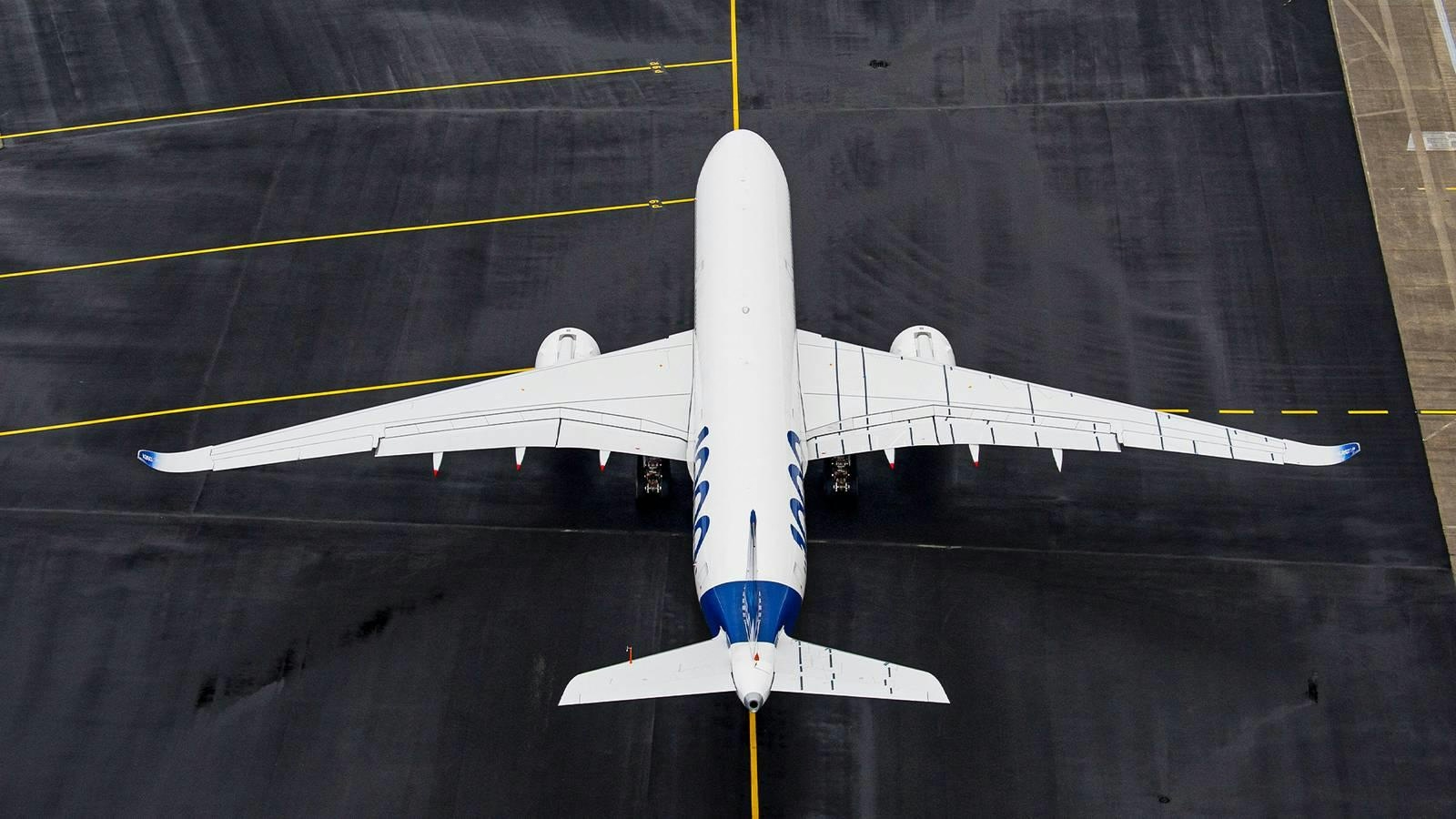
What Sets the Airbus A350’s Wing Design Apart from Other Widebodies
What Sets the Airbus A350’s Wing Design Apart from Other Widebodies
When the Airbus A350 entered commercial service, it quickly distinguished itself among long-haul aircraft. While passengers often note its quieter cabin and larger windows, aviation experts emphasize a less visible but critical innovation: the aircraft’s unique wing design. Characterized by its length, slenderness, and remarkable flexibility, the A350’s wings can bend several meters upward during flight. This intentional feature plays a central role in enhancing the aircraft’s overall performance.
A Clean-Sheet Approach to Wing Design
The A350 represents a departure from Airbus’s previous models, as it was developed from a clean sheet rather than as a derivative of an existing aircraft. This approach granted engineers the opportunity to integrate the latest advances in aerodynamics and materials science from the outset. The goal was to maximize efficiency, reduce fuel consumption, and support ultra-long-range operations without the constraints of legacy designs.
Although aircraft wings may appear similar at a glance, technological progress has significantly transformed their design over the decades. The A350’s wing, with its pronounced sweep and adaptive trailing edge, exemplifies this evolution. Much like a bird’s wing, the trailing edge can adjust dynamically during flight, optimizing the aerodynamic profile for varying phases and conditions. This adaptability reduces drag, improves fuel efficiency, and enhances performance on extended routes, underscoring Airbus’s decision to develop an entirely new wing rather than modify an older concept.
Size, Shape, and Advanced Materials
The A350’s wings are immediately recognizable for their exceptional length and slender shape, tailored specifically to meet the demands of long-haul travel. With a maximum range of approximately 9,000 nautical miles, the aircraft enables airlines to connect distant city pairs such as New York to Singapore or Auckland to Doha. Achieving this range efficiently depends heavily on the wing’s ability to balance lift, weight, and aerodynamic efficiency.
A key factor in this performance is the extensive use of advanced materials. The wings are constructed predominantly from carbon-fiber-reinforced composites, which provide greater strength and reduced weight compared to traditional aluminum. This material choice not only lowers the overall aircraft weight but also allows for the wing’s signature flexibility, further enhancing aerodynamic efficiency and reducing fuel consumption.
Industry Impact and Future Developments
The innovative wing design of the A350 has had a notable influence on the widebody aircraft market. Airbus is currently exploring a stretched variant of the A350-1000 to meet anticipated demand for larger aircraft, while simultaneously working to increase production rates across the A350 family. These initiatives are unfolding amid ongoing supply chain challenges that could impact delivery schedules and market dynamics.
At the same time, competitors such as Boeing are advancing their own widebody designs to maintain competitiveness in response to the A350’s technological advancements. How Airbus manages its production and supply chain issues will be closely monitored by airlines and industry analysts, as these factors may significantly influence customer decisions and the future trajectory of long-haul aviation.
The Airbus A350’s wing design stands out not only for its distinctive appearance but also for the advanced engineering and materials that underpin its efficiency and performance, establishing a new benchmark for modern widebody aircraft.
BBN Airlines Becomes IATA Member
FAA Orders Breeze Airways and Delta to Inspect Airbus A220 Fuel Hoses

Philippine Aviation Navigates Expansion and Costs Amid Fuel Price Volatility
On April 26, 1971, an SR-71 Blackbird Flew Over 15,000 Miles in 10.5 Hours, Limited by Liquid Nitrogen Supply
Boeing 747 Airframe Valued Less Than One Landing Gear Component

The Rear-Fan Engine Behind the Crash of the World's Fastest Airliner
Morphing Aircraft Skin Improves Safety and Fuel Efficiency

BRICS Nations Commit to Enhanced Cooperation on Sustainable Transport and Green Aviation
CFM Turbine Upgrade Doubles LEAP Engine Service Life in Harsh Conditions
CFM Upgrade Doubles LEAP Engine Lifespan in Harsh Climates
