
Orchestrate AI insights into action

Trending
Categories
Ahmedabad Plane Crash Investigation Finds Both Engines Shut Down Simultaneously
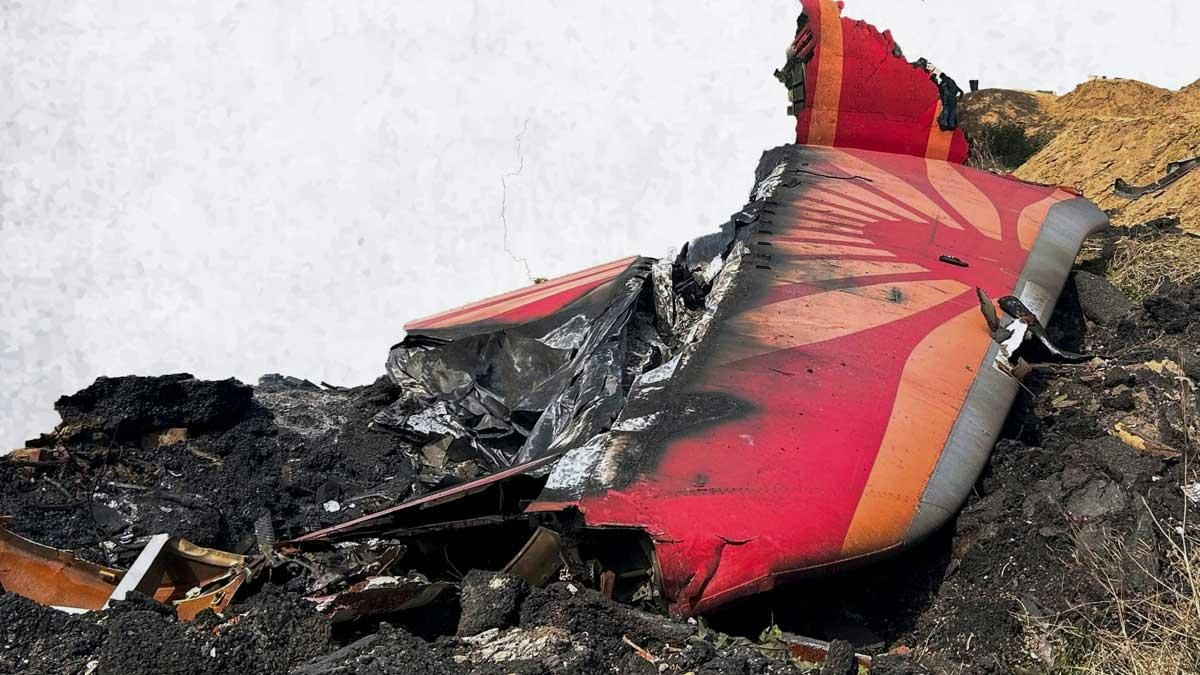
Ahmedabad Plane Crash Investigation Reveals Simultaneous Engine Shutdown
A preliminary investigation into the Air India Boeing 787 crash near Ahmedabad has revealed that both engines shut down simultaneously due to an unexplained fuel supply cutoff. The tragic accident, which occurred on June 12 shortly after takeoff, resulted in the deaths of 241 passengers and crew. According to the Air Accidents Investigation Bureau (AAIB) report, the aircraft’s engine fuel control switches were moved from the “Run” to “Off” position within a single second, causing a rapid loss of thrust just moments before the crash.
Details from the Cockpit Voice Recorder and Flight Circumstances
Cockpit voice recordings captured a brief exchange between the pilots immediately following the fuel cutoff. One pilot questioned the other about the sudden fuel shutdown, which the second pilot denied initiating. At the time, the second pilot was flying the aircraft while the captain observed. After the switches were returned to their normal position, the engines initiated an automatic relight process. Although one engine successfully restarted, it was insufficient to prevent the aircraft’s deceleration and subsequent crash near residential buildings adjacent to Ahmedabad Medical College.
The AAIB report has not yet determined the reason behind the fuel switches being moved to the “Off” position. Investigators are exploring all possibilities, including the potential for sabotage. Both pilots, based in Mumbai, had arrived in Ahmedabad the day before the flight and were reported to have received adequate rest. Pre-flight checks confirmed that the crew was fit to operate the aircraft.
Impact and Ongoing Investigation
The flight was carrying 242 people, including 169 Indian citizens, 53 British nationals, seven Portuguese, and one Canadian. Only one passenger, British citizen Ramesh Vishwashkumar, survived the crash. Among the deceased was Vijay Rupani, the former two-time chief minister of Gujarat. The crash also caused injuries to at least 50 students from Ahmedabad Medical College, with two in critical condition.
Following the accident, the AAIB completed recovery operations at the crash site, securing the aircraft wreckage and both engines at the airport for further examination. Components identified as significant for the investigation have been preserved. Fuel samples taken from the aircraft’s refueling tanks were found to be satisfactory, effectively ruling out fuel contamination as an immediate cause, although this had been considered earlier by experts.
The AAIB’s preliminary findings highlight the unusual and abrupt nature of the dual engine shutdown. Investigators continue to examine both technical factors and potential criminal motives as they seek to determine the full circumstances behind this devastating tragedy.

Etihad Airways Suspends Airbus A380 Flights on Key Route

Aditya Birla Group Seeks Approval for Aircraft Leasing in GIFT City

Qatar Airways Highlights Innovation and Connectivity at Arabian Travel Market 2026

Hong Kong's Five-Year Plan Includes Andrew Fan's Aircraft Parts Processing Hub Proposal

ACIA Aero Leasing Delivers ATR72-600 to Air Nostrum

RTX Appoints Jill Albertelli as Head of Pratt & Whitney

TAT Technologies Joins Beyond Aero Hydrogen Aircraft Program

AURAK Study Highlights Barriers to Air Taxi Adoption in Emerging Economies

Xiamen Air Selects Altitude for 787 Maintenance at Heathrow

Etihad and Swissport Extend Global Partnership
