
Orchestrate AI insights into action

Trending
Categories
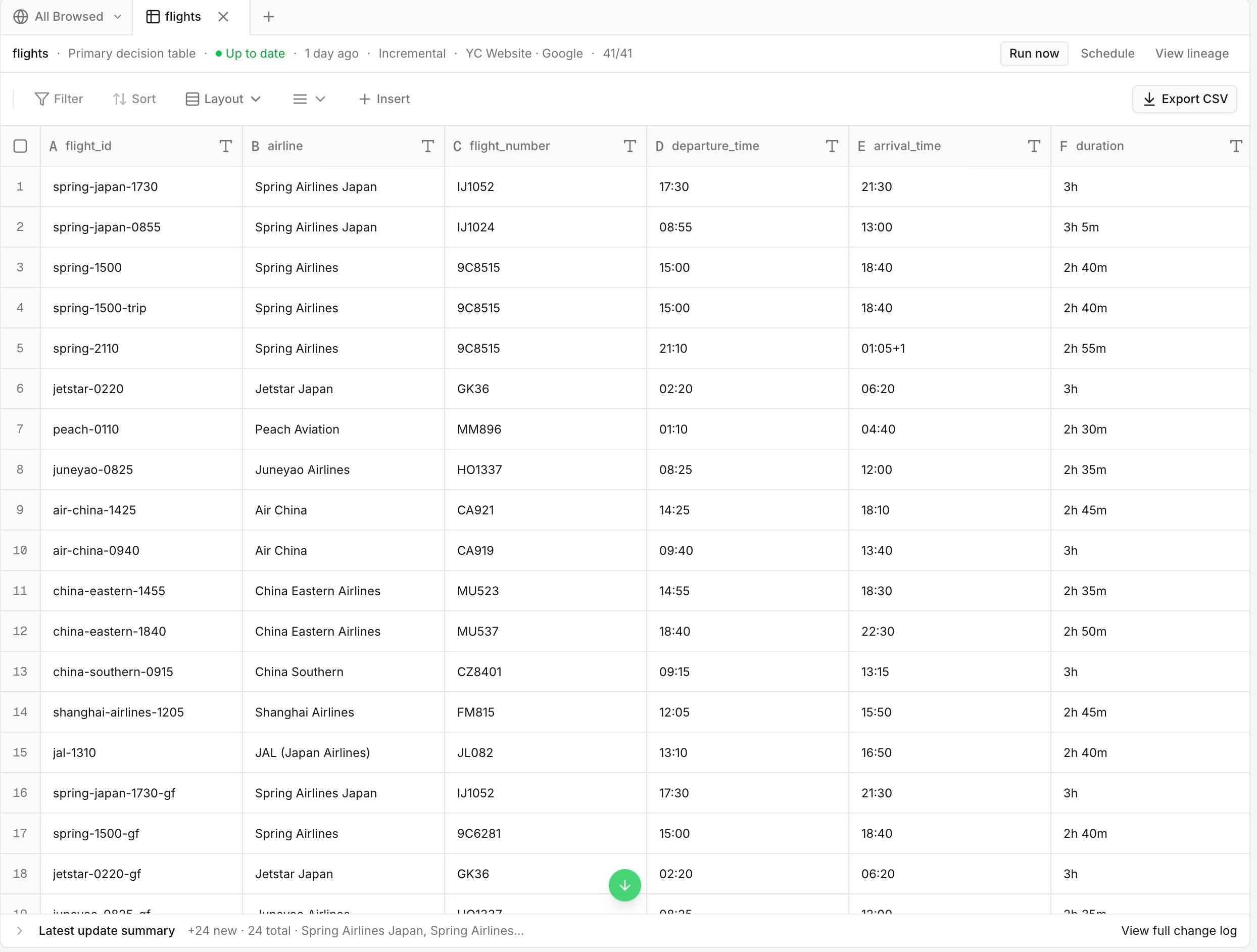
AI Struggles to Interpret Airline Fare Data
AI Struggles to Interpret Airline Fare Data
Artificial intelligence is significantly increasing traffic to U.S. travel websites, with visitors arriving through AI-driven sources demonstrating longer engagement, lower bounce rates, and deeper interaction, according to new research from Adobe released on Wednesday. The study, which examined over eight million direct online transactions, revealed that AI-generated traffic to travel sites surged by 194% year over year in May. These visitors spent 70% more time per session, bounced 41% less frequently, and showed 21% higher engagement compared to users from non-AI sources.
Challenges in Fare Data Interpretation
Despite these promising engagement metrics, Adobe’s findings also expose a critical technical challenge: AI systems frequently struggle to accurately interpret the complex and nuanced data associated with airline fares, a vital component for successful booking processes. This difficulty was emphasized by travel technology leaders at the recent Skift Data + AI Summit, who identified both operational and organizational barriers that limit AI’s effectiveness in fare management. They stressed the importance of clear data ownership, robust technological infrastructure, and fostering trust among customers and employees as essential measures to overcome these challenges.
Industry Response and Market Skepticism
Market reactions reveal a cautious skepticism regarding AI’s capacity to fulfill its promises of enhanced efficiency and improved fare management. In response, some industry players are intensifying investments in data infrastructure to address these limitations. For instance, Air Canada has taken proactive steps to reinforce its systems following notable incidents, including a chatbot error that led to a tribunal ordering compensation to a customer. Such episodes highlight the risks inherent when AI misinterprets fare rules or booking conditions, underscoring the need for vigilance.
As AI continues to transform how travelers discover and engage with travel brands, the industry confronts a dual challenge: harnessing AI to boost user engagement while ensuring these systems can reliably decode the intricate data that underpins airline pricing. Experts suggest that progress will depend not only on technological innovation but also on organizational clarity and a renewed commitment to building trust across the travel ecosystem.

Etihad Airways Suspends Airbus A380 Flights on Key Route

Aditya Birla Group Seeks Approval for Aircraft Leasing in GIFT City

Qatar Airways Highlights Innovation and Connectivity at Arabian Travel Market 2026

Hong Kong's Five-Year Plan Includes Andrew Fan's Aircraft Parts Processing Hub Proposal

ACIA Aero Leasing Delivers ATR72-600 to Air Nostrum

RTX Appoints Jill Albertelli as Head of Pratt & Whitney

TAT Technologies Joins Beyond Aero Hydrogen Aircraft Program

AURAK Study Highlights Barriers to Air Taxi Adoption in Emerging Economies

Xiamen Air Selects Altitude for 787 Maintenance at Heathrow

Etihad and Swissport Extend Global Partnership
