
Orchestrate AI insights into action

Trending
Categories
Air Astana Order Boosts Airbus A320neo Backlog
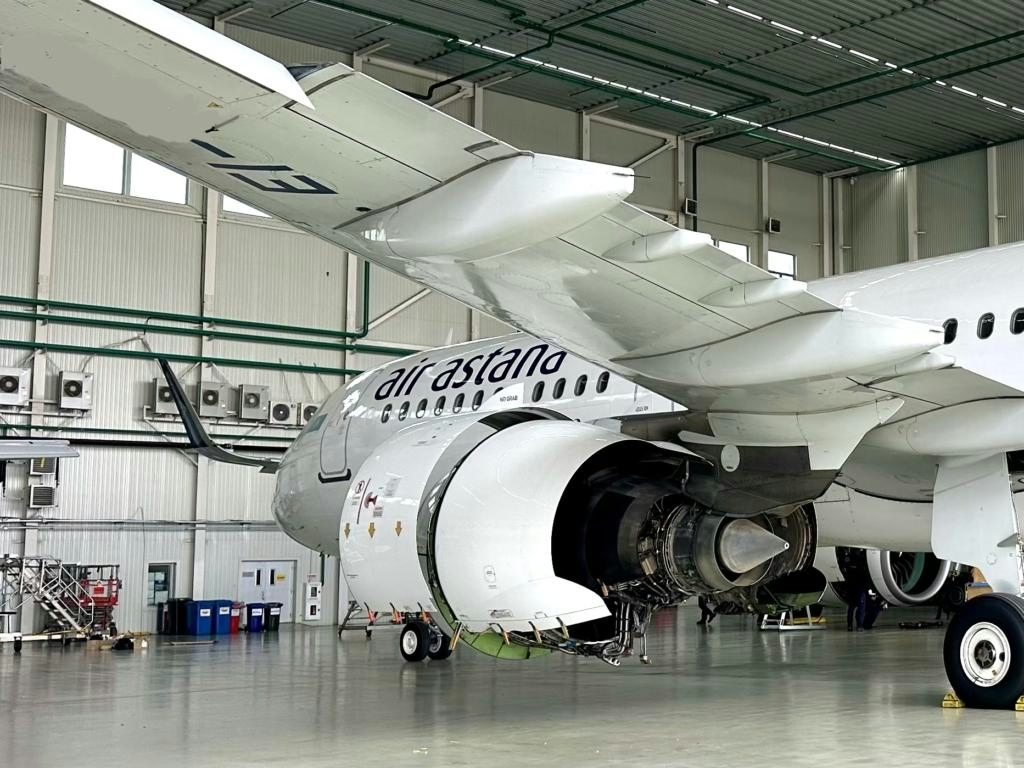
Air Astana Order Strengthens Airbus A320neo Backlog
Air Astana Group has confirmed its largest direct aircraft order to date, committing to 25 Airbus A320neo Family jets. The order includes 20 A321neos and five A320neos, with additional options that could further expand the agreement. This substantial purchase not only deepens Airbus’s partnership with one of Central Asia’s fastest-growing carriers but also directly bolsters the manufacturer’s A320neo backlog.
Strategic Significance and Market Impact
The timing of this agreement is particularly significant for Airbus, reinforcing its status as a leading supplier of single-aisle aircraft in emerging aviation markets. The A320neo Family remains a cornerstone of Airbus’s commercial portfolio, valued by airlines for its fuel efficiency and enhanced cabin comfort on high-frequency routes. Importantly, these aircraft are engineered to accommodate higher blends of Sustainable Aviation Fuel (SAF), aligning with Air Astana’s objectives to improve operational efficiency and sustainability.
Market response to the order has been favorable. Airbus recently increased its commercial jet delivery forecast for 2026 by 10% compared to the previous year, a revision partly driven by strong demand exemplified by the Air Astana deal. This development contrasts with challenges faced by Boeing, whose delivery projections have been affected by ongoing engine supply constraints. Industry analysts suggest that competitors may seek to secure more reliable engine supply agreements and accelerate fleet modernization efforts in response.
Long-Term Production and Sustainability Focus
For Airbus, the firm order of 25 aircraft, along with additional purchase rights, ensures sustained production activity. This supports Air Astana’s mainline fleet renewal as well as the expansion of its low-cost subsidiary, FlyArystan. The multi-year commitment is crucial for maintaining Airbus’s existing backlog and keeping A320neo production lines operating at planned rates, a key priority for management focused on delivery execution.
The emphasis on aircraft capable of operating with higher SAF blends underscores the growing influence of environmental considerations on airline fleet decisions. Airbus’s ability to link commercial successes with its decarbonization strategy resonates with carriers aiming to meet increasingly stringent sustainability requirements.
For investors monitoring Airbus (ENXTPA:AIR), this contract highlights continued airline demand for narrowbody jets and demonstrates the manufacturer’s resilience amid a competitive landscape. As environmental standards and operational efficiency continue to shape fleet strategies, Airbus’s reinforced backlog and production outlook position the company favorably for future growth.

Etihad Airways Suspends Airbus A380 Flights on Key Route

Aditya Birla Group Seeks Approval for Aircraft Leasing in GIFT City

Qatar Airways Highlights Innovation and Connectivity at Arabian Travel Market 2026

Hong Kong's Five-Year Plan Includes Andrew Fan's Aircraft Parts Processing Hub Proposal

ACIA Aero Leasing Delivers ATR72-600 to Air Nostrum

RTX Appoints Jill Albertelli as Head of Pratt & Whitney

TAT Technologies Joins Beyond Aero Hydrogen Aircraft Program

AURAK Study Highlights Barriers to Air Taxi Adoption in Emerging Economies

Xiamen Air Selects Altitude for 787 Maintenance at Heathrow

Etihad and Swissport Extend Global Partnership
