
Orchestrate AI insights into action

Trending
Categories
Air Canada and IAMAW Reach Agreement for Maintenance Workers
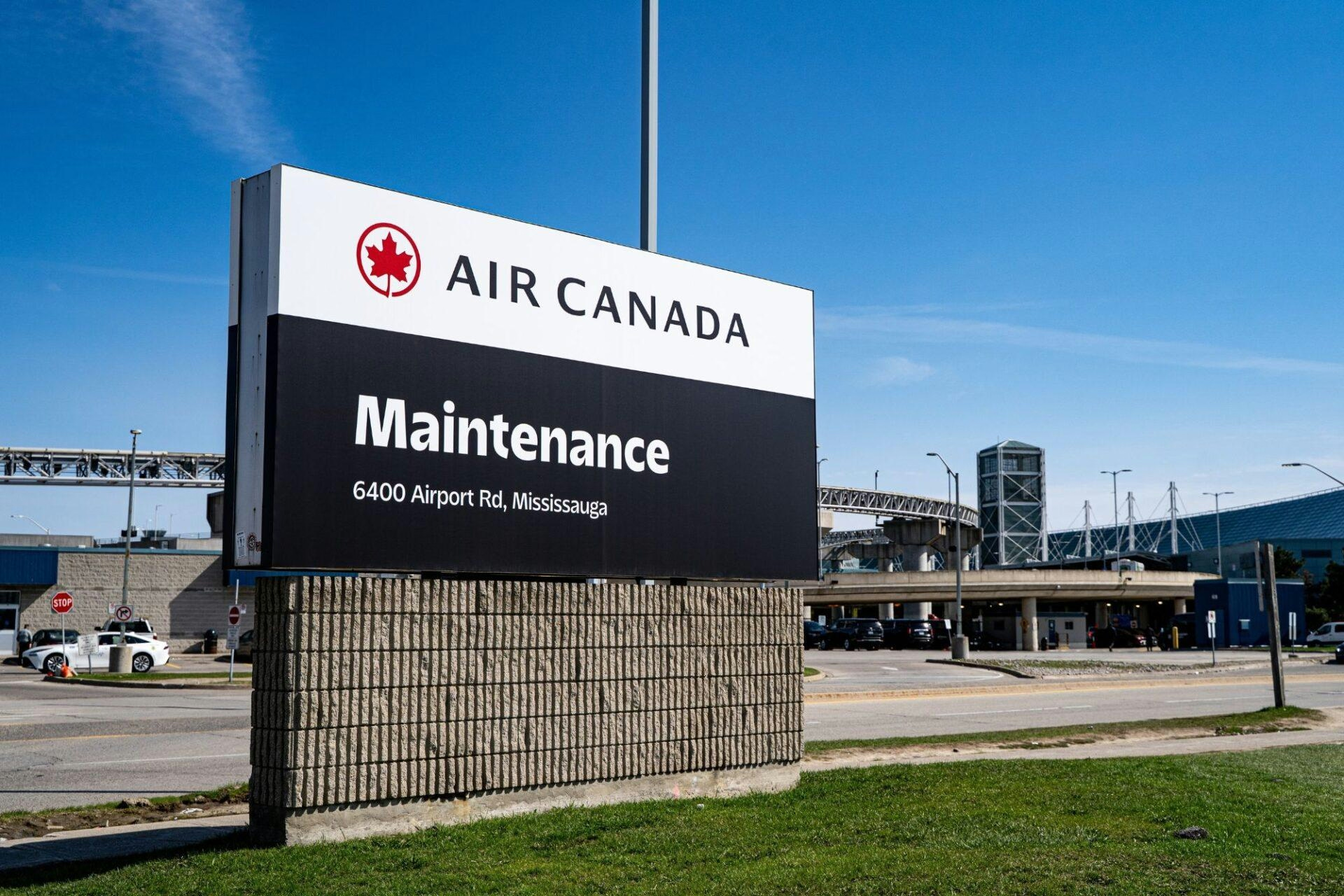
Air Canada and IAMAW Reach Tentative Four-Year Agreement for Maintenance Workers
Air Canada has announced a tentative four-year collective agreement with the International Association of Machinists and Aerospace Workers (IAMAW), covering approximately 11,000 employees within its technical and operational divisions. The agreement, revealed on July 13, 2026, encompasses the airline’s Technical Operations, Maintenance, and Operational Support groups, including personnel in Technical Operations, Airports, Cargo, Logistics, and Supply.
If ratified, the agreement will be retroactive to April 1, 2026, and remain in effect until March 31, 2030. This development follows a similar accord reached in June between Air Canada and IAMAW, which also covered over 11,000 employees across Maintenance, Cabin Services, Airport Airside Operations, Cargo, Finance, and Clerical roles. The specific terms of both agreements remain confidential pending ratification by union members and approval from Air Canada’s Board of Directors.
Ratification and Industry Implications
The latest agreement is currently subject to a ratification vote by IAMAW members, with results expected in the coming days. If approved, it will represent the sixth collective agreement finalized by Air Canada this year, underscoring a period of intense labor negotiations within the airline. Air Canada emphasized that the agreement acknowledges the skills and contributions of its workforce.
Beyond its immediate impact on employees, the agreement may have broader consequences for Air Canada’s operational and competitive landscape. The anticipated increase in labor costs could affect the airline’s market position, prompting competitors to respond either by matching wage increases or adopting cost-saving strategies to preserve profit margins. Market analysts suggest that Air Canada’s stock price might experience a short-term decline due to expectations of higher operational expenses. However, the airline may ultimately benefit from enhanced employee satisfaction and a reduction in labor disputes, which could mitigate financial pressures over time.
The outcome of the ratification process will be closely monitored by industry stakeholders, as it may set a precedent for labor relations and competitive dynamics within the Canadian airline sector.

Etihad Deploys Widebody Fleet to Meet Strong Demand

Korean Air Finalizes $36.2 Billion Deal with Boeing

Australia’s RFDS Queensland Section Orders Six King Air 260Cs

Korean Air Finalizes Order for 103 Boeing Jets and Engines
Embraer E195-E2 Features Distinctive Engine Placement Among Regional Jets

What Passengers Can Expect on Boeing’s New 777X Jet

How Ethiopian Airlines Became Africa’s Leading Carrier Amid Gulf Competition

Joby Aviation Extends Autonomous Flight Capabilities with Cross-Country Tour
Strengthening Europe's Aviation Supply Chain Amid Uncertainty
The Evolution of the Aircraft Maintenance Engineer Role
