
Orchestrate AI insights into action

Trending
Categories
Key Developments at Delta Air Lines in Fuel, Loyalty, and AI
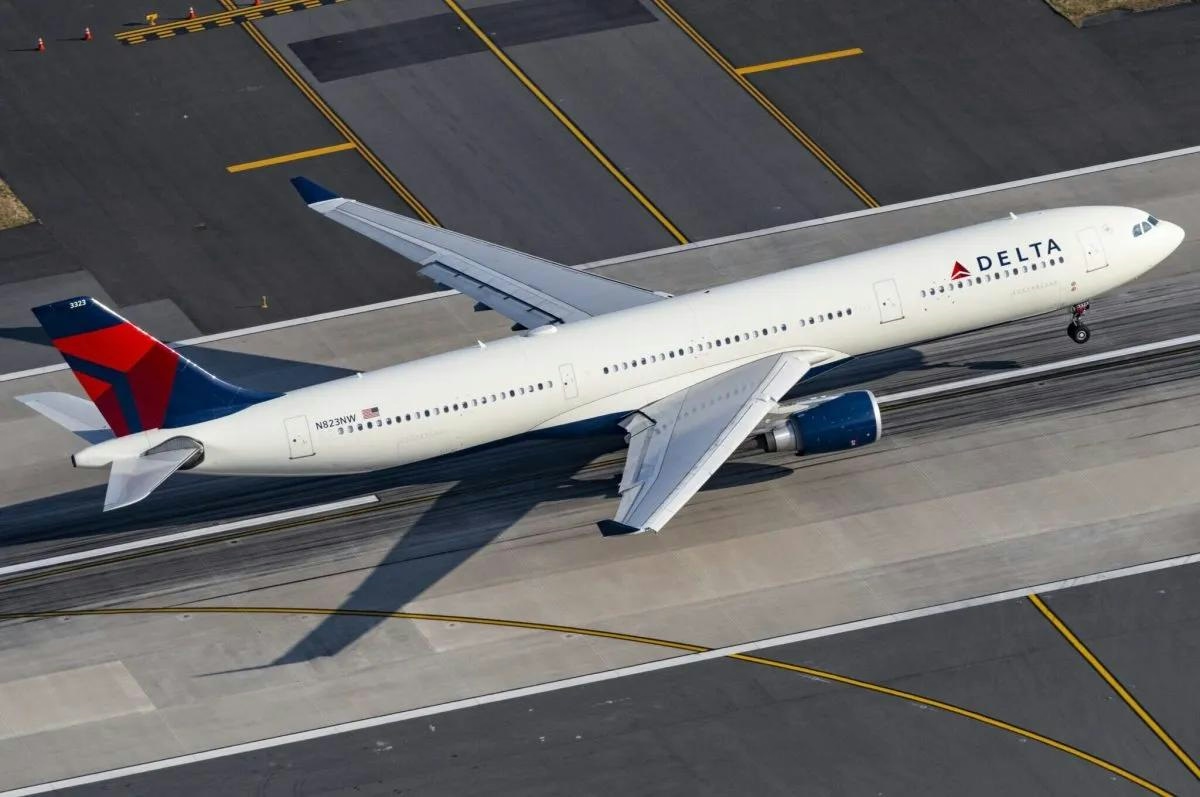
Key Developments at Delta Air Lines in Fuel, Loyalty, and AI
Delta Air Lines (DAL) continues to navigate a complex landscape shaped by fuel price volatility, evolving customer preferences, and technological innovation. As the airline industry advances into 2026, Delta’s strategic initiatives in premium travel, loyalty program expansion, and artificial intelligence are under close scrutiny by investors, particularly in the context of intensifying competition from United Airlines Holdings, Inc. (UAL) and American Airlines Group Inc. (AAL).
Premium Travel and Fuel Cost Challenges
Demand for premium travel remains a significant driver of Delta’s revenue growth. In the June quarter, premium revenue increased by 17% year over year, with diverse revenue streams accounting for 61% of total revenues—an improvement of two percentage points compared to the previous year. Corporate travel demonstrated notable resilience, with corporate sales expanding at double-digit rates across all sectors. Premium corporate sales, in particular, surged by more than 25%, fueled by strong demand for Delta Comfort and Delta Premium Select offerings. This strategic emphasis on premium segments and customer segmentation enhances Delta’s ability to maintain revenue quality amid economic uncertainties and fluctuations in fuel prices.
Nevertheless, rising jet fuel costs have emerged as a significant headwind. Increased fuel expenses have contributed to a deceleration in overall revenue growth. While Delta has attempted to mitigate this impact by passing some costs onto consumers, early indications suggest that this approach may face resistance, potentially constraining the airline’s future pricing power.
Expansion of Loyalty Programs and International Reach
Delta’s loyalty program continues to play an increasingly pivotal role in its business model. Loyalty-related revenues grew by 19% in the June quarter, driven by expanded engagement with the SkyMiles program beyond traditional air travel into a broader array of partner activities. Revenues from American Express reached $2.4 billion, marking a 16% increase year over year, supported by accelerated card acquisitions and sustained double-digit growth in cardholder spending. This diversification reduces Delta’s dependence on the cyclical nature of airfare demand.
In addition to loyalty program growth, Delta is actively expanding its international route network, with a particular focus on the Pacific region. This expansion aims to capture greater market share from competitors such as United Airlines and is integral to the airline’s broader strategy to grow its loyalty base and diversify revenue streams.
Technology and AI: Progress and Investor Skepticism
Technology adoption is becoming central to Delta’s efforts to enhance revenue and customer loyalty. The introduction of Delta Sync, which enables logged-in experiences across onboard channels, facilitates deeper customer insights and more personalized engagement during travel. While Delta has highlighted its artificial intelligence initiatives as key to improving customer experience and operational efficiency, these technologies remain in the developmental stage. A disconnect persists between the company’s optimistic projections of AI-driven returns and investor sentiment, reflecting broader skepticism regarding the near-term financial impact of such innovations.
Financial Performance and Outlook
Delta’s second-quarter earnings surpassed expectations; however, underlying financial pressures remain evident. Both operating margin and free cash flow margin have declined, underscoring the challenges posed by rising costs and competitive market dynamics. As the airline continues to invest in premium services, loyalty programs, and technological advancements, its capacity to control costs and sustain profitability will be a focal point for investors.
Looking ahead, the Zacks Consensus Estimate anticipates year-over-year sales growth for Delta through the third and fourth quarters of 2026, as well as for the full years 2026 and 2027. The airline’s ability to balance escalating costs, shifting customer expectations, and competitive pressures will be critical to maintaining its growth trajectory in the coming years.

Etihad Deploys Widebody Fleet to Meet Strong Demand

Korean Air Finalizes $36.2 Billion Deal with Boeing

Australia’s RFDS Queensland Section Orders Six King Air 260Cs

Korean Air Finalizes Order for 103 Boeing Jets and Engines
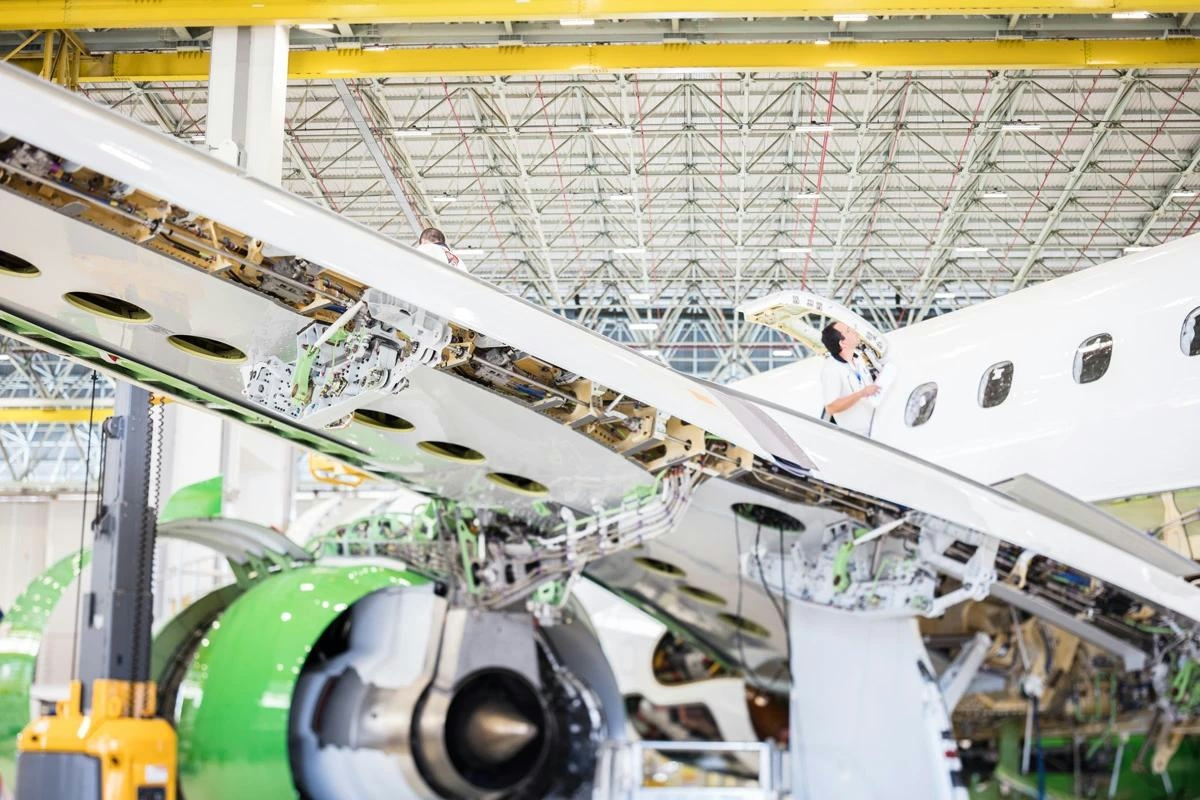
Embraer E195-E2 Features Distinctive Engine Placement Among Regional Jets
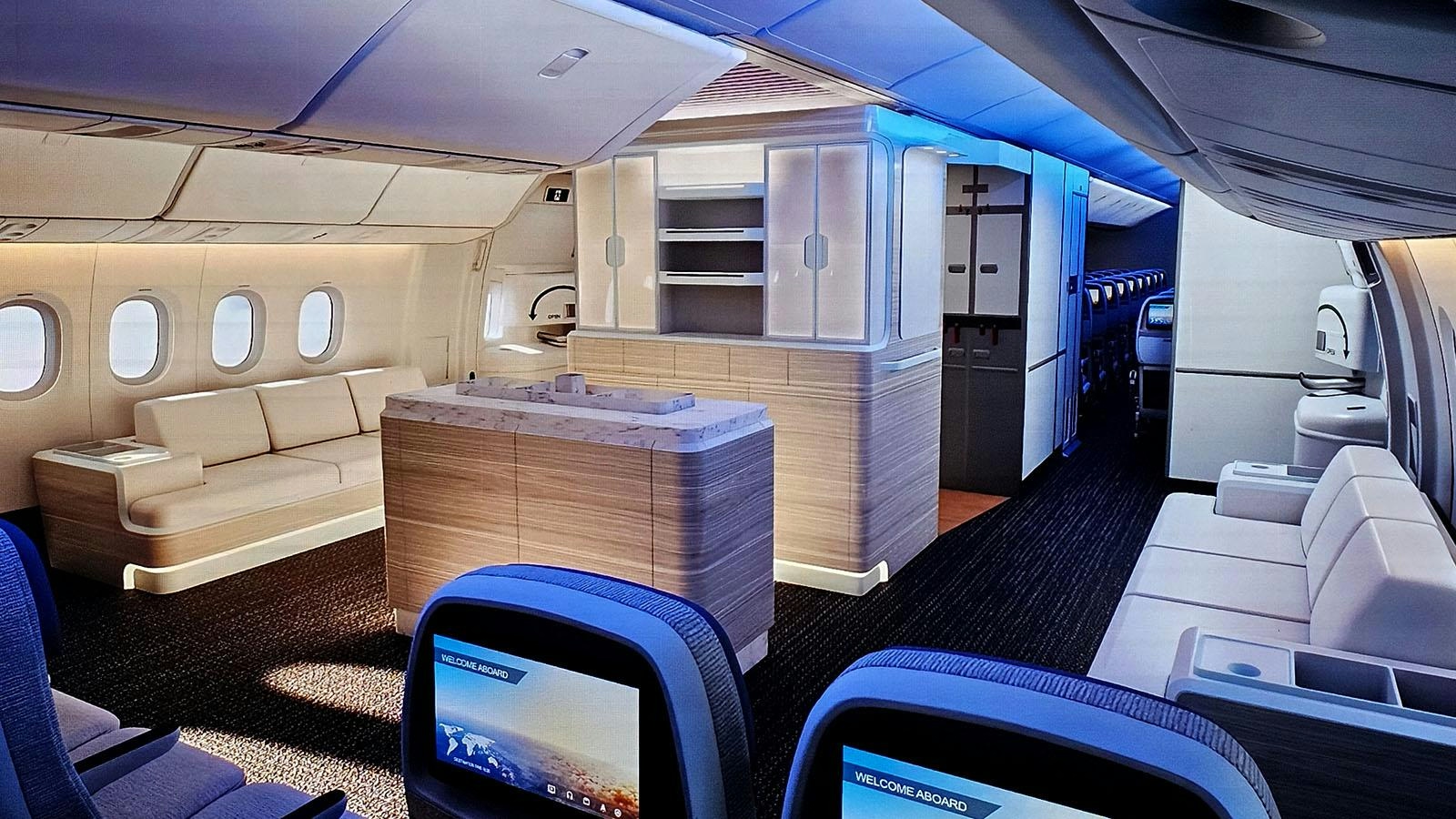
What Passengers Can Expect on Boeing’s New 777X Jet
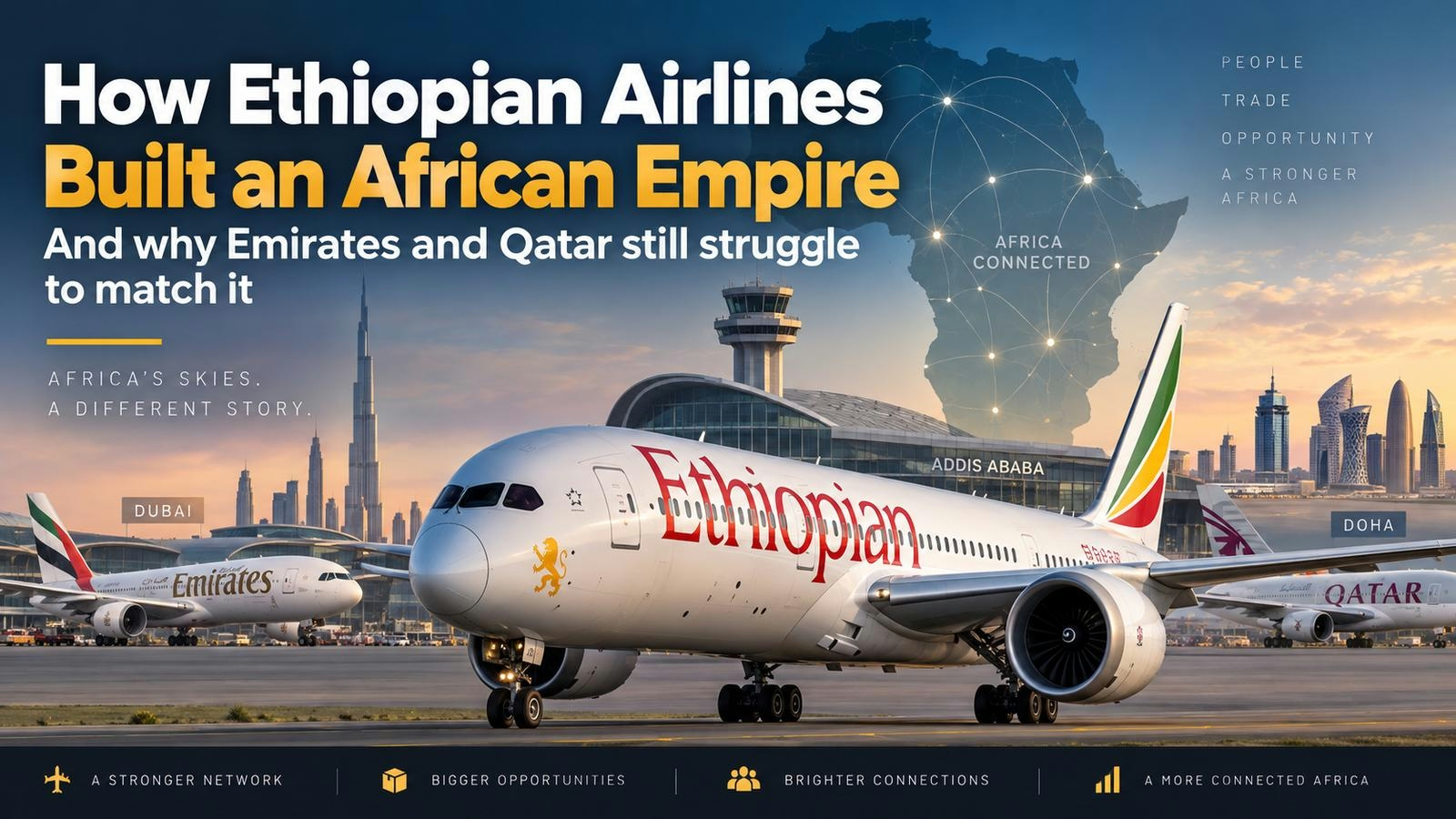
How Ethiopian Airlines Became Africa’s Leading Carrier Amid Gulf Competition

Joby Aviation Extends Autonomous Flight Capabilities with Cross-Country Tour
Strengthening Europe's Aviation Supply Chain Amid Uncertainty

The Evolution of the Aircraft Maintenance Engineer Role
